


Feb 20, 2026 8:00 AM
Updated Feb 25, 2026 1:54 AM
When people talked about moving from 4G to 5G, they often focused on it being a "faster internet." However, the real game-changer has been how it shrinks the feeling of distance.
The digital world of 2026 has evolved from a collection of static sites into a vibrant, interactive ecosystem of "immediacy." We don’t just "log on" to consume content anymore; we live it in real time. This dramatic shift towards instant engagement is most apparent in how we play, connect, and conduct transactions. As high-speed internet becomes the norm, the accessibility of high-stakes entertainment has surged. Platforms like 7Bit Casino are leading the charge, merging the excitement of traditional gaming with the transparency of blockchain technology. For many enthusiasts today, playing crypto roulette online is more than just a hobby—it symbolizes a world where geographical and financial barriers are quickly fading, paving the way for a shared, real-time experience.
This transformation is deeply rooted in the decentralization of trust. In the last decade, digital entertainment often suffered from "the lag"—both in terms of technical delays and the cumbersome processes of traditional payment systems. Nowadays, that friction has been smoothed out. Users looking for roulette online for crypto aren’t just after a game; they’re engaging in a peer-to-peer financial revolution that values speed and user control over institutional restrictions. By utilizing smart contracts and low-latency streaming, real-time platforms have successfully captured the electric atmosphere of a physical venue while providing the privacy and security that only a digital-first approach can offer.
The Pillars of the Real-Time Revolution
The rapid rise of these platforms isn’t just a coincidence; it stems from three powerful technological "super-trends" that have really come into their own by 2026.
The 5G and Edge Computing Connection
When people talked about moving from 4G to 5G, they often focused on it being a "faster internet." However, the real game-changer has been how it shrinks the feeling of distance. With latency dropping to an astonishing 1 millisecond, the "heartbeat" of a digital platform now syncs up with our own nervous system. This opens the door to:
Related stories
- Zero-Lag Live Dealers: Crystal-clear video streams that let you interact in real-time without any hiccups.
- Synchronized Global Tournaments: Thousands of players battling it out in the same split-second environment, no matter where they are in the world.
- Haptic Integration: Users can actually feel the "click" of a wheel or the shuffle of cards through wearable technology.
Blockchain as the "Trust Protocol"
Transparency used to be just a catchy marketing term; now, it’s embedded in the code. The surge in real-time entertainment is closely linked to the "Provably Fair" algorithm. This cryptographic approach lets users independently verify the randomness of every outcome. For the savvy consumer, this means they don’t have to "trust" a corporation anymore; they can simply "verify" the math themselves.
The Move to Fluid Currencies
The emergence of digital assets has freed entertainment from the limitations of traditional banking. Real-time platforms now provide nearly instant deposits and withdrawals, ensuring that a user’s funds are as fluid as the entertainment they enjoy.
Comparing the Eras: A Decade of Digital Evolution
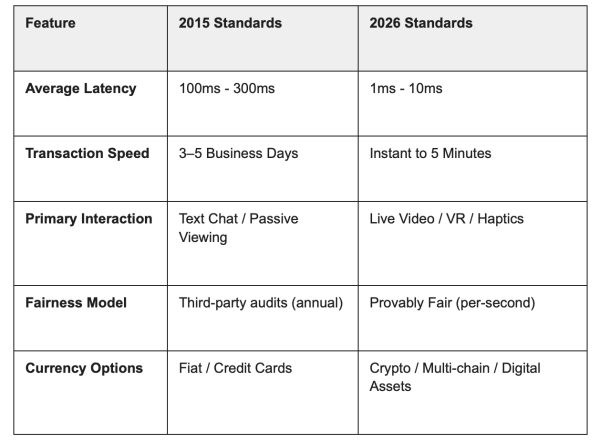
To really grasp how far we've come, it's useful to compare the metrics that shape user experience today with those from the mid-2010s.
Table: Evolution of Real-Time Interaction Metrics
The Socio-Economic Impact of Decentralized Leisure
From a forward-thinking perspective, the rise of real-time digital entertainment is a mixed bag that leans heavily towards empowerment. By cutting out the traditional "middleman"—like banks that hold up transfers or sluggish regulatory bodies that restrict access—the digital landscape has fostered a more level playing field.
Breaking the Geographic Lottery
In the past, your access to top-notch entertainment often depended on your zip code. If you were in a bustling city, you had plenty of choices; if you were in a rural area, you were often left out. Thanks to real-time platforms, those barriers have largely disappeared. Now, someone in a remote village with a satellite connection can enjoy the same high-quality experiences as someone living in Manhattan.
The New Creator Economy
This evolution has also given rise to a new breed of "entertainment influencers." Live-streamers on platforms like Twitch and YouTube are now deeply integrated into gaming ecosystems, crafting a shared experience that emphasizes social connection just as much as the games themselves.
"The modern digital platform has transformed from a mere vending machine for content into a vibrant town square where the community comes together to witness, engage, and validate experiences collectively."
Psychological Shifts: From "On-Demand" to "In-the-Moment"
The way we think about consumption has really evolved. We’ve left behind the "On-Demand" phase—where we could get what we wanted whenever we wanted—to embrace the "In-the-Moment" mindset. Nowadays, there’s a strong desire for live experiences over pre-recorded ones. Whether it’s a live-streamed concert, an exciting sports match, or a nail-biting round of roulette, the thrill comes from the unpredictability of the now.
Platforms like 7Bit Casino really get this, creating spaces that feel vibrant and engaging. The social aspect—like chatting with a dealer in real-time or watching other players’ wins light up a global leaderboard—fulfills a deep-seated human need for connection that was often lacking in the early, more sterile days of the internet.
Looking Ahead: The Metaverse and Beyond
As we head into 2026, the boundaries between "real-time digital entertainment" and the "Metaverse" are starting to blur. We’re witnessing the dawn of persistent virtual worlds where your digital assets seamlessly travel with you from gaming platforms to social spaces.
- Interoperability: Imagine being able to use your winnings or rewards from one platform to snag digital art or gain access to another.
- Virtual Presence: Picture VR headsets that don’t just show you a screen but actually place you at a virtual table where you can pick up on your opponents' "tells."
- AI Integration: Think about real-time AI moderators and assistants that create a safe, personalized experience for every user.

The rapid rise of real-time digital entertainment mirrors our broader cultural shift: a move toward a world that’s faster, fairer, and more interconnected. By embracing technologies like blockchain and 5G, platforms are doing more than just offering a game; they’re laying the groundwork for the next generation of human interaction.
Comments

Powered by RoundtableAn AI/DeFi-powered Enterprise Media Operating System. Learn more at Roundtable.io.© Roundtable 2026. By using this site you agree to the Terms of Use and Privacy Policy