



Saxenda and Ozempic
Oct 1, 2024 7:00 AM
Updated Oct 8, 2024 2:07 AM
Understanding the difference between Saxenda and Ozempic is crucial when deciding which option is best for your individual needs.
Saxenda and Ozempic are two medications commonly prescribed for weight loss and managing type 2 diabetes, but they work in different ways.
Understanding the difference between Saxenda and Ozempic is crucial when deciding which option is best for your individual needs.
While both medications are injectable and help regulate appetite and blood sugar levels, they contain different active ingredients and are prescribed for slightly different purposes.
This guide will explore the key distinctions between Saxenda and Ozempic, helping you make an informed decision on which treatment is the right fit for your health goals.
Related stories
Growing Popularity of Saxenda and Ozempic for Their Potential Benefits
Saxenda and Ozempic, both medications originally designed for treating type 2 diabetes, have witnessed a surge in popularity recently, primarily due to their potential benefits in weight loss.
Saxenda, containing liraglutide, is specifically FDA-approved for chronic weight management in adults with obesity or overweight individuals with at least one weight-related health condition.
It works by mimicking a hormone called GLP-1, which helps regulate appetite and food intake, leading to reduced calorie consumption and weight loss.
Ozempic, containing semaglutide, is primarily approved for improving blood sugar control in adults with type 2 diabetes.
However, its notable side effect of weight loss has led to its off-label use for weight management, contributing to its growing popularity. Similar to Saxenda, it also mimics GLP-1, promoting feelings of fullness and reducing appetite.
The appeal of these medications lies in their effectiveness in facilitating significant weight loss compared to other weight loss interventions.
Clinical trials have demonstrated that individuals using Saxenda or Ozempic can achieve substantial weight reduction, often ranging from 5% to 15% of their initial body weight.
How Saxenda and Ozempic Work for Weight Loss
Saxenda and Ozempic work for weight loss primarily by mimicking the action of a naturally occurring hormone called glucagon-like peptide-1 (GLP-1).
GLP-1 is released by the intestines after eating and plays a crucial role in regulating appetite and food intake. It signals the brain that you're full, slows down stomach emptying, and reduces cravings.
Both Saxenda and Ozempic are GLP-1 receptor agonists, meaning they bind to the same receptors in the body as GLP-1 and produce similar effects.
Key mechanisms of action for weight loss:
- Appetite Suppression: By mimicking GLP-1, they increase feelings of fullness and satisfaction, leading to reduced food intake and calorie consumption.
- Delayed Gastric Emptying: They slow down the rate at which food leaves your stomach, making you feel full for longer and decreasing the urge to eat between meals.
- Reduced Cravings: They can help decrease cravings for sugary or high-calorie foods.
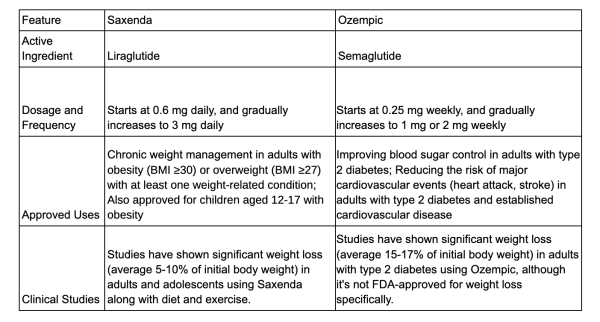
Key Differences of Saxenda vs Ozempic
Most Common Side Effects of Saxenda vs. Ozempic
While Saxenda and Ozempic offer promising benefits for weight loss and blood sugar control, it's essential to be aware of their potential side effects.
Understanding these potential side effects can help you make informed decisions about your treatment and manage any discomfort that may arise.
Saxenda:
- Very common:
- Common:
- Less common:
- Rare:
Ozempic:
- Very common:
- Common:
- Less common:
- Rare:
Additional Notes:
- The severity and duration of side effects can vary.
- Most side effects are mild to moderate and often improve over time.
- Consult your doctor if you experience severe or persistent side effects.
- Starting with a low dose and gradually increasing it can help minimize side effects.
Dosage Adjustments when Switching between Saxenda and Ozempic
When switching between Saxenda and Ozempic, it's important to follow specific dosage adjustments to ensure a smooth and safe transition.
These adjustments are crucial because the medications have different active ingredients, dosing frequencies, and potencies.
Switching from Saxenda to Ozempic:
- If you're currently on the maximum Saxenda dose (3 mg daily):
- If you're on a lower Saxenda dose:
Switching from Ozempic to Saxenda:
- If you're currently on Ozempic 0.5 mg or 1 mg weekly:
- If you're on Ozempic 2 mg weekly:
What Should I Do if Saxenda or Ozempic isn’t Working as Expected?
Switching between Saxenda and Ozempic necessitates careful dosage adjustments under the guidance of your healthcare provider.
When transitioning from Saxenda to Ozempic, the starting dose of Ozempic depends on your current Saxenda dosage, typically beginning at 0.25 mg weekly and gradually increasing if needed. Conversely, when switching from Ozempic to Saxenda, the initial Saxenda dose is usually 0.6 mg daily, with weekly increments until reaching the maintenance dose.
Your doctor will personalize the dosage adjustments based on your individual needs and response to the medications.
It's crucial to adhere to the prescribed schedule, monitor for side effects, and maintain open communication with your doctor throughout the transition process to ensure a safe and effective switch.
Final Thoughts
The growing popularity of Saxenda and Ozempic for weight loss highlights the increasing demand for effective solutions to manage obesity and related health conditions.
These medications, originally designed for type 2 diabetes, have demonstrated significant potential in facilitating weight reduction and improving overall health.
However, it's essential to approach their use with caution and under the guidance of a healthcare professional.

While both medications work similarly by mimicking the action of GLP-1, they differ in their active ingredients, dosage frequency, and approved uses.
Understanding these differences is crucial in making informed decisions about which medication may be more suitable for your individual needs.
Comments

Powered by RoundtableAn AI/DeFi-powered Enterprise Media Operating System. Learn more at Roundtable.io.© Roundtable 2026. By using this site you agree to the Terms of Use and Privacy Policy