


Sep 12, 2025 7:00 AM
Updated Sep 16, 2025 10:17 PM
According to Ruzumna, every case depends on how well the story is told. He believes jurors and judges respond best to narratives that are simple and relatable.
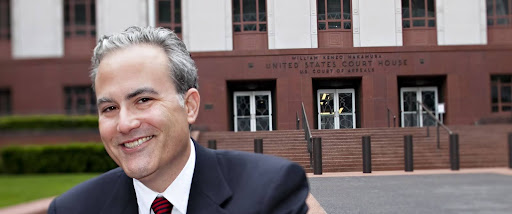
Dave Ruzumna does not measure the success of his career by a single verdict. Instead, he defines it by the moments spent helping clients through situations that could alter the course of their lives forever.
“For me, helping a single mother keep her home, or saving a small businessperson’s livelihood in the face of some regulatory or legal challenge, reminds me of the importance of my work,” he said.
These moments may not appear newsworthy to the average person, but they form what he calls a “mosaic” of small victories. Since founding the Law Office of David Ruzumna, PLLC in 2000, those accomplishments have defined his nearly three decades in law.
A Leap of Faith Into Solo Practice
Born and raised in Los Angeles, California, in the Brentwood and West LA neighborhoods, Ruzumna pursued a degree in sociology at Humboldt State University. After graduation, he took a year away from school before applying to law programs. From law school, he gained not just a career, but also met the woman who would eventually become his wife.
Related stories
In 1997, after finishing law school but before taking the bar exam, he proposed. He passed the bar the same year, married, and started working at a small firm. After just a year, he left that position and established his own practice in Seattle, which has been running for the last 25 years.
Cases That Left a Mark
Early in his career, Ruzumna defended a young man accused of felony theft. Prosecutors claimed the defendant exploited an older man by accepting expensive gifts. Ruzumna argued that the two were romantically involved and that the gifts were freely given as part of their relationship.
The state brought in two seasoned prosecutors, while Ruzumna was the only defense attorney. After a two-week trial in the superior court, the jury deliberated for just two hours before returning a not guilty verdict.
“This experience reinforced my belief that when the truth is on your side, the attorney should not be intimidated by the state’s decision to file charges,” he said. “The truth will win the day.”
Another case has stayed with him for years. A client faced multiple counts of unlawful gun possession after a warrantless police search. Ruzumna was prepared to file a motion to suppress the evidence and believed it would be successful, although he could not be certain.
The client chose a plea deal that required pleading guilty to one count, helping him avoid time in prison.
“To this day, that case haunts me,” he admitted.
He believed the search violated the law and was unsettled by the fact that the police faced no consequences for their actions. Despite his feelings, he remained supportive of his client.
“An attorney may disagree with a client’s decision, but the attorney must nevertheless respect and abide by the client’s wishes, because it is always easier to ‘gamble’ with someone else’s money,” he said.
Mastering the Art of Language
According to Ruzumna, every case depends on how well the story is told. He believes jurors and judges respond best to narratives that are simple and relatable.
“Find the kernel of the case,” he said, “and build the narrative around that.”
Over the years, Ruzumna has developed this particular skill on his own. In court, he speaks conversationally, aiming to keep disputed facts clear while reinforcing the broader story.
Listening to oral arguments in the Washington Supreme Court and the U.S. Supreme Court has made him even stronger in this area. He studies how the top advocates argue, and then applies those techniques in his own practice.
“Being able to coherently and articulately convey a thought or story is extremely important to any legal practice,” he said.
In King County Superior Court, most motions are decided on written pleadings alone. Judges may never see the attorney face-to-face, so the written word becomes the client’s only voice. To ensure his words are effective, Ruzumna reads extensively, turning to any kind of well-written legal document to learn from.
Ruzumna’s Rules for Avoiding Complacency
In Ruzumna’s mind, discipline and routine are what keep his solo practice successful. He sets an alarm each morning, follows the same schedule, and treats his home office just like a traditional workplace. All of these habits allow him to stay productive and give each client the attention their case deserves.
The Washington State Bar Association requires a minimum number of Continuing Legal Education (CLE) hours, but Ruzumna treats that figure as a starting point, not a finish line. Rather than using CLE courses only to expand his knowledge, he often attends sessions in areas he already knows well to ensure he’s current on the basics.
After 28 years in practice, he has also taken on the role of presenter, finding that teaching others can be its own way of learning.
For those considering a career in law, Ruzumna stresses the importance of finding an experienced mentor who has time to provide advice and direction. He also emphasizes the need for continual learning, even after gaining expertise.
“Even if you have become an expert in an area of law, you should continue reading and learning about it from other perspectives,” he said. “Never become lazy or complacent when it comes to nourishing your knowledge base.”
Making the Case for Civility
Dave Ruzumna sees civility as a professional tool. At the start of a case, he calls opposing counsel to introduce himself and set expectations.
He has learned that conflict is inevitable in litigation, but hostility is not. In his mind, zealous advocacy for a client and professionalism toward an opponent can coexist.
“There is no downside to being civil and professional in your dealings with opponents,” he noted.
His mentors have only reinforced those values. Ruzumna’s father-in-law, who rose from CFO to CEO of a real estate development company, taught him that mistakes should be treated as opportunities to learn, not as reasons for punishment.
Justice Steven Gonzalez, now Chief Justice of the Washington Supreme Court, modeled restraint from the bench. Ruzumna remembers that Gonzalez spoke sparingly in court, which made every word carry weight.
“Justice Gonzalez taught me to listen more, speak less, and of course be polite and gracious toward everyone, whether friend or foe,” he recalled.
Integrity as a Compass in Law and Life
Ruzumna believes most ethical dilemmas arise when someone is tempted to bend the truth, and he’s always willing to share that view with colleagues who are facing questions of integrity. In litigation, when a fact would only weaken a case, he maintains that it’s better to leave it unspoken than to misrepresent it.
“Being honest in your statements to others keeps life simple,” he said, referring to opposing counsel, clients, and peers alike.
When faced with challenges of his own, Ruzumna reminds himself that living in the United States and having a job that enables him to support his wife and children is his version of winning the lottery. He believes that circumstances that feel difficult to him are minor compared to the struggles faced by much of the world.
With that perspective, he draws motivation from the lives he has been able to change for the better and from representing clients who might not otherwise have a voice.
The Future of Law
Looking ahead, Ruzumna sees technology changing the profession for both clients and solo practitioners. Tools like AI-assisted contract analysis and e-discovery are making legal work more efficient. That gives solo practitioners more time to focus on strategy and relationships, leveling the playing field with larger firms. Mediation is another trend he welcomes, since it saves both time and money for clients.
By contrast, he expects real estate law (one of his main practice areas) to remain relatively unchanged. In his view, that stability is by design, since predictable and consistent rules are essential for property matters.
As long as there are entrepreneurs and innovators, he believes, lawyers will continue to play a necessary role in business transactions.
Finding Fulfillment in Everyday Triumphs
For Dave Ruzumna, Seattle is both his home and the city where his practice has grown over the years. It’s a place of professional opportunity, with its many entrepreneurs and start-ups, and one of natural beauty, with its endless walking trails and campgrounds — a combination that, to him, makes it the best place to live and work.
“I’ve always believed that there is nothing better than a sunny day in Seattle,” he said.
Ruzumna has built his career through results that add up one by one. None of them alone defines his success, but together they make up an impactful life in law.

While the profession may change in the coming years, the values that sustain it will not. For him, it’s not the headline-making victory that matters most, but the smaller wins that change the lives of everyday people.
Comments

Powered by RoundtableAn AI/DeFi-powered Enterprise Media Operating System. Learn more at Roundtable.io.© Roundtable 2026. By using this site you agree to the Terms of Use and Privacy Policy