


Jan 5, 2026 8:00 AM
Updated Jan 8, 2026 10:31 PM
Eastman, unlike most doctors, entered law enforcement to see emergencies from the start, not just the end.
In Dallas, people say “Parkland” the way they say “downtown” or “the Trinity,” because it is part of the city’s daily life, even for people who have never walked through the doors. When something terrible happens here, whether it is a wreck on the highway, a shooting in a neighborhood, or a violent call that escalates quickly, the story often ends up at Parkland Memorial Hospital, where trauma teams work with whatever arrives and whatever time remains.
That is where Dr. Alexander Eastman developed his career, and the setting matters because Parkland is not a place where trauma arrives once in a while and gives staff time to think about it later. It is steady. It is continuous. Places like this make patterns difficult to ignore, because the same problem returns in different forms, and people begin asking the same question in different ways. Why does a patient with an injury that should be survivable still die?
Eastman trained at Parkland as a surgical resident, and while many people picture trauma care as a dramatic moment in an operating room, what he saw most often was less dramatic and more frustrating, because the most severe problems did not always begin at the hospital.
Often, the outcome was influenced during the critical minutes when an individual was injured on a street, in a parking lot, in a house, or on the side of a freeway, while responders attempted to provide care within a system that follows a predetermined order, which can delay treatment.
Related stories
The Pattern That Became Hard to Ignore
You can watch the same situation unfold in many different ways in a trauma bay, and that repetition changes how a physician thinks. Patients arrive with serious injuries that are not automatically fatal, but they can still die because bleeding was not controlled quickly enough or because the airway, which is simply the path that allows air to move into the lungs, was compromised before anyone had time to stabilize it. In these moments, the surgeon’s skill is not the only factor that determines whether a patient survives, and sometimes it is not even the most important one, because the critical window has already passed before the patient ever reaches the hospital.
This is where a concept like time to definitive care becomes easier to understand, even if the term sounds technical at first. It describes the time between the moment a person is injured and the moment they receive the medical intervention that actually stops the life-threatening problem. In trauma cases, that life-threatening problem is often blood loss, because the body can only lose so much blood before organs begin to fail, and once the body reaches that point, it becomes much harder to reverse what is happening, even with the best doctors, equipment, and operating rooms.
The practical implementation of emergency response in cities like Dallas shapes this timeline, as various groups assume different responsibilities. First, law enforcement officers often secure the scene. Emergency medical services often wait for clearance before entering. Surgeons prepare at the hospital for patients who have not yet arrived. From a safety standpoint, this The sequence makes sense because responders cannot provide care if they also become victims. However, this sequence can also lead to delays, and trauma teams observe the consequences of those delays when they treat patients after the waiting period concludes.
Eastman was not the first doctor to notice this problem, but his subsequent actions elevated his work to a level that later contributed to national preparedness discussions.
Why Eastman Looked Beyond the Hospital
Eastman, unlike most doctors, entered law enforcement to see emergencies from the start, not just the end.
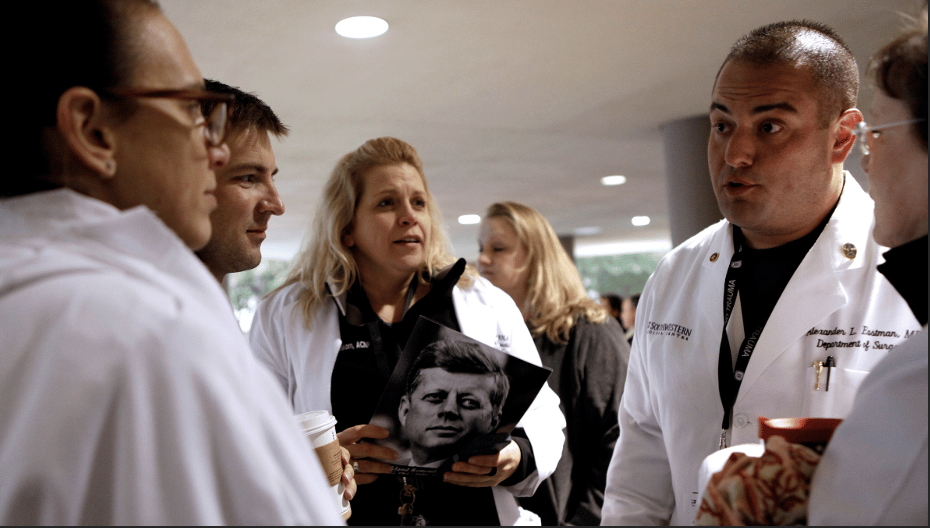
Eastman was sworn in as an officer with the Dallas Police Department and worked in tactical and medical leadership roles. That experience gave him a perspective on parts of trauma care that typical hospital staff do not experience firsthand, including the chaos and uncertainty that exists on a scene and the way a dangerous situation can shift quickly while responding officers are trying to stop a threat and protect people nearby.
From the police side, the delay that frustrates trauma surgeons looks different because it is often caused by real danger rather than paperwork or indifference. An officer may still be under fire. A suspect may still be inside a building. The scene may still be unstable, and responders may not know whether moving an injured person will make the situation worse. In those scenarios, waiting is usually a safety decision, not apathy. Still, the cost of waiting often shows up in the same ways, through lost minutes and ongoing blood loss.
Eastman’s dual role inside the trauma center and inside law enforcement operations gave him a way to describe the same problem using language understood by both groups. He understood why officers made the decisions they made, and he also understood what those decisions could mean once the injured person arrived at the hospital.
How Local Experience Became National Policy
After mass casualty events pushed the country into a new kind of conversation about preparedness, trauma leaders and public safety officials began looking closely at the same issue Eastman had been seeing for years, which was that victims were dying from bleeding before they reached surgery and that many of those injuries could have been survivable if bleeding control had started sooner.
That concern helped drive the Hartford Consensus, a national effort that brought together trauma surgeons and public safety leaders to rethink the earliest minutes of mass casualty response. The focus was especially intense in situations like active shooter events, where the scene might not be fully safe, but victims still need immediate care long before an operating room becomes part of the story.
Eastman became involved in those conversations because he had direct experience with the practical questions the Hartford Consensus was trying to answer. If the scene is still dangerous, who can provide care without increasing risk? What care can be provided safely in those circumstances? What should law enforcement carry and be trained to use? How can agencies coordinate to ensure that the sequence of responses, which may seem logical as "police first, medicine second," does not result in a deadly outcome of "medicine too late"?
In other words, he spoke as both a doctor who wanted faster treatment and an officer who wanted operational safety. He had experienced the tension between the priorities of medical treatment and operational safety in a real city facing violence and significant consequences, and his work aimed to narrow that gap.
The Shift That Redefined Early Response
One of the most important changes from this shift in thinking is the national emphasis on early bleeding control, which may sound simple but represents a major cultural shift.
For a long time, the public message was to stand back and wait for professionals. Inside response systems, there was also a strong division between who handled threats and who handled medical care. The newer approach, widely recognized through programs like Stop the Bleed, pushed a different idea, which is that bleeding is so time-sensitive that waiting can be deadly and that basic bleeding control is something many people can learn, including law enforcement officers and civilians, if they have the right tools and training.
To understand why such information matters, it helps to say it plainly. A tourniquet is not complicated, but it must be applied correctly, and it must be applied early, because it works by stopping blood flow to a severely bleeding limb. If someone loses too much blood before help arrives, the best hospital in the world may not be able to repair what has already happened. Early action can change the entire trajectory of care, because it keeps the patient alive long enough to reach definitive treatment.
Eastman’s role in this area has often involved education and practical guidance, because the point is not to create a heroic image of responders. The point is to build systems that allow more people to take basic lifesaving actions while the injured person still has time.
Why Dallas Became the Reference Point
Dallas is not the only city with violence, and it is not the only city with advanced trauma care. However, Dallas has been a common reference point in many discussions about time-sensitive response, in part because Parkland’s volume forced the city to face the timing problem directly, and in part because Dallas police repeatedly encountered situations where the difference between survivable and fatal often came down to minutes.
When a city sees enough cases, debates about whether time matters tend to disappear, because the outcomes answer the question. That is why ideas developed and tested in Dallas, even when they did not receive national attention at the time, later became useful reference points when the national conversation demanded practical examples of what really worked.
How the Work Expanded Beyond Dallas
Eastman later moved into federal operational medicine and homeland security roles, where the work differs in scale and structure. It involves larger systems, more oversight, and more public scrutiny. It often requires policy development, planning, and coordination across multiple agencies rather than decisions made at a single scene in a single city.
However, the fundamental lesson remains constant. People lose blood at the same rate regardless of system size, and time remains critical even with more agencies involved. If anything, as systems grow, delays can become easier to create and harder to see. That is why preparedness efforts put so much emphasis on clear roles, clear training, and tools that allow action in the first minutes, when outcomes can still be changed.
Why Eastman Became Part of the National Conversation
When people mention Dr. Alexander Eastman in discussions about preparedness, they are often referring to credibility that comes from seeing the problem from more than one angle and explaining it in plain terms that both sides recognize.
Eastman understands trauma care because he trained and worked inside one of the busiest trauma hospitals in the United States. He understands the operational side because he served inside a major police department. And he contributed to national conversations at a moment when agencies across the country were rethinking old assumptions about the first minutes after a mass casualty incident.
If you strip away titles and buzzwords, the message remains straightforward. The clock matters in trauma care. If communities want more survivors, they need systems designed to begin lifesaving care sooner, closer to where injuries happen, with more people trained and equipped to act.
That is why Eastman’s work continues to be referenced in national preparedness conversations, and it is why Dallas continues to be part of the discussion.
Comments

Powered by RoundtableAn AI/DeFi-powered Enterprise Media Operating System. Learn more at Roundtable.io.© Roundtable 2026. By using this site you agree to the Terms of Use and Privacy Policy