


Jun 13, 2025 7:00 AM
Updated Jun 17, 2025 1:47 AM
No two shipments are exactly alike—and neither are their costs. Understanding the factors that influence pricing helps you make smarter shipping decisions.
Why 20ft Containers Are the Hidden Champion for Smart Importers
Not every shipment needs a giant vessel to move serious business forward. For many importers today—whether you’re running an eCommerce brand, managing a wholesale business, or launching a new product line—20ft container shipping from China to USA hits the sweet spot: big enough for efficiency, small enough for flexibility, and crucially, a powerful lever to keep shipping budgets under control.
Imagine this: You’ve outgrown air freight but don’t have dozens of pallets to move each month. Paying for a half-empty 40ft container feels wasteful. That’s where the 20ft container quietly becomes your best ally—practical, cost-effective, and designed for businesses that think smart, not just big.
In this guide, we’ll unpack what drives the cost of 20ft container shipping, share real-world rate examples, and offer practical tips to maximize your shipments without stretching your budget.
Key Factors That Affect 20ft Container Shipping Costs
No two shipments are exactly alike—and neither are their costs. Understanding the factors that influence pricing helps you make smarter shipping decisions.
Related stories
Uncontrollable Market Factors
Origin and Destination Ports
Shipping from major hubs like Shanghai, Ningbo, or Yantian is usually more cost-effective. Arrival ports like Los Angeles/Long Beach (LA/LB) often offer lower terminal handling fees and faster customs clearance than inland ports like Chicago (CHI).
Direct Shipping vs. Transshipment
Direct sailings—where the vessel goes straight from China to the U.S.—cost more upfront but save significant time and reduce handling risks. Transshipment routes might appear cheaper but often hide additional delays and fees.
Peak vs. Off-Peak Seasons
Expect a cost surge during pre-holiday periods and Chinese New Year. Booking during quieter months—or securing space several months in advance—can unlock significant savings.
Factors You Can Optimize
Cargo Characteristics
Dense, heavy cargo is priced differently than light, bulky goods. Carriers charge based on “chargeable weight”—whichever is greater between actual weight and volume. Smart packing and space optimization can lower your shipping costs dramatically.
Pro Tip: Always check if your cargo could be categorized as “light cargo” to negotiate better rates with your forwarder.
Average 20ft Container Shipping Rates: What to Expect
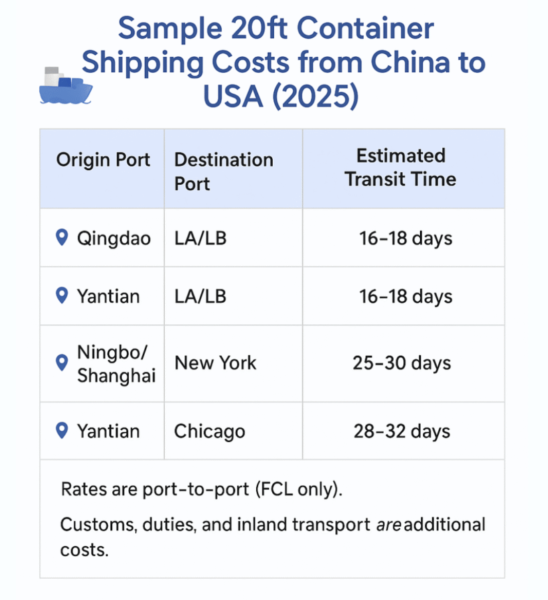
While shipping rates fluctuate with the market, here’s a realistic snapshot of 2025 port-to-port 20ft container costs based on recent data:
- From Qingdao to LA/LB: around $1,200
- From Yantian to LA/LB: about $1,300
- From Ningbo/Shanghai to New York (NY): approximately $1,400–$1,450
- From Yantian to Chicago (CHI): around $1,400
Note: Rates typically cover port-to-port ocean freight only (Full Container Load, FCL). Customs clearance, duties, insurance, and inland delivery fees are billed separately.
Quick Insight:
Shipping to coastal ports like LA/LB tends to be significantly cheaper than inland hubs like Chicago or New York. Choosing your destination port strategically could save you $100–$250 per container—enough to impact your bottom line over multiple shipments.
If you want to dive deeper into detailed examples and full pricing structures, Check container prices for more insights.
Shipping Tip:
Keep in mind that freight quotes can change rapidly due to fluctuations in fuel prices, carrier availability, and port congestion. A rate that looks attractive today might be significantly different in just a few weeks. It’s a good practice to request updated quotes regularly, especially if you’re planning shipments several months in advance.
If you’re unsure whether your cargo would benefit from strategic timing, alternative ports, or consolidation options, working closely with an experienced freight forwarder can make a big difference. A small adjustment in your shipping plan could translate to hundreds or even thousands of dollars saved annually.
20ft vs. 40ft: Which Container Actually Saves More?
At first glance, a 40ft container seems more economical: double the space, slightly less than double the price. But the right choice depends heavily on your cargo volume and shipping goals.
When a 20ft Container Makes More Sense
- Small to medium cargo volume: If shipping fewer than 15–18 pallets, a 20ft avoids paying for wasted space.
- Dense or high-value goods: Electronics, luxury goods, or machinery parts often hit weight limits before volume limits.
- Budget control: Lower port fees, easier handling, and lower per-shipment insurance premiums make 20ft shipments a smarter choice for many importers.
When a 40ft Container Could Be Smarter
- Significant volume: Furniture, textiles, or bulk commodities often justify a 40ft container.
- Order consolidation: Combining multiple purchase orders into one larger shipment can significantly reduce per-unit shipping costs.
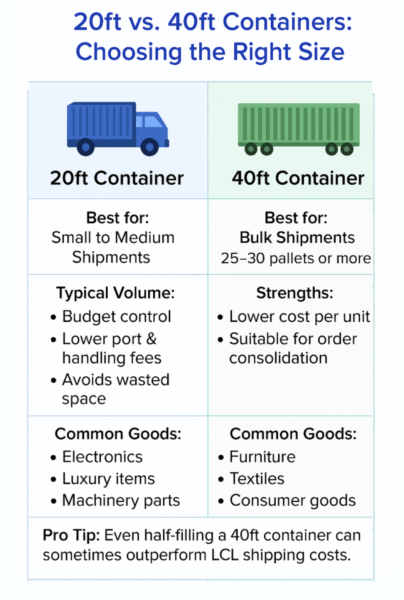
Pro Tip: If your shipment is close to the volume threshold, request a detailed cost simulation. Sometimes, even half-filling a 40ft container can still beat LCL (Less-than-Container Load) options for cost efficiency.
For a broader look at container shipping rates from China to US and to compare different container sizes, see the 40 ft container shipping cost from china to usa for more.
Tips to Maximize Value with 20ft Container Shipping
Small early choices can compound into major savings over time. Here’s how to optimize every shipment:
1. Avoid Peak Season Shipping
Ship outside of peak periods like late summer or the Chinese New Year rush. Off-peak rates can be 20–30% lower, and space availability is much better.
2. Maximize Your Container Space
Optimize your packing strategy: tightly palletize, stack carefully, and use custom packaging when feasible. Efficient loading not only reduces costs but also minimizes cargo damage risk.
3. Explore Consolidation Opportunities
If you can’t fill a container fully, ask about consolidation with compatible shipments. It’s an often overlooked way to significantly cut ocean freight costs.
4. Book Early and Lock in Rates
Reserve space early to avoid last-minute surcharges. Early bookings often offer better rate negotiation opportunities and guaranteed slots on vessels.
Conclusion: Choose Smart, Ship Smart
Choosing the right container size isn’t just about saving on freight—it’s about building a logistics strategy that supports your business goals, adapts to market shifts, and scales with demand.
For many importers, especially those managing smaller or denser shipments, 20ft containers strike the perfect balance between cost-efficiency and flexibility. When used strategically—paired with smart packing, route planning, and off-peak timing—they can unlock meaningful savings and reduce operational friction.

Want to explore more ways to optimize container shipping or understand the full cost structure of a 20ft shipment?. Resources like GortoFreight offer practical tools, up-to-date shipping insights, and guidance to help importers make smarter logistics decisions.
Comments

Powered by RoundtableAn AI/DeFi-powered Enterprise Media Operating System. Learn more at Roundtable.io.© Roundtable 2026. By using this site you agree to the Terms of Use and Privacy Policy