


Apr 10, 2026 7:00 AM
Updated Apr 14, 2026 1:01 AM
A noisy apartment, cheap drinks, too many people in one kitchen, music you feel through the wall. Nothing new there.
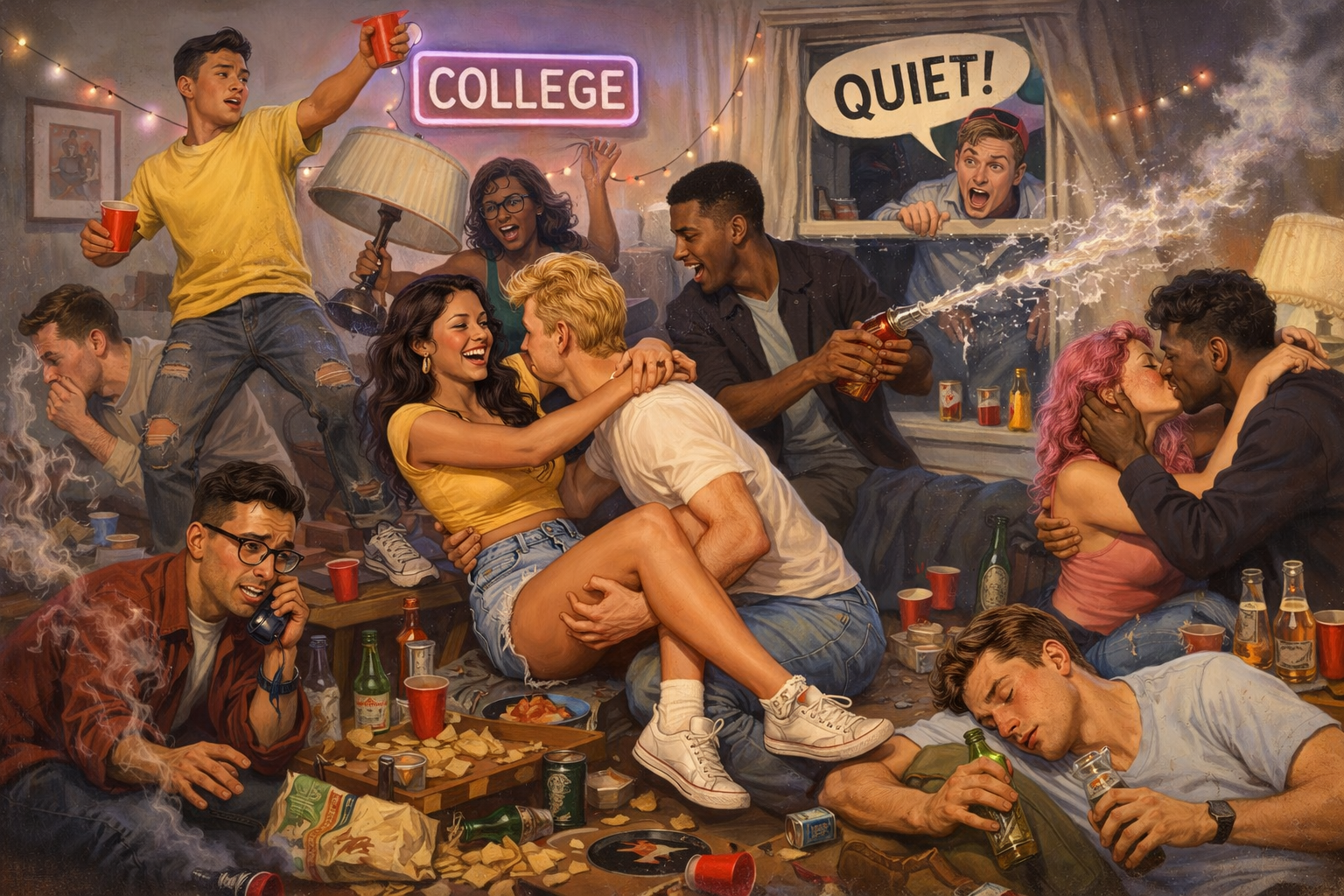
College nightlife usually gets framed in soft, familiar language. People call it blowing off steam, having fun, making memories, being young. And sure, sometimes that is all it is. A noisy apartment, cheap drinks, too many people in one kitchen, music you feel through the wall. Nothing new there.
But that easy, harmless label can cover something darker.
Not every high-risk social group looks threatening at first glance. It does not always announce itself with obvious violence or with the kind of symbols people expect from crime stories. Sometimes it looks polished. Social. Popular, even. It may be tied to parties, team culture, housing circles, or loose campus networks that seem normal from the outside. That is what makes it easy to miss. The atmosphere feels casual, yet the pressure inside it is anything but casual.
That pressure can take many forms. It can show up as humiliation passed off as jokes. It can sound like a demand wrapped in group slang. It can rely on intoxication to blur consent, accountability, and memory. And over time, it can build a structure of fear without ever calling itself one.
Related stories
That is the part people often do not want to name. Intimidation does not need a formal title to work. It only needs repetition, silence, and a group that knows how to make someone feel small, isolated, or watched.
When “it’s just a party” stops being true
A party becomes something else when the social setting starts doing disciplinary work. That sounds clinical, maybe, but the pattern is pretty plain once you see it.
A person is mocked for leaving early. Someone gets iced out for refusing a dare. A newcomer is pressured to prove loyalty. A rumor appears after somebody says no. Private moments get turned into public currency. Everyone laughs, so the target is supposed to laugh too. And because the setting is loud, messy, and fueled by alcohol or drugs, outsiders often write it off as chaos instead of control.
But chaos can be useful. It gives cover.
That cover matters because organized intimidation rarely begins with a dramatic event. It begins with little tests. Who will comply? Who will stay quiet? Who will protect the group over the person harmed? College environments can make those tests easier because students are often living away from home for the first time, trying to belong, trying not to be the difficult one, trying not to lose access to a social circle they think they need.
So the group learns something important. If pressure gets results, it keeps going.
The social cost of saying no
For many students, the fear is not always physical first. It is social. That matters more than adults sometimes admit.
On a college campus, social exclusion can shape your whole week, your housing situation, your dating life, your sense of safety walking into a room. If a student thinks refusing one person means getting blacklisted by twenty, that is not small. That is a system. It may not be written down, but it works like one.
And once that fear settles in, people start making decisions to avoid fallout instead of protect themselves. They go along. They stay longer than they want. They keep silent after something feels wrong. They tell themselves it was weird, but not serious. They downplay it because the group already has.
That is how intimidation becomes normal. Not because it is harmless, but because it is repeated until it feels routine.
Normalized aggression does not always look aggressive
Here’s the tricky part. A lot of college intimidation does not look violent in the movie-version sense. It looks social. It hides inside rituals, inside humor, inside traditions people defend because “that’s how it’s always been.”
This is where normalized aggression enters the picture.
Normalized aggression is the stuff that gets treated as ordinary even though it chips away at a person’s freedom, dignity, or safety. It includes coercive teasing, forced drinking, sexualized humiliation, threats disguised as banter, and status games that punish independence. It can happen in fraternities, sports circles, party houses, off-campus friend groups, or even in looser networks that have no official structure at all.
And yes, it can happen among people who would never think of themselves as intimidating anyone.
That contradiction is uncomfortable, but real. A student can be charming in class, funny online, and still participate in a group dynamic that corners people. A group can post smiling photos one night and create fear the next. The image and the behavior do not always match. In fact, that mismatch is part of what protects the behavior.
Why intoxication makes the pattern harder to name
Alcohol and drugs add another layer of confusion because they scramble the story people tell afterward.
Once substances enter the room, responsibility gets blurred on purpose. People say everyone was drunk. Nobody remembers clearly. Things got out of hand. That phrase does a lot of work on campuses. It turns choices into accidents. It turns pressure into miscommunication. It turns fear into overreaction.
But intoxication does not erase patterns. If the same people keep pushing limits, silencing complaints, or using substances to lower resistance, that is not random. That is a method.
It also leaves students dealing with the fallout in isolation. Some may need support well beyond the night itself, especially when repeated party environments are tied to anxiety, depression, trauma responses, or emotional instability. In those cases, access to real treatment matters. Programs such as Mental Health Treatment for Teens show how behavioral care often has to address the social pressures and emotional patterns surrounding risky environments, not just the visible incident.
Secrecy culture is not accidental
Most people think secrecy means a grand conspiracy. On campuses, it is usually less dramatic and more effective.
Secrecy culture grows through habits. Don’t post that. Don’t mention names. Handle it internally. You’re making this a bigger deal than it is. If you report it, you’ll ruin lives. If you speak up, you were there too.
That language does two things at once. It protects the group and burdens the person who is uneasy, hurt, or targeted.
And the more socially connected the group is, the stronger that burden becomes. Students may worry that reporting one person really means going up against a whole web of roommates, teammates, exes, mutual friends, party hosts, and people with better campus standing. Even witnesses can go quiet because they know exactly how quickly a reputation can get shredded in a closed circle.
That is why organized intimidation often survives without formal organization. It does not need written rules. It needs shared incentives. Protect the group. Minimize the harm. Freeze out the problem.
The loyalty trap
Loyalty sounds positive until it gets weaponized.
In some college circles, loyalty means keeping confidence. Fair enough. In others, it means absorbing harm without complaint. It means proving you are chill enough not to “snitch,” strong enough not to care, loyal enough to protect people who did not protect you.
That is not loyalty. That is control wearing a friendlier outfit.
The really unsettling part is how ordinary it can feel from the inside. People may convince themselves they are preserving the community. They may think they are avoiding drama. They may even believe silence is maturity. But a culture that only works when people stay quiet is not stable. It is coercive.
The red flags get blurred on purpose
College students are often told to watch for red flags, as if danger always arrives in bright colors. It usually does not. It comes mixed with fun, attraction, popularity, and plausible excuses.
That is what makes the red flags blurry.
A host insists everyone stay. Someone keeps taking phones “as a joke.” A person gets separated from friends. A room goes quiet when one specific name comes up. People suddenly act vague about what happened last weekend. A student starts avoiding certain houses or events but cannot quite explain why. None of these signs alone gives you the full picture. Together, they can point to a social environment built on pressure.
And when those signs keep repeating, the issue is no longer one awkward party. It is culture.
This is also where adults sometimes get it wrong. They look for obvious gangs, formal hierarchies, or visible criminal behavior. Meanwhile, campuses can produce smaller, looser systems of intimidation that operate through access, reputation, substances, and group loyalty. The style is different. The effect is not.
Harm does not have to leave bruises to be real
A student who feels watched, cornered, manipulated, or punished for resisting a group may not have language for it right away. They may just know their stomach drops when certain people text. They may start changing routes, skipping events, drinking more, sleeping less, or going numb.
That matters.
The harm here is not always immediate or easy to document. Sometimes it shows up as panic, dissociation, isolation, or an inability to trust one’s own memory after substance-heavy nights. Therapy can become a key part of sorting out what happened and what patterns were in play, especially when someone has been conditioned to minimize their own experience. That is part of why resources like a North Carolina therapy program matter in the broader conversation. Recovery is not only about substance use itself. It is also about the emotional wreckage that coercive environments can leave behind.
Why campuses keep missing the pattern
Institutions tend to work case by case. One complaint. One incident. One hearing. One statement. But intimidation networks do not always behave in neat, isolated units. They are cumulative. They rely on fragments that seem minor until you line them up.
That is the blind spot.
When schools separate every report from the larger social ecosystem around it, they can miss how ordinary nightlife settings are being used to train compliance and protect repeat behavior. A party house is not just a location. It can be a sorting mechanism. A friend group is not just a friend group. It can act like a gatekeeping structure. Even silence itself becomes infrastructure after a while.
And then people ask why no one said anything sooner.
Usually, someone did. Maybe not in the clean format institutions prefer. Maybe it came out as avoidance, panic, rumors, dropped classes, changed routines, half-finished disclosures, or vague warnings passed between friends. But those signals count. They are often the first draft of the truth.
What the “harmless” label really does
Calling something harmless before you examine it is not neutral. It is a shield.
It protects the image of campus fun. It protects people who benefit from keeping things blurry. It protects traditions that should have been questioned a long time ago. Most of all, it pressures students to doubt themselves when a social environment feels wrong.
That is why this topic matters. Not because every party hides organized intimidation. It does not. But because some do, and they do it well enough that the harm gets mistaken for normal college life.
That mistake is costly.
Once intimidation gets folded into the campus idea of fun, students start treating fear as a personality problem. They tell themselves they are too sensitive, too serious, too dramatic. Meanwhile, the group gets stronger from every silence, every laugh that covered discomfort, every person who went along because pushing back felt socially impossible.

So no, the danger does not always look like danger at first. Sometimes it looks like the place everyone wants to get into on a Friday night. Sometimes it looks like popularity. Sometimes it looks like tradition.
And that is exactly why it works.
Comments

Powered by RoundtableAn AI/DeFi-powered Enterprise Media Operating System. Learn more at Roundtable.io.© Roundtable 2026. By using this site you agree to the Terms of Use and Privacy Policy