
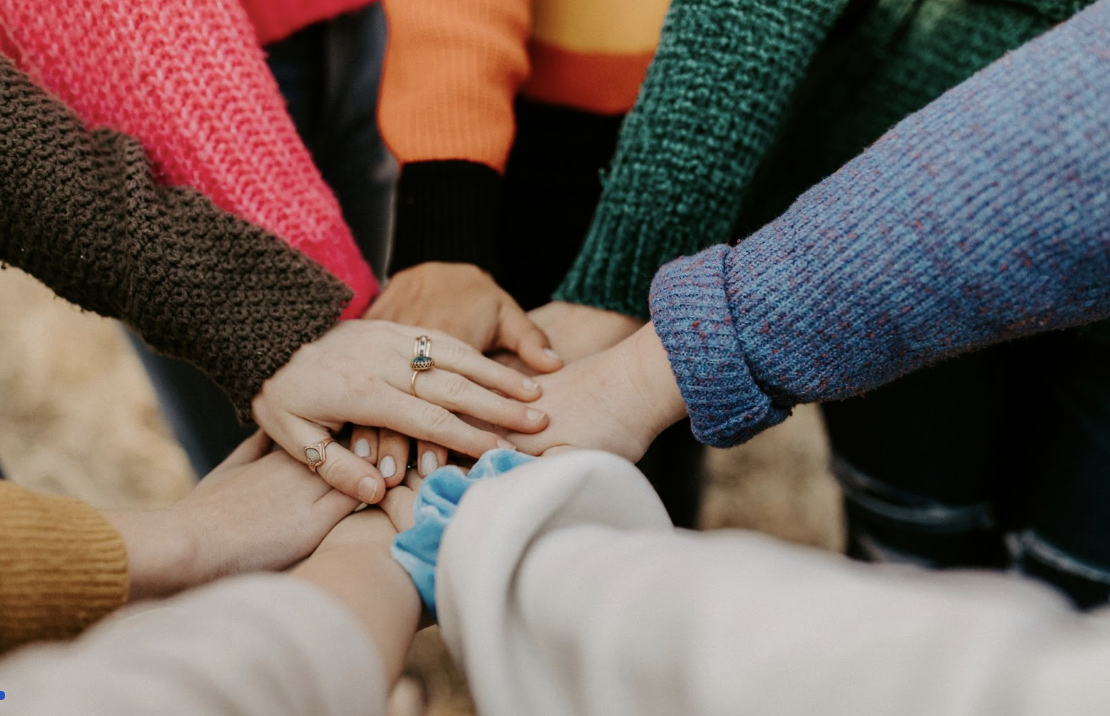
Photo by Hannah Busing on Unsplash


Collaborative Learning
May 5, 2024 7:00 AM
Updated May 7, 2024 6:06 PM
Collaborative learning is the educational approach to learning that involves a group dynamic.
Envision an employee starting a new job. Painstakingly they run through the multitude of training videos. They complete the subsequent quizzes to measure retention and then - they move on with their day, never to engage with the material again.
While this method of learning is relatively quick, can be conveniently provided en masse, and would be cost-effective, it is not the most productive. Collaborative learning, on the other hand, is consistently proven to improve engagement, enhance teamwork, and place greater emphasis on the importance of communication. The benefits of this learning method are so renowned that educational institutes and even online courses are taking great strides to ensure collaborative learning is included as part of the curriculum.
What is collaborative learning?
Collaborative learning is the educational approach to learning that involves a group dynamic. Learners will work together to solve a problem, complete a task, or create a product to achieve a shared objective.
A key aspect of collaborative learning is to still allow the positive impact of individual autonomy within the group setting. With collaborative learning, students contribute to a collective goal but may each tackle a distinct task. The concept hinges on individuals honing their skills and witnessing firsthand their contributions to the group efforts.
Related stories
A major benefit of the collaborative learning approach is its real-life applications. Beyond just the academic realm, collaborative learning is a better representation of how professional workspaces operate, where colleagues will engage in group work to problem-solve, share ideas with their peers and learn from one another.
Collaborative learning has real-life applications that stretch beyond educational institutes. Photo by Jason Goodman on Unsplash.

Examples of collaborative learning
Collaborative learning can be conducted in several ways.
Group or pair discussion
Discussions between learners can occur in several ways to help develop peer-to-peer learning.
- Listening triangles with a speaker who explains the topic, a questioner who asks clarifying questions and a note-taker who observes the process and provides feedback.
- Designating talk partners where learners are paired together for short discussion activities.
- Think-Pair-Share activities where learners prepare a response to a text or prepare a piece of work and then explain this to their partner. The learners then join another pair, share their views and emerge with a combined group conclusion.
- Snowballing discussions where a pair of learners investigate an issue, then join another pair to form a group, who then join another small group to make a larger group until the whole class is in discussion.
Shared tasks
Working on shared tasks encourages the use of vocabulary, listening, making suggestions, justifying opinions and working on agreeing/disagreeing with others.
Shared tasks may involve matching, sorting, and ranking and may utilise flashcards.
Games or activities
Games can be a very effective way to motivate learners. Learners will benefit from turn-taking and negotiating as a team and justifying their thoughts.
Good game-related activities may involve splitting a class into two and playing noughts or crosses game, with the correct answers producing a shot on the board, or a Bingo-style game that can even be used as a distance teaching method.
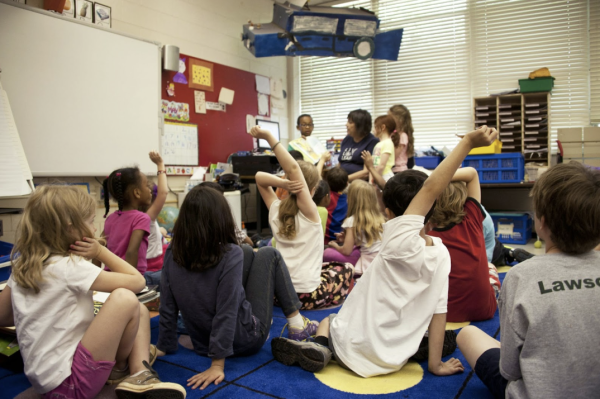
The benefits of collaborative learning
Collaborative learning has many benefits.
Facilitates greater social interactions
Good communication is vital in most aspects of life including in professional settings. By facilitating collaborative learning through healthy debate, group projects or discussion groups, learners can improve their interpersonal qualities. This can be by improving their listening, observation and awareness skills, as well as building empathy and respect.
Increases problem-solving skills
When a shared goal is the primary driver, a group of learners will automatically switch to problem-solving mode. By doing so in a collaborative environment and with more minds on the task, they can better identify issues and solve problems. This is another important skill that is relevant well beyond educational settings.
Improves engagement
When compared to reading coursework, answering short-answer questions or writing an essay, collaborative learning is typically more engaging - in fact it is often considered the most engaging of all learning types. Learners will often absorb more information when engaged with content, and they are more likely to build a positive attitude towards self-development.
Develops better communication skills
Collaborative learning requires learners to use verbal communication skills to share ideas and explain their thoughts. On this basis alone, by creating an environment in which learners can practice these skills every day, they will become better at communicating with their teachers and peers and carry this through to their personal and professional lives.
Fosters better creativity
When working as a group it is common to hear the opinion and perspective of each individual. Through actively listening and engaging with others ideas and thoughts, individuals may gain inspiration from these other perspectives. It expands everyone’s thought processes and may allow the group to reach conclusions the individual would not have formulated on their own.
Builds trust
By working collaboratively to achieve a goal and relying on others to complete certain aspects of a task to achieve success, learners may develop a deep sense of trust in one another. This is particularly useful as a carry-over skill to the workplace, where colleagues will require trust to work together on team projects and outcomes.
Improves self-confidence
Collaborative learning is generally an incredible environment to develop an individual's confidence. It is typically highly supportive, provides feedback, encourages everyone to work as a team and offers help where required. This is particularly helpful for those with low self-confidence as they are more likely to involve themselves in what is considered a safe, “low-risk” environment, share their ideas and help make decisions.
It’s more fun

The bottom line on collaborative learning - it is generally just more fun! While independent learning like reading course material or questionnaires has its place in educational settings, collaborative learning allows learners to socialise, work together and participate in engaging activities. It often feels less tedious, includes game-like aspects and fosters lively conversation, making it a more comfortable, relaxed and engaging method of learning.
Comments

Powered by RoundtableAn AI/DeFi-powered Enterprise Media Operating System. Learn more at Roundtable.io.© Roundtable 2026. By using this site you agree to the Terms of Use and Privacy Policy