


Aug 19, 2026 7:00 AM
Updated Aug 24, 2026 4:59 AM
This is the coat-check paradox: the garment worn for the smallest portion of the event can shape both its first and final impression.
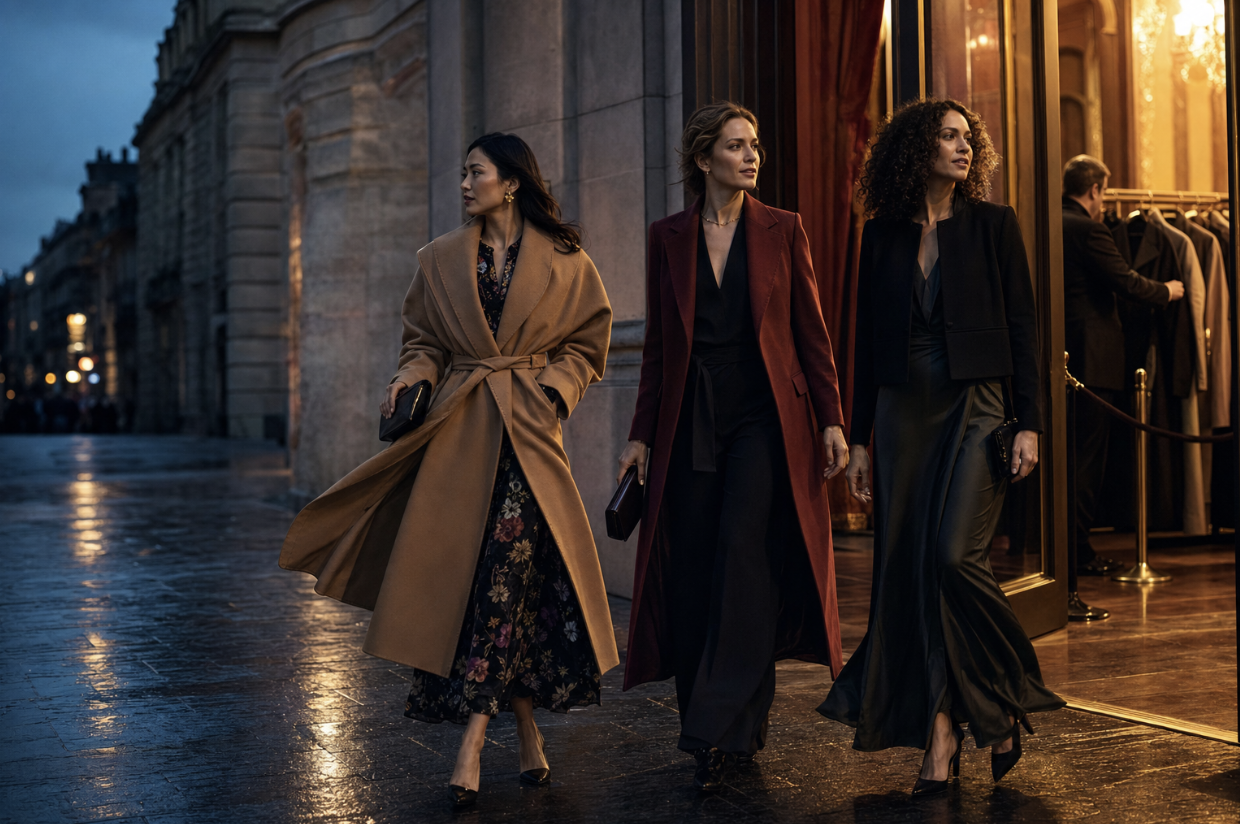
At a cold-weather event, the first version of an outfit most people see is not the dress, tailored set, or carefully chosen jewelry. It is the outer layer.
Guests meet on the pavement, wait at the entrance, greet friends in the lobby, and sometimes pose for photographs before reaching the coat check. Hours later, the same coat returns for final conversations, late-night transportation, and the journey home.
Despite this visibility, outerwear is often treated as a logistical afterthought. A carefully constructed evening look disappears beneath whichever coat happens to be warm enough. The colors compete, the proportions collapse, and a sophisticated outfit becomes visually disconnected before the wearer even enters the room.
This is the coat-check paradox: the garment worn for the smallest portion of the event can shape both its first and final impression.
Related stories
Solving it does not mean buying a new coat for every dress. It means treating outerwear as part of the outfit’s architecture rather than temporary packaging.
Outerwear Is the Opening Sentence
Clothing tells a story in sequence. The coat introduces the mood, the outfit underneath develops it, and the accessories add detail. When those elements communicate in different visual languages, the result can feel accidental.
A sharply tailored evening dress under a bulky casual jacket creates an abrupt change in tone. A flowing floral midi beneath a coat with the wrong length may interrupt the movement of the skirt. A formal outfit paired with outerwear designed exclusively for commuting can lose much of its intended presence.
The most useful coats and jackets do more than provide warmth. They establish proportion, frame the face, and connect the visible layers of an outfit. The shoulder line influences posture, while the hem determines how the silhouette is divided.
This does not require perfect matching. In fact, outerwear often looks more sophisticated when it creates controlled contrast. A structured coat can give definition to a fluid dress. A cropped jacket can sharpen a long skirt. A soft wrap coat can make a tailored outfit feel less severe.
The important question is whether the contrast feels intentional.
Begin With the Hem Relationship
Length is one of the easiest ways to determine whether a coat belongs with a dress. The two hems do not need to align exactly, but their relationship should be clear.
A long coat over a midi or maxi dress creates a continuous vertical line, especially when the coat remains slightly open. This approach works well for formal events because it preserves the elegance of the outfit during arrival.
A shorter jacket can also succeed, but it changes the emphasis. Cropped outerwear draws attention toward the waist and allows more of the skirt to remain visible. It is particularly useful with fit-and-flare dresses or designs where the movement begins below the waist.
The most difficult combination is often a coat that ends at the widest or most visually active point of the dress. It may interrupt pleats, hide intentional draping, or make the skirt appear heavier than it is.
Before deciding, photograph the complete outfit from a distance. Mirrors encourage attention to individual details, while a photograph reveals the overall geometry.
A Coat Should Still Work When Open
Outerwear is often evaluated only while fully buttoned, but event dressing rarely remains so controlled. Coats are opened while entering buildings, greeting people, finding invitations, or moving between transportation and the venue.
An open coat creates a frame around the clothing underneath. Its lapels, lining, and front edges become part of the composition. This is where color relationships matter most.
A burgundy coat over a deep green dress creates richness without exact coordination. Camel can warm darker botanical prints, while black provides a graphic frame for jewel tones and metallic textures. Tonal combinations—such as navy over midnight blue—can lengthen the silhouette and allow fabric differences to provide contrast.
The lining also deserves attention. A coat that repeatedly opens may expose bright synthetic material or a print that competes with the dress. A restrained lining allows the transition to feel polished even when the wearer is moving quickly.
Florals Need Framing, Not Hiding
Floral dresses are frequently associated with spring and summer, but darker botanical prints can be especially effective during autumn. Their layers of color create a natural connection to wool, leather, and other cold-weather textures.
Online search habits sometimes reduce this complex choice to a repeated phrase such as floral floral dress, but the real styling decision involves much more than finding any garment covered in flowers. Scale, background color, fabric weight, and the amount of print left visible all affect how the dress works beneath outerwear.
A dark floral ground is usually the easiest to extend into cooler seasons. Black, navy, plum, or deep green backgrounds provide enough visual weight to sit comfortably beside a structured coat. Rust, burgundy, muted rose, and botanical green can then connect the print to autumn accessories.
The coat should frame the print rather than erase it. An open camel wrap coat allows a dark floral pattern to remain the focal point while creating a clean neutral border. A cropped leather jacket can make the same dress feel sharper and more urban. A long burgundy coat may pick up one of the quieter colors in the flowers.
Repeating one secondary color is often more interesting than matching the most obvious shade.
Use Texture to Control the Mood
Color receives most of the attention in outfit planning, but texture may be even more important when layering.
A sequined or satin dress beneath a smooth, sharply cut coat creates a formal impression. The same dress under brushed wool feels softer and less theatrical. Floral chiffon gains structure from a tailored coat, while a heavy woven dress may benefit from outerwear with a cleaner surface.
Texture also determines how the layers behave physically. Rough inner surfaces may catch delicate fabric. Heavy coats can crush sculptural sleeves, while narrow armholes may distort the shoulder line of the dress underneath.
Try the coat over the exact outfit rather than over everyday clothing. Move the arms, sit down, carry the intended bag, and check whether the dress returns to its shape after the coat is removed.
A coat that looks beautiful but damages the outfit beneath it has failed its most basic role.
The Bag Must Work With Both Versions
Event accessories are often chosen for the indoor outfit alone. Yet the bag is usually carried over, under, or beside the coat during arrival.
A delicate shoulder strap may slide from structured wool. A large daytime tote may overwhelm a formal silhouette, while a tiny clutch can become inconvenient when gloves, invitations, or transportation details must be managed.
A compact bag with a removable strap offers useful flexibility. It can sit comfortably against the coat during travel and become a clutch indoors. The material should relate to both layers: matte leather can calm a richly patterned dress, while a restrained metallic finish can lift dark outerwear.
The practical test is simple. Put on the complete outfit, fasten the coat, carry the bag, and use both hands naturally. If the pieces require constant rearrangement, the system is too fragile for a real event.
Do Not Let the Coat Check Determine the Plan
Some outfits only work if the coat disappears immediately. This can be risky. Outdoor ceremonies, drinks on terraces, crowded entry lines, and venues without formal coat checks may keep guests in their outerwear far longer than expected.
Instead of assuming the coat is temporary, plan for it to remain visible through the first thirty minutes. The outfit should still feel complete if the evening begins outside or if the venue is cooler than anticipated.
This mindset changes purchasing decisions. A versatile evening coat becomes more valuable than several inexpensive layers that never quite belong with formal clothing. A well-cut jacket can support dresses, tailored trousers, skirts, and coordinated sets across multiple seasons.
The aim is not to create a vast outerwear wardrobe. It is to own a few shapes with distinct functions: perhaps one long formal coat, one cropped structured jacket, and one softer transitional layer.
The Final Photograph Often Includes the Coat
Arrival photographs are obvious, but outerwear also appears in some of the most emotionally interesting images of an evening. Friends leave together, couples wait for transportation, and final conversations continue beneath streetlights. These moments are less posed and often more memorable than formal portraits.
A coat that belongs to the outfit allows the visual story to continue. The wearer does not look as though the event ended when she retrieved her outerwear. She looks prepared for the entire experience, including the journey home.
The best coat does not compete with the dress or simply conceal it. It introduces the outfit, protects it, frames it, and then delivers the closing line.
When planning the next cold-weather look, do not stop after choosing the clothing that will be seen inside. Put on the coat, pick up the bag, step back from the mirror, and consider the first impression. In real life, the outfit begins before the coat check.
Comments

Powered by RoundtableAn AI/DeFi-powered Enterprise Media Operating System. Learn more at Roundtable.io.© Roundtable 2026. By using this site you agree to the Terms of Use and Privacy Policy