


Jun 12, 2019 8:02 AM
Updated Feb 10, 2022 10:07 PM
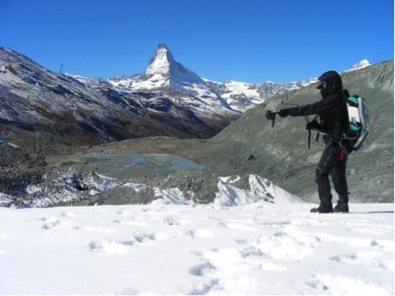
Climate Change Affects Glaciers -- Researchers have also found that the thickness of ice is the most important factor in regulating flow: the thinner the glacier is, the slower its movement.
The glaciers located in the highest mountains in the world are a source of life for more than a billion people, these glaciers provide water to drink and generate electricity. Due to negative climate changes, these glaciers are losing mass, we might think that, lubricated by melting water, their flow would be faster. However, satellite images of the last 30 years show us that this relationship is not so simple.
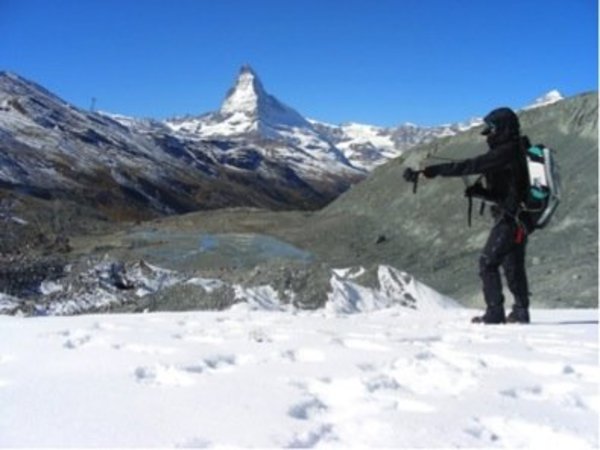
Earth scientists who study glaciers and ice sheets use satellite data and information gathered by physically visiting the actual glaciers are focusing on how particles from land and atmosphere end up in ice and how it impacts the melting of ice. Many particles such as desert dust, pollen and volcanic ash are found in the ice which is interesting as these particles begin on land. Many of these particles makes ice melt faster potentially impacting humans, animals and plants.
Researchers have also found that the thickness of ice is the most important factor in regulating flow: the thinner the glacier is, the slower its movement.
Earth scientists work is exciting as they have to leave office environment, travel to the glaciers, collect ice sheets and go to chemistry labs to examine the ice characteristics. While visiting glaciers these scientists wear polar buff, snow shoes, use trekking poles to get to the point of interest. They also wear watch suitable for snowy mountain terrain. Casio g-shock is quit popular mong them as it is rugged, waterproof and has many useful features like GPS capable of telling altitude.
Researchers have also found that the thickness of ice is the most important factor in regulating flow: the thinner the glacier is, the slower its movement. This contradicts the more intuitive hypothesis that the glacial flow is accelerated by the lubrication effect of the melting water at its base, and one of the reasons for this slowing down is gravity. These glaciers have been gaining mass on their surface, although they maintained a net loss of mass due to the discharge of ice to the ocean in the form of icebergs, along with underwater melting on the glacial fronts. This trend seems to have reversed in the last two years, returning to a situation of warming and mass loss on the surface.
Related stories
How does gravity influence the displacement of glaciers?
The gravitational attraction is related to the mass, so if a glacier loses mass, the attraction will weaken, which will cause it to flow at a lower speed. Also, in the few places where the glaciers have remained stable or where they are growing instead of weakening, the speeds of displacement have increased slightly.
The melting of glacial ice contributes to sea level rise, which threatens to displace millions of people and is something that would happen throughout the lives of many of today's children.
Positive balance of the surface mass
During the stay in the island of the researchers will also be carried out tasks of monitoring the balance of mass of the Johnsons and Hurd glaciers, which are part of the network of the World Glacier Monitoring Service. The mass balance is the net result of the mass gains from precipitation in the form of snow and the losses of glacier mass due to the melting of ice and snow and the release of icebergs.
These works are of special interest since the cooling detected during the last decade in the Antarctic Peninsula region, together with the increase in rainfall due to the intensification in this area of the cyclones that move from west to east around Antarctica, have fact that the balance of recent mass in the surface of these glaciers happens to be positive.
These glaciers are gaining mass on their surface, although they still have a net mass loss due precisely to the discharge of ice to the ocean in the form of icebergs, along with underwater melting on glacial fronts. All this reinforces the interest of the glacier discharge measures that we will carry out in this campaign because our studies will contribute to improve the knowledge of the response of glaciers to climate change.
Jasmine Agnelli
Sponsored
Comments

Powered by RoundtableAn AI/DeFi-powered Enterprise Media Operating System. Learn more at Roundtable.io.© Roundtable 2026. By using this site you agree to the Terms of Use and Privacy Policy