


Jun 25, 2025 7:00 AM
Updated Jun 30, 2025 4:04 AM
Over the course of nearly twenty years, he has maintained a presence in both civilian and military legal systems, often serving in parallel capacities that require different skills but equal commitment.
Chris Randle holds two demanding roles—one as a Senior Litigation Attorney in Wichita, Kansas, and the other as a Lieutenant Colonel in the United States Army Reserves. Over the course of nearly twenty years, he has maintained a presence in both civilian and military legal systems, often serving in parallel capacities that require different skills but equal commitment.
At his current firm, O’Hara and O’Hara, he represents clients in complex legal matters involving criminal law, family disputes, and military-specific issues. On the military side, he serves as Staff Judge Advocate for the 2nd Legal Operations Detachment, which is based in New Orleans. Randle has also served in multiple international deployments and holds a Top Secret/SCI security clearance.
His background includes a broad mix of civilian and military legal work, covering trial practice, negotiation, and advisory roles. He’s licensed to practice in Kansas, Missouri, Texas, and Washington and is admitted to federal courts in Kansas and Missouri.
Still, what defines Randle’s career isn’t the list of titles or accomplishments, but the purpose behind them. As someone who always wanted to be an attorney, he was drawn most to the chance to build real relationships and help people through difficult situations—something that still drives every part of his work today.
Related stories
Building a Legal Career That Doesn’t Cross Personal Lines
Randle earned his Bachelor of Arts in History from the University of Kansas in 2000, then completed his Juris Doctor at the University of Kansas School of Law in 2003. While he was in law school, he competed on a national criminal moot court team, gaining practical experience in oral argument and legal reasoning.
In the early years of his legal career, Randle served as an Assistant District Attorney in the 18th Judicial District of Kansas. There, he focused on felony-level prosecution, including property crimes, drug charges, and assault cases. He then went on to work at Cordell & Cordell, a national law firm focused on family law, where he represented clients across the United States in a variety of emotionally difficult and legally complex matters.
Through these roles, Randle developed a stronger understanding of the need for boundaries—especially when it comes to legal work that places him close to people in crisis. Looking back, he says that’s something he wishes he had known sooner. One of the most important pieces of advice he’d give his younger self is to never let clients become personal friends. He believes that when professional relationships become too close, it can complicate the work and lead to further issues down the road.
Today, he makes sure to keep those lines clear, believing that professional care should never be confused with personal involvement. He has found that structure and distance aren’t barriers, but tools for protecting both himself—an advocate—and the people he represents.
The Combat Zones That Changed His Outlook on Life
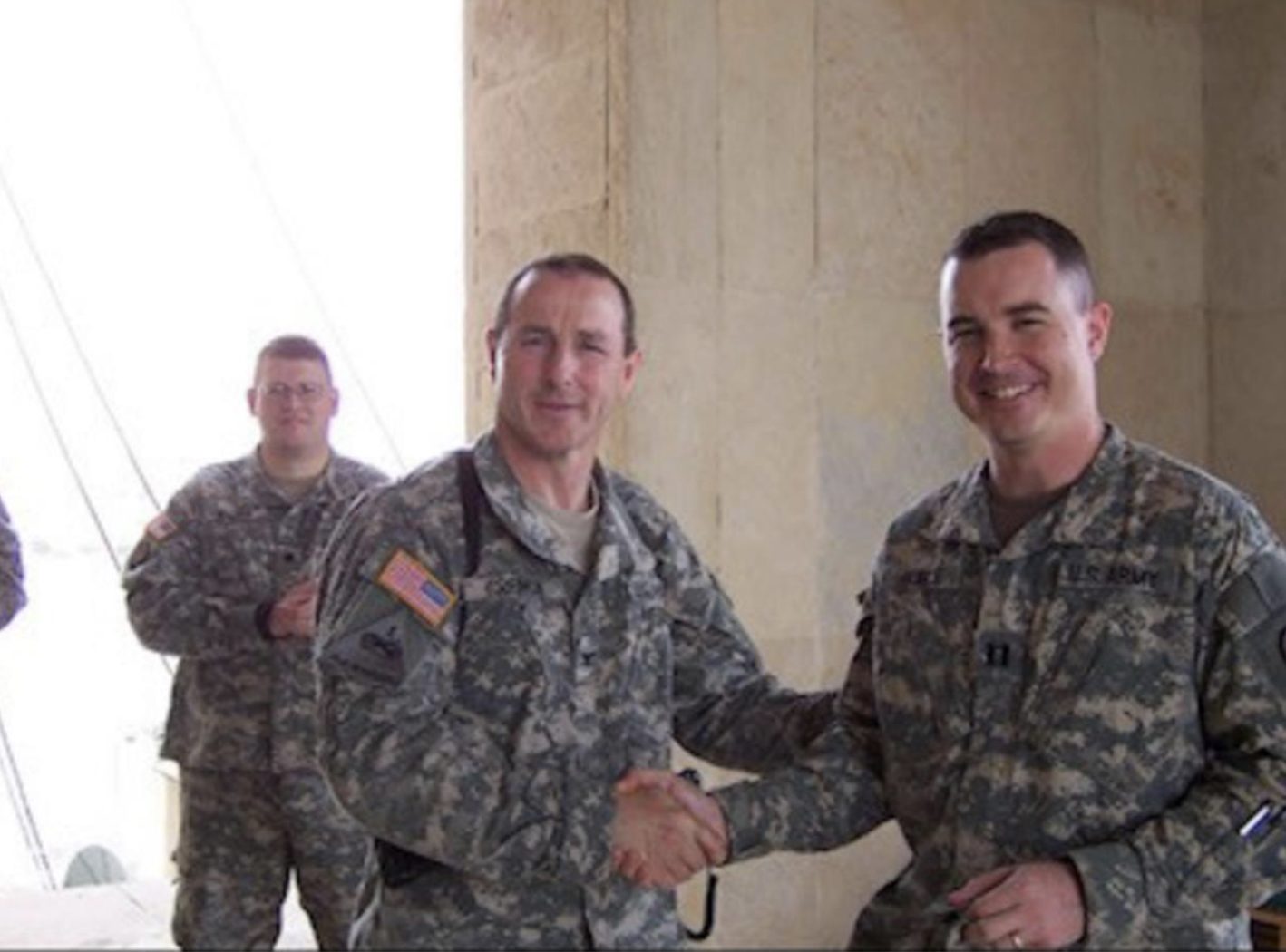
Military service has affected how Chris Randle sees the world—not in theory, but in the way he approaches each day. He served in Baghdad as an Operational Law Officer and in Djibouti as a Battalion Judge Advocate, experiences that placed him at the center of intense and unpredictable environments.
Stateside, he also held several key roles, including Chief of Operational Law and Special Victims’ Counsel at Fort Hood, Texas. Later, he served as Brigade Judge Advocate for the 259th Military Intelligence Brigade. His service in each of these roles has been formally recognized with the Defense Meritorious Service Medal, the Meritorious Service Medal, and the Army Commendation Medal.
Each of these assignments asked a lot of him, requiring legal judgment, discipline, and the ability to operate under pressure. Among them, it was the two deployments that left the strongest impression. They made him aware of how serious and difficult life can be in war-torn areas—a perspective that continues to shape how he views daily life. Those experiences showed him that while the problems people face in the U.S. are real, they don’t always compare to what he witnessed overseas.
Leading with Resolution Both In and Outside of the Courtroom
Randle’s civilian legal work has included courtroom litigation and out-of-court settlement negotiation. As a Settlement Consultant for Arcadia Settlements Group, he worked with clients involved in workers’ compensation, medical malpractice, and automobile-related injury cases. Since these kinds of cases tend to be emotionally complex and financially sensitive, working on them required a deep understanding of the law, along with strong communication skills.
Today, Randle is a member of the Wichita Bar Association and regularly works with individuals and small businesses seeking structured legal support. His legal background includes experience in prosecution, defense, and civil negotiations, allowing him to approach each case with a wide-ranging understanding of both conflict and resolution.
Setting Rules That Make Space for Growth
Randle has developed a set of personal values that guide both his professional and day-to-day life. His Christian faith plays a central role in how he treats people, and he tries to live by the Golden Rule of treating others in the same way he’d hope to be treated. This mindset also influences his approach to law, reminding him that many clients come to him during deeply difficult or even desperate times, when a kind word or presence could make a meaningful difference.
Chris Randle is actively working toward personal growth, even when the process is difficult. He openly acknowledges that managing stress is something he struggles with, but he continues to put effort into improving. Along the way, he has made several resolutions. One of the most notable is his desire to stop letting past mistakes define him, choosing to let go of them instead. Another is to avoid gossiping—preferring not to speak at all rather than risk saying something unkind to someone.
These days, he’s more focused on what he can control and doing his best to release anything that’s clearly out of his hands. While he admits it’s not always easy to move forward, forgive, and fully accept others, he ultimately believes that every person—despite their background—has value and the capacity to offer something important to the world.
Choosing Family at All Costs
When Randle talks about the most meaningful moments in his life, one story in particular stands out. During her first year at the University of Nebraska, his daughter was struggling, and Randle was the first person to encourage her to transfer to a different school. He told her that they would make it work, no matter the financial impact or what she might lose in support from scholarships.
His daughter eventually transferred to Colorado State University, where she now reports being happier than ever. Randle says that she later told him how he had been the one who believed in her decision and supported her from the beginning. That moment is just one example of what he values most. For him, success isn’t measured by personal happiness or professional acclaim. All he wants is a happy, financially stable family, and that doesn’t even have to include himself. So long as the people he values most in life are doing well, he considers himself successful.
Personal Role Models, and Faith-Driven Giving
Chris Randle doesn’t claim to have all the answers. He’s open about the areas where he struggles, including managing stress and maintaining a healthy work-life balance. Still, he continues to make progress, bettering himself so that he can look out for clients and, most importantly, his family.
When asked about the people he finds most inspiring, he names two: Ryan Ferguson and Steve Jobs. Ferguson was wrongly convicted and later exonerated, yet maintains a positive outlook on life, while Jobs’ intelligence alone is an inspiration to Randle.

Outside of his professional endeavors, Randle is active in his local church community—Pathway Church in Wichita—and gives regularly to St. Jude’s Children’s Hospital. These commitments are a reflection of the same values he lives by in every part of his life: growth, steadiness, and being there for others when it matters most.
Comments

Powered by RoundtableAn AI/DeFi-powered Enterprise Media Operating System. Learn more at Roundtable.io.© Roundtable 2026. By using this site you agree to the Terms of Use and Privacy Policy