



Apr 10, 2026 7:00 AM
Updated Apr 14, 2026 4:08 AM
Best 529 Plans
College in California isn’t just pricey—it’s a moving target. In 2026, in-state tuition and mandatory fees at University of California campuses average about $15,000 a year, while room and board can tack on another $17,000.
Yet California gives you zero state income-tax relief for 529 contributions. Every dollar of benefit must therefore come from rock-bottom plan expenses and solid investment returns.
That’s why we hunted for direct-sold 529 programs with the lowest all-in fees, reliable performance, and user-friendly features. The five plans that cleared our scorecard offer the strongest value for California parents right now.
How we picked the winners
We approached the search as a math problem, not a popularity contest. First, we pulled the March 2026 Morningstar medal list, which screens 59 of the nation’s largest 529 plans for cost, stewardship, and performance. Only plans rated Gold, Silver, or high Bronze advanced.
Related stories
Next, we built a scorecard focused on growing your child’s balance:
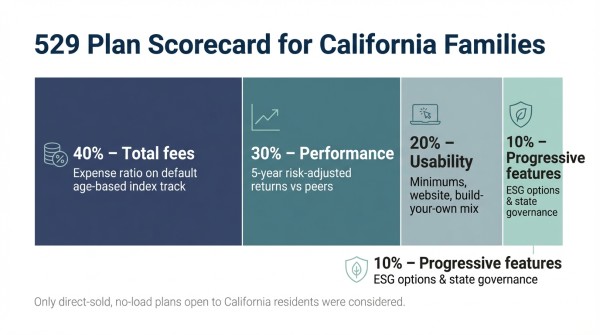
- 40 percent: total expense ratio on the default age-based index track
- 30 percent: five-year, risk-adjusted returns versus peers
- 20 percent: everyday usability (low minimums, an intuitive site, and the freedom to build your own mix)
- 10 percent: progressive touches such as ESG portfolios or transparent, state-run governance
Plans also had to be direct-sold and open to Californians with no extra fees or residency hoops. Advisor-sold programs and any plan with a front-load went straight to the recycle bin.
Finally, we compared our math with community feedback on Bogleheads and Reddit to confirm that the glossy brochure matches what parents see after logging in.
Each of the five finalists scored at least 85 out of 100, keeping the list tight so you spend less time comparing and more time saving.
Bright Start 529: the ultra-cheap index powerhouse
Bright Start is built for fee hawks. Its passive age-based index track costs 0.10 percent a year, roughly a dime per $100 invested. Over 18 years, that gap can cover one semester of in-state tuition.
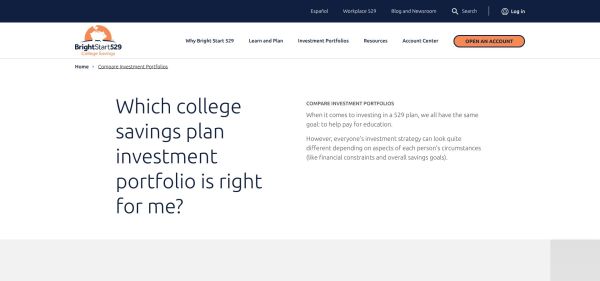
The plan runs on TIAA’s platform and holds mostly Vanguard index funds, giving you broad U.S. and international exposure without extra work; the Bright Start 529 investment portfolios page details the three track choices—Enrollment Year, Static Allocation, and Individual—so you can see precisely how each is built before you click “open account.”
Morningstar’s March 2026 report keeps Bright Start in the Gold tier thanks to Illinois’ stronger oversight and recent fee trims.
Opening an account takes minutes. There is no minimum deposit and no maintenance fee, handy when you want to drop in every birthday check. The age-based glide path eases from stocks to bonds, so you can set it and forget it.
Two wrinkles matter for Californians. First, Bright Start has no dedicated ESG track, so values-focused savers may prefer ScholarShare later in this list. Second, Illinois reserves its state tax break for residents—a moot point because California offers none.
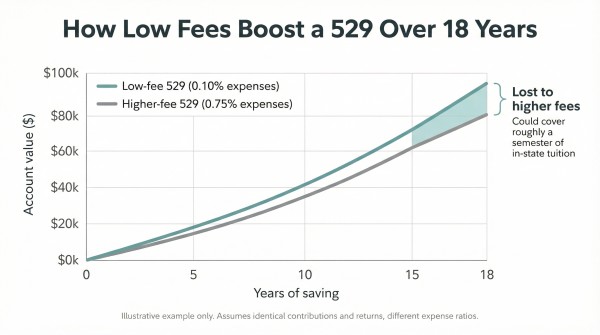
Every basis point you save here compounds for your child instead of a fund company, which is why Bright Start lands at the top of our list.
Utah my529: ultimate freedom at rock-bottom cost
If Bright Start wins on sheer cheapness, Utah’s my529 takes the prize for control. The state agency behind the plan lets you tailor everything—from glide path to individual fund weights—without a “custom” surcharge.
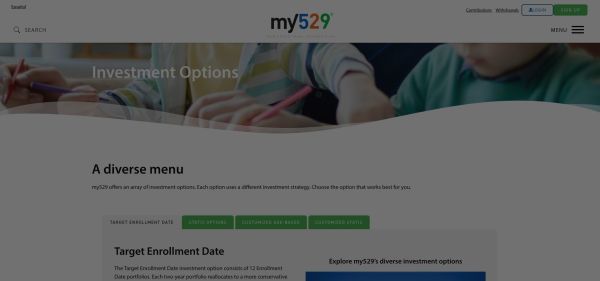
The default Enrollment Date portfolios sit near the front of the low-fee pack at 0.12 percent a year. Under the hood you get a blend of Vanguard index funds and DFA factor funds, creating broader diversification than most rivals.
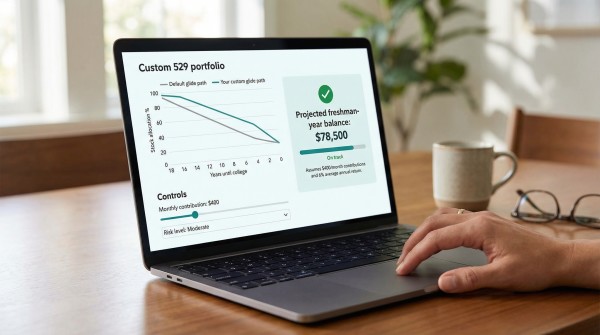
Where my529 shines is its Build & Save tool. You can choose up to five underlying funds, set your own asset weights, and design a step-down schedule that dials back risk on your timeline, not someone else’s. Every adjustment costs nothing.
Usability matches that flexibility. There is no minimum to open an account, contributions post instantly from a bank link, and the dashboard projects a college-year balance so you always know whether you are on track.
Morningstar’s March 2026 report keeps my529 at Gold, crediting Utah’s in-house governance and continual fee trims. That stability matters; while many plans swap managers, Utah’s board, composed of educators and finance professionals, has pushed costs lower year after year.
The main gap is a lack of labeled ESG tracks. You can still hand-pick sustainable index funds in the custom tool, so values-based savers are not shut out.
If you want Vanguard-level pricing with the steering wheel firmly in your hands, my529 is hard to beat.
ScholarShare 529: California convenience, plus real ESG
Sometimes home cooking hits the spot. ScholarShare cut its index fees to 0.10 percent, cheaper than Vanguard’s own 529, and offers two dedicated ESG portfolios for parents who want their dollars invested with a conscience.
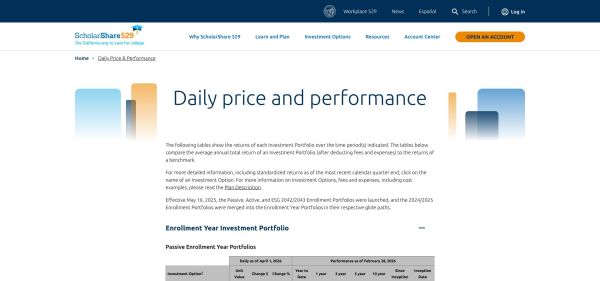
You can open an account with any amount, set payroll deposits in minutes, and see your balance alongside a forecast of freshman-year costs. The passive age-based track glides smoothly from equities to bonds, so the risk dial turns down without drama.
Because California gives no state tax break, staying in-state is all about convenience. ScholarShare leans into that with strong mobile tools and local customer service. A useful perk: new state law shields older contributions from creditors, a layer of protection out-of-state plans cannot match.
Morningstar’s March 2026 update returned the plan to Silver after a brief dip to Bronze, praising tighter oversight and continued fee cuts. Performance still trails our top two picks by only a rounding error, and the ESG options remain rare at this price.
If you want click-simple setup, firm state oversight, and sustainable funds ready on day one, ScholarShare deserves a spot on your shortlist.
Conclusion
The five plans that cleared our scorecard offer the strongest value for California parents right now.
Comments

Powered by RoundtableAn AI/DeFi-powered Enterprise Media Operating System. Learn more at Roundtable.io.© Roundtable 2026. By using this site you agree to the Terms of Use and Privacy Policy