


May 23, 2019 8:22 AM
Updated Feb 10, 2022 10:12 PM
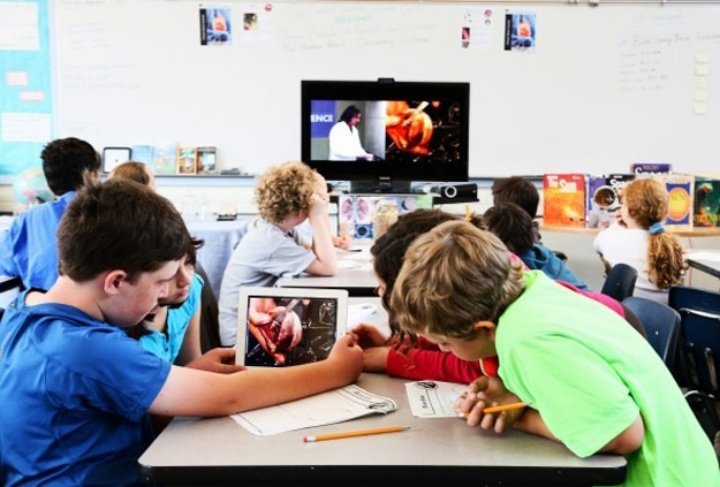
Rokey Jhonson: The presence in the class is no longer the sole way to grasp knowledge. Students may contact teachers remotely as well as look for additional info on the web, allowing them to complete their homework more effectively.
The only thing that interferes with my learning is my education“ — said Albert Einstein, one of the cleverest minds ever lived on the planet. The man was flagrantly unsuccessful in school and eventually drop out. This fact, however, only fueled his breakthroughs.
He is not the only example of prospering talents who considered education a deterrent to evolution rather than a driver of it. This phenomena clearly shows us that education can’t keep up with the ever-changing society and therefore inhibits the personal development of each student.
American education is not an exception. Many criticize it for being a grade-obsessed system detached from reality. That’s exactly why excellent students often fail to succeed afterward — they appear to have no relevant skills to compete in the labor market or run an enterprise.
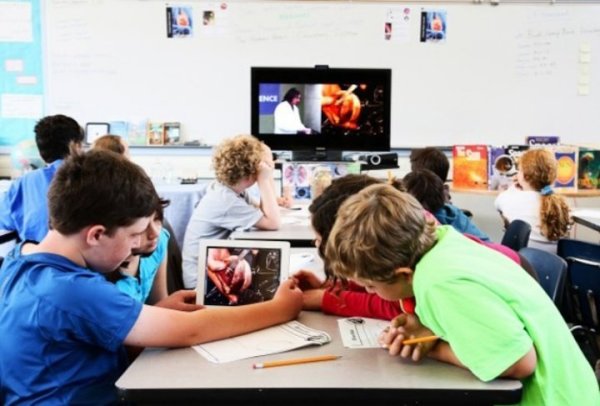
The presence in the class is no longer the sole way to grasp knowledge. Students may contact teachers remotely as well as look for additional info on the web, allowing them to complete their homework more effectively.
However, dropping out is not the best choice while we can reform the system instead. Are there any ways to prevent those 12 years to be the waste of time for American students? Let’s figure out what could be changed.
Related stories
Embrace Technology Improvements
The presence in the class is no longer the sole way to grasp knowledge. Students may contact teachers remotely as well as look for additional info on the web, allowing them to complete their homework more effectively.
But there is still room for improvement. For example, it’s possible to enable remote access by creating a class website, where schools may publish all the relevant materials. Or, even to create a local social network for students and teachers with various means of communication.
Going even further, the school may develop its own mobile app with a unique achievement system. If you make this in a fun way, students will be organically engaged in learning and motivated by more visible competition. Modern kids are the most flexible with adopting tech novelties, so it also makes sense to introduce them first in schools rather than at the enterprise.
Teach Learning
The major drag on better education is that school compels us to learn without teaching “learning”. The whole system is focused on facts & figures and not on the way how they will be memorized and further applied.
Here we agree with Alvin Toffler, who argues: “the illiterate of the 21st century is the person who can’t learn, unlearn, and relearn”. Today’s world changes very fast, so the essential ability is to adapt quickly to any changes and learn new skills in no time.
The key to this is to let students be in control of their learning, at least partial. The role of the teacher as a sole content provider is played out. The alternative methods of learning like a peer instruction approach and the establishment of a more flexible environment turned out to be more effective than traditional ones. In such a classroom each student has an idea of why they need to learn and a personal motivation for keeping doing that during their entire life.
Include Life Basics Lessons
Another illiterate product of the American education system comes from the absence of life basics lessons. Students are aware of complex physics concepts and are able to solve three-story mathematical equations, but they have zero competence in life basic skills such as financial intelligence, employment, decision-making, time management, basic civil law, psychology, etc. Excellent students often fail in their careers due to the disregard of those.
The viable solution for American schools would be to include a life basics lesson into the curriculum. Many people say that these skills could be taught by parents, but few parents have enough time and resources to teach their children by themselves. This makes life basics an essential discipline for every single establishment.
Finally Get Rid of Industrial Values
Seth Godin, an education industry expert, says that the only intent of the system was to make people be willing to work in a factory. Even though modern education is not the same as it was a hundred years ago, the industrial mentality is rooted deeply in the system. Students follow almost the same instructions their grandparents followed before.
The high-valued skills for factory workers were to follow instructions as accurately as possible. In the 21st century, people who do what they are told to do are valued the least. To succeed, modern professionals need to have perfect communication skills as well to be creative and able to speak on their ideas.
Increasing the autonomy degree in schools may also be applied in here. People don’t like school because they don’t feel themselves free in this place, so the only way to drive thirst for knowledge is to give them that freedom.
Rokey Jhonson
Sponsored
Comments

Powered by RoundtableAn AI/DeFi-powered Enterprise Media Operating System. Learn more at Roundtable.io.© Roundtable 2026. By using this site you agree to the Terms of Use and Privacy Policy