


Nov 28, 2025 8:00 AM
Updated Dec 3, 2025 5:02 AM
The real crisis is that America has quietly replaced health with health insurance, and we’ve forgotten that these are not the same thing.
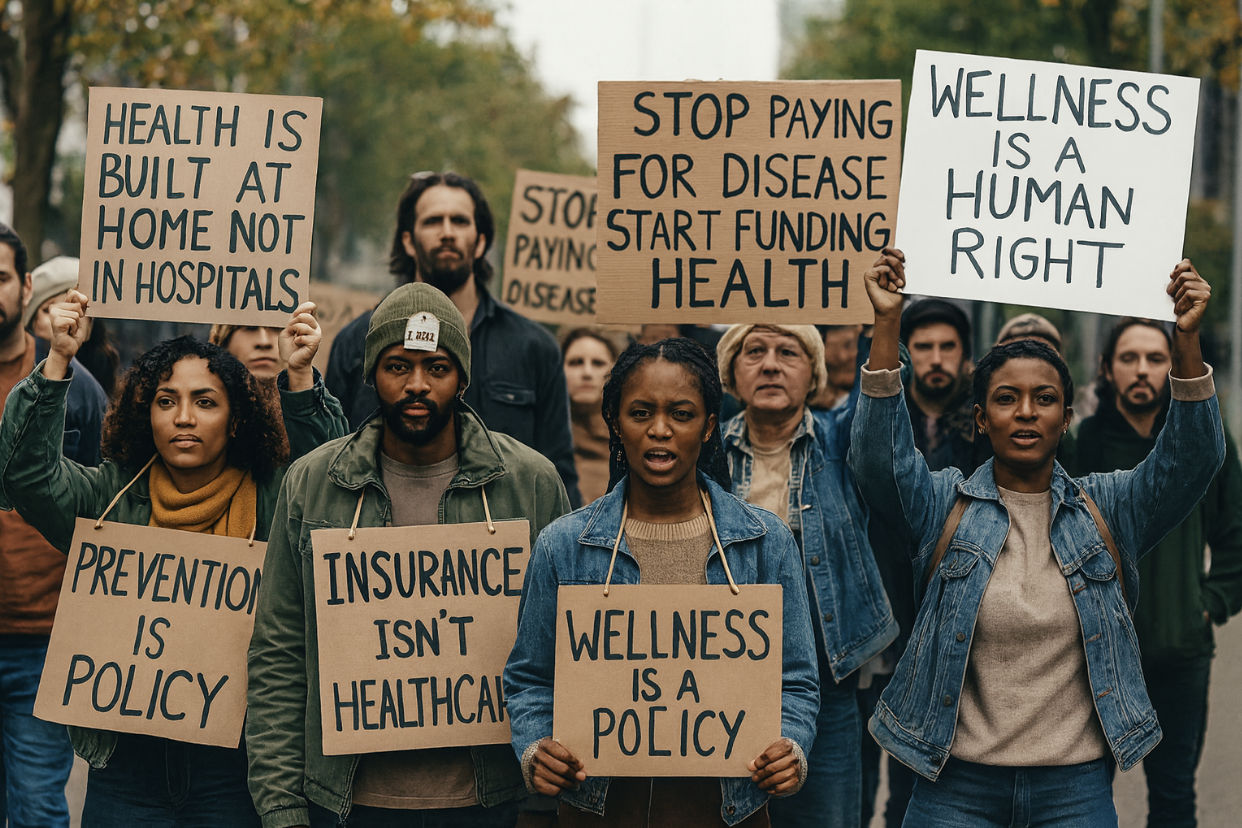
Most Americans believe we have a healthcare crisis. We do, but not in the way people think. The real crisis isn’t a lack of doctors, hospital beds, MRI machines, or insurance companies offering “new plans” with the same old deductibles. The real crisis is that America has quietly replaced health with health insurance, and we’ve forgotten that these are not the same thing.
- Insurance is not healthcare.
- Insurance is risk management.
- It protects you from catastrophic medical bills.
- It does not make you healthy.
Yet we’ve built an entire system, politically, culturally, and economically, around the fantasy that a new insurance card equals better health. It doesn’t. It provides financial coverage for medical events, but the real health crisis starts at home. And our addiction to insurance-as-health has not only failed to protect people; it has also created the most bloated, overpriced, and reactive medical system on earth.
- The problem isn’t that Americans are unhealthy.
- The problem is that the system profits when we stay that way.
Related stories
How We Replaced Healthcare With Insurance
Ask the average American what healthcare means. Most will automatically talk about:
- Premiums
- Deductibles
- copays
- PPO vs. HMO
- whether their doctor is “in network”
Look closely: every single one of those is an insurance concern, not a health concern.
This is the sleight of hand that built America’s mess. We’ve been trained to measure the quality of our healthcare not by how healthy people actually are, but by how much insurance coverage they carry.
Meanwhile, the U.S. has:
- the highest healthcare spending in the world
- some of the worst health outcomes in the developed world
- a record-high burden of chronic disease
- a system that’s world-class at emergencies and terrible at everyday care
Insurance didn’t fix any of it. In many ways, it made it worse.
First-Dollar Waste: The Health Inflation Nobody Wants to Talk About
Here’s the truth that almost never appears in political speeches or cable news segments:
Most Americans use less than $5,000 worth of healthcare in a year. Most years, dramatically less.
Yet many of these same Americans are paying $15,000 to $20,000 a year in premiums for insurance that mainly covers… the $5,000 they could manage themselves through preventive living, nutrition, movement, and everyday self-care.
This is the heart of the crisis.
We’re paying three to four times more for insurance than for the care we actually use. Why? Because the system is incentivized to medicalize every ache, cough, headache, or digestive issue — not because the patient needs it, but because the insurance structure rewards first-dollar spending and defensive medicine.
Defensive Medicine: The Hidden Tax on Every American Household
Doctors don’t order endless labs, CT scans, MRIs, tests, and follow-up imaging because they enjoy it. They do it because the system punishes restraint and rewards covering every possible base — even when the symptom clearly points to a straightforward cause.
If you walk into a doctor’s office with a headache today, you’re not getting an exam and reassurance. You’re getting a brain MRI.
Why? Not because you’re sick, but because the doctor is terrified of being sued for the one-in-10,000 possibility they missed something.
This is defensive medicine, and it costs America over $100 billion a year in unnecessary care.
- It’s the reason insurance premiums go through the roof.
- It’s the reason “routine symptoms” now generate a cascade of expensive testing.
- It’s the reason first-dollar spending has exploded.
And ironically, it’s the reason so many Americans now believe they need more insurance — because routine care has been inflated into a financial event.
We’ve Medicalized Everyday Life — and Then Wondered Why Healthcare Costs Exploded
Somewhere along the way, America forgot what normal feels like.
- Feeling tired? Must be a disorder.
- Digestive discomfort? Must be a disease.
- Day-to-day stress? Must be a medical condition.
- Minor pain? Must need imaging and specialists.
It’s not that people shouldn’t seek care. They absolutely should when something is truly concerning. The problem is that we’ve collapsed the difference between health maintenance and medical treatment.
These are not the same thing.
Health maintenance is the daily care each person gives their body: nutrition, movement, sleep, routines, stress reduction, and paying attention to their own signs and symptoms first.
Medical treatment is what you seek when something is clearly wrong, persistent, or alarming.
America inverted the order. We put medical treatment first and personal health practices last. And then we let insurance companies define and price the whole sequence.
The Prevention Blind Spot: Why Chronic Disease Became a Business Model
If Americans approached health the way most traditional cultures have for thousands of years, with daily practices that protect digestion, regulate stress, improve circulation, and reduce inflammation, we would need far less medical care, and the bulk of chronic disease would shrink.
But here’s the uncomfortable truth: Our healthcare system does not profit when people stay healthy.
- Chronic disease is the annuity.
- Blockbuster drugs are the revenue stream.
- Emergency care is the jackpot.
- Insurance premiums are the subscription model.
Prevention? Prevention is the threat.
This is why preventive care in America usually means “screening for disease,” not “teaching people how to stay healthy.”
Checking for cancer is not prevention.
A statin for life is not prevention.
Insurance-approved nutrition counseling twice a year is not prevention.
Those are early-detection and risk-management strategies dressed up as “wellness.”
Actual prevention happens long before a medical system enters the picture. It’s personal, daily, and society-wide — not insurance-covered.
What Real Healthcare Reform Would Look Like
If we were serious about healthcare reform, we wouldn’t start with insurance. We’d start with the daily behaviors, environments, toxins, food systems, and lifestyle structures that determine 80 percent of a person’s long-term health.
Real healthcare reform would include:
- teaching people how to identify early signs of imbalance
- rebuilding community-based support for movement and nutrition
- protecting time for rest, not glorifying burnout
- lowering the barriers to healthy food
- reducing exposure to hormone and metabolic disruptors
- giving families access to simple preventive tools
- integrating stress-reduction into everyday life, not as a spa luxury
And yes — learning from non-Western preventive systems like Ayurveda, which have spent thousands of years building frameworks for how to stay healthy long before anyone becomes a patient. Not as a replacement for medicine, but as part of a more complete understanding of health.
Ayurveda’s value in this context is not in herbs or rituals. It’s in the idea that you play the primary role in your health by learning Ayurveda, not your insurer, not your doctor, not your insurance plan.
It is a worldview America has almost entirely lost.
Healthy People Are Paying for a Sick System
Right now, healthier Americans — especially those who rarely use more than $5,000 in annual medical care — are quietly subsidizing a system that has no interest in reducing its dependence on defensive medicine, overdiagnosis, chronic disease, or inflated pricing.
People aren’t paying for healthcare. They’re paying for the consequences of a system that no longer trusts human beings to understand their own bodies.
And the irony is unbearable:
The more self-care the public abandons, the more the system grows.
The more the system grows, the more self-care becomes impossible to access.
This cycle did not happen naturally. It happened because insurance replaced common sense.
America Already has Many Insurance Options, What it Needs is Health
America doesn’t lack medical technology.
- It lacks a culture of health literacy.
- It lacks trust in human intuition.
- It lacks affordable healthy food.
- It lacks stress management at a population level.
- It lacks the courage to say: “Your insurance card does not make you healthy.”
A true healthcare revolution will not begin in Congress, or in hospitals, or in insurance boardrooms.

It will begin in kitchens, parks, grocery stores, community centers, workplaces, churches, and living rooms. It will begin when Americans stop believing that health comes from a premium payment and start reclaiming the parts of health no one can outsource.
Insurance should protect life.
It should not define it.
Comments

Powered by RoundtableAn AI/DeFi-powered Enterprise Media Operating System. Learn more at Roundtable.io.© Roundtable 2026. By using this site you agree to the Terms of Use and Privacy Policy