


Jan 3, 2026 8:00 AM
Updated Jan 7, 2026 5:38 AM
If AI tools now sit between information and decisions, they can’t stay in the “nice app” bucket. Treat them like any other model or data feed — with a few hard rules.
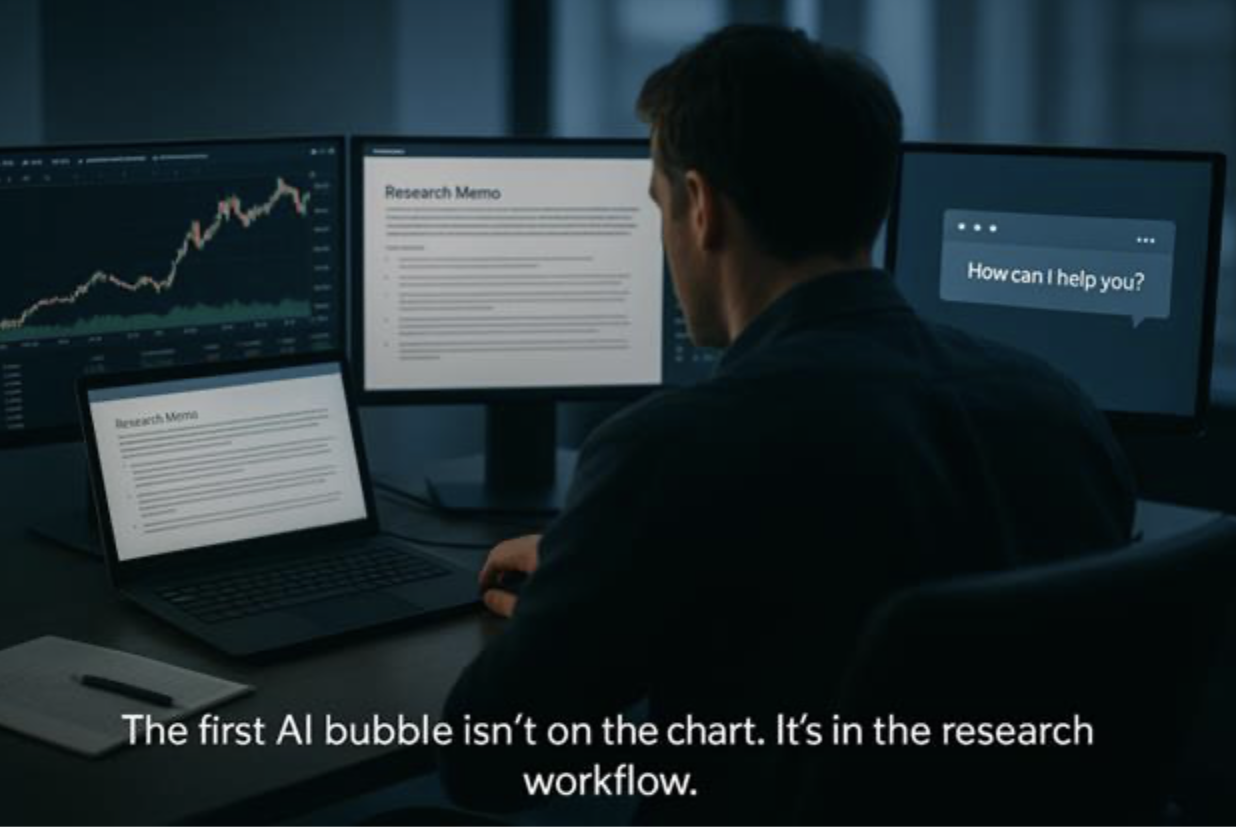
The first AI bubble isn’t on a chart. It’s in your notes.
Over the past year, most arguments about AI have been about stocks: stretched multiples, “transformational” guidance, and CEOs who suddenly sound like prompt engineers on earnings calls. That bubble is easy to see.
The quieter one lives on the research desk.
Plenty of teams now run important work through a zoo of “copilots” and “agents” — one that summarizes filings, another that cleans up notes, a third that spits out something close to a client deck. Open a memo and it’s hard to tell, line by line, which parts were written by a person and which came out of some background tab. The document still goes out. The trade still goes on. Nothing blows up immediately, so everyone shrugs and moves to the next thing.
Related stories
On the surface, it looks like productivity. Underneath, it’s an unmodeled layer between raw information and real decisions. If nobody actually read the source, who owns the conclusion? When a hallucinated summary slips into a client report or an investment thesis, is that on the junior, the desk head, or the opaque box in the workflow? That’s what an AI tool bubble looks like from the inside: very confident output sitting on top of not-enough thinking.
The Quiet Bubble and the Missing Data-Driven Lens on AI Tools
The core issue is simple: almost nobody treats this as a position.
The same desk that will fight for hours over a 20 bps funding change or a tweak to a risk model will happily let a handful of tools reshape how information flows, how arguments are built, and how conclusions get written — with no limits, no monitoring, and no explicit owner.
If you saw it as a risk factor, you’d start asking different questions:
- How much of our weekly output now flows through one vendor’s model?
- Where do AI summaries quietly replace actual reading?
- At which points could hallucinations slip in without anyone noticing?
Because there’s no line item called “AI tool risk” on a dashboard, the exposure doesn’t feel real. It hides in meeting notes, in decks that look a bit too polished for the time spent, in briefs where everyone nods along but nobody can clearly retrace the underlying documents. The bubble isn’t driven by headlines. It’s built out of quiet dependency on tools treated as harmless convenience software instead of components that move capital and reputation.
Right now, desks that bother to run any kind of data-driven analysis of AI tools on this layer are the exception, not the rule.
From Hype Lists to Hands-On AI Product Evaluations
Ask how any given AI tool got into the stack and the story is rarely impressive.
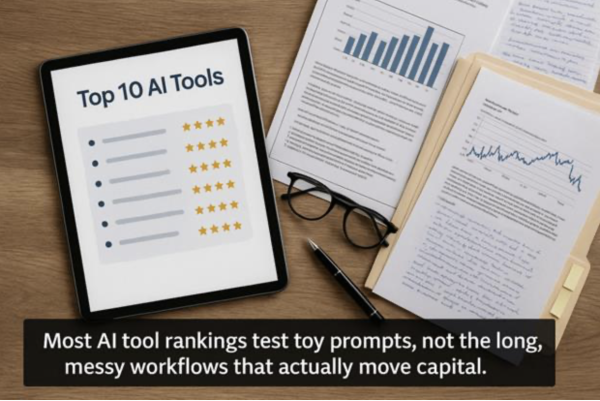
Usually it starts with a “Top 10 AI tools for research” post, a slick conference demo, or a glowing LinkedIn thread. The criteria are almost always the same: nice UI, smart-sounding answers, and enough novelty to feel “ahead.” Almost nobody checks whether the test tasks resemble the long, messy, high-stakes work that actually happens on a desk.
Those rankings lean on easy prompts — short articles, toy datasets, generic questions. They almost never measure what serious teams care about:
- Can it chew through a 200-page filing plus broker notes without inventing key numbers?
- Does it preserve nuance when the topic is politically sensitive or genuinely uncertain?
- What happens when the inputs are contradictory, stale, or incomplete?
What you actually need, if you’re honest about risk, is your own set of hands-on AI product evaluations — based on real workloads, not press releases and listicles.
Even so, hype nudges procurement. A tool that appears in enough lists ends up in internal slides, gets a trial, and quietly moves into production.
If you care more about risk than about being on-trend, the alternative is less glamorous and more honest: treat those rankings as background noise and test tools directly against the research and decision tasks that actually move capital.
A Data-Driven Test Bench: From Workflows to Hard Numbers
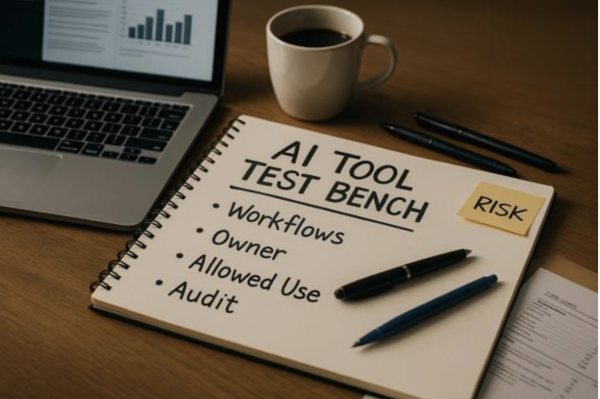
Once you stop taking rankings at face value, the next step is to build a test bench. The trick is to think in terms of workflows, not clever prompts.
Pick a few jobs that really matter for P&L: turning a central-bank press conference and historical reactions into a scenario map; digesting several bank earnings calls into a clear relative-value view; turning a long sector report and a pile of notes into a client-ready memo.
For each, spell out three things:
- Inputs — which documents, data feeds, and prior models go in
- Output — what format you expect, how long it should be, how uncertainty should be handled
- Constraints — time budget, acceptable error rate, citation standards
Then run each candidate tool through those same workflows alongside your current process. Look at the unglamorous metrics: time to first draft, factual or logical errors caught on review, how often citations check out, how much editing a human still has to do.
After a few rounds, the conversation shifts from “this feels smart” to “this saves a third of review time but doubles our fact-check load,” or “this produces clean tables but keeps missing edge cases in guidance.” At that point you’re no longer trading opinions; you’re building an internal log of results that slowly turns into your own grounded evaluation library, shaped by real work instead of vendor demos.
Only Hands-On Trials Show the Real Risk
Those numbers matter, but they still don’t tell the whole story. Anyone who has ever back-tested a model knows how easy it is to pick conditions that make it look brilliant. AI tools are no different. You only see what they really are when they spill into day-to-day work.
The straightforward way to do that is to run time-boxed trials on live projects, not toy demos. Take a real client deck or risk memo. Let one analyst do it the usual way and another lean hard on the AI stack. Then compare what actually ships: how the argument is structured, how uncertainty is handled, what tone the document takes, where caveats quietly vanish.
A simple failure log matters just as much. Every hallucinated citation, misread chart, missing caveat, or broken integration is a data point in the tool’s risk profile. Viewed one at a time, they’re annoyances. Viewed over a few months, they’re a pattern — a rough but honest picture of how these systems behave in your world, not in a marketing deck.
From Bubble Risk to Research Edge
If AI tools now sit between information and decisions, they can’t stay in the “nice app” bucket. Treat them like any other model or data feed — with a few hard rules.
Rule 1: No AI tool without a test bench
If it touches research, client output, or risk discussions, run it through your workflows, log the results, and stress it. Gut feel doesn’t count.
Rule 2: Every tool gets an owner and clear limits
Someone must track where it helps, where it fails, and when to switch it off. Define allowed use: maybe it structures notes, but it doesn’t draft risk language.
Rule 3: Audit outputs regularly
Pull samples, compare them to the raw sources, and look for overconfident tone or missing caveats. It’s tedious — like compliance — until the day it would have saved you.

Do that, and the AI tool bubble on your desk stops being invisible risk and becomes a position you can actually model. The edge won’t come from flashier agents or longer integration lists. Almost everyone will have the same base models. The real advantage belongs to desks that know, under pressure, what their tools are really doing to their thinking.
Comments

Powered by RoundtableAn AI/DeFi-powered Enterprise Media Operating System. Learn more at Roundtable.io.© Roundtable 2026. By using this site you agree to the Terms of Use and Privacy Policy