


Mar 13, 2026 7:00 AM
Updated Apr 3, 2026 3:05 AM
For a long time, music software assumed the user already knew how to translate taste into technical decisions.
The hardest part of making music is often not technique. It is momentum. Many people already know the feeling they want, the scene they want to support, or even the words they want to sing, but the distance between an idea and a finished track still feels large. Traditional production workflows can make that gap even more obvious. A rough lyric sheet is not yet a chorus. A mood note is not yet arranged. A melody idea is not yet a track that can actually be played, edited, and used. That is why tools built around an AI Music Generator feel meaningful right now. They do not remove taste or intention. They reduce the time between intention and something audible.
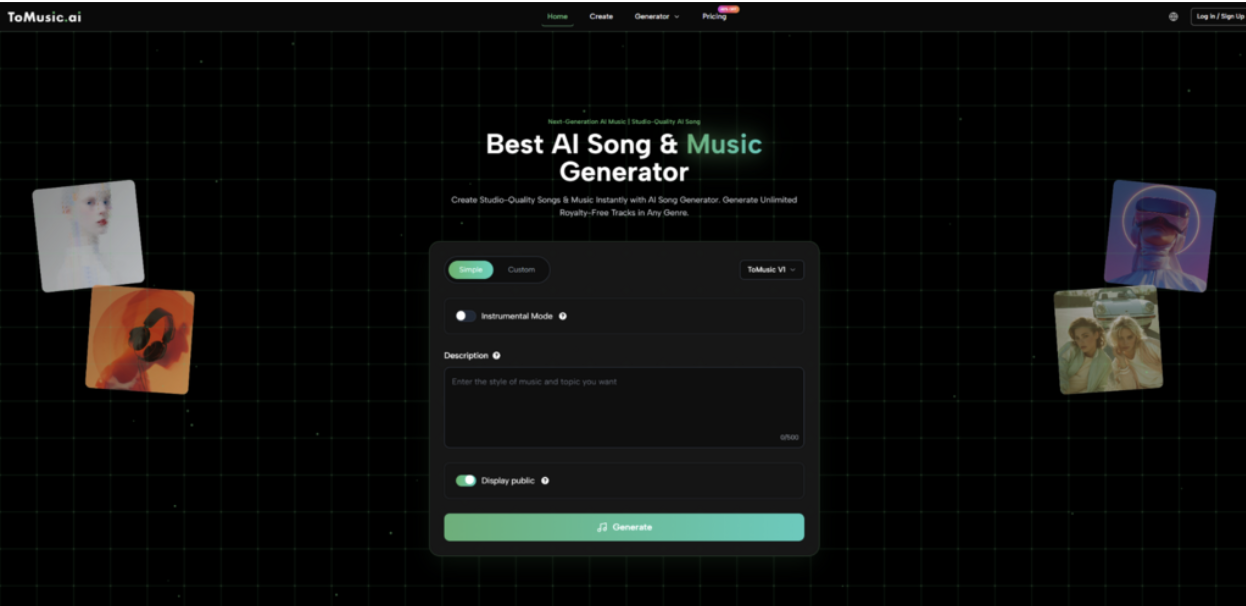
What stood out to me when looking closely at ToMusic is that the platform is not presented as a novelty that spits out random clips. It is organized around a more practical promise: turning text prompts or user-written lyrics into complete songs, while giving people access to different model versions, a music library for saved outputs, and export options that make the result easier to use in real projects. That matters because the modern creator rarely needs “music” in the abstract. They need music that fits a trailer, a short film, a personal demo, a channel intro, a campaign draft, or a late-night idea that would otherwise disappear before morning.
Why Music Creation Now Starts With Language
For a long time, music software assumed the user already knew how to translate taste into technical decisions. You needed to know instruments, tempo ranges, arrangement layers, editing logic, and often at least some theory vocabulary. That worked for trained musicians, but it left a large group of people standing outside the door. They knew what they wanted emotionally, but not how to ask a machine for it.
How Descriptive Prompts Replace Production Jargon
The important shift is not just automation. It is translation. A person can describe a track as cinematic, soft, nocturnal, hopeful, heavy, intimate, or restless, and the system tries to map those words to musical structure. In my view, this is the real breakthrough behind text-driven music generation. It lets non-specialists begin from mood, story, and texture rather than engineering language.
Related stories
Why Intent Matters More Than Technical Fluency
This is where platforms like ToMusic become useful. The interface logic is built around the assumption that intention can come first. A user can start from a short prompt, or from lyrics, and treat production as an extension of expression rather than a separate discipline. That change sounds simple, but it has a wide effect. It opens the door for writers, video creators, marketers, students, and hobbyists who may never have touched a DAW.
How ToMusic Turns Ideas Into Full Songs
At a practical level, the platform appears to work by taking one of two main inputs: a text description of the music you want, or a set of lyrics you want turned into a full song. From there, the system uses its available model versions to generate a finished musical output rather than only a sketch.
What The Core Input Layer Actually Does
The first layer is interpretation. A text prompt can imply style, tempo, arrangement density, emotion, and vocal direction. A lyric-based input adds another level because the platform has to decide not only what the track should feel like, but also how words should sit inside melody and rhythm. That creates a more complete task than background audio generation.
How Different Model Versions Shape Results
One aspect that makes ToMusic more interesting than a single-mode generator is the presence of multiple model versions. In my observation, this suggests the product is designed around trade-offs rather than a one-size-fits-all answer. Some outputs may lean more toward speed, some toward vocal expression, some toward stronger harmony or longer song structure. For users, this changes the experience from “generate once and hope” to “choose a model that fits the kind of result you want.”
Why Asset Management Changes The Experience
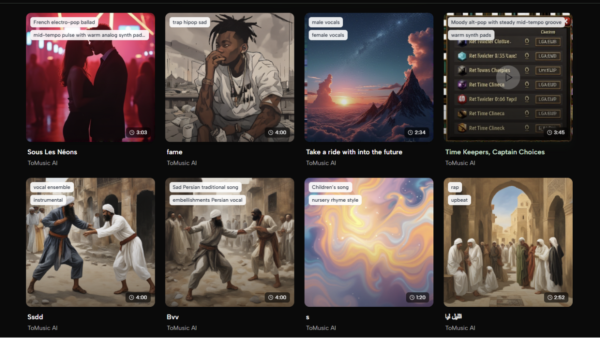
A surprisingly important detail is the saved music library. Once generation stops being a one-off novelty, organization matters. Titles, stored lyrics, descriptions, and output history help turn the platform into a working environment rather than a disposable demo page. For content creators producing multiple pieces every week, that is often the difference between a fun tool and a usable one.
What Makes Lyrics To Music AI More Practical
A lot of people do not begin with melody. They begin with words. That may be a notebook verse, a chorus idea, a parody concept, a personal poem, or a promotional script that needs a musical frame. The value of Lyrics to Music AI is not merely that it saves time. It changes who gets to finish a song.
Why Lyrics Alone Usually Stall Out
Writers often have strong language instincts but limited production ability. They know phrasing, emotional direction, and narrative pacing, but they do not necessarily know chord movement, vocal phrasing strategy, or arrangement development. In a traditional workflow, that means the lyric remains unfinished unless another collaborator steps in.
How Musical Framing Changes The Meaning Of Words
The same lyric can feel vulnerable, theatrical, playful, melancholic, or triumphant depending on how it is voiced and arranged. This is why lyric-to-song generation is more than a convenience feature. It is an interpretation layer. In my testing of tools in this category, that layer is often where results become either compelling or generic. The stronger systems are the ones that make the words feel placed rather than merely attached.
Comments

Powered by RoundtableAn AI/DeFi-powered Enterprise Media Operating System. Learn more at Roundtable.io.© Roundtable 2026. By using this site you agree to the Terms of Use and Privacy Policy