


Jun 29, 2026 7:00 AM
Updated Jul 4, 2026 12:56 AM
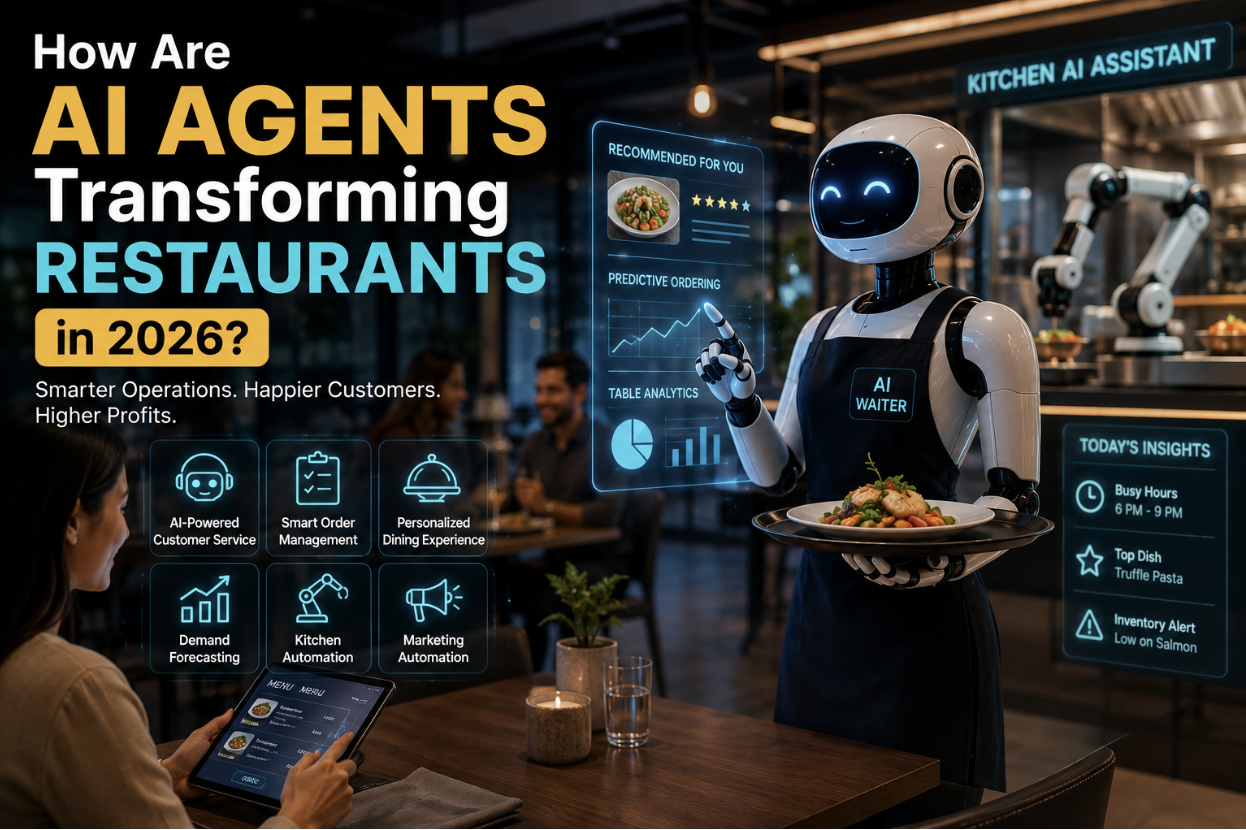
Explore how AI agents are transforming restaurants in 2026 with smart ordering, kitchen automation, personalized dining, and operational efficiency.
The restaurant industry has always evolved alongside technology, but 2026 marks a turning point. AI has moved beyond simple chatbots and recommendation engines to a new generation of intelligent systems known as AI agents.
Unlike traditional automation tools that perform fixed tasks, AI agents can analyze data, make decisions, adapt to changing situations, and collaborate across multiple business functions with minimal human intervention.
For restaurants, this evolution is reshaping everything from customer service and kitchen management to inventory control, marketing, and workforce optimization. Restaurants are no longer relying solely on staff to manage repetitive operational tasks. Instead, AI agents are becoming digital assistants that work around the clock, improving efficiency while delivering more personalized dining experiences.
Whether it's a local café, a quick-service restaurant, or a global food chain, AI agents are helping businesses reduce operational costs, improve customer satisfaction, and increase profitability. As consumer expectations continue to rise, adopting intelligent automation is becoming less of a competitive advantage and more of a business necessity.
Related stories
Why Are Restaurants Investing in AI Agents?
The restaurant business operates in a fast-paced environment where every second counts. Delayed orders, inventory shortages, staffing issues, and inconsistent customer experiences can directly impact revenue and brand reputation.
Many businesses now partner with a restaurant app development company to build intelligent applications that integrate AI agents into daily operations. Instead of performing isolated tasks, these agents communicate across ordering systems, kitchen displays, delivery platforms, payment gateways, and customer databases to create a connected digital ecosystem.
This approach enables restaurants to make faster decisions, reduce manual intervention, and maintain consistent service quality even during peak hours.
What Makes AI Agents Different from Traditional Automation?
Traditional automation follows predefined rules. If a specific condition is met, the software performs a programmed action.
AI agents work differently.
They continuously learn from operational data, customer behavior, historical sales, weather conditions, local events, and inventory patterns to make informed decisions.
For example, an AI agent can:
- Predict ingredient shortages
- Recommend staffing adjustments
- Suggest menu pricing changes
- Personalize customer promotions
- Detect unusual purchasing patterns
- Optimize delivery routes
These intelligent capabilities allow restaurants to become more proactive instead of simply reacting to problems.
1. AI-Powered Customer Service That Never Sleeps
Customer service has become one of the biggest applications of AI agents. Modern restaurant apps can now deploy intelligent virtual assistants capable of handling multiple customer interactions simultaneously.
These AI agents assist customers by:
- Taking food orders
- Recommending dishes
- Managing reservations
- Tracking deliveries
- Answering frequently asked questions
- Processing cancellations
- Handling refund requests
Unlike conventional chatbots, AI agents understand customer preferences, previous orders, dietary restrictions, and conversation history, creating a much more personalized experience.
The result is faster response times and higher customer satisfaction.
2. Smarter Order Management with AI Agents
Managing hundreds of simultaneous orders during lunch or dinner rushes can overwhelm restaurant staff.
AI agents simplify this process by automatically:
- Prioritizing urgent orders
- Routing requests to appropriate kitchen stations
- Identifying delivery timelines
- Detecting duplicate orders
- Monitoring preparation progress
- Notifying customers about delays
Restaurants researching the cost to develop a restaurant app are increasingly prioritizing AI-driven order management because it directly improves operational efficiency while reducing human error.
This creates a smoother experience for customers, kitchen staff, and delivery personnel alike.
3. Intelligent Inventory Management
Food waste remains one of the largest operational expenses in the restaurant industry.
AI agents analyze historical consumption data alongside real-time inventory levels to predict future demand with remarkable accuracy.
These systems help restaurants:
- Prevent ingredient shortages
- Reduce food spoilage
- Optimize purchasing schedules
- Improve supplier coordination
- Forecast seasonal demand
- Minimize overstocking
Rather than relying on manual stock counts, restaurant managers receive automated recommendations based on live business data.
4. Personalized Dining Experiences
Customers increasingly expect personalized interactions whenever they engage with restaurants.
AI agents create customized experiences by analyzing:
- Favorite dishes
- Previous purchases
- Dietary preferences
- Spending habits
- Ordering frequency
- Location-based behavior
Based on these insights, restaurants can automatically recommend menu items, create personalized discounts, and send promotions that match each customer's interests.
Personalization not only increases customer satisfaction but also boosts repeat business.
5. Predictive Demand Forecasting
Accurately forecasting customer demand is one of the most difficult challenges for restaurant owners.
AI agents process large amounts of information, including:
- Historical sales
- Weather forecasts
- Local events
- Public holidays
- Seasonal trends
- Social media activity
Using this data, restaurants can prepare staffing schedules, purchase ingredients more effectively, and adjust production levels before demand changes occur.
Predictive forecasting reduces waste while improving service quality.
6. Workforce Management Becomes Smarter
Managing restaurant staff is often a balancing act between controlling labor costs and maintaining service quality.
AI agents optimize workforce management by:
- Predicting busy periods
- Scheduling employees
- Tracking attendance
- Monitoring productivity
- Recommending shift adjustments
- Preventing overtime costs
Managers spend less time creating schedules while ensuring adequate staffing during peak business hours.
7. AI-Powered Marketing Automation
Marketing campaigns become far more effective when powered by AI agents. Instead of sending the same promotion to every customer, intelligent systems create targeted campaigns based on customer behavior.
Examples include:
- Birthday rewards
- Personalized coupons
- Loyalty incentives
- Cart abandonment reminders
- Weekend meal offers
- Re-engagement campaigns
The result is higher engagement and improved return on marketing investment.
8. Voice AI Is Becoming Mainstream
Voice ordering is rapidly gaining popularity in 2026.
Customers can now:
- Place orders through smart speakers
- Modify meals using voice commands
- Reserve tables
- Track deliveries
- Ask nutritional questions
AI agents understand natural conversations, making voice interactions faster and more convenient than traditional menu navigation.
This improves accessibility while creating a more modern customer experience.
9. AI Agents Strengthen Restaurant Security
Restaurants process thousands of digital transactions every month.
AI agents continuously monitor payment systems for unusual activity, such as:
- Fraudulent transactions
- Multiple failed payments
- Suspicious login attempts
- Data breaches
- Unauthorized employee access
Early detection reduces financial risks while protecting sensitive customer information.
The Future of AI Agents in Restaurants
The capabilities of AI agents will continue expanding over the coming years. Future restaurant applications are expected to include autonomous purchasing systems, robotic kitchen assistants, advanced visual quality inspections, multilingual customer support, and highly predictive business planning.
As generative AI, computer vision, and machine learning become more sophisticated, AI agents will collaborate across departments rather than functioning as isolated tools. A single intelligent ecosystem will coordinate reservations, inventory, staffing, customer engagement, supply chain management, and financial reporting in real time.
Restaurants that invest in adaptable AI-driven platforms today will be better positioned to adopt these emerging innovations without rebuilding their entire technology infrastructure.
Conclusion
AI agents are transforming restaurants by making operations smarter, faster, and more customer-centric. From automating order management and optimizing inventory to delivering personalized dining experiences and improving workforce efficiency, these intelligent systems are redefining how restaurants operate in 2026.
Rather than replacing employees, AI agents empower restaurant teams by handling repetitive and data-intensive tasks, allowing staff to focus on hospitality, creativity, and customer relationships. This combination of human expertise and artificial intelligence creates stronger businesses capable of adapting to changing customer expectations and market demands.
As digital transformation accelerates across the food service industry, AI agents are no longer a futuristic concept. They have become practical business tools that improve operational efficiency, reduce costs, strengthen decision-making, and enhance the overall customer experience. Restaurants that embrace this shift today will be better prepared to compete, innovate, and grow in the years ahead.
Comments

Powered by RoundtableAn AI/DeFi-powered Enterprise Media Operating System. Learn more at Roundtable.io.© Roundtable 2026. By using this site you agree to the Terms of Use and Privacy Policy