
Renews Manufacturing Solutions


Aerospace Parts Manufacturing
Jun 8, 2024 7:00 AM
Updated Jun 10, 2024 11:23 PM
Explore the future of aerospace parts manufacturing. Delve into the latest advancements and innovations shaping the aerospace industry.
The aerospace industry has always led the way in technology, pushing the limits of what we can achieve. Looking ahead, making aerospace parts is set for big changes. New ideas and inventions will completely transform how we build these parts.
In this article, we'll explore important advancements that will shape the future of aerospace parts manufacturing. These changes promise to make production faster, more efficient, and more innovative than ever before. Let's start exploring!
Additive Manufacturing (3D Printing)
Additive manufacturing is also known as 3D printing. This is changing the way aerospace parts are made. This technology lets us create complex shapes that are often impossible with traditional methods. By building parts layer by layer, 3D printing cuts down on material waste.
Related stories
It allows for the making of lightweight but strong components. Plus, it helps in making prototypes. This is reducing the time from design to production. As 3D printing gets better, it will be more important in making global or American-made parts. It lowers costs and improves supply chain resilience.
Advanced Composite Materials
The development and use of advanced composite materials have opened new possibilities for making airplanes. These materials include carbon fiber-reinforced polymers. These are stronger and lighter than traditional metals. This improves the performance and fuel efficiency of aircraft.
It also helps reduce greenhouse gas emissions. New techniques in making composites use automated fiber placement and resin transfer molding. They are making it easier to produce these high-performance materials on a large scale. This led to more use in the aerospace industry.
Automation and Robotics
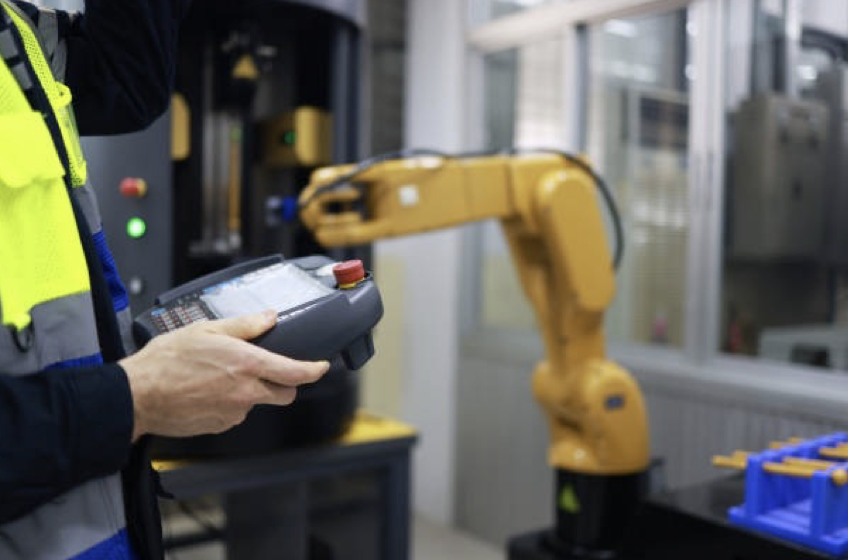
Automation and robotics are set to change aerospace technology manufacturing. This is by making it more efficient and precise. Advanced robots can do repetitive tasks very accurately. This helps cut down on human mistakes. Also, automation can speed up production, increasing output and lowering costs.
Collaborative robots, or "cobots," that work with human operators are becoming more common in assembly lines. They help with tasks that need a lot of skill and precision. These technologies not only boost productivity but also make the workplace safer by handling dangerous jobs.
Digital Twins
The idea of digital twins is the virtual versions of physical assets. This is becoming popular in the aerospace industry. Digital twins let manufacturers:
• simulate
• analyze
• optimize production processes
This is in a virtual setting before doing them in real life. This technology helps with predictive maintenance. This allows manufacturers to spot potential problems before they lead to major disruptions.
Sustainable Manufacturing Practices
The push towards sustainability is causing big changes in aerospace manufacturing. Companies are starting to use eco-friendly processes and materials. This is to reduce their environmental impact. For example, some are using bio-based materials and energy-efficient production techniques.
They're also looking at using green hydrogen as a clean energy source. Efforts to recycle and repurpose aerospace materials are growing. This helps to create a circular economy and reduce waste.
Explore the Future of Aerospace Parts Manufacturing
In conclusion, the future of aerospace parts manufacturing looks very promising. There are many new advancements and manufacturing innovations on the horizon. With this, the industry is set for exciting changes. By adopting these new technologies and methods, manufacturers can work more efficiently.

This will help meet the growing needs of the aerospace industry. As these trends continue, the industry will be better prepared to face future challenges, leading to more sustainable, reliable, and advanced air travel solutions. Overall, the future of aerospace manufacturing is bright and full of potential.
Did you find this article helpful? Check out the rest of our blogs!
Comments

Powered by RoundtableAn AI/DeFi-powered Enterprise Media Operating System. Learn more at Roundtable.io.© Roundtable 2026. By using this site you agree to the Terms of Use and Privacy Policy