


Mar 9, 2026 7:00 AM
Updated Mar 13, 2026 4:50 AM
Poverty is not only about income. This article explores why mental health and addiction care must be part of every serious conversation about inequality, public health, and long-term recovery.
Poverty gets talked about in numbers a lot. Rent burden. Food insecurity. Wages. Evictions. Medical debt. All of that matters. But something often gets pushed to the side, even in serious public conversations: mental health and addiction care. That gap is not small. It changes everything.
If a person cannot sleep because of trauma, cannot focus because of untreated depression, or cannot keep a job because substance use has become a way to survive unbearable stress, then poverty is not only an economic issue. It is also a health issue. A public health issue. A family issue. A neighborhood issue. And yes, a political issue too.
Progressive movements usually understand that suffering does not happen in a vacuum. People do not “fail” one by one through some private flaw. They get cornered by systems that stack risk on top of risk. Low wages. Unsafe housing. Racism. Underfunded schools. Little access to care. Criminalization instead of treatment. You can see the pattern. And once you see it, it becomes hard to ignore: if mental health and addiction care are missing from anti-poverty policy, then the policy is incomplete.
Poverty is not just about money
Poverty affects the nervous system as much as the wallet. That sounds clinical, but it is really quite human. When you live with constant uncertainty, your body does not relax. You brace for the next bill, the next shutoff notice, the next call from school, the next emergency that will cost more than you have.
Related stories
That kind of strain adds up.
People living in poverty face higher exposure to chronic stress, violence, unstable housing, family disruption, and untreated medical problems. Those pressures can trigger anxiety, depression, panic, trauma responses, and substance use. Not in theory. In ordinary life. In kitchens, shelters, motel rooms, crowded apartments, court waiting rooms, and buses heading to jobs that still do not pay enough.
Stress changes behavior, not just mood
We often talk about mental health as if it is separate from daily survival. It is not. When stress becomes constant, decision-making gets harder. Memory gets worse. Irritability rises. Sleep falls apart. Small setbacks feel huge because, honestly, they are huge when you have no cushion.
A person under this kind of pressure may miss appointments, struggle to organize paperwork, or seem “unmotivated.” But that label misses the point. The issue is not laziness. The issue is overload.
Addiction can become a form of survival
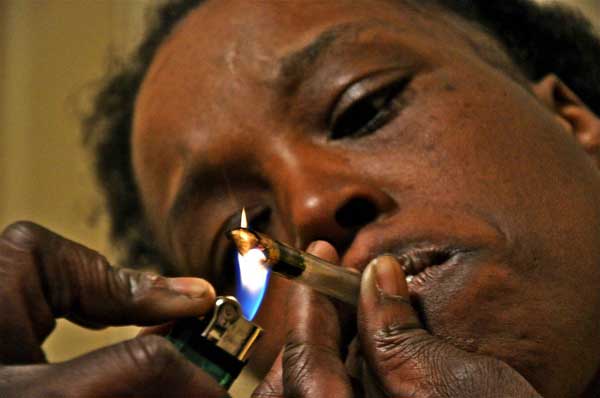
Substance use does not begin in the same way for everyone. Sometimes it starts with pain relief after an injury. Sometimes it grows out of grief, untreated trauma, or the need to get through another day while feeling numb, frightened, or exhausted. People self-medicate when formal care is out of reach. That is not a moral mystery. It is a policy failure.
When treatment is expensive, far away, or buried under waitlists and red tape, people do what people do. They try to cope with what they have.
The old story about “bad choices” has done real damage
One of the most damaging myths in American life is that poverty reflects poor character. Another is that addiction and mental illness are mostly about personal weakness. Put those two myths together and you get a cruel public script: people are struggling because they made bad choices, so help should be limited, conditional, or punitive.
That script has shaped housing rules, policing, welfare policy, and even public attitudes toward treatment. It is why people with serious mental health needs end up in jail cells, emergency rooms, and tents instead of stable care. It is why families burn out trying to hold each other together with almost no support.
Here’s the thing. You cannot punish a person into stability.
Shame is not treatment
Shame may silence people for a while, but it does not heal trauma. It does not treat depression. It does not reduce cravings. It does not give a teenager a therapist, a mother a safe place to detox, or a father a chance to recover without losing housing.
And yet shame keeps showing up in policy language and public debate. People are told to get their lives together while systems deny them the basic tools to do exactly that.
Punishment costs more than care
It is strange, and a little maddening, that many communities will spend heavily on crisis response while underfunding early support. Jail, hospitalization, court involvement, child welfare intervention, and homelessness services are all expensive. They also tend to arrive after harm has spread.
Care is cheaper than collapse. Not only financially, but socially. A person who gets support early is more likely to keep a job, stay housed, parent more steadily, and avoid deeper medical and legal fallout.
Recovery does not happen on an island
People talk about recovery as a personal journey, and sure, part of it is personal. But recovery also depends on whether the world around you gives you a fighting chance.
A person leaving treatment still needs safe housing. They still need transportation. They still need childcare, food, medication, job flexibility, and follow-up care that does not vanish after discharge. Otherwise, “recovery” becomes another word we use while setting people up to fail.
That is why access matters. Someone looking for Rehab in New Jersey is not simply searching for a service. They may be searching for a way to stop a crisis from swallowing the rest of their life. They may be trying to keep a family intact. They may be trying, quietly and urgently, to stay alive.
Poverty raises the relapse risk
This part gets overlooked a lot. Even when people want help and even when they get it, poverty keeps pressing in. Miss one shift and income drops. Miss a bus and an appointment is gone. Lose childcare and the whole week falls apart. Live in a home where others are still using, and recovery gets harder by the hour.
So yes, individual effort matters. But context matters too. A lot.
Long-term care should not be a luxury item
The people who need consistent mental health care most are often the people least able to afford it. That contradiction sits at the center of the problem. Therapy, medication management, crisis support, and dual-diagnosis care should not function like premium services for people with strong insurance and flexible jobs.
They should be treated as basic infrastructure.
Families carry the burden when systems back away
When public systems fail, families become the backup plan. Sometimes that sounds compassionate. Often it is simply abandonment dressed up as family values.
Parents become case managers. Grandparents become full-time caregivers. Siblings become financial lifelines. Partners become crisis teams with no training, no rest, and no backup. People skip work to manage psychiatric episodes. They empty savings to keep loved ones safe. They learn intake procedures, insurance codes, and medication lists because nobody else is stepping in.
And when families cannot hold it all together, they get blamed too.
Children notice more than adults think
Kids living in poverty already carry too much. Add untreated depression, addiction, or severe anxiety in the home, and their world becomes even more unstable. School performance can drop. Sleep gets worse. Fear becomes normal. Some children grow up too fast. Others shut down.
If we say we care about children, then we have to care about the mental health of the adults raising them. Those things are connected. Deeply connected.
Care helps break the cycle
Good treatment does more than reduce symptoms. It can steady a household. It can lower conflict. It can help parents return to work, rebuild routines, and become emotionally available again. It can reduce hospital visits and legal trouble. It can give children something many have not had in a while: predictability.
That is not a side issue in the poverty debate. That is central.
A progressive response has to be bigger and bolder
If poverty policy stays limited to wages and rent, it misses a huge part of what keeps people trapped. Income support matters. Affordable housing matters. Labor protections matter. But the agenda has to go further.
It has to include community mental health clinics, addiction treatment, school-based support, trauma-informed care, harm reduction, mobile crisis teams, and real continuity after discharge. It has to include coverage that people can actually use. Not coverage on paper, but care that exists nearby, answers the phone, and does not force people to wait until they hit bottom.
That also means treating mental health as part of healthcare, not as an optional extra. A person looking for Mental Health Treatment in New Jersey should not have to navigate a maze while already overwhelmed. Access should be straightforward, humane, and timely.
Public health is economic policy
This is where the false divide really falls apart. People do better economically when their mental health is treated. Communities become more stable when addiction care is available. Workplaces function better when people are not pushed into breakdown. Schools improve when students and parents have support. Hospitals face less strain when crises are addressed earlier.
In other words, mental health and addiction care are not separate from anti-poverty work. They are part of it.
We need a wider moral imagination
Honestly, that may be the hardest part. Policy can change, but public thinking has to change too. We need to stop acting as if people must earn compassion by suffering in the “right” way. We need to stop dividing the poor into the deserving and undeserving. We need to stop pretending that untreated pain stays private.
It does not. It spills into every part of life.
The real question is what kind of society we want
Every poverty conversation reveals a deeper question underneath it: do we believe people deserve stability only after they prove themselves, or do we believe stability is what helps people recover, work, parent, and participate in public life?
That answer shapes budgets. It shapes headlines. It shapes whether people get care or punishment.
Mental health and addiction treatment belong in every poverty conversation because poverty is lived in bodies, minds, and relationships, not just spreadsheets. Because recovery requires more than willpower. Because families should not have to absorb failures that belong to public systems. Because dignity means more than survival.
And because serious anti-poverty politics cannot stop at keeping people barely afloat. It has to ask what people need to heal, stay well, and build a life that is not defined by crisis.
Comments

Powered by RoundtableAn AI/DeFi-powered Enterprise Media Operating System. Learn more at Roundtable.io.© Roundtable 2026. By using this site you agree to the Terms of Use and Privacy Policy