


Aug 16, 2025 7:00 AM
Updated Aug 21, 2025 12:24 AM
You’ve probably heard the old advice: “Stick to neutrals, you can’t go wrong.” But let’s be honest, that’s only half true.
Let’s get real: throw cushions can either elevate your living room or totally throw it off. You’ve just dropped serious money on a new couch, the walls are painted, the rug is in place, and then you panic at the cushion aisle. It’s tempting to play it safe with beige-on-beige or, worse, grab whatever’s on sale and hope for the best. But cushions are like the final brushstrokes of a painting: if they don’t match the vibe, the whole thing falls flat.
This matters even more when you’re dealing with luxury sofas and made in Italy couches that already bring serious character into the room. Those pieces aren’t meant to be drowned in generic pillows; they need complements, not competition. So if you’re going to invest in design, don’t stop at the upholstery. The cushions you choose should feel just as considered and intentional as the rest of your home.
Tone-on-Tone, Not Tone-on-Boring
You’ve probably heard the old advice: “Stick to neutrals, you can’t go wrong.” But let’s be honest, that’s only half true. Neutrals can feel safe, yes, but they can also flatten a room, stripping it of energy and personality. And we know this from life outside interiors too: silence or “neutrality” in the face of inequality doesn’t preserve harmony, it preserves the status quo. Design, like politics, needs depth, layering, and a willingness to speak. If your sofa is a creamy beige or a soft gray, your cushions shouldn’t be the exact same shade. Even the coolest Baxter sofa would just look flat and lifeless that way. Instead, think in layers. Go one or two tones lighter or darker, and mix up textures like linen, velvet, or boucle to give your eye something to land on. Italians, who’ve long understood that materials themselves carry narrative power, let the fabric do the talking. A dusty ivory sofa with ecru cushions in raw silk doesn’t shout; it converses. It’s a quiet sophistication that doesn’t grow stale with time, which, let’s face it, is the domestic equivalent of sustainable politics: choices that age well.
Stop Thinking Like a Showroom
Here’s a truth that HGTV won’t tell you and that Restoration Hardware catalogs will never admit: your home is not a showroom. It isn’t a static set piece, curated once and left untouched like a museum of your own domesticity. A real home, the kind you want to collapse into after marching at Pride, after a long organizing meeting, or after simply navigating a world that often demands too much of you, needs rhythm. Not perfection: rhythm. That means cushions that live with you. Ones that can be thrown on the floor during a late-night Paris Is Burning rewatch, or cradled while you ugly-cry through Ocean Vuong’s On Earth We’re Briefly Gorgeous. Cushions that don’t judge you when you sprawl across them in sweatpants while binge-reading Audre Lorde’s Sister Outsider, but that also rise to the occasion when friends drop by for cocktails, laughter, or political debate. A showroom tries to freeze life in a glossy still frame. But queer culture, progressive culture, resists that rigidity. We know that identity isn’t static: it shifts, it expands, it shapeshifts depending on season, context, and mood. Why should your living room be any different? Rotate velvet into the mix during the short days of winter, the way some of us pull closer to chosen family when the nights get heavy. Let linen and cotton breathe during summer, when the body craves lightness and openness. This is not just interior design; it’s a philosophy of flexibility, a quiet domestic queerness. Your cushions are not permanent partners; they’re companions in flux. Call it polyamory of textiles: consensual, fluid, joyful, and deeply sustainable.
Related stories
Think in Trios (or Fives)

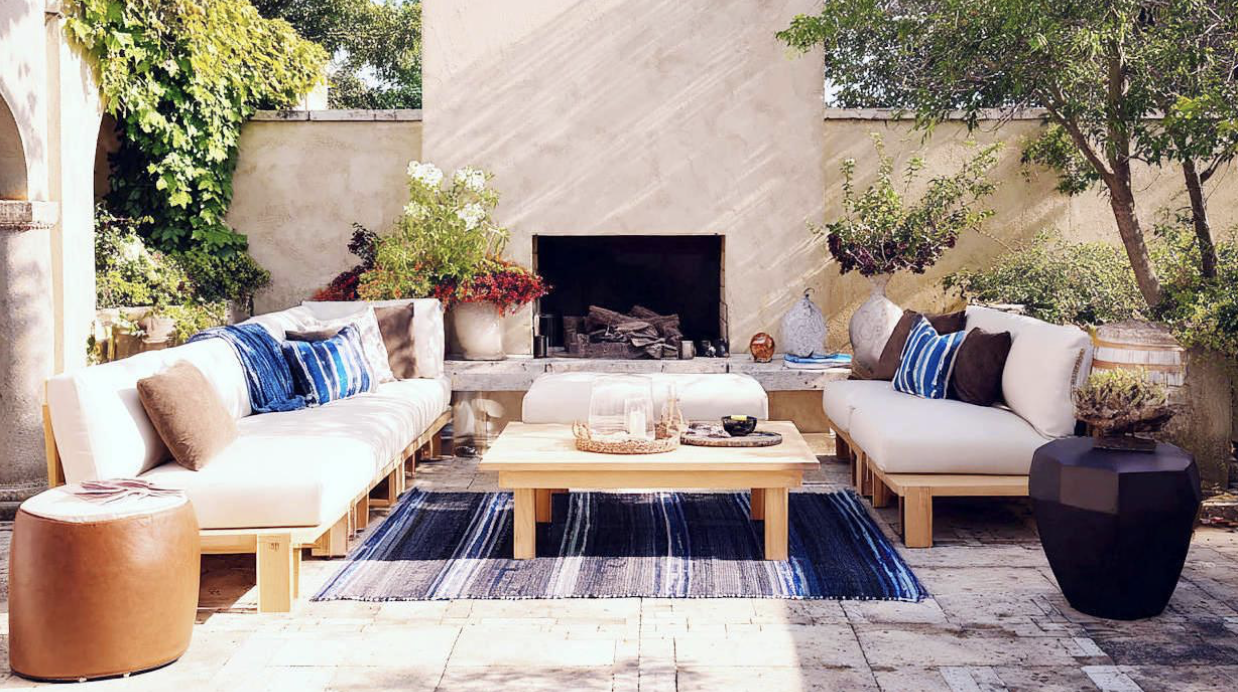
Ever notice how two cushions sitting at opposite ends of a sofa look like strangers forced to make small talk? It’s awkward, static, almost hostile. Even numbers can feel like binaries: rigid, oppositional, a tug-of-war of symmetry. But odd numbers? Three or five? They break the tension. They create asymmetry, and with it, a sense of inclusivity, improvisation, and play. Three or five cushions let you compose a micro-story: an anchor cushion (your Toni Morrison: foundational, grounding), a pattern or pop of color (your James Baldwin: bold, unafraid, unforgettable), and a contrasting texture (your Divine: disruptive, camp, gloriously uncontainable). Together, they don’t just “decorate”; they perform a narrative of coexistence. A little like queer chosen families: unconventional, mismatched, but resilient and magnetic because of their differences. Think of it like getting dressed for a night out: your staple piece, your statement, and your wild card accessory. That’s why Italians, who’ve mastered the art of casual sophistication, often build little vignettes right on the sofa. A cushion trio is basically a textile version of storytelling, one that says: this space is layered, it has history, it evolves. Because at the end of the day, a home, like a community, is most alive when it’s not monochrome, not homogenous, but textured, diverse, a little unpredictable. The kind of unpredictability that makes you lean in rather than turn away. The kind that reminds you that comfort is not sameness, but complexity embraced.
Comments

Powered by RoundtableAn AI/DeFi-powered Enterprise Media Operating System. Learn more at Roundtable.io.© Roundtable 2026. By using this site you agree to the Terms of Use and Privacy Policy