


Feb 17, 2015 5:27 AM
Updated Feb 10, 2022 10:37 PM
Rev. Hannah Petrie: Ever since I was a kid I was drawn to Africa, but it was more than the romantic imagination stoked by watching Out of Africa. There was also an unconscious longing to reconcile the past, which I only became conscious of later in life.
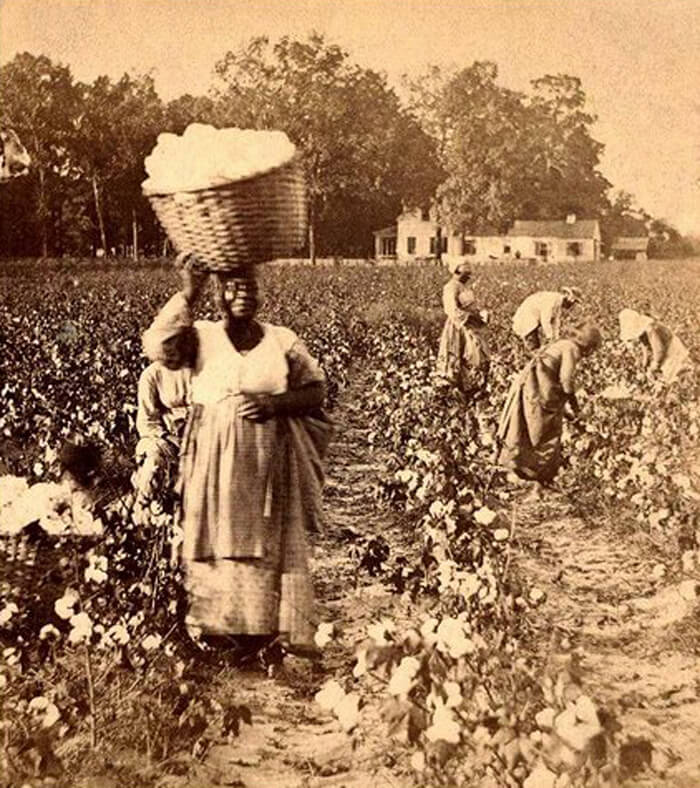
This sermon reaches deep into my heart and my ancestry, where there are secrets and mystery. Black History Month is something of a misnomer, but there isn’t a better name for it. It should be called American History Month, because the distinctiveness of Black History is what makes America distinct. But it has to be called Black History Month so we are instructed to look with clarity and courage at the history of the African American experience, and the bondage, cruelty, and violence that characterized their experience for so many generations, well beyond the Emancipation Proclamation.
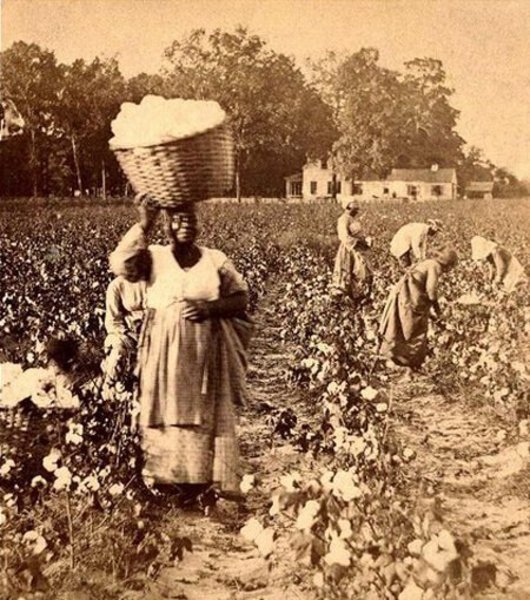
If, like me, you are white, the first thing to do is look at their story, the so-called other, those Africans sold into bondage to come here, from countries like Sierra Leone. As you are able, and for me, I'm not always able, you read or take in accounts as depicted on the silver screen of what it was like to be a slave in the antebellum South.
I'm not always able because it hurts too much – not just because I’m a “bleeding heart liberal”– it goes deeper than that. I’m not sure I’ll ever have the wherewithal to watch 12 Years a Slave. It took me 12 years before I could watch the film Amistad, about the great Sierra Leonean hero Sengbe Pieh, who led the revolt on board the Cuban slave ship Amistad. It’s an amazing story that played a role in the American abolitionist movement, when John Quincy Adams, a Unitarian, made an argument on behalf of the captive Africans that helped set them free. In Sierra Leone, Sengbe Pieh’s statue is ubiquitous – they regard him as we regard Abraham Lincoln.
You see, I lived in Sierra Leone when I was 20 years old, for six months as part of a college foreign exchange, and was immersed in its culture and history, discovering my joy as an amateur ethnographer, interviewing and writing the biographies of over 30 poets local to Freetown, collecting their poems. Ever since I was a kid I was drawn to Africa, but it was more than the romantic imagination stoked by watching Out of Africa. There was also an unconscious longing to reconcile the past, which I only became conscious of later in life.
Related stories
Delving into American black history is like going down a rabbit hole, cutting through layers of preceding generations. My mother’s side of the family goes back to the Revolutionary War, and my father’s back to before the Civil War, in the Deep South. I know that my great, great, great grandfather was an overseer of slaves in Alabama, and that my family enjoyed the wealth of the slave-holding society, then after the Civil War, lost it.
Recently, I've read a lot of black history, the women slave narratives being the hardest. Some James Baldwin was easier, the accounts of Sengbe Pieh the easiest with what at least appears to be a happy ending, and Mark Morrison Reed’s biography, which helped bridge me to the present era, and revealed some realizations worth sharing today. Both Baldwin and Reed write about how it took living outside America to realize how American they are.
I’m not bragging about all the reading I’ve done – I mention it because this is important soul work for me, as I think it could be for any American – it’s painful, but also illuminating. It’s helping me understand the most compelling reason to stand side by side with my African American brothers and sisters, who continue to fight for dignity, equality, and freedom in today’s world - in many ways, the same fight they have fought since their ancestors survived the Middle Passage.
Just as so many non-black Americans stood side by side with Dr. King at Selma, we should keep doing so today because all Americans have inherited that oppressive history, if not directly from their ancestors as I have, then through cultural inheritance – we all pay the price of this hurtful inheritance and we keep paying.
So the second thing to do after you’ve reviewed just how awful and challenging the African American experience could be, is to realize, no matter what color you are but perhaps especially if you’re white, you’re not as separate from it as you first imagined. For one thing, there is the fact that there was so much mixing of black and white blood – you could have black genes and not even know it. Mark Morrison Reed discovered himself to be the inheritor of both the benefits of white supremacy and the disadvantages of black racial prejudice. Mark says he is “in between” and his book is about navigating that world, becoming comfortable with who he is as a black person that was conditioned in a lot of ways to be white, even though he could never “pass” as white.
It’s made me think and reflect upon the ways that, if he can say there is a fair amount of “white” in him, especially culturally, could there not be some ways there is “black” in me? It strikes me as a bold proposition to suggest this, so I do so with trepidation. But it points to my overriding message today, which is that there is a difficult-to-recognize truth about how we as Americans reconcile our shameful and violent history of being a slave-holding society.
At face value, you could say it’s an us/them kind of issue, the white owner/privileged experience vs. the enslaved/oppressed experience. But our liberal religious tradition asks us to dig deeper than that in uncovering the truth, and admit it’s not that simple. Grasping that nuance, slippery as it is, leads us to an insight: that it’s everyone’s problem, the legacy of slavery, not just for the ancestors of slaves. To be the ancestors of slave-owners, or benefit from being white in general, is to benefit from the fruits of violence and oppression and that’s not wholesome fruit we’re eating, is it. That violence is in us, among us, and about us – it persists as part of our American culture until someday we recognize its origin and uproot it.
No one is free in a master and servant society, and in this way, we are all still traveling in the middle somewhere, between the darkness of the severest inequity of our past and the brighter dream of tomorrow, when discrimination and oppression are regarded as relics of human history, from when we were less evolved.
I see the legacy of violence today in the persistence of domestic violence that cuts across color and class lines. I see it in how brown people, poor immigrants, have become the servant class.
I see the legacy of violence today in the persistence of domestic violence that cuts across color and class lines. I see it in how brown people, poor immigrants, have become the servant class. I see it in the cultural sanctifying of violence in the NFL. Or how master and servant has become the jailor and the jailed. I see it in fifty shades of shame, in all the ways we consume or enact violence as part of the everyday fabric of our living. Where do you see it? In my family history I’m not as familiar with physical violence as I am with emotional violence. It’s still violence.
So how is there a little black in me, and how is that relevant to a sermon about Black History, and in particular, reconciling American slavery. I’m offering myself as just one example of how all Americans are subject to our history. It’s a very mixed bag of good and bad things we inherit. One of the best things we get is the music, even as it has been appropriated left and right.
I was talking with my Dad a few days ago, arguing with him that he learned his love of music and dancing from Elvis Presley, who stole his rhythm and moves from black musicians. “He was like, no no, he didn’t steal it, he took it and made it his own.” Yes, I said, he took it and he made a lot of money from making it acceptable for white people to listen to. My Dad tried again. “But Elvis was also influenced by lots of gospel.” Where do you think that soulful gospel came from, Dad?
My father, who grew up in Georgia and Pennsylvania, has always been a really good dancer. He still dances swing, the jitterbug, even the lindy-hop. He instilled this reverence for dance and music in me. Partly it’s the thing we latch onto because we’re both depressives, but music does have the power to heal and strengthen and get us through. It’s no wonder the slaves sang and sang and sang – it was their only source of hope at times, their most heart-felt embodied prayer for relief from the suffering, their most heart-felt prayer for freedom.
Of course America inherited the African’s love of music – I’m fairly obsessed with music. I just made 12 playlists of music released between 2012 – 14. Like my father, I inherited a love of white rock’n’roll. One of my playlist categories is rock, and the musicians are entirely white. As much as I love the Black Keys and Jack White, I see how these kinds of songs didn’t start off as my songs - they became my songs because they were taken, whitened, and given to me. It’s the same blues beat for which Robert Johnson sold his soul to the devil to make him famous. Who do you think the devil was in that story? There are countless songs that we have no idea originated in the minds and hearts of African Americans.
I also love gospel and soul and funk, as sung by African Americans. Last Saturday night on a rare date out with my husband, we went to Funky Sole, a weekly dance party in Echo Park featuring all rare funk and soul mixed by a DJ, and for the video art, they were showing clip after clip of Soul Train dance lines, you know, when one or two dancers get a chance to strut their stuff down the runway? There were no white people, mostly African Americans of the 1970’s expressing their passion and pride through dance. It struck me how beautiful and powerful their rhythm was, how African. It reminded me of something that happened close to the time I first arrived in Sierra Leone all those years ago.
I traveled there with 11 other Americans, four of whom were African American. They talked about an excitement of returning to their “homeland,” that it would feel like a homecoming. But as the poorest country in the world, our accommodations at Fourah Bay College were rustic – no private running water, and food was hard to come by around breakfast and dinnertime, probably because most people only ate one big meal a day there. You have to adapt - to the food, to the absence of privacy or sense of personal ownership. In a lot of ways, Sierra Leonean and American culture couldn’t be more opposite, the communal mentality vs. the individual. Toward the end of the trip, one of the African Americans said they learned how very much more American than African they are.
Most of the white students were timid too – for them it was also more often an ordeal. For me and the fast friend Anna I made upon arrival, it was an incredible cultural experience of Sierra Leonean friendships.
One of the reasons I wasn’t so timid was because I had grown up Unitarian Universalist, instilled with the knowledge of the inherent worth and dignity of every human being. I knew, at that time, there was little to fear. It was one year before the war of Charles Taylor ravaged that beautiful country, when refugees ran for their lives, and the atrocity of hacking off limbs subjugated the people. The best friend I made there, a man named Alhaji Mardi who went by L.L. Cool J, didn’t make it. He died running and it’s the reason it was so hard for me to revisit the story of Sengbe Pieh in Amistad - it reminded me too much of the pain in that country, pain beyond comprehension.
Back to my specific story. There was a student assembly, and about 150 people sat in a large outdoor amphitheater to see a dance troupe showing us African styles popular in Sierra Leone. Toward the end, they asked anyone in the theater to come up and join the line they were dancing in. Some of the native students joined in, but what everyone really wanted to see was the Americans join in. My cadre of fellow students sat frozen on their benches, smiling at each other weakly. No way.
Not only did this strike me as prudish, as rightly it should have, but it made me mad because I wanted to get up and dance. It was one of those moments in life where you realize you only have a few seconds to seize the day or not. I popped out of my seat and ran down the steps to join the line of dancers on-stage, and the amphitheater went wild! The Africans loved it! It only lasted a few seconds, but it was my way of expressing my belief that I can be one of them, too. That’s what they loved. I was showing my appreciation for their culture, for their Africanness.
After remembering that event at Funky Sole, I had a cool conversation with an African American man – I had turned to him to ask if he knew who sang the song, "Bee-Sting" that all these years I had thought was only a camp song. He didn’t know. Then we talked about our love of Curtis Mayfield. Then he and my husband realized they worked in the same field and talked for an hour while I danced, still watching the old Soul Train clips. That’s when it hit me. At least when it came to music and dance, there was more black in me, more African in me, than there was in those African American students who traveled to Africa.
I wonder if I was drawn to Africa because I’ve spiritually inherited a deep, dark pain. Not by my kin of the 19th century, who didn’t own slaves but worked for people who did, but by their children’s children’s children, who also lived in a strict economy where you were expected to regard blacks as low-level human beings, too inferior even to use your bathroom.
We inherit the unresolved issues of our ancestors, murky and mysterious as they may be, they affect us one way or another, unless we find a way to confront them. I wonder if my proneness to shame may stem in part from the hate and violence and poor behavior of my ancestors. This is separate from the fact that I still get to enjoy my white privilege - alongside this there's a kind of suffering that is a result of American History, from what happened as part of Black History. If there are reparations to make to reconcile the past, could they be made by fighting for racial justice and equality?
Maybe I run the risk of claiming pain that isn’t rightfully mine, but it’s actually the message I’m wishing to convey this morning. That change happens when everyone feels the pain of oppression, not just the oppressed. It is through compassion, through feeling with, that we are moved to act and address racism, poverty, sanctioned violence and killing. If not us, who?
Delve into Black History, and not just in February - think of it as a spiritual practice, because it is - to study the past so we can better open our eyes to the present, and see how patterns of violence, bondage, and oppression are variations on a theme. What is that theme and what is your role in it? What legacies did you inherit? What does it mean that no matter what our roots, European or African, Asian or Latin, we are Americans first? What unity does that portend, and what does that unity demand of us?
I picked today's theme of Black History and slavery in particular because over 20 of you will be seeing the play, The Whipping Man this afternoon. I saw it Tuesday and can say the plot and the story interweaves my message today. Do see the play, even if you're not going today.
At one point the oldest and wisest freed slave in the play, Simon, says in the context of faith, You don't always get answers, but what's important is you keep asking questions. We who hold questions sacred, Unitarian Universalists, will never stop asking the hard questions as part of our spiritual practice. Because hard questions lead to actions, which at some point, when the arc of the moral universe bends toward justice, lead to answers.
Together, let's make it so.

Hannah Petrie
Neighborhood Church
Comments

Powered by RoundtableAn AI/DeFi-powered Enterprise Media Operating System. Learn more at Roundtable.io.© Roundtable 2026. By using this site you agree to the Terms of Use and Privacy Policy