


Teachings of an Argentine Chemist—Robert Nelson:
Apr 22, 2025 4:34 PM
Updated Apr 22, 2025 6:29 PM
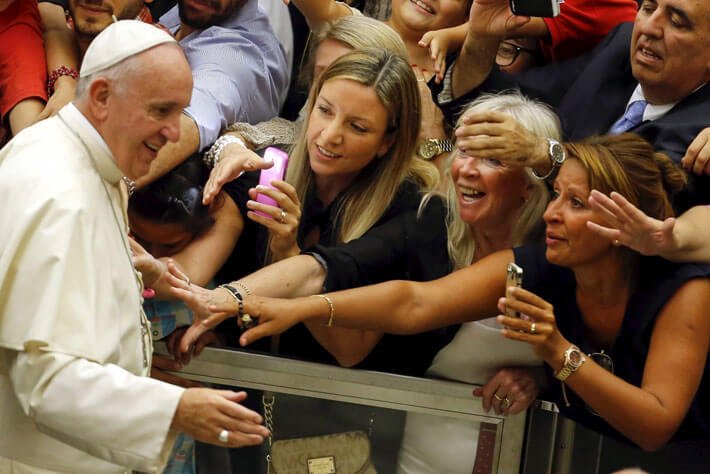
Pope Francis tried to lay down a new path, consulting and praying with the whole, allocating much time and deep listening.
Just a month and 12 years ago, our (Roman Catholic) church received a big break with the election of Pope Francis, the first Latin American pope. He blew in like a breath of fresh air, declining some of the traditional pomp, paying his own hotel bill, traveling lightly, and imploring people to pray for him, when he was introduced. His modesty and kindness were reflected in the name he took as pope: Francis.
When his predecessor Cardinal Ratzinger was elected in 2005, Cardinal Jorge Bergoglio from Buenos Aires came in second with 35 votes, reportedly urging his supporters to step back and support Cardinal Ratzinger instead, avoiding divisions in the church and preventing a long, drawn-out election process.
By 2007, Cardinal Jorge Bergoglio had been an effective leader or secretary during the Aparacida meeting of Latin American bishops, which was more like a continental synod, coming 15 years after their previous episcopal conference. As the Jesuit magazine, America, noted: “Cardinal Jorge Bergoglio was elected by his brother bishops to chair the important committee charged with drafting the final document. One detail confirms his popularity: on the day he celebrated Mass in the Sanctuary of Aparecida, the people applauded at the end of his homily, the only time that something like that ever happened.” Aparecida repeated a style and highlighted some issues that have been part of the church’s identity since the first CELAM meeting in Medellin in 1968: a poor church, for the poor; Christ is the center; and going out to the edges or the periphery, a message largely sublimated under Pope John Paul II (1978-2005) and when his “enforcer” or prefect of the Sacred Congregation for the Doctrine of the Faith”, Benedict VI, was elevated in 2005.
The Vatican and especially its governing bureaucracy, the Curia, were struggling with financial and personnel problems. Most of all, the Curia had increased its power and was imposing that on sisters in the US and theologians such as Leonardo Boff, censoring and pushing out of the church great minds such as Fr. Matthew Fox. Fr. Roy Bourgeois was pressured out of Maryknoll for retaining his stance of conscience calling for women priests. And worst, abusive leaders such as Cardinal Theodore E. McCarrick and orders such as the Legionnaires of Christ were sheltered and given a pass for far too long. The role of money in the church and mansions for bishops, funded by “private” donations had been rising for decades.
Related stories
He wasn’t afraid of falling down; he maintained that Christians should cultivate humility and said that wasn’t possible without accepting humiliations that come our way.
Bergoglio courageously took on this situation, despite his aversion to much of what Rome represented. He picked up St. Francis’ calling to “rebuild my church”, despite all the obstacles to doing so, and his own periodic stumbles and shortfalls. He wasn’t afraid of falling down; he maintained that Christians should cultivate humility and said that wasn’t possible without accepting humiliations that come our way. From his first year as pope to his last, he spoke out against the scourge of clericalism and privilege afflicting the church, repeating this emphasis with his brother clerics, often in their Advent retreats.
Speaking to cardinals before the conclave and his election in 2013, Bergoglio argued that the Church must shift from being inward and self-focused, which he thought caused illness, careerism, and worldliness. Instead he looked to the margins, what we in the US call the frontlines more often, for more life and dynamism and better perspective and understanding.
Above all, Pope Francis pulled the focus back to the gospel.
Just eight months into his papacy he published Evangelii Gaudium: The Joy of the Gospel, indeed sparking great joy. He was unafraid to call out harms that have only become clearer since that time, urging an outspoken “No to an economy of exclusion and inequality” and a “throw away culture” of the excluded and outcast, none more than our Mother Earth, as he expanded the thought in Laudato Si’ in 2015. In paragraph 165 of the latter he clearly said that “technology based on the use of highly polluting fossil fuels–especially coal, but also oil and, to a lesser degree gas (now known to have equal pollution upstream, over the supply chain) – needs to be progressively replaced without delay.”
Pope Francis said, and urged we all say:
“No to the new idolatry of money” and acceptance of “the dominion of money over ourselves and our societies.” He charged the state and us all “with vigilance for the common good”. He insisted on a clear “No to a financial system that rules rather than serves”; Also “No to the inequality which spawns violence.” He called us to work together on a “common plan that transcends individual gain and personal ambitions”. He said the Global North has a debt to the Global South.
Finally, he insisted on a welcoming church, with open doors. He had never denied anyone the Eucharist. From his first unheard-of 82-minute exchange with reporters on a plane returning from his first papal trip, he tore off the band-aid for the universal church by saying “who am I to judge” someone who is gay, searching, and who has good will? At his last world youth event in Portugal last year, he clarified yet again that “todos, todos, todos” are and should be welcome in our churches. We are a field hospital, not a country club excluding others.
There’s no question that Pope Francis disappointed some too, from conservatives when he turned down revered trappings, traditions, and stasis, instead urging a living, breathing church that gets its hands dirty and isn’t afraid to “make a ruckus”, to women called to ministries that still exclude them. Pope Francis tried to lay down a new path, consulting and praying with the whole, allocating much time and deep listening, with key roles for lay people. At the month long Synod on Synodality, lay people met with cardinals at round tables and all had the same allocated time to speak and reflect.
Will Pope Francis’ enlivening reforms continue? Will they reach into the strongholds against them, such as the US bishops conference and their chosen leaders? As Oxford historian and podcaster Jon Rosebank said today, after his webinar on Germany in 1933, “All praying hands on deck now for an inspired successor to Francis…”
Comments

Powered by RoundtableAn AI/DeFi-powered Enterprise Media Operating System. Learn more at Roundtable.io.© Roundtable 2026. By using this site you agree to the Terms of Use and Privacy Policy