
Creative Commons Attribution-Share Alike 4.0 International


Jul 23, 2023 4:09 PM
There is more to the dog and God relationship than the fact that they spell each other backwards.
I began fostering my dog (Junior) when I brought him home from the local Humane Society when he was seven years old. The shelter had picked him up months before running loose on the street. He is mainly a white Pit Bull, and while at the shelter he had a cancer operation that removed his right hind leg—but he gets along pretty well walking on the other three. After fostering him for several months, I adopted him, mainly because someone was interested in doing so, and I didn’t want to let him go.
He’s been good company. My wife, Nancy, died in early 2022 (at age 83), and Junior has helped me deal with the void that her death created.
Observing him and how he seems puzzled when I give him some commands he doesn’t understand or when something strange happens (like a thunder clap), it occurred to me that he is sort of like we humans trying to understand God. Or at least the varied concept that we have of Him if He exists (or is it Her, They or It?) Thus, at least in my mind, there is more to the dog and God relationship than the fact that they spell each other backwards.
But before we get to that, a little background. For over four decades my main teaching responsibility was Russian history, and several times I team-taught a course entitled “Russia in the Age of Tolstoy and Dostoevsky.” (And later wrote a book with a similar title.) Thus, Dostoevsky is a name with which I am very familiar, and I first read his The Brothers Karamazov while in college. There is a famous scene in it where two of the Karamazov brothers, Ivan and the novice monk Alyosha, are talking, and Ivan says he cannot accept any God that allows the suffering of innocent children, which occurs in this world of ours. “I most respectfully return Him the ticket [of being a follower],” Ivan tells his brother.
Related stories
Later on, while in graduate school, I read Albert Camus’s The Rebel (English trans., 1956), and it contained a section (“The Rejection of Salvation,”) dealing with Ivan’s words above to Alyosha. Camus sees Ivan as a case of “Metaphysical Rebellion” and writes, “From the moment that man submits God to moral judgment, he kills Him in his own heart.”
What affects both Ivan and Camus is that they cannot accept a God that allows the suffering of the innocent, especially children. Later, in 1981, a Jewish rabbi, Harold Kushner, wrote a book, When Bad Things Happen to Good People, which eventually reached over 4 million readers, and it tried to answer the same question with which Dostoevsky and Camus struggled—the suffering of innocent children.
Only as Kushner writes, he was “someone who believes in God and in the goodness of the world, someone who has spent most of his life trying to help other people believe, and was compelled by a personal tragedy to rethink everything he had been taught about God and God’s ways.”
The personal tragedy? The same suffering that concerned Ivan Karamazov, only not the suffering of innocent children in general, but that of just one child, Kushner’s son Aaron. A pediatrician told Kushner and his wife that their “son’s condition was called progeria, ‘rapid aging.’ He went on to say that Aaron would never grow much beyond three feet in height, would have no hair on his head or body, would look like a little old man while he was still a child, and would die in his early teens.” And he did when he was 14, four years before When Bad Things Happen to Good People was published.
In his book, Kushner writes that he was left with an “aching sense of unfairness. It didn’t make sense. I had been a good person. I had tried to do what was right in the sight of God...How could this be happening to my family? If God existed, if He was minimally fair, let alone loving and forgiving, how could He do this to me?”
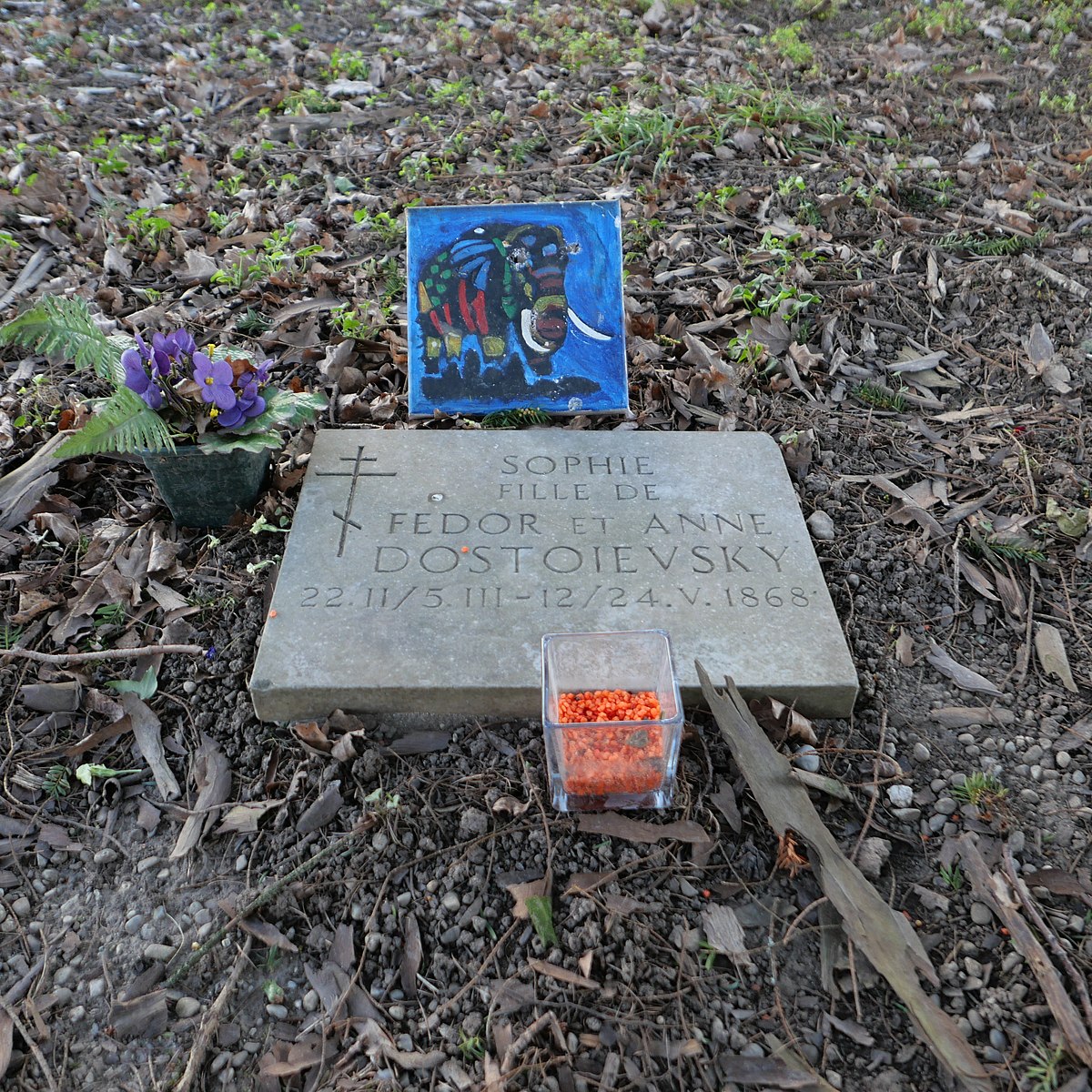
The answer he finally arrived at, after searching the Jewish Bible, was that God was not all-powerful, as Kushner had earlier thought, and could not control or alter all the suffering that occurred in this world. One Bible book he especially focused on was that of Job, which was also a favorite of Dostoevsky, who had a daughter die of pneumonia when just a few months old.
Although Kushner’s answer gave satisfaction to some, others—especially many Christians and religious Jews—criticized his explanations. One Christian site faulted the rabbi for going “against very clearly written biblical statements that insist that God is all-powerful” and for refusing “to accept the whole biblical explanation,” i.e., all parts of the Christian Bible, as well as the Jewish parts that Christians refer to as the Old Testament.
A 1996 article in the journal Modern Judaism by Abraham Cohen also criticizes Kushner partly because some of his propositions are “incompatible with biblical and historical Judaism, and one assumes, Christianity and Mohammedanism [i.e., Islam].”
The problem, of course, is that there is no guarantee that either the Christian Bible or “biblical and historical Judaism” are any more correct than is Kushner.
The problem, of course, is that there is no guarantee that either the Christian Bible or “biblical and historical Judaism” are any more correct than is Kushner. As St. Paul wrote in Corinthians 13:12, “We see through a glass, darkly.” The longer I live the more I’m convinced, that we humans trying to understand the vast complexities of the universe, including whether there’s a Supreme Being or not, is analogous to some lower form of existence (like my dog Junior) trying to figure out why we humans do what we do.
In an article last year I wrote,
Having been raised Catholic, including over 20 years of Catholic education, and later having taught comparative religions, I am more familiar than most people with religious ideas. Ditto, for philosophers’ thinking about religion...
But now, after decades of reading and thinking about previous theologians’ and philosophers’ ideas about God, all I can say is “the jury is still out.” Whether a God— however we might define He, She, or It—exists or not, no one can say for sure. We can believe or hope there is a God, but that’s all we can do. In spite of thousands of years of religious and philosophic inquiry, that’s all we got. No matter how intense one’s faith or hope is, if there is no God, believing or hoping will not create one. Conversely, no matter how ardently one insists that there is no God, such insistence will mean nothing if one does actually exist.
So where does that leave us? All over the place, from doctrinaire believers to ardent atheists—and all shades in between.
Moreover, what I wrote about God, also goes for understanding why suffering occurs—we simply do not know. Kushner can have his opinion and various religious and non-religious believers can have theirs.
I am not saying that all opinions are equal, or one is as good as another. When it comes to cancer, an oncologist’s judgement tops that of a lay person. The same goes for a climatologist regarding climate change. Moreover, some people reason better than others. It is our job as individuals to take these various factors into consideration and try to determine whose opinions to value and whose to dismiss—not an easy task in this Internet age of ours.
Regardless, however, we should all realize how limited our knowledge is. Wisdom scholar psychologist Robert Sternberg believes that “smart and well-educated people” are often unwise because of four fallacies, which he labels the egocentrism, omniscience, omnipotence, and invulnerability fallacies. All four reflect too big an ego, overestimating one’s own importance and powers.
When I was younger, I thought I knew more. But gradually I began to realize how much I didn’t know. Reading and looking at the pictures in Carl Sagan’s Cosmos soon after it came out in 1980—it was a companion piece to a PBS mini-series—I was thunderstruck. There’s a picture with a black background and innumerable little white marks and below it reads: “a small sampling from a map of the million brightest galaxies, all within a billion light-years distance from the Earth. Each little square is a galaxy containing billions of stars.” Recently I completed Peter Frankopan’s The Earth Transformed: An Untold History, and he includes such information as “the creation of our planet around 4.6 billion years ago”; “for almost all the time that the earth has existed, our species [humans] would not and could not have survived”; and “most scholars date the arrival of the first modern humans in the Americas to around 22,000 years ago.” As Sagan has stated, the vastness and complexity of our universe are a “profound sermon on humility.”
While Sagan is an agnostic, many religious teachings have also emphasized humility. But as Pope Francis has reminded us, many believers often don’t practice it. In a 2013 sermon Pope Francis urged Christians “to remain humble, and so not to become closed.” He also warned Christians against making their religion into an ideology: “When a Christian becomes a disciple of the ideology, he has lost the faith...But it is a serious illness, this of ideological Christians. . . . [the] attitude is: be rigid, moralistic, ethical, but without kindness.”
Another religious thinker, perhaps the most famous U. S. Protestant theologian of the 20th century, Reinhold Niebuhr, stressed humility when he linked it with humor. “People with a sense of humor do not take themselves too seriously. They are able to ‘stand off’ from themselves, see themselves in perspective, and recognize the ludicrous and absurd aspects of their pretensions. All of us ought to be ready to laugh at ourselves because all of us are a little funny in our foibles, conceits and pretensions. What is funny about us is precisely that we take ourselves too seriously. We are rather insignificant little bundles of energy and vitality in a vast organization of life. But we pretend that we are the very center of this organization. This pretension is ludicrous; and its absurdity increases with our lack of awareness of it.”
How refreshing it would be in this polarized Internet world of ours if we could all see the “ludicrous and absurd aspects” of our “pretensions.” If we could all realize that like my dog Junior we often don’t understand most of the complexities of this universe where we temporarily reside.
Comments

Powered by RoundtableAn AI/DeFi-powered Enterprise Media Operating System. Learn more at Roundtable.io.© Roundtable 2026. By using this site you agree to the Terms of Use and Privacy Policy