
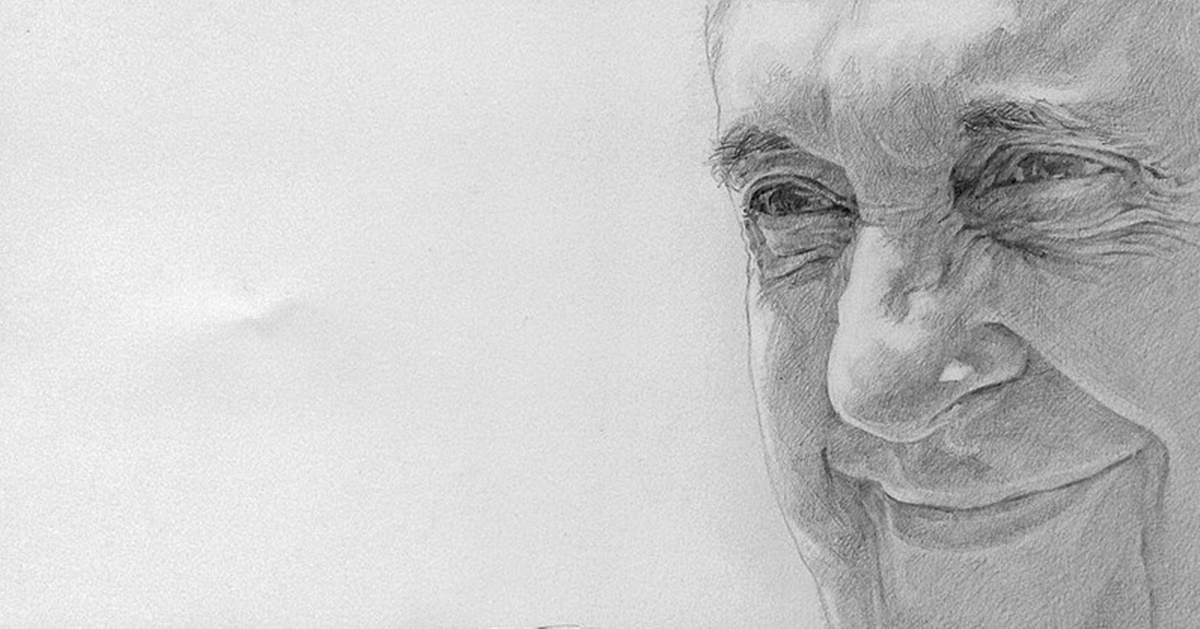


Pope Francis
Apr 24, 2025 4:04 PM
This stress on the common good led Francis to be especially outspoken in three vital areas—capitalism, climate change, and immigrants (and refugees).
Pope Francis had his faults. Who does not? Yet, he was still one of the great moral voices of our times. In this age of leaders like Putin, Netanyahu, and Trump—and corporations like Purdue Pharma—what a contrast was Francis!
On the one side we have merciless wars in Ukraine and Gaza or Trump’s heartless attack on immigrants and refugees, plus in this time of Purdue Pharma’s (and other corporations) putting “profits first—before any ethical considerations. Before the interests of people. Even if it killed them”—Francis was exceptional. (With Purdue it was in its marketing of the opioid OxyContin; with other corporations like Boeing or Facebook it was something else, but they still put, in the words of a Facebook whistle-blower, “astronomical profits before people.”
Francis thought that the main aim of politics should be to further the common good—not to enhance what Sen. Bernie Sanders has labeled “unfettered capitalism” or the rich, like Trump himself or his enabler Elon Musk.
This stress on the common good led Francis to be especially outspoken in three vital areas—capitalism, climate change, and immigrants (and refugees). For a dozen years on LA Progressive, I have praised his views on these three topics.
Related stories
Beginning in 2013, I honored his “apostolic exhortation,” Evangelii Gaudium (all 224 pages of it). It criticizes not every form of capitalism—see Sen. Sanders’s approval of a more Franklin-Roosevltian type—but one that places “individual gain and personal ambitions” first, one that gives “priority...to the outward, the immediate, the visible, the quick, the superficial and the provisional”; one that is “economically advanced but ethically debilitated”; one that corrodes “the cultures of poorer countries” and spreads “ethically deficient values”; and, finally, one that “tends to devour everything which stands in the way of increased profits, whatever is fragile, like the environment, is defenseless before the interests of a deified market, which become the only rule.”
In 2015, after the appearance of a new Francis encyclical, I wrote “The Radical and Deep Insights of Pope Francis’s Environmental Encyclical.” Perhaps the U. S.’s leading environmentalist, Bill McKibben, wrote about Francis’s composition: “This marks the first time that a person of great authority in our global culture has fully recognized the scale and depth of our crisis, and the consequent necessary rethinking of what it means to be human.”
The pope’s encyclical reflects his overall philosophy. We read: “Human ecology is inseparable from the notion of the common good...The same mindset which stands in the way of making radical decisions to reverse the trend of global warming also stands in the way of achieving the goal of eliminating poverty.” He directly challenges our modern “throwaway culture,” one of “compulsive consumerism,” where the “market tends to promote extreme consumerism in an effort to sell its products, [and] people...easily get caught up in a whirlwind of needless buying and spending.”
Not being a believer in unfettered capitalism, he writes that “the environment is one of those goods that cannot be adequately safeguarded or promoted by market forces.” Like many progressives, Francis did not share the conservative fear of “big government.” Instead, he wrote of the need to develop better laws which would lay “down rules for admissible conduct in the light of the common good.” Yet he was realistic enough to realize that politicians are susceptible to lobbyists and big-money interests and therefore “society, through non-governmental organizations and intermediate groups, must put pressure on governments to develop more rigorous regulations, procedures and controls.”
Francis also saw a connection between environmentalism and peace, “which is much more than the absence of war. Inner peace is closely related to care for ecology and for the common good.”
He admitted “that some committed and prayerful Christians...tend to ridicule expressions of concern for the environment. Others are passive; they choose not to change their habits and thus become inconsistent. So what they all need is an ‘ecological conversion.’”
The pope’s third major focus was the plight of immigrants and refugees. Earlier this year I noted his comment that Trump’s plan to mass deport undocumented immigrants was a “disgrace.” It would be wrong “because it would make poor wretches, who have nothing, pay the price of the (world’s) inequality. That’s not right; this is not how you solve things.”
Francis’s criticism of Trump’s stance on immigration goes back to 2016 when he implicitly criticized the then-candidate Trump by saying, “A person who thinks only about building walls...and not building bridges, is not Christian. This is not in the Gospel." In 2019 the pope added, “Our response to the challenges posed by contemporary migration can be summed up in four verbs: welcome, protect, promote, and integrate.” Francis also believed that such a response would “help the world community to come closer to the goals of sustainable development that it has set for itself and that, lacking such an approach, will prove difficult to achieve.”
In 2020, the pope provided examples of policies governments accepting migrants and refugees should enact or oversee, including providing paths to full citizenship. In addition, “increasing and simplifying the granting of visas. . . . opening humanitarian corridors for the most vulnerable refugees; providing suitable and dignified housing. . . . equitable access to the justice system...freedom of movement and the possibility of employment...ensuring their regular access to education...guaranteeing religious freedom; promoting integration into society; [and] supporting the reuniting of families.”
Francis’s criticism of unfettered capitalism, climate-change neglect, and immigrant/refugee vilifying were not the only moral subjects he addressed. Among other matters he spoke to were peace and homosexuality.
As the Huffington Post noted, “the pope repeatedly spoke out against the war between Russia and Ukraine, as well as the violence in Gaza. In 2023, Francis begged for an end to what he called ‘the passions that are killing everyone.’” He was especially critical of Netanyahu-directed actions in Gaza, suggesting that they might be genocidal.
Regarding homosexuality, in 2013 in response to a question about a supposedly gay priest he said, “If someone is gay and he searches for the Lord and has good will, who am I to judge?” Such a remark was typical of this man who often counseled humility and against ideologies that made people “rigid, moralistic, ethical, but without kindness.”
As a previous article on this site stated, “There’s no question that Pope Francis disappointed some.” Including conservatives disappointed that “he turned down revered trappings, traditions, and stasis, instead urging a living, breathing church that gets its hands dirty.” On Ukraine, many Ukrainians thought that in his call for an end to the war in Ukraine, he was not critical enough of Russia as the aggressor. And others found that he did not go far enough in speaking out for LGBTQ rights.
But such criticisms are more debatable. And none of us are perfect. At least for me, Pope Francis rang out as a “great moral voice”—one that will be painfully missed.
Comments

Powered by RoundtableAn AI/DeFi-powered Enterprise Media Operating System. Learn more at Roundtable.io.© Roundtable 2026. By using this site you agree to the Terms of Use and Privacy Policy