
Gilbert Mecier • Attribution-NonCommercial-NoDerivs (CC BY-NC-ND 2.0) • Flickr


christian nationalism
Jan 15, 2025 6:45 PM
Updated Feb 14, 2025 6:17 PM
Like a blacksmith hammering iron into chains, the far-right toils to forge a national theology, attempting to sanctify evangelical Christianity as the sole light in the land.
In this darkening chapter of our fractured republic’s story, a new specter rises to haunt the fragile promise of pluralism and multicultural democracy. Like a blacksmith hammering iron into chains, the far-right toils to forge a national theology, attempting to sanctify evangelical Christianity as the sole light in the land. Their vision is no beacon but a pyre, consuming the First Amendment in flames of zealous fervor. Beneath their hands, the Constitution bends and splinters, twisted into a staff of dominion—a scepter for those who would crown fundamentalist theocracy as the sovereign ruler of the United States.
Forging National Theology: The Rise of Christian Nationalism
In the grand spectacle of modern American politics, few figures elicit as much vitriol as Rep. Marjorie Taylor Greene and Rep. Lauren Boebert. Both have boldly embraced the mantle of "Christian nationalism," positioning themselves as champions of a deeply divisive ideology. Greene, during a Turning Point USA summit, declared herself a “Christian nationalist,” provoking an immediate uproar on Twitter, where the phrase “She’s a Nazi” quickly trended. The backlash was swift and fierce, yet Greene remained resolute, doubling down in her defense of the label, casting herself as a warrior against the "Godless left" she so vehemently opposes.
Meanwhile, Boebert stoked the flames of controversy during a speech at an Aspen church, where she declared her disdain for the concept of "separation of church and state." "The church is supposed to direct the government, the government is not supposed to direct the church," she proclaimed, further underscoring her belief in the intertwining of faith and politics.
Both Greene and Boebert, in their defiant rhetoric, stand as figures at the crossroads of nationalism and religion, drawing sharp lines in the sand between their vision of America and those who dare to challenge it. Their words resonate as a call to arms for a specific brand of Christian identity politics, one that some view as a necessary reclaiming of America’s moral compass, while others see it as a dangerous blurring of church and state.
Related stories
The term "Christian nationalism" has been gaining prominence, leaving many to question what this phrase truly means and why its association with Greene and Boebert provoked such intense reactions. At its core, Christian nationalism is a political creed that intertwines America's identity with Christianity. Its adherents believe that the nation was forged in the crucible of Christian values and should maintain a close bond between church and state, championing Christianity's privileged role in public life. This ideology insists that America's destiny is divinely ordained, with the state expected to advocate for Christian values, disregarding the separation of church and state.
However, not all who identify as Christians embrace this ideology. In fact, many evangelicals denounce it, even accusing Christian nationalism of straying dangerously from true Christian teachings, as evidenced by the condemnation of the Capitol Riots by evangelical leaders. They argue that the United States should not be seen as God's exclusive vessel but as part of a global community of faith, where political power should never be wielded through violence or exclusion.
Greene's proclamation sits uneasily alongside the definition of patriotism, which is rooted in a love for one’s country and a devotion to its ideals, without seeking to dominate or dismiss the rest of the world. Nationalism, on the other hand, aspires to elevate one’s nation above all others, often descending into a us-versus-them mentality that ostracizes those who do not conform.
Christian nationalism finds its roots in darker chapters of American history, where figures like Gerald B. Winrod and Gerald L. K. Smith fused faith with authoritarianism, sowing seeds of division and conspiracy. This ideological lineage is gaining traction once again, with policies and laws in several states reflecting the movement’s priorities, from the "Don’t Say Gay" bill in Florida to the increasing scrutiny of LGBTQ+ rights.
According to Brian Bolton, the United States is not, nor has it ever been, a Christian nation. Its history, like a vast river, flows from sources far older than Christianity’s dawn. Over 30,000 years ago, the first humans crossed the icy expanse of the Bering land bridge, their footsteps echoing through millennia before the cross was ever conceived. Centuries later, Viking sails graced the shores of North America around 1000 CE, long before Columbus, the first documented Christian to set foot here, arrived in 1492.
Though some colonial charters spoke of Christian missions, those early settlements soon became tangled thickets of oppressive theocracy, stifling dissent and diversity. By the time of the American Revolution, ten of the thirteen colonies bore the stamp of state-sponsored Christian churches. Yet these establishments were systematically disbanded by 1833, giving way to disestablishment and religious freedom.
The architects of America’s foundational documents—Jefferson, Madison, Franklin, and their contemporaries—crafted a framework that stood apart from Christian orthodoxy. Their vision, steeped in the reason and skepticism of deism, invoked not the Christ of cathedrals but the "Nature’s God" of enlightenment thought. Jefferson, the principal author of the Declaration of Independence, carved from the Gospels a version of Jesus stripped of miracles, a reflection of his rejection of traditional Christian doctrine.
Even as the American populace today is largely Christian in identity—some 70%, though only a fraction are devout—the Constitution itself remains untouched by sectarian faith. Its language contains no invocation of Christ, and its dating, “in the Year of our Lord,” is a relic of its time, not a theological statement. Evangelical icon Billy Graham himself dismissed the notion of America as a Christian nation, recognizing that true followers of Christ are but a minority.
The United States, then, is not a nation of any one creed but a mosaic of many, its soul bound not to a single faith but to the freedom of all. Its founders cast their lot with liberty, envisioning a republic where the sacred and the secular coexisted.
Sanctifying Division: The Far-Right’s Vision for America
As Christian nationalism grows, it is accompanied by an even more extreme strain: Christian fascism. This movement calls for an authoritarian Christian state, with chilling echoes of violence in its rhetoric, evident in protests that spiral into chaos and hatred. In this twisted vision, the nationalist agenda can only be enforced through force, excluding those who do not fit the prescribed mold, leaving behind a path of division and turmoil.
President-elect Donald Trump has once again shown himself as a figure unhinged from the principles of democracy and Christian virtue. Through his amplification of inflammatory social media posts, he has called for televised military tribunals for former Republican Rep. Liz Cheney and the imprisonment of top elected officials, including President Joe Biden and Vice President Kamala Harris. In these posts, Trump, now a self-proclaimed avenger of justice (e.g. “I am your retribution”), casts aside the character of a leader rooted in Christian values (i.e., “the Chosen One”), revealing instead a tyrant willing to sacrifice the very foundations of the nation for political retribution.
One post, shared on his Truth Social platform, declared, “ELIZABETH LYNNE CHENEY IS GUILTY OF TREASON,” urging followers to "RETRUTH IF YOU WANT TELEVISED MILITARY TRIBUNALS." Cheney, unfazed, retorted on X (formerly Twitter), asserting that such actions demonstrated Trump's instability, rendering him unfit for office. In another amplified post, Trump pointed to a group of political figures—ranging from Biden and Harris to prominent members of Congress—and demanded, "THEY SHOULD BE GOING TO JAIL ON MONDAY NOT STEVE BANNON!"
Trump’s rhetoric, now echoed on a stage of divisiveness and retribution, lays bare a vision where political enemies are silenced through coercion and force rather than debate and justice. His campaign, marred by criminal indictments, has long hinted at weaponizing the Justice Department against his opponents if given another chance to lead. The chilling prospect of using government institutions to punish political adversaries paints a stark picture of a leader who has abandoned any pretense of ethical leadership, let alone Christian values that teach forgiveness and mercy.
This dangerous brand of authoritarianism not only undermines the rule of law but also reveals Trump’s disconnection from the moral tenets he once claimed to uphold. It is a dark chapter in the story of American politics, where the pursuit of power eclipses the values of justice, humility, and respect for democratic institutions.
Trump's influence is a grim reflection of how a political figure can manipulate the nation's values and moral compass. Rather than embodying any true love for America, he is systematically undermining the social fabric by promoting ideologies rooted in division, hatred, and misinformation.
The allure of his rhetoric appeals to the disaffected and the uninformed, manipulating them through his flashy spectacle and a message of resentment. His rallies, where he champions certain working-class groups while simultaneously praising individuals who uphold discriminatory views, exemplify his exploitation of identity politics for personal gain. His incoherent ramblings, like clumps of sludge from a backed-up toilet, are making their way through the runnels of the mass media and dumped into the storage basin of America’s social brain.
Defining Patriotism: Love for Country or Nationalistic Dogma?
The parallel to fascism is undeniable—Trump’s disdain for the principles of the Constitution, his attacks on the free press, and his authoritarian-like impulses paint an ominous picture of an "us versus them" narrative—hardly the actions of a Christian leader.
When ideologically undressed, Trump, the de facto figurehead of American Christian nationalism, is the embodiment of spectacle over substance, where policies and ideas take a backseat to performative acts of vengeance and retaliation outside the realms of the law, acts that appeal to the basest of human instincts. He reinforces an ideology that mixes white nationalism with authoritarianism, promoting division rather than unity and feeding the populace a steady diet of fake news and false narratives. In doing so, Trump has not only diminished the moral fiber of the nation but also paved the way for future generations to witness the erosion of democracy itself.
America stands at a breaking point, its foundations trembling beneath the weight of compounded crises. It is not an exaggeration to say that we are living in a time of relentless assault on the soul of democracy. The air thickens with the smoke of this ideological war, choking the voices that demand freedom not as a gift of grace but as an unyielding birthright. While these Christian-nation architects preach salvation, their sermons herald submission—a hymn for the erasure of difference and the silencing of dissent. It is a reckoning for the land that once dreamed of liberty, now poised on the edge of a precipice where the sacred and tyrannical entwine, threatening to cast us all into the abyss.
The land of plenty has become a cruel paradox, where millions stare at empty cupboards, their hunger mocking the nation's abundance. The dream of shelter has turned into a mirage for low-income families, as the walls of affordable housing crumble into dust. Across the country, the Ponzi scheme of late capitalism churns on, siphoning wealth upward while leaving ordinary Americans to stumble in its hollow wake.
And yet, this is not merely an economic collapse—it is a moral and spiritual reckoning. Racism festers and spreads like an untreated wound, its infection visible in white vigilantes armed with AR-15s, patrolling their twisted notions of justice. Women’s autonomy over their own bodies is under siege, their rights carved away with cruel precision. Immigrants and people of color find themselves hunted, scapegoated, and brutalized by a society clinging to its illusions of supremacy. Black men fall to police bullets in the streets, their deaths a grim punctuation to the endless chapters of injustice. Above it all looms the existential dread of a planet in revolt—its fires, floods, and storms delivering nature's fierce indictment of human greed.
Amid this chaos, voices of dissent rise, trembling but resolute. They point to the rotting heart of the capitalist system itself, naming it as the architect of our collective despair. They whisper of alternatives—of democratic socialism, of solidarity, of shared humanity—but their words are drowned out by the din of denial. Marginalized and banished from the public square, these visionaries and truth-tellers are forced to gather in the shadows, their debates confined to the edges of a society that refuses to hear them.
The Us-versus-Them Mentality: Dividing a Fractured Republic
It is as though America has sealed itself in a gilded coffin, deaf to the pounding fists of those demanding change. The nation teeters on the brink, blindfolded by its own myths, unwilling to confront the abyss that yawns before it. And yet, somewhere in the darkness, the faint spark of hope flickers—a reminder that even the most oppressive systems can be unraveled, if only we dare to imagine a world beyond their grasp.
Public education, the great equalizer, now stands battered and broken, its guardians disrespected, its mission undermined. Henry Giroux warns that if this malignancy is not excised, if this assault is not met with fierce resistance, the future of public education—and the democracy it underpins—will remain perilously in jeopardy.
Critical educators find themselves standing at the crossroads of culture wars, their work and integrity under siege. They are besieged by unwarranted attacks on Critical Race Theory—a term twisted and weaponized to stoke fear and misunderstanding. State legislatures, wielding their power like a blunt instrument, have introduced measures to sanitize the past, curtailing the teaching of slavery and erasing the lived truths of systemic racism from the curriculum. In classrooms, the very act of truth-telling has been reframed as subversion. This mirrors the shameful reversal of Meta, which no longer wishes to curb the spread of false information and hate speech. Scot Detrow of NPR reports:
Here's CEO Mark Zuckerberg speaking at Georgetown University back in 2019.
MARK ZUCKERBERG: You know, no one tells us that they want to see misinformation, right? That's why we work with independent fact-checkers to stop hoaxes that are going viral from spreading.
DETROW: But this past week, Zuckerberg said those efforts were a mistake.
ZUCKERBERG: We tried in good faith to address those concerns without becoming the arbiters of truth. But the fact-checkers have just been too politically biased and have destroyed more trust than they've created, especially in the U.S.
DETROW: Zuckerberg is now getting rid of professional fact-checks and other speech rules on Facebook and Instagram in the U.S. He made this announcement, of course, weeks before Donald Trump returns to the White House, and he nodded to the political climate in his announcement.
The Illusion of a Christian Nation: Myths, Realities and DEI Intolerance
Adding fuel to the fire are increasingly vocal parent groups, such as Moms for Liberty, whose coiled, spring-loaded invective galvanized by political rhetoric and misinformation, have accused teachers of advancing "woke" ideologies. They condemn the use of gender-neutral pronouns and any initiatives that affirm the humanity and dignity of LGBTQ students. These educators—tasked with nurturing critical thinkers and compassionate citizens—are instead cast as ideological agitators, their professional autonomy stripped away by the rising tide of intolerance.
The ferocity of Donald Trump and his Republican allies’ attacks on Critical Race Theory (CRT) reveals more than mere opposition to an academic framework; it exposes a calculated strategy to stoke fear and inflame divisions. Cloaked in the rhetoric of defending "American greatness" and "equality," these assaults frame CRT as a sinister ideology—an alleged form of anti-White racism and anti-American heresy. The intensity of their vitriol reached new heights in the wake of the nationwide Black Lives Matter protests that erupted after the brutal murder of George Floyd, protests Trump derided as the work of “thugs,” tarnished by unfounded claims of rampant looting and violence.
This backlash is not simply reactionary but symptomatic of a deeper, festering ailment in the American body politic. The emergence of White militia groups, neo-Nazis, and ethno-nationalists—thriving in the fetid swamps of fascist ideology—underscores a disturbing reality: virulent racism remains a potent force in American society. These groups, galvanized by Trump’s inflammatory rhetoric and his unrelenting gaslighting, march to the beat of an insidious theory: The Great Replacement. This conspiratorial narrative, which claims that White Americans are being systematically displaced by immigrants of color, has found violent expression in public spaces, with menacing displays of AR-15s serving as both symbol and threat.
The dog whistles of politicians like Trump have morphed into full-throated roars, emboldening these clusters of racists to action. Their vision of America is one rooted in exclusion and domination, a perverse inversion of the ideals they claim to defend. In truth, the very fabric of equality and democracy they profess to protect is being unraveled by their own hands, as fear and hate drown out reason and justice. This is not a battle of mere ideas but a fight for the soul of the nation—a struggle between the forces of progress and the shadows of a past that refuses to die.
The Republican Party has cloaked itself in divine authority, proclaiming its mission as the ordained will of Almighty God. Its politicians march forward as self-anointed apostles of security and prosperity, wielding the rhetoric of faith to silence dissent. Who, after all, dares to argue with the will of the divine? In this narrative, their policies—steeped in trickle-down economics—are framed not as economic ideology but as providence itself. The rich, we are assured, are not exploiters but saviors, their wealth a benevolent tide destined to lift all boats. And yet, for those adrift in poverty’s depths, salvation remains conspicuously out of reach.
Fake Corporate Driven Christianity
Kevin M. Kruse, in his masterful One Nation Under God, traces the origins of “Christian America” not to the founding fathers or the sacred ink of the Constitution but to the backrooms of the 1930s and 1940s, where corporate titans and conservative clergy forged a Faustian alliance. Their unholy goal was to sanctify the free market and demonize the New Deal. As President Roosevelt’s reforms sought to temper the excesses of capitalism and uplift the downtrodden, industrialists and business lobbyists recoiled, seeing in his governance a threat to their unchecked power.
To counter this tide of regulation and labor rights, America’s Republican oligarchs enlisted the pulpit as their battleground. Conservative religious leaders, armed with sermons crafted to preach the gospel of free enterprise, took to their congregations with undiminished fervor. The teachings of Christ were yoked to the imperatives of capitalism, binding faith and market together as one. Thus, American Christianity was reborn—not as a reflection of scripture’s call for justice and compassion, but as a handmaiden to corporate greed.
This manufactured identity—of America as a nation consecrated by God and guided by conservative economics—has since seeped into the marrow of Republican ideology. It feeds the myth that wealth is virtue, poverty is sin, and dissent from this narrative is heresy. But Kruse’s account reminds us that this fusion of faith and free enterprise is no divine truth. It is a construct, a calculated strategy by those who seek not the spiritual salvation of the people but the preservation of their profits. And in this revelation lies the power to question, to resist, and to reclaim a vision of faith unchained from the machinery of exploitation.
President Dwight Eisenhower ushered in an era of civic religion, baptizing the nation in the rhetoric of "one nation under God," where capitalism and Christianity became inseparable partners, locked in a fervent, almost sensual embrace. It was during the Cold War that this marriage reached its zenith, as Kruse argues, not out of fear of the Soviet Union's godless communism, but as a reaction to the domestic "threat" of New Deal governance. To the industrialists, Roosevelt’s regulatory state was the true adversary—an encroachment on free markets, a blasphemy against the sacred doctrine of individualism.
The industrial elite, through groups like the American Liberty League, launched a crusade to sanctify their economic agenda, enlisting ministers across the nation as foot soldiers in their campaign. Far-right preachers were tasked with delivering a gospel that conflated capitalism with Christianity, framing them as spiritual and economic soul mates. This was not a new argument, but in the shadow of the New Deal, it took on sharp political teeth, recasting a battle over policy as a struggle for the soul of the nation.
The rhetoric they crafted was seductive in its simplicity. Christianity, they argued, is a system of divine justice: the good ascend to heaven, the wicked are cast into hell. Capitalism, too, rewards merit, allowing the industrious and virtuous to rise through profit while the lazy and unworthy are left to fail. The New Deal, with its regulations, safety nets, and redistributive policies, was portrayed as an affront to this divine order, an unnatural intervention that coddled the undeserving and punished the successful.
More damning still, the industrialists and their allies declared the New Deal a violation of the Ten Commandments themselves. The federal government, they claimed, had become a false idol, luring Americans into worshiping its power instead of God. By promoting taxation, the New Deal was framed as theft from the wealthy. By advocating for economic equality, it was said to inspire covetousness among the poor. And most egregiously, it bore false witness against the wealthy by spreading "lies" about their greed and exploitation. In this narrative, the New Deal was not just misguided policy—it was heresy, a form of pagan statism that defied the will of God.
Through this lens, Kruse reveals how industrialists weaponized religion to safeguard their wealth and dismantle the New Deal’s legacy. By framing economic policy as a moral imperative, they recast their resistance to regulation and redistribution as a defense of the divine order itself. The result was a powerful and enduring myth: that capitalism is not merely an economic system but a reflection of God’s will, and that to challenge it is to sin. This myth persists, its roots deep in the soil of American political and religious life, its consequences still shaping the nation today.
Since the Second Coming of Donald Trump, Christian nationalism has roared back into the public square, wielding its ideology like a banner and a cudgel, its resurgence a tempest not seen in recent memory. This movement has reclaimed its place as a formidable force, fusing religion with nationalism in ways that reshape the American civic and political landscape with alarming fervor. To understand the contours of this revival, we turn to Andrew Whitehead and Samuel L. Perry, whose piercing analysis lays bare the unsettling core of this ideology.
Christian nationalism, they argue, is not merely a call for faith to inform values but a wholesale merging of Christianity with the machinery of governance and identity. According to their research, nearly half of Americans support this fusion, believing that Christianity should shape public policies, infuse sacred symbols into civic life, and serve as the foundation of the nation’s identity. Yet, this "Christianity" is not universal—it is exclusionary, wrapped tightly around assumptions about race, culture, and origin.
In this vision, the "true" American emerges as white, culturally conservative, and natural-born. The ideology is as much about defining who belongs as it is about faith itself. Those who do not fit this mold—people of color, immigrants, the LGBTQ community, progressives, and those of non-Christian faiths—are rendered outsiders, their citizenship and humanity implicitly questioned. What has emerged is a theology of boundaries, a religion of exclusion, cloaked in the language of divine will.
White Christian Nationalism
The resurgence of Christian nationalism is not simply a spiritual awakening; it is a political strategy, a reassertion of power that seeks to cement a particular vision of America as a nation chosen by God, its destiny tied to the supremacy of a narrow, racialized Christianity. This ideology harks back to an imagined past—a golden age that never existed—while casting its shadow over the future, erasing pluralism in its quest for dominion.
National survey data collected in February 2021 cast an illuminating, if unsettling, light on the ideological currents that fed this eruption. Among white Americans, adherence to Christian nationalist beliefs—such as viewing the founding documents of the United States as divinely inspired or endorsing the idea of America as a “Christian nation”—was starkly correlated with a willingness to embrace false narratives surrounding January 6 violence.
These individuals, steeped in the mythology of a God-ordained America, were significantly more likely to deny Donald Trump’s role in inciting the insurrection, shielding him with a kind of messianic immunity. For them, Trump was not a flawed leader but a chosen instrument, absolved of guilt by the righteousness of his cause. Their faith in this narrative was unshaken, even in the face of overwhelming evidence to the contrary.
Equally alarming was their susceptibility to debunked conspiracy theories. Many fervently clung to the belief that the violence of January 6 was orchestrated not by the MAGA crowd but by Black Lives Matter or Antifa, shadowy figures conjured to deflect blame and perpetuate a narrative of victimhood. This willingness to distort reality, to rewrite history in real time, was not a mere misunderstanding but a reflection of a deeper ideological framework—one that conflates patriotism with faith and regards dissent as heresy.
Christian nationalism, in this context, acts as both a shield and a sword. It shields its adherents from accountability, reframing insurrection as divine justice rather than sedition. And it wields a sword against perceived enemies, casting blame on marginalized groups while sanctifying its own acts of violence. The events of January 6th revealed how potent—and dangerous—this ideology can be when untethered from truth and democracy. It is not simply a belief system but a lens through which reality itself is refracted, reshaped, and weaponized in the service of power.
This ideology, which entwines religious identity with national identity, functions as more than a belief system—it is an incubator for conspiratorial thinking, a crucible where mistrust and paranoia are forged into political weapons.
Christian nationalism thrives on the construction of enemies, scapegoating marginalized groups while recasting its followers as noble defenders of a divinely ordained social hierarchy. It is a story of us versus them, sanctified by faith and steeped in the rhetoric of divine justice.
As surveys and studies have revealed, White Christian nationalism transcends theology; it is a worldview, a lens through which adherents interpret not only their faith but also their politics, culture, and even reality itself. It shapes allegiances, fortifies biases, and molds narratives, transforming what should be democratic discourse into a battleground of absolutism. Truth becomes malleable, subservient to the demands of this ideological framework. Objective facts are dismissed as heretical if they contradict the sacred narrative of national sanctity.
This resurgence signals more than a political trend; it is a dangerous convergence of religious zeal with authoritarian impulses. It reinforces systemic racism by elevating a narrow vision of whiteness as central to both faith and nationhood. It embeds exclusionary ideologies into the fabric of patriotism, recasting the ideals of pluralism and equality as threats to divine order. Under the guise of piety, it legitimizes exclusion, justifies inequity, and sanctifies power.
Erosion of Democracy: When Ideology Trumps Justice
The revival of Christian nationalism, then, is not merely a reassertion of religious fervor—it is a profound threat to the principles upon which democracy is built. Its rise challenges the very heart of pluralism, casting equality as weakness and diversity as disobedience. In its wake, it leaves a polarized nation, fractured by fear and fortified by faith, marching ever further from the promise of liberty and justice for all.
White Christian nationalism, deeply entwined with the fevered imaginings of the QAnon conspiracy and the festering rot of white supremacist ideology, stands as a cauldron of paranoia and hatred. Its worldview, marbled with anti-Semitism and steeped in the myth of cultural and racial purity, fuels a movement that sees itself not merely as a political force but as the hand of divine providence shaping America’s destiny.
Yet, in this era of upheaval and reckoning, national attempts to confront the twin scourges of racism and white supremacy have been dishearteningly impotent. These efforts, though well-intentioned, bear the futility of a Victorian perfume atomizer aimed at dousing a raging inferno, or a bottle rocket set aloft with the ambition of touching distant stars. The tools of reform seem laughably small against the towering architecture of racialized capitalism and religiously sanctioned hate.
A willful complacency cloaks this crisis, an eerie quiet as white Christian nationalism tightens its grip on the Republican Party. Its ascendancy is accompanied by a motivated amnesia, a collective forgetting of the jagged origins of America’s racial and class conflicts. Convenient myths of an unblemished past are polished and paraded, even as the nation’s foundations groan beneath the weight of history's unresolved injustices.
This deliberate forgetting is not mere negligence—it is strategy. By erasing the memory of slavery, genocide, and systemic exploitation, white Christian nationalism recasts the present as the natural and inevitable order of things. It rewrites America’s story as one of divine favor and exceptionalism, purging the inconvenient truths of struggle and resistance. In doing so, it drowns the potential for renewal in a sea of sanctified lies, leaving a country paralyzed by its refusal to confront the ugly mirror of its past.
White Christian Nationalism Attacks DEI
The Republican Party, which has increasingly identified itself with Christian values, has launched a full-scale assault on identity politics, using it as both a weapon of repression and a tool of collective amnesia. This ideological war is not just against the present-day politics of identity but against the very truths that challenge the myth of American exceptionalism—the nation's deep complicity in racial demonization and the distortion of its history as a settler colonial state. In place of reckoning, there is a cultural longing for a past, not real but constructed, a golden age defined not by historical fact but by the rose-tinted lens of 1950s Hollywood, a vision of America that never truly existed beyond the confines of celluloid.
Each day, we bathe in the ambience of retreat—where reality is distorted, and the horrors of race and class warfare are drowned in a structured silence. This silence is not passive but deliberate, a means of maintaining the status quo while feeding a manufactured nostalgia for a time when America was “great.” The catch, of course, is that this “greatness” is an illusion, a construction built on the premise of white entitlement and domination. In the face of rising inequality, injustice, and division, the answer becomes clear: build walls, both literal and metaphorical, and reassert white supremacy under the guise of national pride.
The rhetoric is simple but dangerous: "Make America great again." The code, however, is unmistakable—it is not a call to heal, to unify, or to make progress. It is a call to reverse history, to claw back a time when power, privilege, and whiteness were unchallenged. The goal is not national renewal, but national regression—a reversion to an America where racial hierarchy is codified, and the promise of democracy is reserved for a chosen few. This is the America Christian nationalists long to resurrect: not a beacon of liberty, but a fortress of exclusion.
We invest our historical memory in a counterfeit democracy of lapel pin flags and emblems while the Christian Identity neo-fascist accelerationist movement prepares for a race war that will supposedly expedite the Great Tribulation and the Battle of Armageddon, the latter of which will manifest as a racial holy war, and will precede Christ’s return to earth.
White Christian Identity developed out of John Wilson’s 19th-century theory of British Israelism that claimed Anglo-Saxons and Germans are the direct descendants of the biblical Lost Tribes of Israel who would eventually reunite and live in the United States. ShieldWall Network is busy ‘training and prepping’ white nationalists for the RaHoWa (Racial Holy War) battle to come, which includes a war on black people and on Jews, the latter who are described as belonging to the Synagogue of Satan. The whole purpose of Christianity, claims Christian Identity, is the preservation of the white race. Thom Hartmann notes that, throughout the 1950s, the John Birch Society erected billboards all across America demanding that Supreme Court Chief Justice Earl Warren be impeached because he’d signed off on the Brown v Board decision that stipulated by law that public schools be racially integrated. Wealthy industrialists became donors to White churches across the country and warned Americans ‘that school integration was the first step to full-blown communism in America.’ It was, they claimed, against ‘God’s will.’ The religious right henceforth came into being—the ‘big bang’ of Christian fundamentalism and Biblical literalism whose necrotic power-laden ideology has been expanding ever since God apparently looked the other way when Brown vs. Board of Education was ratified.
Bob Jones, Jerry Falwell and other famous preachers started all white schools ‘to defy the [Supreme Court] decision, often claiming that because their schools were “Christian” they were exempt from federal oversight and thus didn’t have to comply with the Supreme Court’s dictum.’ What has become lost amidst the rantings and ravings of the white Christian nationalists both then and now is that the Framers of the Constitution did not want the government corrupting the churches (James Madison) nor the churches corrupting the government (Thomas Jefferson).
Pyres of the First Amendment: When Freedom Burns
Article VI of the Constitution reads: ‘[N]o religious Test shall ever be required as a Qualification to any Office or public Trust under the United States.’ And the First Amendment says: ‘Congress shall make no law respecting an establishment of religion or prohibiting the free exercise thereof….’ Jefferson was convinced that this established ‘a “wall of separation between church and state” that would keep both our republic and our churches independent of each other.’ But, clearly, this hasn’t stopped white evangelical churches lobbying for restrictions on voting rights for African Americans so that the exercise of social and political control continues to advantage white financial power, all stage-managed under a fire and brimstone philippics that mocks wokeness, insults the teachings of Jesus and supports a post-Trump evangelical cult of white privilege, where preachers feel emboldened to dress down their congregations for failing to purchase them a private jet, and where the God-ordained trappings of private wealth signify holiness.
According to Robert Jones, ‘The historical record of lived Christianity in America reveals that Christian theology and institutions have been the central cultural tent pole holding up the very idea of white supremacy. And the genetic imprint of this legacy remains present and measurable in contemporary white Christianity, not only among evangelicals in the South but also among mainline Protestants in the Midwest and Catholics in the Northeast.’ Jones also reports that the White Jesus manufactured by the narrative construction of white evangelicals ‘demanded its defense and preservation as part of the natural, divinely ordained order of things.’ Views about slavery may have diverged among Southern and Northern Methodists, but both agreed ‘that black Methodists should hold a subservient place not just in society but even in Christian fellowship.’ Jones writes of ‘one zealous priest standing on the church steps with a bullwhip to discourage any blacks from attending services.’
White supremacist ideology is flourishing among disaffected white youth, the military, the police, social media influencers, politicians and MAGA Christian evangelicals, and among copious other groups and organizations. As Marc Boswell argues, ‘white racism is a discrete ideational, and material manifestation of the existential longings of particular human beings for a mechanism of social difference-making and marking that secures resources and goods for what they perceive as their own benefit and flourishing.’ White supremacists have created a generative social ontology through their discursive operations, unruly antagonisms and practical logics hospitable to the materialization of specific and uneven racial formations emerging from America’s despoiled public sector and immiserated non-white populations. They have created a social universe of hate, distrust, paranoia and racial violence, as Trump fires up his base by insisting that the 2020 election was rigged.
The KKK is no longer recognized as a mob of stocky hirsute men in signature white robes smelling of cigarettes and reeking of stale beer, stuffing Blacks, Jews and gay men into the trunk of a rust-splotched old Buick in the heat of the night under the flickering cinders of a burning cross. You can find their rebranded version of hate swaddled in fashionable human form marching in in broad daylight, sporting custom-tailored seersucker and tweed suits. A case in point is Richard Spencer sporting a dapper three-piece Brooks Brothers suit attire or the UK’s regnant fascist, Nigel Farage, modelling a lord-of-the-manor, fuddy-duddy, slipper hero ‘heritage’ look that drips of upper-class pretensions.
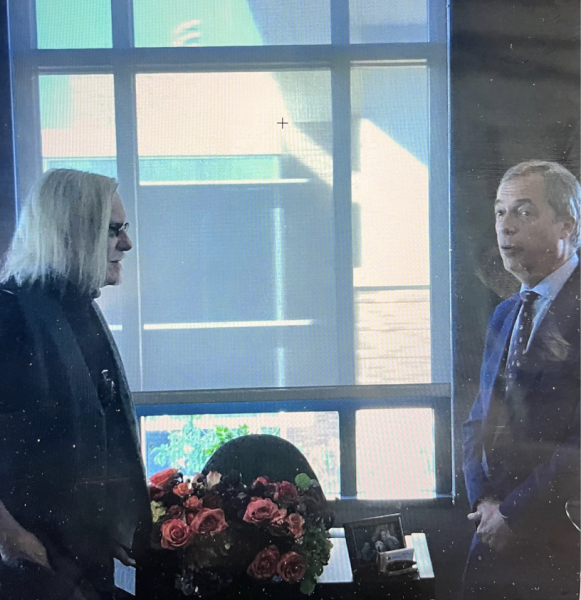
Today’s white hate mongers can be found breaking Black bodies not only at tiki torch gatherings but in suburban settings populated by clean-cut young white men in spiffy-looking attire designed to mirror the sartorial trends of the all-American white suburbanite crowd.
At the core of contemporary white supremacy and the radical shift in evangelical Christianity within white constituencies exists an entrenched, almost existential fear—one that is rooted in the shifting tides of global power. Historically marginalized non-white nations, once subjugated to the periphery by colonialism and imperialist systems, are now ascending, mastering the very technologies and systems of knowledge that once served as instruments of their oppression. These nations are no longer content with dependency or subordination; they are demanding a seat at the table, asserting their agency, and challenging the global order that has long privileged whiteness.
White Supremacy Ideology Dominates
This fear is far more profound than simple anxiety over economic competition or political influence. It strikes at the heart of an identity forged in the belief of superiority and ordained dominance. It is the dread of losing not just material advantages but also the symbolic power of being at the apex of a racial and cultural hierarchy that has defined the "white world" for centuries. This seismic shift in global dynamics disrupts the narrative of a divinely sanctioned order where whiteness is synonymous with progress, civilization, and control.
In response, this fear has manifested in defensive and often violent reactions. From policies that seek to codify exclusionary practices to ideologies that sanctify whiteness under the guise of Christian nationalism, the aim is to preserve a faltering order. The rise of authoritarian populism, militant nationalism, and religious extremism are all symptomatic of this backlash, as are the relentless attempts to delegitimize non-white voices and movements for justice and equality.
At its most sinister, this fear fuels a worldview in which non-white nations, immigrants, and even longstanding minority populations within predominantly white nations are cast as existential threats. It justifies acts of violence and oppression as measures of self-preservation, cloaking them in the language of divine will or national security. Yet, beneath these justifications lies an acute awareness that the global hegemony of whiteness is neither natural nor eternal but a fragile construct being actively dismantled by the resilience and resistance of those it sought to dominate.
Confronting this fear requires more than condemning its manifestations; it demands a radical reimagining of global relationships. It calls for an acknowledgment of historical injustices, a commitment to equity, and an embrace of a future where power is not hoarded but shared. Only through such transformative reckoning can we hope to dismantle the structures that perpetuate white supremacy and move toward a genuinely just and inclusive world.
The manifestation of this fear has revealed itself through some of the most heinous acts of racist violence directed at immigrants from these ascendant nations. These immigrants are cast not merely as strangers or outsiders but as existential threats to a meticulously constructed world order grounded in the maintenance of racial hierarchies. For white nationalists, this threat transcends mere demographic shifts; it is a perceived assault on the very essence of their identity and a harbinger of an irreversible transformation of what they see as their rightful dominion.
To guard against this imagined annihilation, this conjured racial obliteration, white nationalists have sought to reframe American identity in the narrow, exclusionary terms of white Christian nationalism. This is not merely a political maneuver but a deeply existential act—a desperate bid for self-preservation in the face of what they perceive as an impending erosion of their cultural, religious, and racial hegemony. The adoption of this ideology allows them to elevate their own identity as sacred and immutable, casting themselves as the last line of defense against a tide of cultural, religious, and racial "others" who threaten to redefine the nation.
Through this lens, white Christian nationalism becomes a rallying cry for those who feel that their dominance is slipping away. It justifies the codification of laws and policies designed to exclude, marginalize, and oppress. It sanctifies violent actions as necessary measures to protect a "divinely ordained" social order. And it provides a veneer of righteousness to ideologies that, at their core, are fueled by paranoia and entitlement.
Yet, this existential fear is fundamentally misguided. It arises from an inability—or refusal—to confront the historical and systemic injustices that underpinned the ascendancy of Euro-American power. It misinterprets the rise of non-white nations and communities as a zero-sum game, where their empowerment necessitates the disempowerment of others. In reality, what is at stake is not obliteration but transformation—a move toward a more inclusive and equitable global order that challenges the primacy of any one group or identity.
Fear Is Driving the White Christian Nationalist Message
To counteract this dangerous ideology, it is essential to address the fear at its root. This involves dismantling the myths of supremacy and exclusivity that have long propped up white Christian nationalism, fostering instead a vision of shared humanity. It requires education, dialogue, and policies that not only expose the fallacies of racial hierarchies but also actively promote justice, equity, and mutual respect. Only then can we begin to dismantle the structures that sustain white supremacy and replace them with a foundation rooted in pluralism, inclusivity, and hope.
The framework they create seeks to establish America as a fortress of white Christian normativity. They see themselves as the true guardians of America’s sacred order, battling not just against political foes, but against the very cultures, religions, languages, and values that threaten to replace their dominance. To this end, they must redefine Christ himself—not as a figure of love, justice, or equality, but as a white God who reigns supreme over the heirs of European Christianity.
In this distorted vision, the cross becomes a symbol not of salvation, but of white supremacy, wielded to preserve sacred hierarchies that have long served to justify exclusion, oppression, and domination. The diversity championed by leftist multiculturalists is portrayed not as a strength, but as a threat to the sacred order—an effort to subvert American values by diluting them with foreign influences. Immigrants, especially those of color, are infantilized in this rhetoric, seen as incapable of truly becoming "American" despite how many generations their families have been in the country.
The fear is that these immigrants will not only fail to assimilate but will actively replace the cultural and racial foundations upon which America’s identity has been built.
This worldview is a toxic blend of paranoia and entitlement, one that sees the arrival of non-white immigrants not as a natural consequence of globalization, but as an existential threat to a vision of America that has always been rooted in exclusion.
Globalism is being attacked by authoritarian populist organizations who are also criticizing multiculturalism and liberalism and championing supra-national associations and entities (globalists is a coded term used by the far right that often refers to a secret cabal of Jewish cosmopolitan elites headed by George Soros, who are in control of world financial markets). The ultra-nationalist populists are busy cultivating a hyper-patriotism engrafted into the ideals of the nation-state, facilitating the white state’s ability to manufacture iron-cast subjectivities out of its emplaced citizenry based on ethnic heritage while roundly rejecting the cosmopolitan subjectivities of those calling for diversity and a multi-polar world. In such a swamp of antagonisms, saviors can be found everywhere, and followers who are desperate for rescue. The public sphere has been concretized in oppressive ways, ensepulchered in a vault of political corruption, disallowing socio-cultural inclusion through gerrymandering and restrictive voting rights legislation. This has gone so far as to transform the entire civil service, ensuring it would be populated indefinitely by Trump loyalists.
The haunting footage of the 1929 German-American Bund rally at Madison Square Garden—a spectacle of twenty thousand zealots draped in swastikas and steeped in the iconography of fascism—chills the soul, not merely for its eerie likeness to Hitler’s Nuremberg rallies, but for the grim reflection it casts on the present. It is a reminder that the United States has long harbored its own festering undercurrents of hatred and white supremacy, currents that have resurfaced with bold defiance in the feverish atmosphere of Trump rallies. The words of the Nazi speaker at the rally, who decries the Jewish press as a “creature with horns” and a “cloven hoof and a long tail”— bear a haunting similarity to Trump’s characterization of immigrants as “vermin.”
An Enduring Affinity for Authoritarianism
Then, as now, the militant choreography of such gatherings—unabashed in their glorification of exclusionary ideologies—lays bare a deep, enduring affinity for authoritarianism. The thunderous chants and fervent displays of loyalty evoke an unsettling sense of déjà vu, a warning echoing across the decades that the distance between history’s darkest chapters and today is perilously short. This is not merely a repetition of history’s mistakes; it is the dangerous rekindling of embers that were never fully extinguished.
One need only refer to the spectacles of Charlottesville’s Unite the Right rally and the Conservative Political Action Conference of 2021 held in Orlando Florida to make this point. This CPAC was condemned by The Hyatt Hotels Corporation when the design of its stage was discovered to be modelled on the Norse Othal or Odal rune featured in the insignia of at least two Nazi SS Nazi (Schutzstaffel) units during World War Two. And yes, this location was where one of the vilest Trump sycophants, Ted Cruz, screamed ‘Freedom’! echoing a speech by William Wallace in the film Braveheart (as a Scot whose clan fought in the battle of Culloden I found Cruz’s brackish bluster to be especially repugnant and hypocritical—Wallace would never have tolerated the “backpfeifengesicht” Cruz).
A foundational belief of white Christian nationalism is that the United States was uniquely founded by white European Christians, who are seen as the rightful heirs to the privileges and power of "legacy" Americans. This distorted worldview not only misrepresents the diverse and often contested history of the nation but also weaponizes religious faith to justify exclusionary ideologies. The Americanist reinterpretation of white nationalism is perhaps one of the most pressing challenges facing the evangelical community in the United States today. Rescuing Christianity from these misinterpretations and distortions of its teachings—particularly those imposed on the laity since Reconstruction—is an urgent task for those committed to the principles of justice, love, and equality inherent in Christian ethics.
The collaboration between self-styled militia groups, radical white Christian nationalist organizations, and white supremacist factions represents a dangerous convergence of ideologies. This coalition thrives on a shared narrative of "aggressive defensiveness," wherein perceived threats to "White Christian America" are amplified and framed as existential crises. So-called "woke culture" is often vilified as a malevolent force, a convenient scapegoat for broader societal changes that challenge entrenched systems of privilege. This aggressive defensiveness is more than rhetorical posturing; it is a political delusion that justifies violence as a necessary tool to "defend" America. Groups like the Oath Keepers, in their paranoia, position themselves as saviors, employing violent means to combat an imagined tyranny and dictatorship.
The irony is glaring. These groups, while decrying tyranny, openly embrace and glorify authoritarian figures like Donald Trump. Their participation as foot soldiers in the January 6 insurrection—a direct assault on the democratic process—helped to foment the very political tyranny they claim to resist.
The Marriage of Capitalism and Religion
Until Christian nationalism is undone by democracy, the road to forging critical communities remains ensnared in the choking vines of an ancient pact: the unholy marriage of capitalism and religion.
Critical pedagogy unveils the intersections of race and corporate power, piercing the binary oppositions that stifle true comprehension. It transforms the classroom into a forge where passive minds are recast, capable of wielding reason in the service of democracy. In the heat of dialectical engagement, students awaken to the structures that bind their humanity and gain the tools to reshape them, striking blows against the barriers that constrain equality and justice.
The battle, however, must also be fought within the citadel of white evangelicalism, a fortress of identity and belief bound in chains of a historical narrative that has long served to uphold privilege. Yet, within these walls, identities are not as unyielding as they may seem. They are malleable, shaped by the crucible of questioning, reconsideration, and reinterpretation. It is here, amid the intricate webs of tradition and dogma, that a profound possibility stirs—the potential for a rebirth.
In this transformative process, freedom need not remain tethered to the hollow privileges of power and dominance. Instead, it can be reimagined, re-rooted in the soil of justice, where it grows not in the shadow of exclusion but in the light of equity and compassion. If white evangelicals dare to dismantle the altars they have built to a "White God," a deity constructed in their own image, they may find the courage to reimagine their faith, shedding the chains of a divisive past.
At the heart of this rebirth lies a radical tradition of Christianity: liberation theology.
Born from the struggles of Latin American priests and theologians in the fight against fascist dictatorships, liberation theology offers a vision of Christianity that transcends the walls of privilege, embracing a faith rooted in justice, solidarity, and the liberation of the oppressed. If white evangelicals are willing to listen to this call, they might find themselves not as defenders of a broken status quo, but as allies in the march toward freedom—a march that seeks not to preserve the power of the few, but to uplift the dignity of all in the belief in the resurrection of a carpenter’s son from Nazareth.
An earlier version of this article can be found at Pesaagora.
Comments

Powered by RoundtableAn AI/DeFi-powered Enterprise Media Operating System. Learn more at Roundtable.io.© Roundtable 2026. By using this site you agree to the Terms of Use and Privacy Policy