


Apr 29, 2015 4:18 PM
Updated Feb 10, 2022 10:36 PM
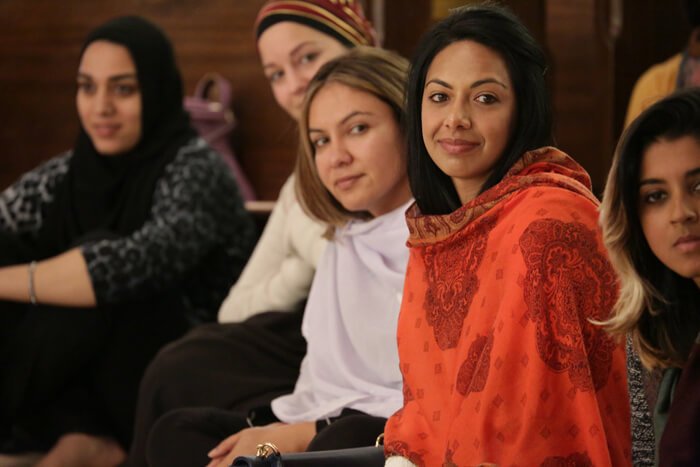
Rosemary Jenkins: Among the more progressive Muslim women, there has arisen a need to explore their religion beyond the traditional means, to ask questions, enjoy active participation, and develop a greater female identity and camaraderie.
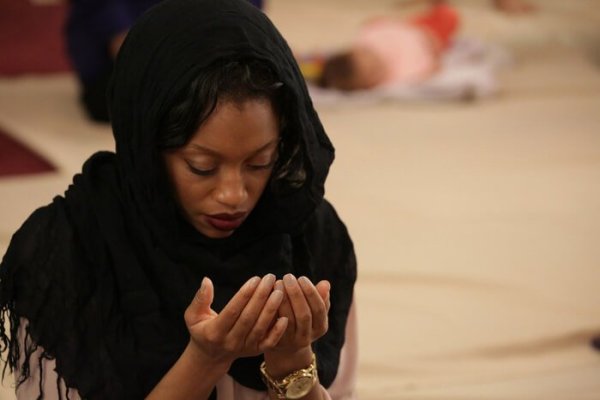
I have written a series entitled “Who Are the Real Angelinos?” discussing how the various ethnic groups have influenced the development of Los Angeles. One article was devoted to the impact of the Muslim community. Now, I am excited to share with you a wonderful new chapter in our City’s history: commencing in January of this year, there are now monthly services (jumu’ah or Friday prayer) held at Pico Union for and by Muslim women (although all women of any faith or non-faith are invited to attend and may wear any garments with which they are comfortable).
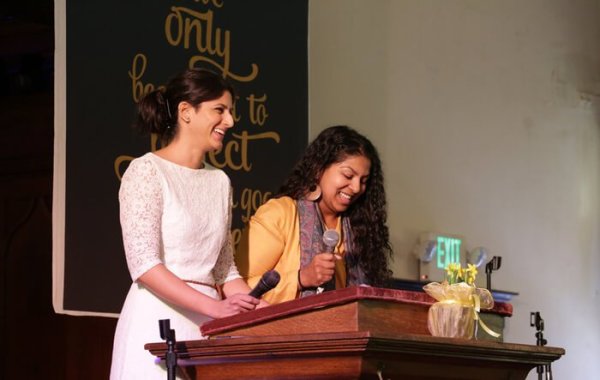
This is the brainchild of two outstanding leaders in Los Angeles: M. Hasna Maznavi (a filmmaker, writer, and director) and Sana Muttalib (an attorney), co-founders of the Women’s Mosque of America. It is perhaps a serendipitous coincidence (demonstrating a certain synergy) that the very location of the services used to be a Jewish synagogue.
This building (originally built in 1909 for Presbyterian services, later utilized by those from the Jewish religion, and now open to believers representing a multitude of faiths) is currently owned by Craig Taubman who has been excited and energized about sharing this structure with a broad cross-section of attendees—not only the Women’s Mosque but also those from the Jewish religion, Christian believers, and others.
Contrary to some of the opposition for women having their own services, this is not the first time such programs have been conceived—women’s mosques have existed from the creation of the Muslim faith. China, Chile, and India are examples of such countries which have women’s mosques--“each with a religious perspective that reflects its own country’s culture, politics, and history.” However, this is the first such mosque for Los Angeles.
Related stories
If the Qu’ran and Muslim history are studied properly, one will quickly realize that women played a prominent role from the beginning. The Prophet Muhammad ("Peace be upon him. May Allah honor him and grant him peace") never declared that women should be segregated during prayer and in other places. It is interesting that this kind of division is not new to religious practice: women to this day are separated and considered “second-class citizens” in Jewish Orthodoxy—hence the emergence in the 20th century of Reform Judaism.
In fact, women were very influential in the early years of the religion and continue to be among some sects. During Muhammad’s life and after his passing, the women in his life played a prominent role due, in part, because he supported female leadership.
His wife, Aisha (daughter of Abu Bakr—see below), considered the Mother of the Believers, was looked up to for her scholarship, intellect, and her Socratic skills. In her own right, she was known for her knowledge of medicine and poetic authorship. She was greatly helpful in spreading the word of the Qu’ran—which eventually became a worldwide religion (the second largest today) and one that now represents a quarter of the world’s population. She is credited with narrating 2210 hadiths (accounts of Muhammad’s teachings), having spent 44 years of her life devoted to her mission.
Fatima (daughter of Muhammad and his first wife Khadija bint (daughter of) Khuwaylid) cared for her father so diligently and devoutly that he often called her umme abiha. She was actually known by a number of names, such as “the one, other than the Prophet, to whom an angel speaks,” “the truthful one,” “the blessed one,” “the one who will be judged well on Judgement Day.”
Fatima’s mother, Khadija was 15 years older than her husband and known as The Lady of Light and for her renowned support of the new religion.
Not surprisingly, however, there were questions about succession after Muhammad’s death. There was significant conflict and frequent violence between and among followers (as we see in so many religions). One the one hand, there were those who believed that the Caliph (successor) should be part of Muhammad’s bloodline [today ’s Shi’a (supporters/helpers of Ali)]. Ali ibn [or bin (son of)] Abi Talib was the Prophet’s cousin and son-in-law (married to Fatimah).
The other sect became known as the Sunni (followers of the Prophet’s customs). Abui Bakr was the Prophet’s friend and was considered the most pious and knowledgeable of the Qu’ran and of Muhammad’s theology and the best person to perpetuate and spread the Prophet’s beliefs.
This conflict has never been resolved (as we witness so much conflict in the Middle East today).
Perhaps it is left to the women (once again) to leader the world to a sense of peace and harmony and a resolution to the divisions within the religion. In fact, to quote Ms. Maznavi, “The stories my mother taught me from the Qu’ran were all about equality!”
It is she and Muttalib who have taken this burden upon their shoulders to realize the Prophet’s true and genuine goals. I have taken the opportunity to read the Qu’ran and (as a student of historical religion) have come to the conclusion that Islam is a faith teaching peace and altruism, the latter playing a prominent role—repeatedly demanding that believers take care of the orphans. It goes on to declare that those of the Jewish and Christian faiths be treated as equals—a pronouncement that was followed for centuries.
Among the more progressive Muslim women, there has arisen a need to explore their religion beyond the traditional means, to ask questions, enjoy active participation, and develop a greater female identity and camaraderie.
For many women, there is a sense of humiliation and second-class categorization when they are separated from the men and older children during traditional Muslim services. Hence, among the more progressive Muslim women, there has arisen a need to explore their religion beyond the traditional means, to ask questions, enjoy active participation, and develop a greater female identity and camaraderie. These Friday afternoon meetings are meant to provide a safe place to pray, to empower Muslim women, to inspire them, to encourage greater Qur’anic literacy (the fiqh—gaining deeper and fuller understanding of their faith), to express the female perspective within the Muslim Ummah (community).
These jumu’ah are not intended to compete with the traditional services but to supplement the religious process for women. The khutbah (public sermon) is given by women for women (and children under 12). Often there are guest speakers who inspire the congregation with new ways of thinking about themselves and their immediate and greater community. One presenter stated, “Being surrounded by women in an environment created for women created a special spiritual charge I won’t ever forget.” Some observers were moved to tears because of the implications of being part of something so authentic and meaningful.
For these women, it is a wonderful experience to be able to interact with the guest lecturer who is eager to ask and answer questions from the women in attendance. What has been so moving for many is when a woman is allowed to do the adhan (call to prayer)—a time-honored song traditionally sung by a man. The muadhan sings the following over and over throughout the service:
Allahu Akbar (God is Great)
I bear witness that there is no god except the One God.
I bear witness that Muhammad is the messenger of God.
Hurry to the prayer.
Hurry to success.
Allahu Akbar (God is Great)
There is no god except the One God.
Prayer is better than sleep.
The beauty of the song and the fact that a woman is intoning the notes make for one of the most touching experiences a woman can feel (whether Muslim or otherwise). Again, by comparison, the Holy Scriptures declares in Exodus 20:3 and Deuteronomy 5:7 (first of the Ten Commandments), “Thou shalt have no other gods before me.” What this really means is that there is allowance that other gods exist but there is only the One True God (Yahweh in Hebrew) above all others. Islam reiterates this thinking with great passion and fervor.
Men are not invited to participate in these jumu’ah but are welcome to attend and participate in the many classes that are offered through this mosque’s programs.
To emphasize the meaning behind the creation of this assembly, Maznavi declared, “God does not change the condition of people until people change themselves.” I wholeheartedly support this imperative. I have tried in my own way to encourage this belief: “The purpose of life is to make ourselves better people and to make the world a better place” is a slogan to which I try to adhere and one that I had taught in the classroom and have shared with so many others through my writing.
Keep in mind that the major world religions observe some form of what Judeo-Christians call the Ten Commandments. Islam is no different but it goes on to include the Five Pillars of this faith which all believers are expected to follow:
- Testimony of faith (consecration/baptism in other religions)
- Prayer
- Zakat (support of the needy)—similar to the Jewish Tzedakah
- Fasting during the month of Ramadan
- Pilgrimage to Mecca (at least once in a lifetime if at all possible)
There is far more that we can share universally. The fact that the Golden Dome on the Rock (the most recognizable structure in Jerusalem’s panorama) is located in a place that is holy for all three major religions, should underline for all of us just why there ought to be an expectation and realization of harmony within and among the people representing these three philosophies and should emphasize how we share a common history and heritage.
It is said that the Prophet rose and returned to earth from this very spot on the Night Journey to Heaven (celebrated with readings during the month of Rajab—generally in April). Christians, like Jews, believe this is the Temple Mount upon which the First and Second Temples were erected (the Wailing or Western Wall exist now as lasting manifestations of this most sacred religion site).
The earliest of these three religions, Judaism, holds this place as holy because it is there that Abraham was challenged by God to sacrifice his son, Isaac (a version of which is incorporated into Muslim belief). These actions, therefore, also historically commemorate the division and separation between human and blood sacrifice (later such “sacrifices” became and remain only symbolic).
The Western World, in particular, has too often misinterpreted what Islam is and who its followers are. We often choose not to separate true, authentic believers from those who pervert the religion for their own purposes. I have written a poem on this very subject to help readers achieve a new and different perspective and to understand so much better the deep feelings that so many may harbor because of historic mistreatment (think of the Crusades). Please check out this poem printed in Hollywood Progressive entitled “Jacob’s Brother.”
Not to be overlooked as well, is the growing numbers of modern, progressive Muslims (such as those who participate in these women’s services) who are seeking a harmony and inclusiveness that will help Westerners to achieve a more receptive perspective about the faith of their neighbors—near and far.
For a long time, I have looked forward (as a Jewish woman and a part of the ummah) to attend a Muslim jumu’ah (as I have with services of so many other faiths). Thus, I took advantage of the opportunity to attend my first Islamic service last Friday.
I must share with you just how overwhelmed I became during and since my being part of this magnificent setting. I shall forever be a changed person (even though I have always felt a kindred spirit with the Muslim community and have always appreciated its influence on human history since the inception of this dynamic religion).
The repeated physical rhythms of the prayer cycles created a spiritual feeling that reaches deep into the soul. Sitting row by row or kneeling or standing or sitting in a chair—all positions are acceptable and all draw the participant in (regardless of personal faith) to the spirit of the moment. The response of each woman to the تبادل الأحاديث (conversation sharing) is personal and different but extremely meaningful and life-altering.
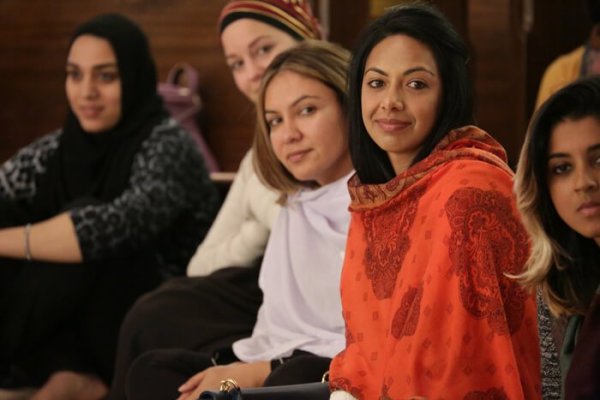
Immediately following the formal jumu’ah is a discussion group held in a circle so that all participants are symbolically of equal value. Many women were brought to tears (including myself) as stories, which will be kept strictly private, were shared among each other.
It should become clear, then, that it is well beyond the time for women to assert themselves in order to be seriously considered as equals! Thus it is that Misses Maznavi and Muttalib are doing just that and, in consequence, are taking their rightful places (though not seeking this acclaim) not only in modern Islamic history but in the development of today’s and tomorrow’s world!
Please, join me and scores of other women on a Friday afternoon to be a part of this wonderful experience. Remember also, there is a place for men who wish to support this movement through participation in classes and other get-togethers and share (some experiences vicariously) with their enlightened wives, girlfriends, or significant others.
In closing, let me leave you with a vignette that I have heard over time. Cecil Murray, a retired pastor and activist from the prominent AME Church in Los Angeles (and now on the staff at USC, chairing the Cecil Murray Center for Community Engagement), found himself a while back in one of the French-speaking countries in Africa.
He was speaking with a group of women who came from the impoverished, less-educated, under-represented “underclass.” He was talking about self-worth and offered an example: He held a 5000 franc note and asked what it was worth. There were different answers—it could buy some chickens, a goat, some milk, etc. Then he crumpled up the bill and threw it disdainfully on the ground to gasps from the listeners. Then he picked it up and straightened it out. Now, he asked, how much is it worth? They weren’t sure how to answer, but he brightlydeclared, It is worth the very same thing. It is still worth 5000 francs no matter what happens to it.
The moral became obvious (and made me tear up when I understood his point). These women--no matter how they had been treated, abused, misused, harmed--they are all still human beings, deserving what is guaranteed by birthright: human dignity, equal treatment, respect, the right to express their true thoughts and feelings, to educate themselves, to pursue careers of their choice, to be held in esteem within and outside the family, to rear their children according to conscience.
What a lesson for us all!
For further information, here is some contact information:
Services are held monthly at Pico Union from 1- 2:30 p.m.
1153 Valencia Street
Los Angeles 90015
818-760-1077 (Ms. Madison Greer)
My Poem published by Hollywood Progressive: “Jacob’s Brother” on 12/23/2013.
My Article: “The Islamic Influence on Los Angeles,” published by City Watch LA
on December 1, 2014.
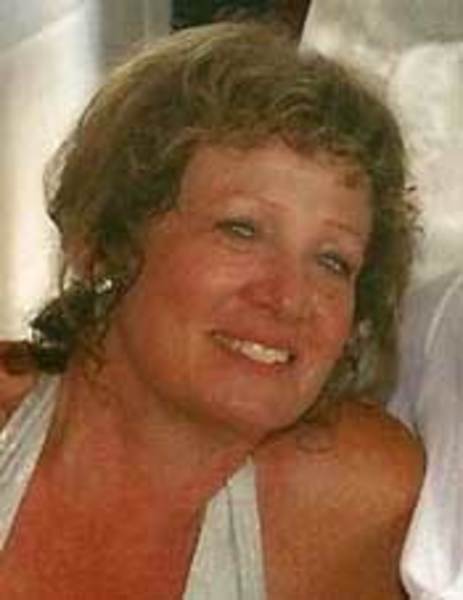
Rosemary Jenkins
Comments

Powered by RoundtableAn AI/DeFi-powered Enterprise Media Operating System. Learn more at Roundtable.io.© Roundtable 2026. By using this site you agree to the Terms of Use and Privacy Policy