


Aug 4, 2026 2:20 AM
America’s economic elites have repeatedly used racial hierarchy to prevent Black and white workers from building power together.
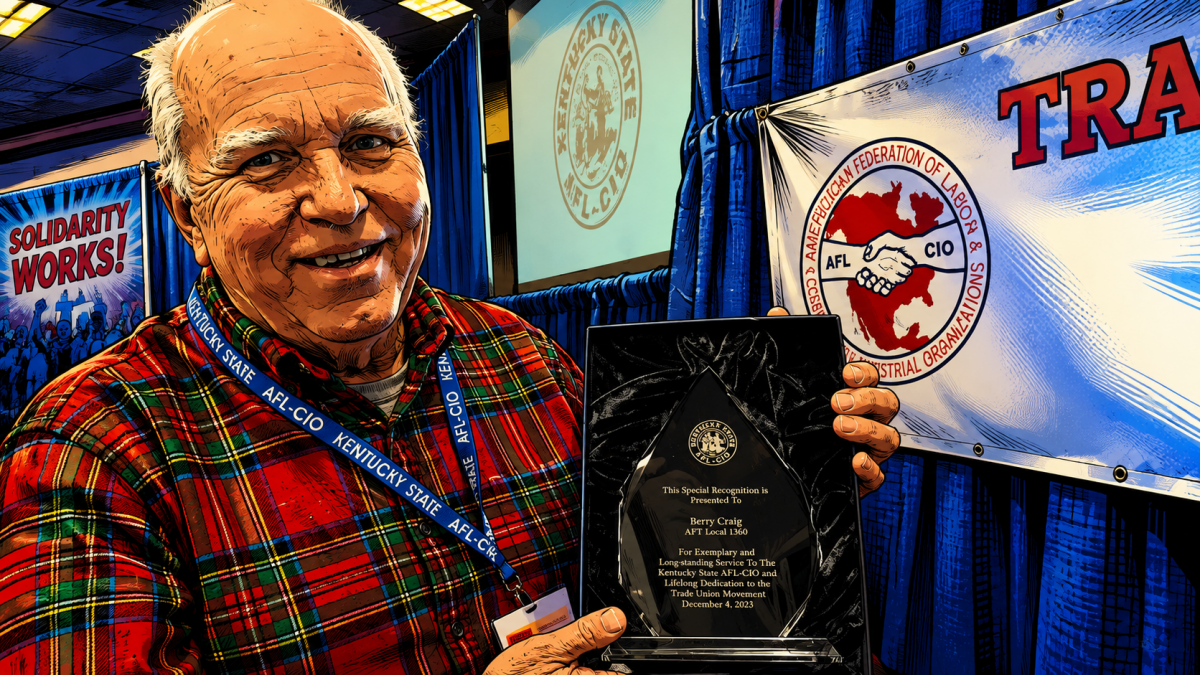
Berry Craig does not speak about racism as an abstract problem. At 76, he has spent his life in western Kentucky, a region shaped by slavery, segregation, and labor exploitation. He grew up under Jim Crow, studied American history and political science, worked as a newspaper reporter, and taught for 24 years.
Craig is a white Southern man who refuses the bargain white supremacy has long offered people like him: accept economic exploitation and political manipulation in exchange for being considered superior to Black people.
He traces his awakening to childhood. During the desegregation of local schools, he met a Black student named Cecil Horton. Like many children getting acquainted, Craig asked what Cecil’s father did.
“He said, ‘My father’s a Presbyterian minister.’ And I said, ‘Where?’ He said, ‘Right here in Mayfield.’”
Related stories
Craig had never known there was a Black Presbyterian church in his hometown. His Sunday school taught that all people were God’s children, yet Black Presbyterians were not welcome in his church. The only Black people he remembered seeing there were the nursery worker and the janitor.
The contradiction stayed with him. As a history student, he gained the language and evidence to understand it.
The Bargain of Whiteness
Craig points to W.E.B. Du Bois, who wrestled with why poor white people so often supported an order that exploited them. A poor Black farmer and a poor white farmer might face the same bank, railroad monopoly, crop failure, and threat of losing everything.
Yet ruling elites repeatedly persuaded poor whites that their most important identity was not worker, farmer, debtor, or tenant—but white.
During slavery, wealthy enslavers assured poor whites that no matter how impoverished they were, they remained socially superior to every Black person, enslaved or free. Most Confederate soldiers did not enslave people, Craig notes, largely because they were too poor to do so. But many aspired to the status of the enslaving class. White supremacy gave them a place in the hierarchy, even when it gave them little else.
That bargain survived slavery.
After the Civil War, poor Black and white farmers were trapped by sharecropping, predatory lending, railroad monopolies, and agricultural monopolies. In the 1890s, farmers organized through the Populist movement. Some recognized that racial division made no economic sense. Black farmers, white farmers, and exploited urban workers were “all in the same boat.”
For a moment, interracial working-class solidarity appeared possible.
Then the powerful played the race card again.
White elites warned poor whites that cooperation with Black citizens threatened their status and political control. Racism fractured the movement, sacrificing a broad democratic coalition to racial hierarchy.
“It has worked forever,” Craig says. “And it’s still working.”
Jim Crow Was Not Ancient History
Craig wants younger Americans to understand that Jim Crow is not remote history. He remembers segregated restaurants, hotels, neighborhoods, cemeteries, schools, and courthouse restrooms. In his hometown, the courthouse had four toilets: white men, white women, “colored” men, and “colored” women.
“This is not the 1860s,” he told his students. “We’re talking about the 1960s.”
He also insists on the distinction between desegregation and integration. When Black students were transferred from Dunbar High School into the white school, Black students came over; many Black teachers did not. The white institution remained while the Black institution was dismantled.
That pattern—admitting Black people into white-controlled spaces without redistributing power—has often been mislabeled integration.
Sharon Kyle noted that even in Los Angeles, one can drive down Wilshire Boulevard and watch racial and economic boundaries shift. Redlining may no longer be openly written into law, but its legacy persists through wealth, housing prices, policing, and social custom.
Craig agrees. Northern and Western communities often congratulate themselves for avoiding the South’s explicit Jim Crow laws while maintaining segregated neighborhoods and schools. Racism was never only Southern. It was national.
From Open Segregation to Political Code
After the civil rights movement made explicit racial appeals less acceptable, racism did not disappear. Political language changed.
George Wallace campaigned openly as a segregationist. Richard Nixon’s “Southern Strategy” relied more heavily on coded appeals—crime, welfare, disorder, states’ rights, and resentment toward federal intervention. The language became less direct, but the message remained recognizable.
Donald Trump removed much of the disguise.
For Craig, “Make America Great Again” carried a clear subtext: make America white again. Trump did not create the racism underneath American politics; he exploited what had been “bubbling under the surface” for generations. His supporters understood whom he blamed, demeaned, and promised to put back on top.
Dick Price raised a strategic concern. Democratic leaders frequently reduce Trump’s appeal to “affordability”—gas prices, groceries, inflation, and household costs. Those issues matter. But treating Trumpism primarily as an economic protest means misunderstanding its foundation.
Economic conditions change. Gas prices fall. Wages rise or decline. Racial grievance can survive every shift in the business cycle.
Craig put it bluntly: many loyal Trump supporters “love him because he hates who they hate.”
Promises of cheaper gasoline cannot defeat a movement rooted in identity, hierarchy, and resentment.
The Media’s Great Evasion
Craig is especially critical of journalists who traveled through diners, coal towns, and rural communities after the 2016 election asking white voters why they supported Trump—but rarely asking whether racism influenced their decision.
Reporters heard about lost jobs, shuttered factories, and distrust of government. Those were legitimate subjects. But race was treated as too divisive to mention.
The result was a distorted national story: Trump voters were presented as economically anxious while the racial meaning of Trump’s campaign was pushed aside.
Kyle observed that even brilliant commentators can discuss American inequality for an hour without naming race. That omission allows whiteness to remain invisible and racial power to masquerade as ordinary politics.
Craig does not claim every Trump voter expresses racism identically. He argues that analysts cannot understand the movement while refusing to investigate its racial appeal.
“At least ask the question,” he says.
White Churches and Selective Christianity
For Craig, some of the most painful hypocrisy comes from white churches. Christianity was selectively taught to enslaved people, with enslavers emphasizing passages demanding obedience while ignoring demands for justice, liberation, mercy, and care for the poor.
Frederick Douglass wrote that some of the cruelest enslavers were also among the most publicly religious. Craig sees the same contradiction in churches that proclaim morality while tolerating racism, attacks on LGBTQ people, union busting, and indifference to poverty.
Yet he also sees another tradition—one rooted in social justice and Christian socialism. He points to pro-labor clergy and the history of Christian socialists in Kentucky. In 1906, American Christian Socialists held a convention in Louisville, and organizing later reached small western Kentucky towns.
“What the hell happened to them?” he asks.
The tradition survives wherever believers read the “red letters”—the words attributed to Jesus—and find a mandate to stand with the poor and excluded.
A Proud “Scalawag”
After the Civil War, white Southerners who supported Reconstruction and the rights of newly freed Black people were condemned as “scalawags.” Northerners who came South—often teachers, missionaries, and reformers—were derided as “carpetbaggers.”
Craig embraces the insult.
“I’m a scalawag,” he says.
He places himself among white Southerners who refused racial conformity: journalists, educators, lawyers, unionists, and ordinary people who stepped to a different drummer.
Kyle told Craig that his voice carries particular force because he is not perceived as speaking from racial self-interest. Craig agreed with one qualification: dismantling white supremacy is in everyone’s interest. A system that trains white people to accept domination in exchange for racial status weakens labor, corrupts religion, impoverishes democracy, and leaves the powerful free to exploit everyone.
Who Can Be Reached?
Craig is pessimistic about changing hardened Trump loyalists. People who do not want to change are unlikely to be moved by another fact, argument, or policy paper. Admitting error is difficult when political identity has become central to a person’s sense of self.
The better audience may be those who are unsettled, young, inconsistent, or not yet committed—people who can still be reached through history, moral clarity, personal relationships, and honest education.
Craig’s life suggests that change rarely comes from a single lecture. It can begin with a childhood friendship, a contradiction inside a church, a teacher’s question, a book, or a union struggle.
“You never know who you’re affecting,” he says.
That uncertainty is not a reason to stop. It is a reason to keep writing, teaching, organizing, publishing, and telling the truth.
History may not repeat itself, but it rhymes. Today the rhyme is deafening: racial division once again protects concentrated wealth and political power from a multiracial majority that could challenge both.
The lesson of Craig’s life and scholarship is not merely that racism harms Black people. Racism has been one of the most effective weapons ever used against democracy and working-class solidarity.
Until America confronts that truth directly, the race card will keep working.
Comments

Powered by RoundtableAn AI/DeFi-powered Enterprise Media Operating System. Learn more at Roundtable.io.© Roundtable 2026. By using this site you agree to the Terms of Use and Privacy Policy