


Nov 19, 2025 5:11 PM
Kirk’s own words prove he was anything but a champion of free speech, bold thinking, and “respectful dialog.”
State Sen. Steve Rawlings and state Rep. T.J. Roberts, both Burlington Republicans, say they aim to file bills making Oct. 14 “Charlie Kirk Day” in Kentucky.
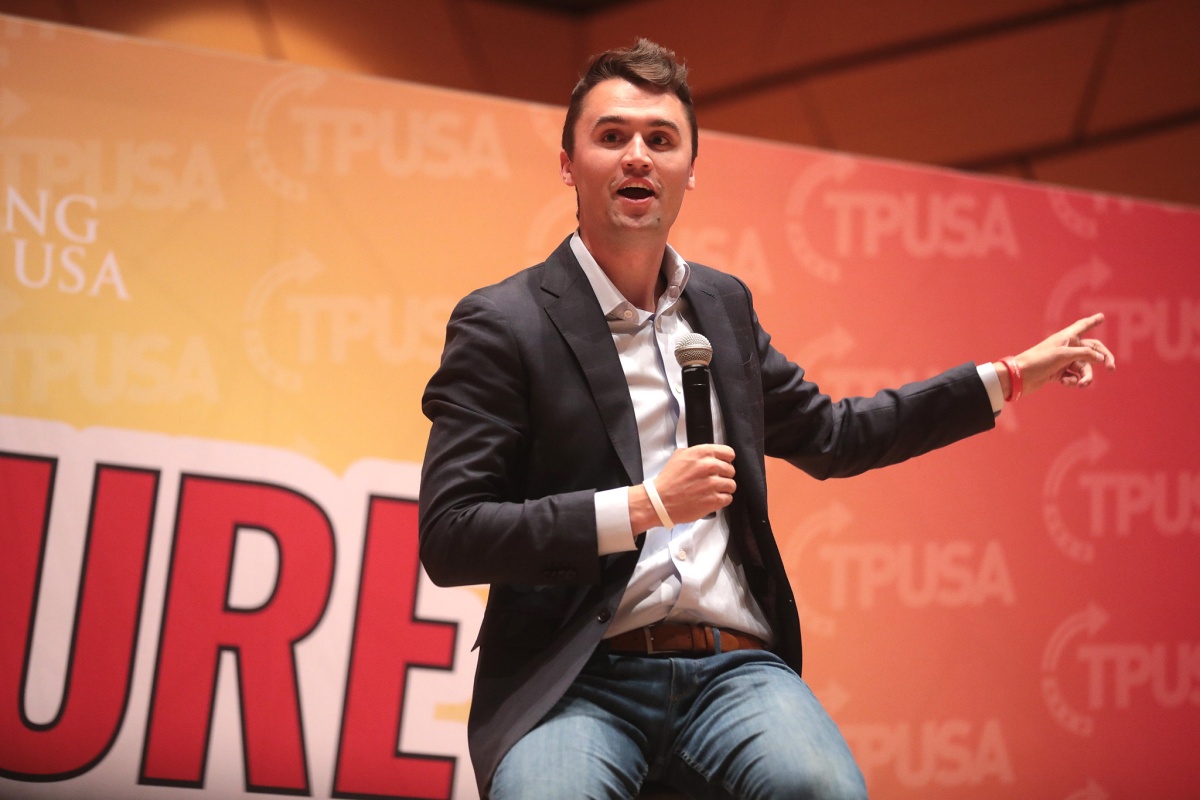
Kirk, a far-right-wing activist, podcaster, founder of Turning Point USA, and staunch Donald Trump ally who especially appealed to young conservatives, was assassinated Sept. 10 as he spoke at a Utah college. Oct. 14 was his birthday.
Rawlings and Roberts say they’ll introduce the legislation on day one of next year’s regular General Assembly session, which begins in early January. Other Republican state legislatures are similarly honoring Kirk.
“Charlie Kirk dedicated his life to ensuring that every American could speak freely and think boldly,” Louisville WHAS11 TV quoted Rawlings. “Even after his passing, his influence will continue to be felt through the countless young people he inspired and the enduring strength of the ideas he championed.”
Related stories
According to WHAS11, Roberts maintained that Charlie Kirk Day would represent a “renewed commitment to uphold respectful dialogue, courage in the face of adversity, and the conviction that faith and truth endure. Charlie Kirk challenged us to defend the liberties our founders enshrined. He was particularly resolved to do so, to approach every conversation as an opportunity, even when it was difficult, when voices were silenced, or when disagreement hardened into hatred or distrust.”
Kirk’s own words prove he was anything but a champion of free speech, bold thinking, and “respectful dialog.” The Guardian published a sampling of Kirk hate mongering after he was murdered.
“Kirk ruled over an online fiefdom peddling his signature brand of rage-baiting racist, xenophobic, Islamophobic, and misogynistic commentary,” wrote Saida Grundy, a Boston University professor, in a Guardian op-ed. “It wasn’t just his vitriolic style, but also his popularization of cruelty, humiliation, and dehumanization of political opponents – especially college students – that attracted millions to his audience. He famously said empathy was “a made-up, new-age term that does a lot of damage.”
Wrote the Rev. Graylan Scott Hagler, senior advisor at the Fellowship of Reconciliation USA, in Word in Black: “In his rhetoric and so-called debate style this 31-year-old evangelical firebrand of the right has stated that Black pilots were incompetent, Gays should be stoned; ironically he was opposed to gun control, abortion, LGBTQ rights, criticized the Civil Rights Act of 1964 and Martin Luther King Jr., promoted Christian nationalism, advanced COVID-19 misinformation, made false claims of electoral fraud in 2020, and was a proponent of the Great Replacement conspiracy theory.”
The Rev. Rodney Kennedy, writing in Baptist News Global, said Kirk “was a garden variety Trumpian demagogue. His goal was not the advance of democratic deliberation but the shutting down of it by scapegoating and oversimplifying complex issues.
“… Kirk’s defenders make a lot of his evangelical Christian faith. He talked about Jesus a lot. I am not doubting his sincerity. He seemed to be a serious Christian. The problem: The Christianity about which he was serious was not shaped by the gospel but the idolatry of Trumpism and an evangelical faith cut loose from its moral values.
“Never have the words of Jesus seemed more relevant. ‘Not everyone who says to me, ‘Lord, Lord,’ will enter the kingdom of heaven, but only the one who does the will of my Father in heaven’ (Matthew 7:21).”
“Saying the name of Jesus to cloak right-wing ideas is not a magical potion. It uses the name of Jesus to assume unmitigated political power.”
In the Minneapolis Star Tribune, Twin Cities-based attorney, civil rights leader, and former Minneapolis NAACP branch president Nekima Levy Armstrong wrote that “Kirk built his career on attacking the dignity of others. He dismissed prominent Black women as affirmative-action ‘picks’ who, in his words, ‘don’t have the brain processing power to be taken seriously,’ despite never completing a college degree himself.
“He smeared George Floyd — whose murder sparked the largest racial justice protests in half a century — as a ‘scumbag,’ pushing conspiracy theories about Floyd’s life rather than grappling with the reality of police violence. He called the Rev. Martin Luther King Jr. ‘a bad man,’ attempting to strip away the moral authority of one of America’s greatest leaders.
“He was openly hostile to empathy itself, saying he did not believe in it. That posture was not abstract — it became a license for cruelty, for mocking the marginalized, for celebrating inequality. His rhetoric toward LGBTQ communities was no less venomous. For young queer kids scrolling social media, the message was clear: You are not safe, not worthy, not human enough to be treated with compassion.
“These words were not harmless. They were a politics of dehumanization, amplified daily through platforms that rewarded outrage. They emboldened bullies, disinformed voters, and undermined the fragile work of racial reconciliation in America. His legacy is not just of ‘provocative’ speech but of real harm.”
MAGA Republican supermajorities in the House and Senate would, of course, all but guarantee passage of the Kirk legislation. No doubt, both chambers would override any veto by Gov. Andy Beshear, a Democrat.
“The valorization of Kirk by his far-right defenders is an insult to millions of the most marginalized Americans who lived every day in the crosshairs of his rhetoric,” Grundy also wrote. “Kirk’s memorialization by his supporters and apologists is but a new opportunity to announce an old message about whose country this is and whose it isn’t.”
Comments

Powered by RoundtableAn AI/DeFi-powered Enterprise Media Operating System. Learn more at Roundtable.io.© Roundtable 2026. By using this site you agree to the Terms of Use and Privacy Policy