


Mar 25, 2026 12:47 AM
Updated Apr 6, 2026 5:28 PM
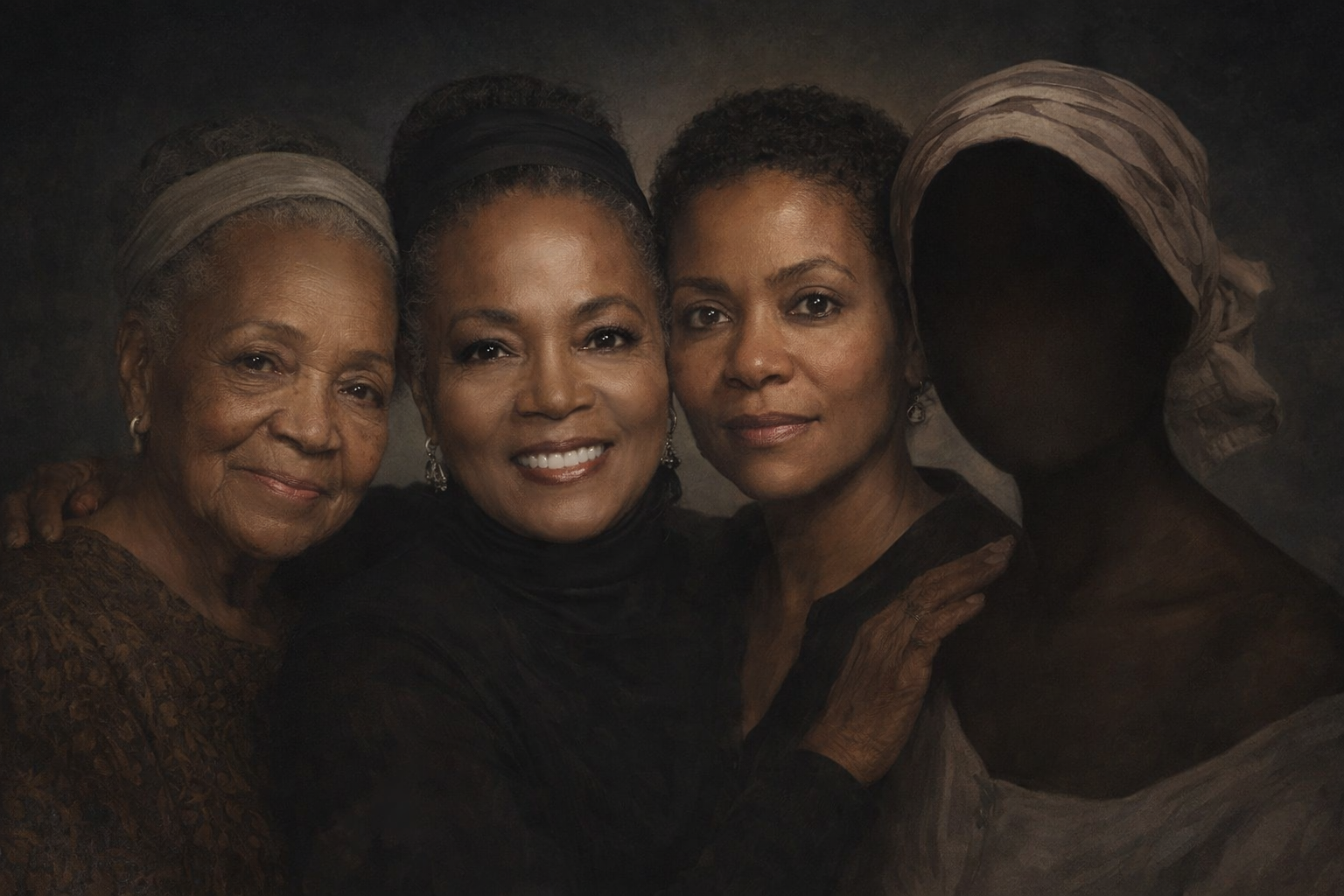
I can trace the enslaver’s name, his land, and his wealth—but the woman who gave my family life is missing from the record.
I have been building my family tree for years.
But like many African Americans, I hit a wall around 1870—the first U.S. census year when formerly enslaved people were listed by name. Before that, my ancestors disappear into someone else’s property ledger—counted, but not known. Tallied, but not named.
And then something else comes into focus.
Through DNA, I have confirmed what the historical record refuses to say plainly: white male enslavers fathered multiple lines of my family with the Black women they enslaved—women who had no agency, no control over their own bodies. Bodies the state and white society claimed as property.
Related stories
Here is the irony of having your DNA analyzed as an African American woman descended from enslavers and enslaved: you can often identify the likely white male enslaver whose DNA is in your blood—but you cannot identify the woman he raped.
What DNA makes newly visible is this:
- A portion of my ancestry traces to Europe
- I can often identify the white enslaver whose lineage appears in my DNA
- I can trace his land, his wealth, his descendants
But the women—my great-great-great grandmothers—are often nameless.
Women who bore children under coercion.
Women who raised families under terror.
Women whose labor—physical and reproductive—helped build this country.
And we do not even know what to call them.
The System at Work
This is a gap in the record. But the gap itself carries meaning.
These absences are not neutral omissions. They are signals—revealing what the society that produced them chose to value, preserve, and protect, and what it chose to obscure.
Slavery was not only an economic system. It was an information system.
Enslaved people were recorded as assets, not individuals. Women were reduced to reproductive capacity, not recognized as mothers. Children inherited status from their mothers—but not identity in any meaningful archival sense.
The state enforced this structure at every level:
- Census records before 1870 excluded the names of enslaved people
- Plantation records prioritized ownership over kinship
- Legal frameworks recognized paternity when it increased property—but erased it when it implied responsibility
That erasure operated in two directions at once.
White fathers were shielded from accountability.
Black fathers were stripped of recognition.
Enslaved Black men could father children, love their children, and raise their children—but the law did not recognize them as fathers. They could not pass on their name, could not claim their children in any legal sense, and could not protect them from sale.
At any moment, a child could be taken. A family could be broken. A father could be rendered a stranger to his own child—not by distance, but by law.
That was not incidental. It was engineered.
The case of Elizabeth Key v. Gould exposed a threat to the system: if a child could claim freedom through a white father, then exploitation carried consequences.
The response was swift. Lawmakers replaced English common law with partus sequitur ventrem—the status of the child follows the mother.
This was a system-level redesign.
It did something precise:
- It captured the economic value of reproduction
- It erased the legal meaning of paternity
- And it severed the recognition of Black fatherhood entirely
A child could be counted, sold, inherited.
The father—whether white or Black—could be known.
But in the eyes of the law, he did not exist.
From that point forward, the archive changed.
Fathers did not disappear because they were unknown.
They disappeared because they were made irrelevant.
The Human Consequence
The result was not just slavery. It was genealogical erasure.
And that erasure is still shaping my life.
I can identify genetic connections across entire branches of my family. I can locate living relatives—sometimes people who grew up near me.
But I cannot always name the women who connect us. And just as often, I cannot fully recover the men—because their fatherhood was never allowed to exist in the record.
Think about that.
A nation that can track property across centuries cannot reliably name the people who created its families.
And this is not distant history.
When my grandmother was born in 1909, millions of formerly enslaved people were still alive. When my mother was born in 1938, that number was still in the hundreds of thousands. When I was born in 1957, tens of thousands of people alive in this country had been born into slavery.
Three generations.
That’s all that separates me from a system that erased not just names—but relationships.
Giving Credit Where Credit Is Due
We preserve the names of “founding fathers.” We maintain estates, documents, signatures. We debate monuments.
But what about the women whose bodies and labor made those estates possible?
What about the men whose fatherhood was denied—men who loved children they could not legally claim, protect, or keep?
Where is their record?
Where is their recognition?
At the very least, we should be able to say:
This woman lived.
This man was a father.
These were their children.
This was their family.
This was their name.
Because names are not trivial. They are entry points into history, anchors of identity, and the foundation of lineage. To deny a name is to deny continuity.
What Repair Would Look Like
If we were serious about giving credit where it is due, we would not leave this work to individuals paying subscription fees and interpreting DNA matches on their own.
We would:
- Fund the identification and naming of enslaved women and men in archival records
- Systematically link plantation documents, birth records, and genetic data
- Provide free access to genealogical tools and expert support
- Preserve and elevate the names and relationships that can be recovered
This is not about rewriting history.
It is about finishing it.
The Work Continues
My great-grandmother spent her life searching for family separated by slavery. She never completed that search.
I am continuing it—with DNA, digital records, and time and money out of my own pocket.
And in doing so, I am encountering women whose lives made mine possible—and men whose fatherhood the law refused to recognize.
Closing
When I was born, people who had been enslaved were still alive.
And yet, I still cannot name the women in my own family who endured that system. I cannot fully recover the men whose fatherhood was denied within it.
That absence is not confined to the past. It continues to shape the present.
The same system that erased mothers’ names preserved white fathers’ property. Land, wealth, and legal identity flowed through documented white lineages, while Black descendants were cut off not just from names—but from claims.
The consequences are still with us:
- Difficulty establishing inheritance or land claims
- The loss of intergenerational wealth pathways
- A structural asymmetry where one side has records—and the other has gaps
Genealogical erasure is also economic erasure.
And because the archive itself is incomplete, the story we tell as a nation is incomplete. National history continues to center those who were recorded and marginalize those who were not. The contributions of enslaved women remain under-credited. The contributions of Black fathers remain under-recognized. The scale of exploitation remains undercounted. The moral accounting remains unfinished.
The erasure of names did not end with slavery.
It became infrastructure.
It shaped who could claim identity, who could claim property, who could claim history—and who would be left to reconstruct all three on their own.
And even now, I am still trying to recover them.
Comments

Powered by RoundtableAn AI/DeFi-powered Enterprise Media Operating System. Learn more at Roundtable.io.© Roundtable 2026. By using this site you agree to the Terms of Use and Privacy Policy