


May 8, 2026 11:40 PM
Updated May 9, 2026 1:03 AM
Ben Guillory and Danny Glover Carry Forward the Legacy of Paul Robeson
There are some conversations that leave you feeling inspired. Others leave you feeling educated. And then there are those rare conversations that do both at the same time.
That’s exactly what happened when I sat down recently with Ben Guillory — veteran actor, director, producer, arts educator, and co-founder of the Robey Theatre Company, which he launched alongside Danny Glover in 1994.
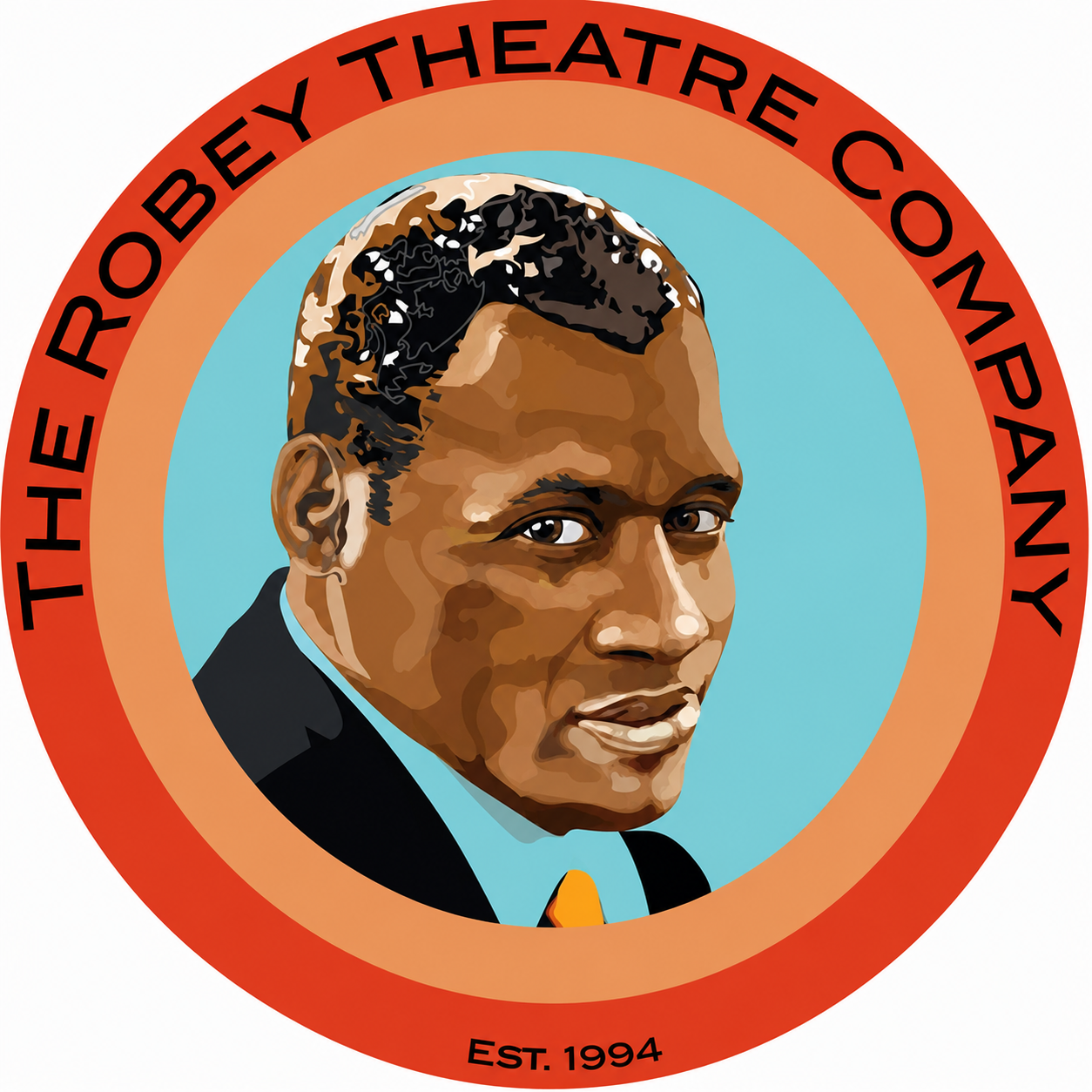
For more than three decades, the Robey Theatre Company has stood as one of the few Black theater institutions in Los Angeles dedicated specifically to telling stories rooted in the global Black experience and politically conscious art expression. Named after the legendary Paul Robeson — whose nickname was “Robey” — the theater company represents far more than performance. It is an act of cultural preservation, historical resistance, and artistic commitment.
And after speaking with Guillory, it became clear that the choice to name the company after Robeson was deeply intentional.
Related stories
The Giant Many Americans Forgot
Most Americans know little about Paul Robeson beyond a vague understanding that he was a singer or actor during the early twentieth century. But as Guillory explained, Robeson was one of the most extraordinary figures America ever produced.
Born in 1898, Robeson was a scholar, athlete, attorney, actor, activist, and world-renowned vocalist. He attended Rutgers University, excelled in football, played professional football briefly, earned a law degree, and became an internationally celebrated performer.
But Robeson’s importance extended far beyond entertainment.
“He was the most popular artist in the world from about the mid-1930s to the late 1940s,” Guillory explained during our conversation. “Not the most popular Black artist — the most popular artist in the world.”
Robeson sang and spoke in more than 20 languages. He performed across Europe, Africa, and Asia. People adored him because he spoke directly to them in their own languages and understood the struggles of ordinary people.
But it was precisely that international stature that eventually made him dangerous to the American political establishment.
As Guillory explained, reporters abroad routinely asked Robeson whether racism in America was as bad as they had heard. Unlike many celebrities of his era, Robeson refused to remain silent.
“He wasn’t going to just sing,” Guillory said.
Robeson openly criticized Jim Crow segregation, racial violence, and economic inequality. He developed deep political consciousness while living abroad, particularly during seven years in England after leaving the United States because of the humiliations imposed by segregation.
Eventually, the U.S. government retaliated.
During the height of McCarthyism and the anti-communist hysteria of the 1950s, Robeson was hauled before the House Un-American Activities Committee alongside figures like Langston Hughes and W. E. B. Du Bois.
In 1951, the government revoked Robeson’s passport. He was blacklisted. Concert venues closed their doors to him. He lost the ability to travel internationally and struggled to make a living despite once earning the equivalent of millions annually.
Yet he refused to back down.
“He knew exactly what would happen to him if he kept speaking,” Guillory said. “And he kept speaking anyway.”
That courage is at the heart of why Guillory and Glover chose to build a theater company in Robeson’s honor.
A Theater Company With a Mission
The Robey Theatre Company was founded with a clear purpose: to produce work centered on the Black experience while nurturing Black playwrights, actors, and technicians.
“Our mission statement is to illuminate the global Black experience and reinterpret Black classics,” Guillory explained.
That mission extends beyond staged productions.
The company offers acting workshops, advanced scene study programs, and a playwrights laboratory designed to help emerging writers and performers develop their craft. Some of the plays developed through these workshops eventually make their way onto the Robey stage.
For Guillory, this work is essential because Los Angeles — despite having one of the largest theater communities in the country — still offers remarkably few permanent Black theater institutions.
“There are almost 200 theaters in Los Angeles,” Guillory noted. “But only about three whose mission is specifically Black work.”
Among those, he named the Robey Theatre Company, the Ebony Repertory Theatre, and the Towne Street Theatre.
That reality matters.
Black theater has historically functioned not simply as entertainment, but as a space where communities process history, power, trauma, joy, resistance, and identity outside the distortions of mainstream institutions.
And sustaining those spaces requires constant fundraising, organizational labor, and long-term vision.
“We’re always fundraising,” Guillory said with a laugh. “Always.”
Building Black Cultural Infrastructure
For more than 20 years, the Robey Theatre Company has operated out of the Los Angeles Theatre Center in downtown Los Angeles while continuing to search for a permanent home.
The dream, Guillory says, is to eventually secure a dedicated building or long-term space that can fully support the company’s mission.
That kind of institutional permanence matters because Black cultural organizations have historically been underfunded, unstable, and forced to survive under conditions that many larger arts institutions never face.
Yet despite those obstacles, the Robey continues producing bold work.
Their current production, Colored People’s Time by Leslie Lee, is running through May 17. Meanwhile, the company recently received major recognition for its production of The Great Jheri Curl Debate, including multiple NAACP Theatre Award nominations.
The company has also been invited to perform at the International Black Theatre Festival in Winston-Salem, North Carolina — one of the nation’s premier gatherings celebrating Black theater.
Guillory himself was recently honored with a lifetime achievement award recognizing his decades of artistic and cultural contributions.
Why Institutions Like Robey Matter
One of the things that struck me most during our conversation was how clearly Guillory understands theater not merely as art, but as infrastructure.
Institutions like the Robey Theatre Company preserve stories that might otherwise disappear. They create opportunities for artists who are too often excluded from mainstream stages. And they sustain traditions of politically conscious Black storytelling that have long served as engines of cultural resistance.
That matters now more than ever.
At a time when public education, libraries, universities, and arts institutions are increasingly under political attack, independent Black cultural institutions play a critical role in preserving historical memory and nurturing democratic imagination.
And perhaps that is why the legacy of Paul Robeson feels so urgent today.
Robeson understood that art without courage becomes decoration. He understood that fame without principle is hollow. And he understood that silence in the face of injustice comes with its own cost.
The Robey Theatre Company continues that tradition.
And Los Angeles is better because it does.
For more information or to support the theater, visit The Robey Theatre Company.
Comments

Powered by RoundtableAn AI/DeFi-powered Enterprise Media Operating System. Learn more at Roundtable.io.© Roundtable 2026. By using this site you agree to the Terms of Use and Privacy Policy