


Aug 20, 2011 6:21 PM
Updated Feb 10, 2022 11:13 PM
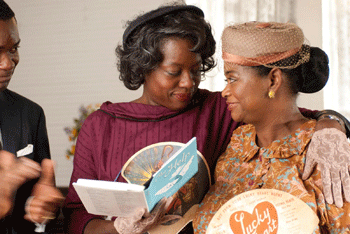
Sharon Kyle: In a culture where “whiteness” is rarely mentioned and hardly ever critically examined it is not surprising that the women in my church saw the story as heartwarming and uplifting. I, on the other hand, saw this as just another story of the black experience as viewed through the white lens.
The movie, "The Help" was not at the top of my list.
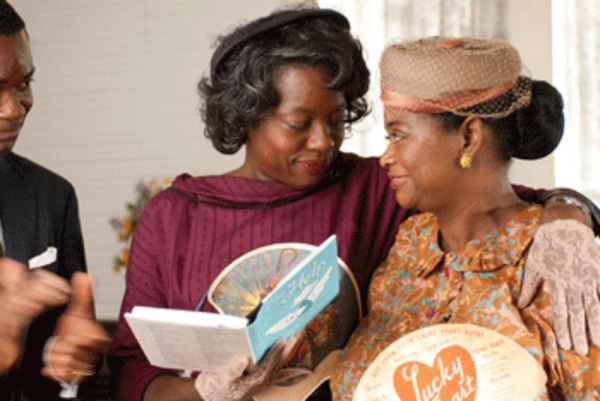
The book version was recommended by several acquaintances but I didn't read it because I'm generally not into fiction – of course there are a few exceptions, James Baldwin comes to mind. I also didn't read it because I sensed the story wouldn't live up to the hype partly because of those who recommended it, those who didn't and those who never mentioned it at all.
Allow me to explain.
I am a black woman. I travel in diverse circles but I attend a predominantly white church. It was there that I'd heard rave reviews of the book and was told that I should definitely read it. When the book was made into a movie, several women at church – mostly middle-aged, middle to upper middle-class white women told me that I had to see it. They insisted, "it shouldn't be missed". But while they praised it, The Help didn't seem to be on the radar of people I connect with in other areas of my life. I'm a progressive who is actively engaged in a few political and civic groups. I travel in activist circles and have friends and acquaintances across a broad spectrum of demographics. Not one of the activists I collaborate with mentioned The Help. Neither the film nor the book reached the level of interest worthy of discussion by any of my family members. At the progressive law school where I am a professor -- no mention. These were all indicators that informed my decision.
Related stories
In a culture where race consciousness and especially white awareness is hardly ever critically examined, it wasn't surprising that the women in my church who characterized the story as heartwarming and uplifting couldn't have guessed that my take on the film would almost certainly be different.
It's presented as a feel good story where black and white characters band together in the face of racism. But for many, particularly those of us in the Black community, The Help replays the age old "White Savior" or white messiah myth where the center of the story about black people is a white protagonist. For those unfamiliar with the term, "white savior", this common Hollywood treatment is described by Matthew Hughey, a sociologist known for his work on race and racism as follows:
a White person (the savior) enters the milieu and through their sacrifices, as a teacher, mentor, lawyer, military hero, aspiring writer, or wannabe Native American warrior, is able to physically save—or at least morally redeem—the person or community of folks of color, by the film's end.
I don't want to be a spoiler but this familiar trope pretty much describes "The Help". What's most problematic with this all too common approach to telling civil rights stories is the fallacy of it. If an alien from outer space relied on Hollywood to understand how black people in this country survived the travails of the middle passage, slavery, Jim Crow, apartheid etc -- they'd believe that had it not been for white people, blacks would never have survived.
My husband and I have an inside joke – well, actually it's my joke. To understand this, it would help for you to know that my husband is white and I've already told you that I'm black. We have an active social life – sometimes attending two or three events in a week. When we're in a social setting where I am the only or one of a few blacks in the room, I have to insert myself into conversations or risk being ignored that is unless the discussion turns to race -- then all eyes look to me as if I'm the race expert.
To be fair to my many non-black friends and family, this usually happens when we're with people we don't know very well. But it happens often enough that I've dubbed myself “the race one”. My husband, on the other hand, is never looked to when the topic turns to race. “So”, I tell him partly tongue-in-cheek, “I guess this means you don't belong to a race? Guess that makes you the race-less one?”
There are lots of stories I could tell, most of which are pretty funny, that illustrate this notion of racelessness among white people. But what it really points to is a lack of white awareness. I certainly felt it was this lack of white awareness that may have led the women in my church to assume I'd be uplifted by reading The Help instead of disappointed. I doubt most of them know of the prevalence of the white messiah meme and how I had picked up clues that this story was going to be just that.
I finally gave in and saw The Help when it was released as a movie. Yes, as my church friends had told me, it was entertaining and well acted. But as I expected, the story was not atypical of most Hollywood films of this genre -- an attempt to convey the southern black experience through a white lens. This is not a film I'd recommend to my son, daughter, or any young person seeking to gain a deeper understanding of the lives of black southerners during this era in American history. It is a fictional representation that is seasoned with humor and supposed feel good, heartwarming moments but it is not a story that would have been told by black maids. In my opinion, they are not given a voice in this film.
Here is an example of a "feel good, heartwarming" scene from the film that was anything but:
One of the maids, who was expecting to be fired for some infraction she did not commit, is told by her employer that not only is she not fired but she can stay on and work for the family for a long as she lives. The boss makes this declaration as sweet sentimental music plays softly in the background and the camera slowly closes in on the maid's smiling face.
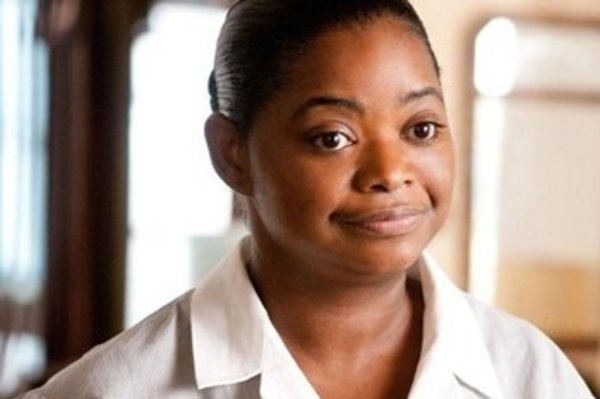
Personally, I wasn't feeling all warm and fuzzy. As I watched the scene, my thoughts went to the maid's not-so-distant ancestors who labored to develop the land and grow the crops that produced the wealth that was stolen by the forefathers of the boss who then inherited the estate and all of its assets putting him in the position to decide this maid's fate.
But for her ancestors hard work and her boss' ancestors exploitation and outright theft, her boss would not have inherited the estate and wouldn't have the power to decide if she'd be employed or unemployed. Born into a society that systematically precludes her from reaping the benefits of her ancestors' blood, sweat, and tears, -- gratitude is probably not what she'd be feeling when told that she could work for the family for the rest of her life. For those who challenge my assumptions I'd like to remind them that I am just one generation removed from this era. Many of my fore-mothers walked in this maids shoes. Trust me, she would not have been grateful.
I won't give the story away, but one critic said, “Despite Hollywood’s best intentions and well-meaning saccharine storytelling, it gets race wrong, repeatedly". I agree.
The women who recommended the book did so because they probably felt the writer successfully grappled with a difficult topic and arrived at a place of racial redemption. But they were unable to see the story through my lens. And they were unaware that they were seeing it through a white lens. For me, their white unawareness is a significant missing element in most discourse on race. From my perspective, rather than being a story of racial redemption, it is a story about white redemption.
Film critic Christopher Kelly said,
For decades, we've seen books, plays and movies about Southern race relations that invariably place white people at the center, and usually as the savior: "To Kill a Mockingbird," "Driving Miss Daisy," "Mississippi Burning," even "A Time To Kill." "The Help" falls right in line. It's a story that allows white readers to feel good about the way black and white characters band together in the face of racism, even as it also reaffirms a "whites lead, blacks follow" social structure.
The white messiah myth has been prominent in American cinema for as long as there have been movies about people of color. In fact, films about people of color that don't have a white lead are doomed at the box office if they ever get made at all. Just ask George Lucas, executive producer of Red Tails, the story of the Tuskegee Airmen. Lucas went to every Hollywood studio looking for backing for his film. They told him -- directly -- that they would not finance a film that didn't have a white lead. After many attempts to get the project off the ground, Lucas was forced to finance the film with his own funds.
It's easy to argue that Hollywood's unwillingness to finance films that don't have a white lead is based on the bottom line. Clearly, they do what they do to turn a profit. But because of this policy, films like Biko, Ghosts of Mississippi, Dances with Wolves, Armistad, The Blind Side, Glory, Avatar, Invictus, A Dry White Season and Dangerous Minds, perpetuate the notion of the white savior coming to the rescue of the helpless and oppressed in ways that don't align with the reality of the past or the present.
In the absence of comprehensive history courses in public schools that contain accurate representations of all people, our nation's sense of history is often shaped by Hollywood. So, even though Hollywood has no obligation to educate, by default, it increasingly has become a primary source of information for good or for evil.
The people of the United States, often characterized as a nation overly entertained and under informed, receive most of their information from television and movies. Like it or not, the myths or truths served up by Hollywood play a role in shaping the nation's sense of history. Without strong countervailing stories, myths reinforce stereotypical images that linger in the public consciousness and contribute to the gap between real lives lived and fictional lives depicted.
Addressing this gap, author Tim Wise, a white anti-racist, wrote of white people,
“When asked if we believe racism to be a significant problem: the vast majority, in poll after poll answer that it is not, irrespective of the evidence to the contrary. And we have long believed that, so even in the early 1960s, at a time when in retrospect all would agree the nation was profoundly unequal in its treatment of people of color, whites told pollsters in overwhelming numbers (anywhere from sixty-five to nearly ninety percent) that blacks had equal opportunities in employment and education. White denial has been a hallmark of the nation’s racial history.”
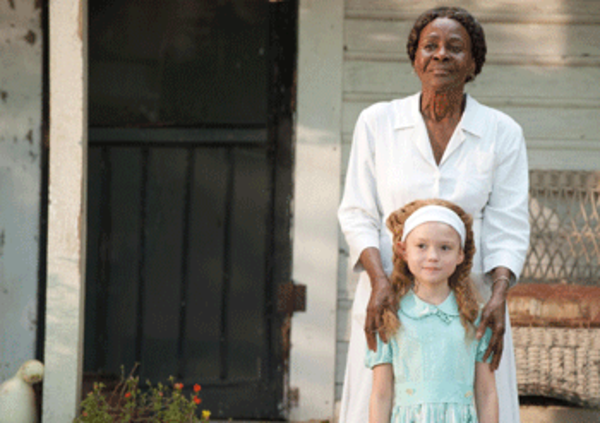
The white denial that Tim Wise is referring to is fortified by subtle and not so subtle messages in film and other media that dismiss, minimize, or render invisible the horrors and continued trauma inflicted on people of color in this nation.
For example, although a fictional account, The Help is supposed to be the story of African-American maids living in Jackson, Mississippi, at the height of the Civil Rights era. The story takes place in 1963. The women range in age from their 40's to their 80's so its likely they had grandparents and maybe even parents who were born into slavery. These women would know of or have a direct connection to someone who may have been lynched. They lived at a time when a white man could rape a black woman with impunity. White men raped black women in the south with such regularity that black women lived in a persistent state of apprehension knowing they had little to no legal or police protection. This story, set in Mississippi when Emmett Till and Medgar Evers were fresh in the minds of the black community - is the Mississippi of Nina Simone's, "Mississippi Goddam" and yet, the high drama of the film centers around Skeeter, the young white journalist who courageously stood up to the powers that be and helped the maids share their story.
The notion that a story - supposedly told from the perspective of black maids living in 1963 Mississippi -- would be focused primarily on the courage of a young white protagonist is preposterous but for the preposterousness to go unaddressed by all of the major media outlets gives us insight into where we are as a nation in our journey to come to terms with racism. It's ironic that as Hollywood continues to whitesplain the civil rights era with this film, major media ignored a true life tragedy that also happened in Jackson, Mississippi at about the same time this film was in the theaters:
It happens that at the same time this movie was getting rave reviews, there was an alleged race related murder in Jackson, Mississippi. In a manner similar to the way the movie The Help avoided serious discussion of black life in pre-civil rights era Mississippi, the media has pretty much avoided covering this murder which ironically also takes place in Jackson, Mississippi. It didn't warrant a headline that James Anderson, a 49-year-old black man was allegedly assaulted and repeatedly run over with a pick-up truck by two white men who were said to be looking for a black man to assault. It didn't even make it to the back pages.
This crime was captured on video tape. I read about it when I saw an excerpt from a post on Facebook. The excerpt was taken from a piece entitled “Prove Me Wrong, Mississippi,” by blogger Susan Wilson. Speaking of the killing, Susan wrote “what I really want to say isn’t about the crime itself. It’s about Mississippi’s response to the crime. What response? Well, that’s the problem.” -- Sharon Kyle
According to the blogger Susan Wilson, when she heard that Anderson had been killed by being run over repeatedly, she tried to find local media coverage of the incident but couldn't. This is the heart of the matter -- the lack of attention given to the real trauma that racism inflicts in the lives of people of color then and now.
If you'd like more information on the lives of black women in the south during the era depicted in the movie The Help, read At the Dark End of the Street: Black Women, Rape, and Resistance--A New History of the Civil Rights Movement from Rosa Parks to the Rise of Black Power (Vintage). The author, Danielle L. McGuire documents and reports on the "alarming regularity and stunning uniformity" of the raping of black women and children with some victims as young as 7 by white men in the south. She also links the beginning of the civil rights movement to the investigation of the gang rape of Recy Taylor, a black woman who was kidnapped and gang raped by 6 white men who admitted to the rape but were neither charged nor arrested. The NAACP mounted an investigation which was conducted by none other than Ms. Rosa Parks.
Now THAT would make a great movie but I'm not holding my breadth waiting for Hollywood to take that on anytime soon.
Note: This piece was written in 2011. In Sept 2018, Viola Davis -- one of the stars of "The Help" admitted in an interview in the New York Times that she regrets accepting the role in the movie. Said Davis, “I just felt that at the end of the day that it wasn’t the voices of the maids that were heard. I know Aibileen. I know Minny [played by Octavia Spencer, who won a best-supporting-actress Oscar]. They’re my grandma. They’re my mom. And I know that if you do a movie where the whole premise is, I want to know what it feels like to work for white people and to bring up children in 1963, I want to hear how you really feel about it. I never heard that in the course of the movie.” Also, in 2017 a film by writer and producer Nancy Buirski entitled, "The Rape of Recy Taylor The Rape of Recy Taylor" was released.
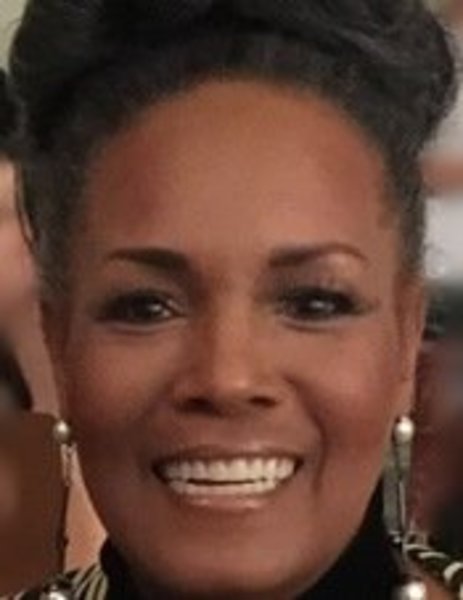
Sharon Kyle
Publisher, LA Progressive
Comments

Powered by RoundtableAn AI/DeFi-powered Enterprise Media Operating System. Learn more at Roundtable.io.© Roundtable 2026. By using this site you agree to the Terms of Use and Privacy Policy