


Jun 1, 2024 5:45 AM
Updated Jun 1, 2024 2:28 PM
Seventy years have passed since the landmark Supreme Court case, Brown v. Board of Education. In 1954, segregation was state sanctioned and state enforced. Today...
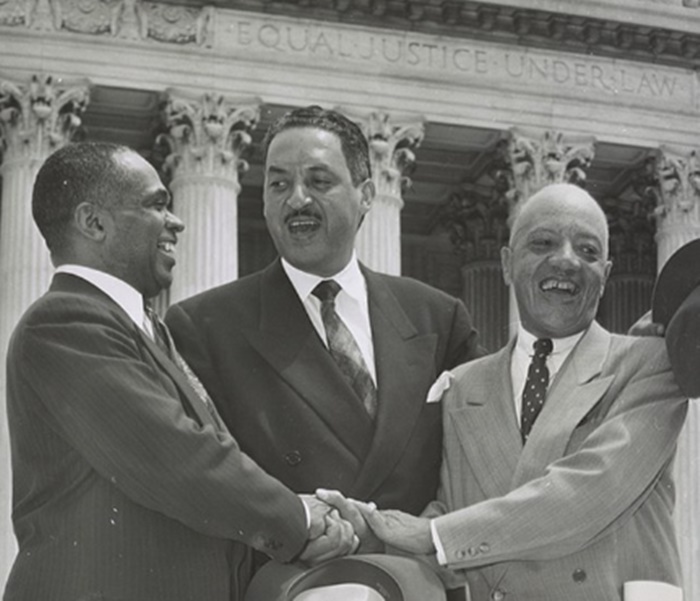
On May 17, 1954, the United States Supreme Court declared the “separate but equal” doctrine unconstitutional. In other words, the court concluded that racially segregated public schools were not and could not be equal. The justices found that maintaining racial segregation resulted in unfair outcomes that harmed students, especially Black students.
The Brown v. Board of Education case wasn’t just one case. It was five different lawsuits that were fought and won over several years in school districts across the United States. But regardless of whether it was one case or five, it transformed America. By dismantling, “separate but equal," Thurgood Marshall, the lead attorney who argued the case before the U.S. Supreme Court, became the Legal Defense Fund’s first Director-Counsel and a Supreme Court Justice himself. He and his team did their part to bring this country closer to being the country it always boasted that it was. But has the country honored the hard-fought battles he and others won? Let’s take a look.
It will probably come as no surprise that even though some of the top attorneys from the NAACP Legal Defense Fund and the ACLU collaborated to win Brown v. Board in 1954 -- in 2024, 70 years later, Black public-school students continue to experience widespread systematic educational disparities. In a report published by ACLU California Action titled, “State of Black Education California 2024," school segregation is one of 24 areas of modern-day inequality in our public-school systems. This State of Black Education California Report draws attention to the ongoing injustices and inequalities that impede the potential of Black children. The Report offers a thorough review of educational fairness and justice, as well as the need for healing and rehabilitation, using extensive data, community voices, legal research, and more.
One of the 24 aspects of contemporary injustice that the paper examines is school segregation, which is supported by recent studies on Black pupils. Other areas—school climate (bullying, school connectedness, absenteeism), student outcomes (test scores, AP courses, college attendance), school-to-prison pipeline, and mental health (suspensions, school arrests, involuntary psychiatric holds)—are divided into three categories, with Black students being disproportionately impacted. ACLU California Action looks at data from districts, state, and federal sources in each of the 24 categories where documented inequalities pertaining to Black students in California have been found. The report also includes charts, timelines, and a list of transformative solutions and practices.
Related stories
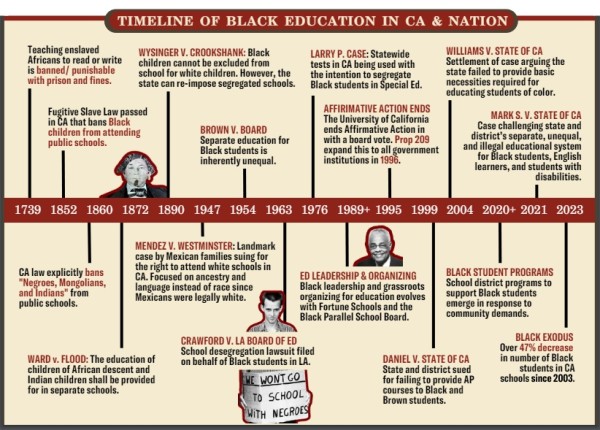
For 285 years, Black children have either been barred from gaining access to education or have been systematically disadvantaged in ways that result in educational inequity. The ACLU California Action report contains a list of actions that can mitigate the inequities. The report can be found here.
This year marks the 70th anniversary of the Brown v. Board of Education decision. As we celebrate this as a marker of progress, we shouldn't forget that the remedy the court provided back in 1954 was an order to the states to end segregation with “all deliberate speed.” That was it, no timeline, no specificity, no explanation of the term "deliberate speed". Given the vagueness of this order, is it any wonder that after 70 years the ACLU California Action finds that racial segregation remains an impediment to racial equity in education.
Comments

Powered by RoundtableAn AI/DeFi-powered Enterprise Media Operating System. Learn more at Roundtable.io.© Roundtable 2026. By using this site you agree to the Terms of Use and Privacy Policy