


Racism as America’s Keystone: Why White Supremacy Blocks Democracy for Everyone
Sep 15, 2025 3:12 AM
Updated Mar 17, 2026 2:48 AM
From climate change and inequality to gun violence and housing, every major U.S. crisis is bound together by one force—white supremacy. Until racism is dismantled, democracy itself will remain fragile and incomplete.
The United States is grappling with an interlocking set of crises—some global, others distinctly domestic—including climate collapse, pandemic vulnerability, widening inequality, gender oppression, rampant disinformation, unprecedented gun violence, and a deepening housing crisis. Too often, analysts treat these challenges as if they exist in isolation, imagining that climate change can be solved with new technology or that inequality can be corrected with tax tweaks. What this siloed view ignores are the underlying social determinants embedded in the fabric of American society—forces that not only generate these crises but also bind them together.
In the book, Bonfire: American Sociocide, Broken Relations, and the Quest for Democracy, social scientist Charles Derber traces the common thread running through these crises. He argues that when the social bonds holding communities together are destroyed, democracy itself unravels—eroding the very capacity of people to create meaningful change. It's a good read. Throughout the book, Derber challenges the siloed approach to remedying social ills—here's a paragraph from chapter 8 of Beyond the Bonfire where he highlights one path to deep democracy:
Education is the most important way that young people learn how power is created and how neoliberal capitalism, militarism, and fascism are intertwined. Moreover, schools and universities bring young people together in a collective space; this is inherently sociophiliac, much in the sense that that collective workplace space inherently opens up avenues toward workplace solidarity and action...
Seeking to chart a path toward universal resistance, Derber points out that our capacity to organize and confront social ills is severely constrained by a social structure that grows ever more isolated and fragmented. Building upon the work of Robert D. Putnam, author of Bowling Alone: The Collapse and Revival of American Community, Derber makes the case that the loss of community, the networks, trust, and norms of reciprocity that allow people to cooperate for mutual benefit—destroys democracy.
Related stories
I first came across Dr. Derber and his book through an interview on Steve Grumbine’s podcast Macro N Cheese. The conversation was so compelling that I ordered and read the book right away. You can listen to Grumbine’s interview with Charles Derber here—I highly recommend giving it a listen —Macro N Cheese
Much of what Derber discusses in his conversation with Steve Grumbine—and later in his book—aligns closely with my own analysis of the U.S. oligarchy. Yet I was disappointed that an author with such depth of insight did not address the central role of race in this story. Bonfire: American Sociocide, Broken Relations, and the Quest for Democracy is an important and deeply insightful book that lays bare the ways broken relationships drive our democratic crisis. Yet in centering the concept of sociocide without mentioning the pervasive racial divisions in the U.S. sidesteps the rootcause of much of the division in the United States. His analysis, while compelling, does not fully grapple with how white supremacy has been the keystone of division and the most reliable tool for preventing cross-racial and cross-ethnic solidarity which are both necessary ingredients in structuring true democracy. Without naming racism as the root cause, any progressive strategy will remain incomplete, and vulnerable to the same forces that have undone past rainbow coalition campaigns.
I continue to make the case that racism is not one problem among many; it is the keystone holding together the entire edifice of American authoritarian drift.
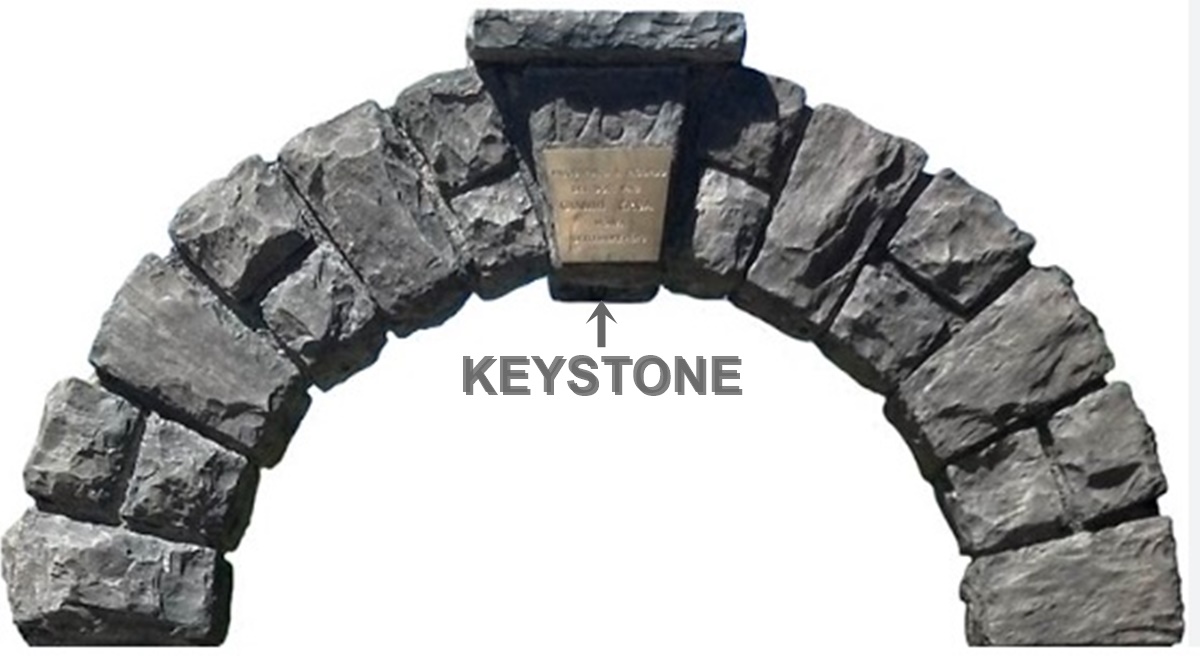
A keystone is the central, wedge-shaped stone at the top of an arch that keeps all the other stones in place. Take it away, and the entire arch falls. In the United States, racism plays this role: it is the keystone binding together inequality, oligarchy, ecological devastation, and the fragility of democracy. Picture America’s overlapping crises as an arch of sociocide—racism is the stone at its center, giving the whole structure its strength. Remove it, and the arch of oppression collapses. Leave it untouched, and the structure only hardens into something more enduring.
Because the United States is the single most racially and ethnically diverse population in the world, racism has always been the most effective wedge to prevent solidarity. In more homogenous nations, elites divide populations by religion, class, or region. In the U.S., race is the line of fracture that keeps workers, women, immigrants, and progressives from forming durable alliances. Until we recognize racism as the keystone, every solution will falter.
The Diversity Paradox
The United States is demographically unique. Nearly every continent and major ethnic group is represented here. By mid-century, no single racial group will constitute a majority. This diversity, in principle, could be the foundation for the world’s most dynamic democracy, capable of building solidarity across lines of difference.
But diversity in a white supremacist system produces the opposite result: constant division, mistrust, and political paralysis. From the very beginning, elites understood this. Colonial planters deliberately hardened racial boundaries after Bacon’s Rebellion of 1676, when poor whites and enslaved Africans united briefly against wealthy landowners. The creation of “whiteness” as a political category was a deliberate strategy to fracture solidarity in a diverse society.
This strategy has endured. From Jim Crow to Trumpism, racial hierarchy has prevented the emergence of a strong, inclusive democracy. What could have been the nation’s greatest strength—its diversity—has instead been weaponized into its deepest weakness.
White Supremacy as an Anti-Democratic Force
White supremacy must be understood as a political technology—a system designed to prevent multiracial democracy.
- Founding Era: The Constitution enshrined slavery, treating enslaved Africans as three-fifths of a person while securing the political power of slaveholding elites. This guaranteed that democracy would never be universal.
- Reconstruction: After the Civil War, multiracial governments briefly took power in the South. These governments built schools, hospitals, and infrastructure, demonstrating the potential of interracial democracy. But they were crushed by racial terror, lynching, and federal abandonment. White supremacy destroyed the first real experiment in multiracial democracy.
- Populist Movement: In the late 19th century, poor white and Black farmers in the South attempted to unite against elites through the Populist Party. Elites responded with racial propaganda and violence, driving poor whites back into the arms of white supremacy.
- 20th Century Movements: When labor and civil rights movements converged in the mid-20th century, the federal government unleashed COINTELPRO against them. Organizations like SNCC and the Black Panther Party sought multiracial solidarity. They were surveilled, infiltrated, and dismantled. The Rainbow Coalition of the late 1960s—uniting Black Panthers, Puerto Rican Young Lords, and poor white Young Patriots—was targeted and destroyed.
- Contemporary Era: Politicians from Richard Nixon to Donald Trump have mobilized white grievance politics to fracture coalitions. Even progressive gains—civil rights, affirmative action, immigrant rights—trigger immediate backlash, showing how white supremacy functions as a veto on democracy.
Racism as a Keystone of Sociocide
Derber’s sociocide framework explains how the destruction of social bonds accelerates authoritarianism. But in the United States, sociocide has always been racialized.
- Workplace Division: Labor unions often excluded Black workers or segregated them, undermining solidarity. To this day, right-wing politicians weaponize race to turn white workers against unions and redistributive policies.
- Community Mistrust: Redlining, segregation, and mass incarceration have isolated communities racially and economically. These divisions destroy trust, which is the bedrock of democracy.
- Political Polarization: White voters have consistently chosen racial identity over class solidarity, aligning with elites who exploit them economically. This has prevented the formation of durable progressive coalitions.
- The Most Segregated Hour: Martin Luther King Jr. observed that “the most segregated hour in America is 11:00 on Sunday morning,” noting that Christian worship—the very institution meant to embody fellowship and unity—remains divided by race. This religious segregation reinforces sociocide by sanctifying racial division within the most intimate communal spaces. Over time, segregated white churches became incubators for a theological defense of white supremacy, giving rise to the modern movement of white Christian nationalism. Beginning with the defense of slavery, morphing into support for segregation and “separate but equal,” and continuing with opposition to civil rights, white Christian churches have repeatedly framed racial hierarchy as divinely sanctioned. Today, white Christian nationalism positions America as a “Christian nation,” coded as white, patriarchal, and exclusionary. It is one of the most powerful political currents sustaining authoritarianism, fusing religious devotion with racial grievance and thereby making sociocide not only cultural but sacred.
Why Other Crises Are Insoluble Without Racial Solidarity
Understanding racism as the keystone clarifies why the U.S. struggles to resolve its most urgent crises --
- Climate Change: Climate action requires mass mobilization and sacrifice across communities. Yet white conservatives have often framed climate policy as an elitist or even “anti-white” agenda, while frontline Black, Indigenous, and Latino communities suffer the worst pollution and climate impacts. Without the kind of racial solidarity that establishes a foundation for mass mobilization, climate policy stalls.
- Pandemics and Public Health: COVID-19 revealed how deeply racial inequality shapes health outcomes. In Medical Apartheid: The Dark History of Medical Experimentation on Black Americans from Colonial Times to the Present, Harriet A. Washington documents centuries of medical abuse targeting Black communities. Public health depends on trust—but racism and white supremacy have systematically eroded that trust. The result is a climate of suspicion that now threatens not only Black health, but the wellbeing of the entire nation -- just look at the current debate on vaccinations.
- Economic Inequality: Other wealthy democracies built welfare states that reduced inequality. The U.S. did not, largely because social programs were racialized as giveaways to Black or immigrant populations. White voters, convinced of their racial superiority, repeatedly chose to oppose their own economic interests.
- Housing: Housing in the U.S. is inseparable from race. Redlining, restrictive covenants, and predatory lending created enduring wealth gaps. The foreclosure crisis of 2008 wiped out decades of Black wealth, setting back Black homeownership for generations. Today’s housing affordability crisis is exacerbated by gentrification, which displaces communities of color. Without racial solidarity, housing policy remains fragmented, with protections seen as benefiting only certain groups.
- Social Media Dysfunction: Online disinformation thrives on racial division. Russian operatives in 2016 exploited racial grievances to weaken democracy. White supremacist content spreads rapidly because it taps into longstanding divisions. Social media dysfunction cannot be solved without dismantling racial hierarchies.
- Women’s Rights and Gender Equality: Attacks on reproductive rights fall hardest on poor women of color, who lack resources to travel or pay for services. Yet mainstream feminism has often failed to address racial inequality, leaving the movement fragmented. Without racial solidarity, the fight for gender justice weakens.
- Gun Violence Gun violence in the U.S. is often treated as a cultural or constitutional problem, framed around the Second Amendment or individual rights. But the truth is deeply racialized. The origins of American gun culture lie in slave patrols, militias designed to control enslaved Africans and suppress revolts. After Reconstruction, armed white groups used terror to dismantle Black political power. In the modern era, the racialization of crime has fueled both the gun industry and opposition to gun control: when gun ownership is coded as white self-defense and gun violence is coded as Black criminality, solidarity around reform collapses. White fear of Black people and “urban crime” becomes the unspoken foundation of permissive gun laws, while communities of color bear the brunt of daily gun deaths and police militarization. Without dismantling the racial narratives that equate whiteness with safety and Blackness with danger, meaningful gun reform is impossible.
The Blindness to Racism
Why do Americans keep “barking up the wrong tree,” hoping to fix problems without confronting race? Because racism thrives on denial. White supremacy survives by disguising itself as incidental, marginal, or secondary.
- Economic reformers emphasize class but downplay race, missing why redistributive policies fail.
- Environmentalists fight carbon emissions but ignore environmental racism, alienating frontline communities.
- Public health experts stress science but fail to address how racism erodes trust in medical institutions.
This blindness is itself a function of white supremacy. To acknowledge racism as the keystone would be to admit that American democracy has never been whole or fully functional. The result is policy band-aids that never cure the wound.
Toward a Politics of Racial Solidarity
If racism is the keystone of sociocide, the path forward requires dislodging it. This means building a politics of racial solidarity that goes beyond symbolic gestures.
- Centering Anti-Racism in Every Movement: Climate movements must foreground environmental justice. Labor must champion immigrant and Black workers. Feminism must prioritize intersectionality, not just the needs of white women.
- Reframing Democracy as Relationship: Democracy is not only about laws or institutions. It is about building trust and cooperation across communities. Without relational democracy, formal democracy collapses.
- Truth-Telling and Historical Reckoning: Just as South Africa confronted apartheid through truth commissions, the U.S. must confront slavery, genocide, and systemic racism. Without truth, trust cannot be rebuilt.
- Creating New Civic Spaces: Schools, workplaces, and digital platforms must be redesigned to cultivate solidarity. This means changing curricula, labor law, and tech regulation to reward cooperation rather than division.
Conclusion: Naming the Keystone
The intertwined crises of climate change, pandemics, inequality, housing, gender oppression, and digital disinformation are not separate battles—they are fronts in a single struggle over the survival of democracy. Charles Derber is right to describe the United States as caught in a sociocidal spiral. What makes this spiral uniquely destructive is that it rests on a keystone: white supremacy.
Racism is the wedge that prevents solidarity from forming, keeps democracy shallow, and ensures that crises remain unresolved. Unless we confront racism as the central impediment, we will continue to misdiagnose our condition and search in vain for solutions.
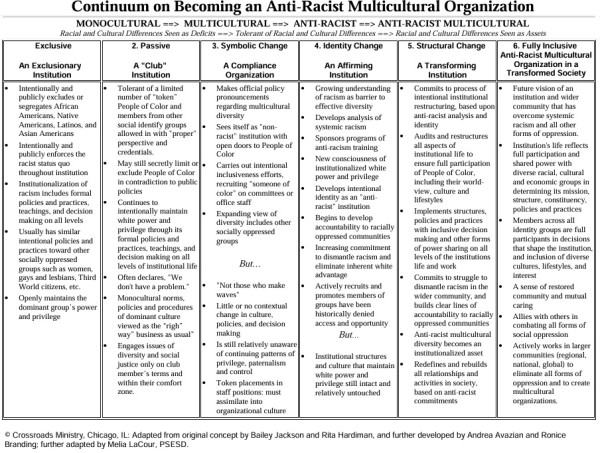
Today, this keystone is most visible in the surge of far-right white Christian nationalism, which fuses racial grievance with religious devotion, sanctifying hierarchy and exclusion under the banner of divine will. In this movement, racism is elevated from ideology to sacred obligation. But the problem does not reside solely on the right. Even within progressive spaces that profess anti-racism, white supremacy persists. On the Anti-Racist Continuum (see chart above), most progressive organizations still function at a level three or four, stopping short of the deeper transformation needed to dismantle racism at its root.
To stop the bonfire of sociocide, we must remove its keystone. That means confronting white supremacy not only in its political and economic forms but also in its religious and cultural expressions. Only by dismantling the fusion of race and faith that underpins white Christian nationalism can the United States begin to reimagine democracy. Only then can America’s extraordinary diversity become the foundation for solidarity strong enough to meet the crises of the 21st century.
Comments

Powered by RoundtableAn AI/DeFi-powered Enterprise Media Operating System. Learn more at Roundtable.io.© Roundtable 2026. By using this site you agree to the Terms of Use and Privacy Policy