


Feb 20, 2024 9:34 PM
Updated Feb 22, 2024 11:13 PM
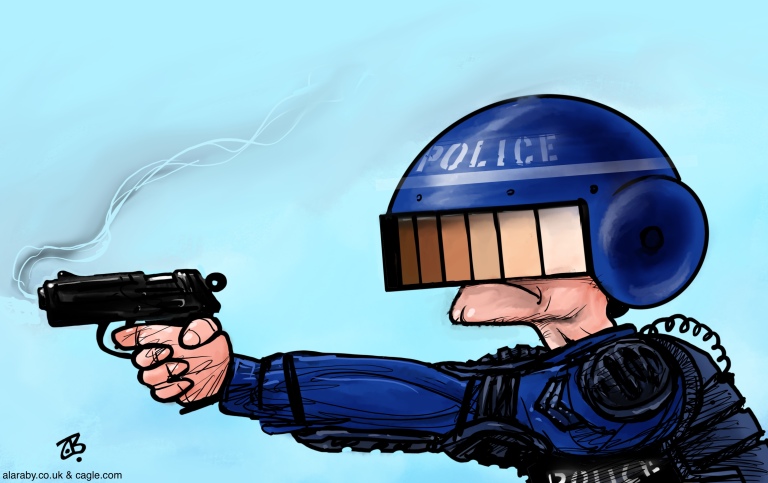
There was progress in racial relations in America, but when President Obama was elected, buried but smoldering racism in the form of a backlash reared its ugly head.
As an ex-cop who served with the Dallas Police Department for four years in the 1960s, I quit the department due to burnout, only to regret it later in life. I have spent more than a decade studying how biology and neuroscience apply to policing, and more than half a century reflecting on my police experience and the history of law enforcement in America.
Near the end of February 2020, I published Blue Bias: An Ex-Cop Turned Philosopher Examines the Learning and Resolve Necessary To End Hidden Prejudice in Policing. [i] Barely three months later, George Floyd was murdered in Minneapolis by white officer Derek Chavin, and the whole incident, recorded by witnesses, was—uploaded to YouTube.
There was progress in racial relations in America during the late 20th century and early in the 21st century, but when President Obama was elected in 2008, buried but smoldering racism in the form of a backlash reared its ugly head. Discourse about the subject of race in America has been going downhill ever since.
The history of how minorities have been treated by law enforcement in America is horrific by any standards, especially what has been done to African Americans and Native Americans. For educational curricula in general, this existential horror has traditionally been whitewashed. You must search to find this dreadful history, but it’s readily available if you really want to know. To have any real hope of achieving racial justice in this country, there are five major subjects that must be fully addressed: Unabridged American history, attitude, behavior, biology, and public safety.
Related stories
History
It is not possible to fully understand the practical, everyday aspects of racial biases in America without an in-depth knowledge and understanding of the toxic history of race relations and how these overtly noxious events occurred, because an emotional residue of this awful history is still presently active in many parts of the country.
Fully understanding the racial sentiments in the American South, for example, is simply not possible without knowledge of the Post-Civil War Reconstruction era and the ideology known as The Lost Cause. At the end of the Civil War, when white men were suddenly expected to compete in a labor market with freed slaves, it spawned a fervent sense of animosity and hatred, so forceful that embers of the sentiment still smolder in some parts of the South.
At the end of Reconstruction, a white anti-Black backlash began that, for decades made life for Black men and women barely endurable. [ii] When you add an unwashed history of American policing, citizens’ doubts about the possibility of achieving a just society are hard to dismiss. The history of policing in America is rife with examples of exceptionally vile behavior. Police officers who are unaware of this history do not have enough street savvy to perform effectively and to assure citizens that their efforts are morally objective. If this is not well understood by peace officers at a street level, it will be readily apparent to the citizens they are sworn to protect.
Attitude
Politics has no place in law enforcement or in our military. In real estate, the saying is “location, location, location.” But in law enforcement, the relevant term is “attitude, attitude, attitude.” Police officers who view their service through the lens of politics effectively have a chip on their shoulder, at best. If peace officers cannot be trusted to view all the citizens in their precinct as worthy of being treated in keeping with their oath of office, then, instead of being protected and served, some in the community will be harassed and oppressed or worse.
Viewing others in an “us versus them” fashion in any law enforcement context is a recipe for abuse. Law Enforcement Today, according to its own website, is a media outlet that was purchased by The 1776 Project in 2023 and is owned by Kyle S. Reyes. Reyes is President and CEO of Silent Partner Marketing, a boutique marketing agency headquartered in Connecticut. He describes himself as a Christian conservative. Reyes is self-funding all the content on Law Enforcement Today. [iii] This is a hard-right political propagandist organization that spews misinformation and anti-liberal vitriol of a caliber that would have made Joseph Goebbels proud. This organization claims more than half a million subscribers. Any police agency or department that follows this outlet as an objective source of information is unfit, in my view, to serve the public. Law Enforcement Today is a disgrace to law enforcement and it represents a clear and present danger to all minorities, citizens of color, and even members of political parties not of the ideologically hard right.
Human Behavior
Academia in America is too often slow in keeping us abreast of the vitally important discoveries in human behavior, biology, and neuroscience. What is known and understood scientifically can be considered an open secret for years before it is accepted as common sense, if ever. Unfortunately, because of the danger evolving humans experienced during prehistory, human brains evolved to automatically categorize and stereotype outsiders. This is less about race and more simply a felt need to identify outgroups, because they might represent a threat. This comportment is hardwired into our limbic system. [iv] Unless we are paying careful attention, we have no control over the assumptions our subconscious has tagged as being worthy of remembering when our judgment about others is called for.
What this means for law enforcement is that implicit biases are ubiquitous. As anthropologist John Tooby put it, we are obsessed with recognizing and subconsciously acknowledging those who qualify as belonging as one of us, and in milliseconds, we readily identify those who qualify as being the other. [v] Fortunately, we have the tools via our frontal cortex to override our implicit biases, but this requires first the knowledge of how this process works, and second, caring enough about the issue of justice as fairness to see it through. [vi] This is where attitude is critical. Without understanding how our brains evolved to function when relating to others, it is not possible to understand the concept of justice as it applies specifically to policing. Moreover, if an officer begins police service with unacknowledged racial biases, then negative daily encounters with those individuals subconsciously deemed as being outsiders will simply cause that bias to grow deeper and become more resistant to change over time.
Our personal opinions about whether we have racial biases are untrustworthy because our biases are stored in our subconscious: Our biases only surface when our judgments are called for. Police officers who really care about racial justice are likely to experience flashing warning lights when occasions present opportunities that require thinking things through. The current political polarization about race is tragically sad because what evolution has saddled us with is less about race, than simply identifying those who don’t belong to our group. This makes color a no-brainer because a notable difference of color is so overwhelmingly obvious. Once implicit biases are normalized and accepted as common sense, when in-group vs. out-group conflict arises, the stage is set for old-fashioned ethnocentric hatred.
In The World Until Yesterday: What We Can Learn from Traditional Societies, evolutionary biologist Jared Diamond describes the history of how small-scale societies dealt with the concept of others. Diamond says they divided people into three categories: “friends, enemies, and strangers.” [vii] He said the band’s enemies were well known, but the likely advice for strangers was: “If you do happen to encounter a stranger in your own territory, you have to presume that the person is dangerous, because (given the dangers of traveling to unfamiliar areas) the stranger is really likely to be scouting in order to raid or kill your group, or else trespassing in order to hunt or steal resources or kidnap a marriable woman.” [viii] The threats we face today are different, but our limbic system still acts as it evolved to keep us safe by causing us to be hyper-suspicious of them.
Biology
For police officers who engage in frequent arrests that involve altercations, there will likely be physical changes to their limbic system. Their amygdala will grow larger, which, in time, will make them hypersensitive to insult or having their authority challenged. Video examples of officers thus affected going ballistic on YouTube abound. [ix] On the other hand, some officers become excitement junkies, having become hooked on the hormonal adrenaline rush that comes with sensational conflict. Over time, they begin to subconsciously escalate conflict to experience the adrenaline rush. [x] Every major police department in America has officers whose personnel records will attest to this behavior.
If police management is anything less than obsessed with keeping their officers’ behavior under constant scrutiny to ensure that the job is not taking a mental and physical toll on them, then their bodily changes that they have had no control over will lead to their becoming overly aggressive. [xi] These matters require the undivided attention of police management. If police supervisors ignore these biological aspects that govern the behavior of their officers, the public will pay a price for their failure to police their own personnel. It is ironic that by simply doing their job some of their officers will undergo adverse physical and emotional changes because of the routine stress that everybody knows comes with the job.
Public Safety
The purpose of law enforcement is public safety. But from the beginning of policing, a double standard has applied between rich and poor neighborhoods. In affluent neighborhoods, policing is observably more respectful of the rights of citizens than in poor communities. It is in large part because of tradition that over-policing is the prevailing tactic in impoverished neighborhoods. There are multiple reasons for their being overly aggressive, some of which are noted above, but the traditional attitude that “this is the way we do it here” seems almost universal. [xii]
In Blue Bias, I characterize poor communities as “cortisol canyons,” extremely stressful places to live. Citizens in these neighborhoods must often contend with both a criminal element and over-policing. [xiii] This is because local government is too often funded from the revenue that comes from fines and misdemeanor arrests by police officers, whose performance is judged by the arrest numbers they rack up. Citizens who live in these communities desperately want criminals to be arrested and held accountable, but what they don’t want is to be incessantly accosted by officers looking to pad their individual performance with evidence of having participated in levying fines. That their skin color makes some citizens a likely target to some officers is irrefutable.
Consider the irony of the oath to protect and serve in an organization so consumed by the edict to demonstrate their willingness to go through the politically motivated motions of appearing effective that they will hide in closets with the intent of apprehending two-dollar transit turnstile violations and then to arrest and jail people who have no previous record. An actual officer’s presence would gain the transit system much more income by simply deterring cheaters. That officers would instead choose to jail citizens over a couple of bucks just to appear effective is telling.
An Inconvenient Cop: My Fight To Change Policing in America, by Edwin Raymond with Jon Sternfeld, is based on Raymond’s fifteen years with the New York Police Department. This book offers profound examples of how judging the effectiveness of policing by the numbers via the relentless pursuit of petty fines has a cancerous effect on policing. If politics enters the realm of law enforcement at a street level, systematic oppression is virtually certain. [xiv]
Edwin Raymond’s experience shows in explicit detail how police hierarchy and the blue wall of silence make it nearly impossible to put the value of public safety over and above the viability of policing as a revenue source. When you jail people for offences that mostly harm only those arrested, this takes us back to biology—because fracturing families has a negative effect on childhood development, especially the frontal cortex of children in low socioeconomic communities. Early brain development for children is critical, and when it doesn’t happen adequately, in too many cases, it ensures a cycle of poverty will continue. [xv]
Policing in low-income neighborhoods was overly aggressive when I was an officer in the 1960s, but what Raymond encountered more recently is much worse. Being obsessed by the need for numbers to measure the effectiveness of policing is like a metastasized virus for which there is no antidote. Top-down power hierarchies are almost impossible to change without drastic measures, and what can seem like major victories are seldom long lasting. Eliminating arrest quotas is a temporary measure at best. Quotas don’t need to be in writing to exist. Indeed, the most formidable quotas are often the ones that are seldom spoken of, but whose existence is profoundly acknowledged and adhered to with an unspoken level of rigid compliance.
Policing in America is a big revenue source for local government coffers, and when politicians who oversee police departments put pressure on police management to reduce crime by generating revenue, the result is too often an obsessive and fervent edict to make petty arrests, which easily become more important than the wellbeing of the citizens. In communities with below-average wealth, focusing on fines for supporting local government can, over time, turn misdemeanor fines into felonies because of mounting debt leading to an inability to pay. That an organization designed to protect the public would do this to its citizens by putting their own job performance over the wellbeing of the public they are sworn to look after is ethically and morally outrageous.
If the goal is to increase public safety in traffic, for example, an easy and guaranteed method to work is simply to use digital cameras and capture violations on video that include the license plates of the offenders. This tactic is very effective. Relying on being caught by a police officer while committing a traffic violation is so rare that it doesn’t have enough of a positive effect on behavior. Traffic camera fines, however, have an immediate and lasting effect, but what happens when they are implemented is that when wealthy citizens begin to get caught every time they break the law, they become hysterically outraged, and they use their political power to influence politicians. [xvi] And it almost always seems to work, yet the power to push back in impoverished neighborhoods against an obsession of raising revenue with petty fines that in most cases have no positive effect on public safety is almost always effectively nonexistent.
Law enforcement, our military, and our institutions that exist to serve the public must be apolitical, or political partisanship will overshadow the objective of having an ethically merited system of governance. When the political division is so extreme that it begins to show up in the attitudes of police officers on the street, democracy itself begins to seem untenable because political partisanship subconsciously increases the number of those considered to be the outsiders or outlaws. Democracy requires an intellectual buy-in, predicated on the idea that collective decisions will represent the triumph of the better argument. Democracy ensures laws reflect the people's will, safeguarding citizens' rights and guiding fair policing. Without democracy administered by the rule of law, ordinary citizens are effectively powerless.
Political polarization by hard-right ideologues is now so extreme that even healthcare in America is negatively affected. We now have nine states with governors who refuse to extend Medicaid for those who cannot afford health insurance (including children), under the mindless paternalistic edict that they do not want to spoil people with handouts. [xvii] This brings us back to biology again: Generations of children in these states will lack the economic and medical resources to grow brains with a fully developed frontal cortex. The frontal cortex is the part of our brain that is mostly able to learn from experience and choose to do the right thing when it is hard to do. [xviii] After their childhoods, these people’s lessened ability will once again be used against them for the rest of their lives, all because of thoughtless punitive political polarization which is antithetical to mature human development.
Conclusion
There are scores of plans to reform policing but very few that spotlight what is most important. Genuine police reform must ensure all personnel are fully invested in the knowledge of how our brains evolved to subtly navigate and influence the way we relate to others. It is not necessary to hate or even dislike someone to treat them differently. All that is necessary is to see them as being different in any sense, and this is something our gray matter does all on its own. Employing law enforcement officers who genuinely care about ending implicit bias is the only practical way to proceed, caring addresses nine tenths of the problem and officers who deny that such biases exist are psychologically and temperamentally unfit to protect and serve.
Everyone in law enforcement must understand and appreciate the biological changes that can occur over time from too much stress. This must become police management’s number-one concern, because in districts with lots of stressful encounters, officers will inevitably cross the line by becoming overly abusive and they won’t even realize this is happening to them. When police officers abuse their power, police management must be accountable, or else in this regard, nothing will change, ever. The goal to achieve safety in poor neighborhoods should be so forceful that local police double down on making these places unsafe locations to commit a crime. Real police reform will begin when local governments find better sources of revenue than petty fines. Only when communities as safe places to live become more important than statistics, will citizens begin to trust the police enough to cooperate in reducing crime.
Finally, it is imperative that all vestiges of politics are removed from policing, especially at the street level. When politics is pervasive in policing, it has the forceful effect of giving license to all manner of “us versus them” biases. Moreover, police unions should only be allowed to deal with officer benefits—officers accused of crimes must be made to use the same criminal justice system that applies to everyone else. If this is not done, justice will simply not be possible, because if given a double standard, the blindfolded Lady will peek.
[i] Charles D. Hayes, Blue Bias: An Ex-Cop Turned Philosopher Examines the Learning and Resolve Necessary to End Hidden Prejudice in Policing (Wasilla, AK, Autodidactic Press, 2020).
[ii] Charles D. Hayes, Evolving in a Dangerous World Made Racism Inevitable: Concerned Citizens, Police Officers, and Teachers Can Help Change This (Wasilla, AK: Autodidactic Press, 2022), 22-24.
[iii] Kyle S. Reyes, “Welcome [Home page],” Law Enforcement Today, 2024, https://lawenforcementtoday.com/.
[iv] Robert M. Sapolsky, Behave: The Biology of Humans at Our Best and Worst (New York: Penguin Press, 2017), 23-30, 65, 84.
[v] John Tooby, “2017: What Scientific Term or Concept Ought to be More Widely Known? Coalitional Instincts,” The Edge, January 1, 2017, https://www.edge.org/response-detail/27168.
[vi] Sapolsky, Behave, 58-64.
[vii] Jared Diamond, The World Until Yesterday: What We Can Learn from Traditional Societies (New York: Viking Penguin, 2012), 49.
[viii] Diamond, The World Until Yesterday, 49-50.
[ix] Hayes, Blue Bias, 119-120.
[x] Hayes, Blue Bias, 19-21, 86, 98, 101, 224, 228.
[xi] Hayes, Blue Bias, 161-178.
[xii] Hayes, Blue Bias, 231-247.
[xiii] Hayes, Blue Bias, 209-215, 244-245,275.
[xiv] Edwin Raymond with Jon Sternfeld, An Inconvenient Cop: My Fight To Change Policing in America (New York: Viking, 2023). Examples appear throughout this book.
[xv] Robert M. Sapolsky, Determined: A Science of Life Without Free Will (New York: Penguin Press, 2023), 66-67, 68, 116-117, 403.
[xvi] Hayes, Blue Bias, 216-217.
[xvii] Noah Weiland, “Biden Administration Warns 9 Governors About Medicaid Losses Among Children,” The New York Times, December 18, 2023, https://www.nytimes.com/2023/12/18/health/medicaid-unwinding-children.html.
[xviii] Sapolsky, Behave, 18-19, 30, 38, 42, 45-64, 88, 91-92, 100, 132-134, 143-144, 196-196.
Comments

Powered by RoundtableAn AI/DeFi-powered Enterprise Media Operating System. Learn more at Roundtable.io.© Roundtable 2026. By using this site you agree to the Terms of Use and Privacy Policy