


Mar 8, 2023 1:00 AM
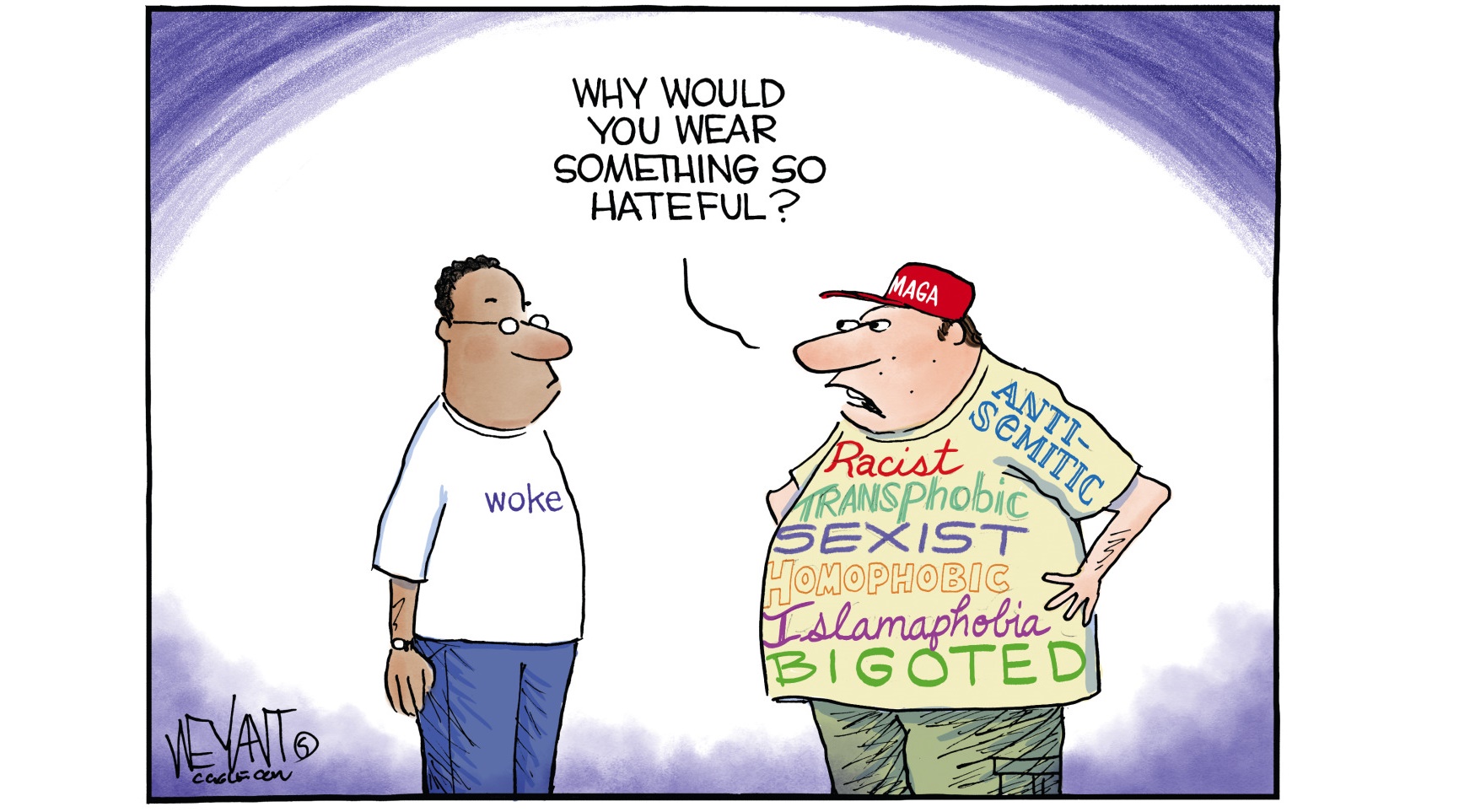
Woke is simply another term for being informed. Those opposed to its use arrogantly believe that they already know everything they need to know
In the March 2023 edition of the Atlantic, there is a piece by Thomas Chatterton Williams titled “The French Are in a Panic Over le Wokisme.”
“Wokeness” is the American translation. Williams says that France’s vehement rejection of identity politics made him recalibrate his views on the topic. The French pride themselves on having created a form of government that doesn’t recognize racial categories or any semblance of ethnicity. But guess what? Minorities suffer discrimination in France, just like in America. In France, Black and Arab citizens are more than 20 times more likely to be stopped by the police. [ii]
All over the world, there is an infantile dust-up over the notion of wokeness, which is simply another term for being educated or informed. Hard right factions everywhere are effectively barring the door to the notion of being informed, which is but an arrogant declaration that they already know everything they need to know, thank you very much.
Cultural anthropologist Ernest Becker’s declaration that leaving the subject of human behavior to experts results in general imbecility screams at us. [iii] Human behavior is incredibly complicated, but academia in both France and the US are so prone to staying in their own lanes, so to speak, that they never go far enough afield to put the notion of “otherness” in perspective so that everyone can understand how we are so easily caught off guard, especially about noticeable racial differences.
Related stories
Having evolved mostly in small groups, we are a tribalist species. [iv] We are social creatures, so conditioned to conform to peer pressure that we grow up speaking with accents like our regional neighbors. Even the most liberal among us have a limited tolerance for experiencing only so much otherness before we push back and begin to ostracize. [v]
My generation was taught that stereotyping is wrong, so for most of our lives we have denied doing it. But as infants, we learn to become astute observers, able to discern minute facial features of the people whose presence we grow up with. [vi] This is where the conventional wisdom that people of all races think that other races all look alike comes from. As we age, our brains categorize and stereotype automatically. We have no control over the process and these assumptions remain in our subconscious until we are presented with the need to make judgments that involve differences. [vii]
It is past time to stop this kindergarten nonsense about who is woke and who isn’t, in America, France, and the rest of the world. Civilization requires intellectual maturity.
Human brains are bias-forming organs. [viii] Thought is an expression of bias; it’s the way we tell one thing from another through the form of assumptions. Growing up, we absorb our respective cultures with the same intensity that a dry sponge soaks up warm water. Our life experience is fed back to us instantaneously from where it is stored in our subconscious as intuition (or as System One Thinking, which stems from our subconscious memory, as explained in Daniel Kahneman’s Thinking, Fast and Slow). [ix]
Psychologists, sociologists, and historians tend to address racial bias wholly within the purview of their own disciplines, and they seldom include enough of the subjects necessary to clearly explain how our gray matter works when we encounter those whom we consider outsiders in any context. Evolutionary psychology, human biology, anthropology, and neuroscience are critical subjects that must be applied to racial bias or else we will never get to the crux of the matter.
People with the best intentions who harbor no conscious racial biases are still prone to make judgments that mimic racial prejudice as a matter of degree because of how our minds intuit our lifelong experience via our subconscious. The only way to mitigate this unintentional bias is to be consciously aware of our mind’s default to our intuition when we are not paying careful attention. When we fully understand our predilections toward unconscious bias, we can apply Danial Kahneman’s System Two (deliberate thinking) and change our reactions. [x]
Even if we are vehemently opposed to racial bias, we are still inclined to give enough credence to our absorbed life experience to put a finger on the scales when it comes to making judgments about race and tribalistic differences. This is why, in every manner of representation where differences exist, that, regardless of the denial of prejudice by large groups of people, bias statistically persists. Human resource specialists across the board deny being racially biased, yet their subconscious biases inevitably show up loud and clear when the statistics are examined.
Political polarization based on what amounts to a childish tribalistic approach to the acquisition of the knowledge required to be a functional citizen in a mature civilization is beneath the dignity of those who have given their lives on foreign battlefields to defend and preserve democracy.
It is past time to stop this kindergarten nonsense about who is woke and who isn’t, in America, France, and the rest of the world. Civilization requires intellectual maturity. At this stage of global animosity, being knowledgeable is every bit as important as rocket science and it may yet prevent rockets from being launched.
[i] Thomas Chatterton Williams, “The French are in a Panic Over Le Wokisme,” The Atlantic, March 2023.
[ii] Williams, “The French are in a Panic Over Le Wokisme,” 46.
[iii] Ernest Becker, The Denial of Death (New York: The Free Press, 1973), 209.
[iv] Robert M. Sapolsky, Behave: The Biology of Humans at Our Best and Worst (New York: Penguin Press, 2017), 430
[v] Sapolsky, Behave, 135.
[vi] Shankar Vedantam, The Hidden Brain: How our Unconscious Minds Elect Presidents, Control Markets, Wage Wars, and Save our Lives (New York: 2010), 72-73.
[vii] Douglas R. Fields, Why We Snap: Understanding the Rage Circuit in Your Brain (New York: Dutton, 2015), 308.
[viii] Fields, Why We Snap, 307.
[ix] Daniel Kahneman, Thinking, Fast and Slow (New York: Random House, 2011), 27-28, 64-65, 81.
[x] Kahneman, Thinking, Fast and Slow, 27-28, 64-65, 81.
Comments

Powered by RoundtableAn AI/DeFi-powered Enterprise Media Operating System. Learn more at Roundtable.io.© Roundtable 2026. By using this site you agree to the Terms of Use and Privacy Policy