


Apr 17, 2023 12:00 PM
Updated Apr 17, 2023 2:43 PM
We still live in an America where white and some Black citizens identify with the fictional compliance of Mammy.
“So maybe you will enter the literary profession as so many Southern gentlemen and gentlewomen too are doing now and maybe some day you will remember this and write about it.” --- Rose Coldfield, in William Faulkner’s Absalom, Absalom!
The first time I saw the film 1939 Gone with the Wind, I was two years from joining SCLC’s Operation Breadbasket and its Youth Division in Chicago. Given my lived experience as a Black twelve-year-old girl growing up on the south side of Chicago, I couldn’t identify with either its lead Scarlett O’Hara nor its supporting character Mammy.
Scarlett, played by the British actress Vivian Leigh, owns Mammy, played by the American actress Hattie McDaniel. The film is made, mind you, during Jim Crow. McDaniel would go on to win the Oscar for Best Supporting Actress, the first for a Black American.
Scarlett owns Mammy, nonetheless, the Southern family depends on Mammy and not just for waiting on its members and performing household chores. No, more important, Mammy is expected to behave as a mammy should, clinging, as they do, to the values of white supremacy. In turn, Scarlett recognizes Mammy as “the last link to the old days” to the Old South and plantation life, for it’s Mammy whose embrace of white supremacy assures Scarlett that all is not lost, even if, after the Civil War, the landscape is in ruins.
Related stories
However entertaining, with its glamorous stars, Leigh and Clark Gable, the film goads its 1939 audience, an audience increasingly outraged by Blacks resisting the restraints of legalized segregation, to be angry, for something has changed with the lose of the war. And it’s Black people! The former enslaved! If only Black people were like Mammy! If only she and other Blacks could be herded back to the plantations (reminiscent of fascist Germany in 1939), thus removing them from any influence that would remind them of this disruptive idea called freedom?
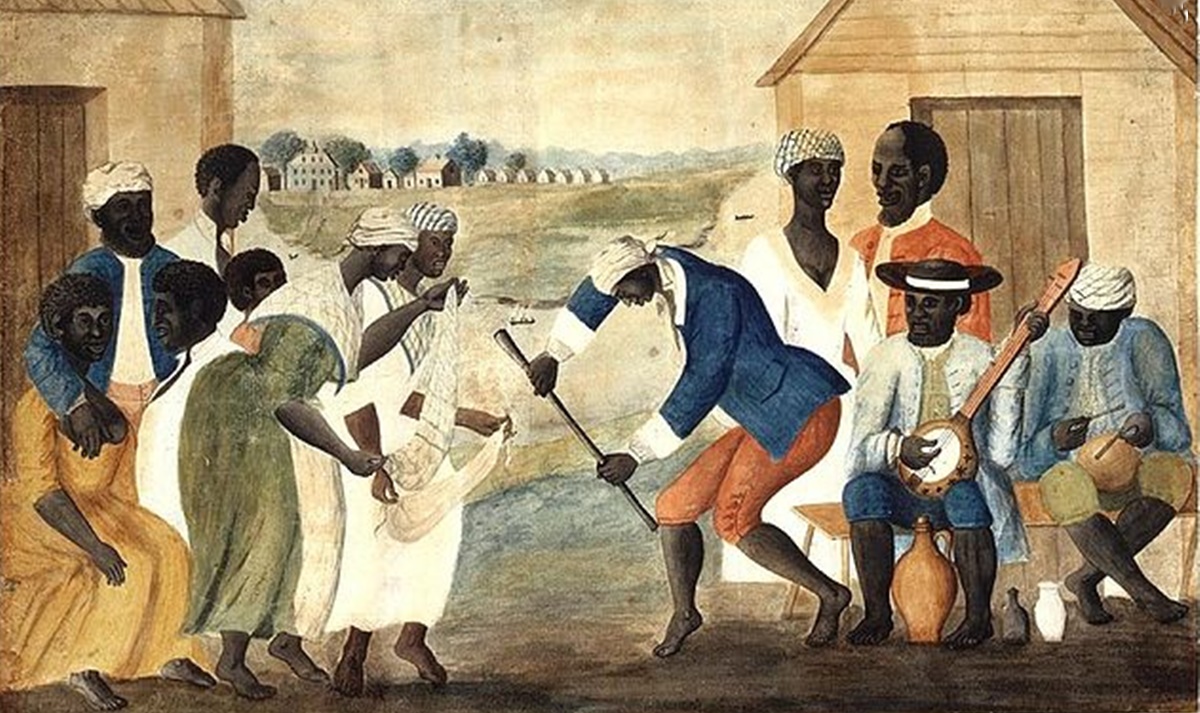
And all wasn’t lost for the South if an industry of Southern writing portrayed Blacks as “happy and content,” writes historian David Blight in Race and Reunion: The Civil War in American Memory. Despite the past state of Fugitive Slave Laws and the creation of slave patrols and the systemic use of violence against returned enslaved Blacks, despite the present state of financial ruin after its defeat in the Civil War, it was the memory of a pastoral, an idyllic “Old South” that rose to the surface and captured the hearts and minds of Southerners.
In the “Old South,” Blacks voluntarily accepted their lived experience as enslaved people, ever grateful to Southerners. Ever grateful to being at the lowest rung of the ladder. Ever grateful for being a member of Southern society at all.
Employing “Negro dialect” to incorporate “the Black voice” in an otherwise white supremacist narrative creates, for the Southern writer, a world devoid of violence. White stately manors surrounded by magnolia trees never reveal Black bodies swaying among Sycamore trees.
For an ever growing audience of regional and Northern readers, this version of the “Old South” could soothe a troubled mind from investing empathy toward the victims of systemic violence. “Thousands of readers took sentimental, imaginative journeys Southward and into idealized war zones, guided and narrated by faithful slaves,” writes Blight.
The “faithful slaves” in these narratives of propaganda allowed Southern writers to create memories of a time when a white slaveholder’s only worry was about the yield of a bale of cotton. And the Black laborer was so very happy to pick that cotton—voluntarily! Simplistic and devoid of the ugliness of slavery. Southern writers proved that democracy and the “Old South” were incompatible.
There was a need to fill these Southern narratives with the memory of a fanciful plantation South because many believed the South had lost more than the war. It had lost of its way of life, what sustained the world’s most profitable enterprise. It had lost control of these very beings who labored to provide them with life itself.
In an article for the New York Times, Blight refers to the Confederate Lost Cause myth as “one of the most deeply ingrained mythologies in American history.” The Southern writers were content in creating the fantasy of an “Old South.” But for the dissenters, writes Blight, dissenters such as returning vets who “couldn’t escape the reality of devastation,” the narratives of white supremacy were not enough. If the literature could create “happy and content” Blacks where there weren’t any “happy and content,” then organized vigilantes and ultimately the law could destroy the enterprising and industrious Black and enforce segregation laws. The Southern writer, then was free to reminiscence.
Only we can imagine the gaping omissions: the white hoods and the flaming torches, the barking dogs, the Sunday afternoon picnics, a tree, a noose. A victim of an unjust society. While secure in their homes or schools, white children read good ‘ole stories. And they need not be made uncomfortable with images of a Black woman forced to lie on the ground in a barn while a slaveholder’s nephews use her body and drink her baby’s milk.
There was much in the New South for admirers such as Hitler and Goebbels to feast on!
In a video entitled “David Blight on the Civil War in American History” featured in “Diverging Memories of the Civil War”, Blight explains that slavery, one of the “single largest financial assets in the entire world… was central to the American economy.” In 1860, enslaved Blacks were worth 3.5 billion dollars. And yet, he adds, some Americans still can’t face the fact that the Civil War was about slavery.
As the bedrock of race relations, the foundation that would forge America’s identity as a superpower, slavery triggers nightmares about a Civil War that in freeing enslaved Blacks, forever tarnished the myth of American innocence. One can’t claim to be free of the reality that once this nation recognized Black Americans as only “chattel” to be exchanged for goods or capital in order to forestall a foreclosure on the “master’s” plantation. The Civil War, Blight argues, was “the event that first tested and then destroyed the first American Republic.”
When the dissenters forced the destruction of the democratic experiment called Reconstruction, they replaced it with Jim Crow legislation. “We reconciled the nation on the backs of former slaves,” writes Blight in the video interview. At the cost of racial justice, the US created a system to once again strip Blacks of their rights.
The majority of Americans, “exhausted from the long debates over the role of blacks in the U. S. society, conceded that the descendants of slaves in the South would have to accept the end of freedom,” writes journalist Douglas A. Blackmon writes in Slavery By Another Name. “The same men who built railroads with thousands of slaves and proselytized for the use of slaves in southern factories and mines in the 1850s were also the first to employ forced African Americans labor in the 1870s.”
Terrorism was once again the lived experience of Blacks, particularly those remaining in the South. Oppression was systemic. In the meantime, the blossoming of propaganda, lies disguised as “literature,” presented distorted representations of Black people. Torched homes and businesses, raped women, murdered children will send many Blacks on the trek called the Great Migration, “perhaps the biggest underreported story of the twentieth century,” writes Isabel Wilkerson in The Warmth of Other Suns.
Unknowingly, I fortified an aversion to Southern Literature with its Mammies and Sambos, its depiction of “Negro dialect,” as hard to read as Chaucer in Middle English. I think it was enough for me to have watched Gone with the Wind once when I was young. But I read enough to imagine how Blacks must have felt about these Stepin Fetchit characterizations. As Blight writes in Race and Reunion, while the press “could not stop reflecting upon the theme of reunion,” the South thought of a profitable reunion between the North and the South, one forged in the writing industry.
A largely Northern and female ”audience looking for an“ increasingly nostalgic depiction of American slavery and the Civil War epoch turned to the novels written by white Southerners determined to resurrect memories of the Old South, whether real or imagined. As Blight explains, “the old-time plantation Negro became the voice through which a transforming revolution in race relations and the remaking of the republic dissolved into fantasy and took a long holiday in the popular imagination.”
“Bothersome” and “a dangerous antithesis of the noble catastrophe that the Confederacy’s war increasingly became in reminiscence and fiction,” free Blacks could be herded behind images of the “‘devoted slave who serves and sacrifices for his master and mistress.’” No matter how much Blacks struggled to read and to write, to set up schools during Reconstruction, in the years following the Civil War, they are portrayed as ignorant and subservient caricatures in the novels of Thomas Nelson Page. For Page, “blacks were happy” once again. As one of his characters states, “‘de ole times done come back ag’n…” A primary theme in Joel Chandler Harris’ Uncle Remus stories, Blight writes, also featured Black “loyalty to masters, to home places, and even to the South.”
A preference for the imagined “Old South” is the antithesis of a reconciled nation. However much energy Page exerted to present a mesmerizing memory of the plantation South, complete with images and narrative of an undefeated Confederacy, “the very dominance of such memory bred resistance,” writes Blight, “especially among the postwar generation.” W. E. B. Du Bois was one such resister.
Du Bois was having none of the “happy and content” Black propaganda. In his response to the Lost Cause proponents, “the make-believe world of faithful slaves,” Du Bois bravely rallied thinking Blacks to battle. There was nothing more dehumanizing than to be an unwilling servant to the big lie. In Du Bois’ Souls of Black Folks, “there are no happy darkies” and “race relations have not been better off left to the South’s own devise.” Souls offers, writes Blight, “a tragic vision of American history, a gripping revelation of the triumphs, betrayals, and legacies that, in the wake of emancipation, shaped the lives of black folks though the first years of the twentieth century.”
I read The Souls of Black Folks for the first time in high school. I could easily see my ancestors, if not myself, see my family and everyone I knew in the neighborhood in that book. It was meant for me and Black folks, and it was written by someone who loved me because he loved Black folks. “Racial reconciliation,” writes Blight, was understood by Du Bois as demanding “a confrontation with the hostility rooted in rape, lynching, and racism.”
We still live in an America where white and some Black citizens identify with the fictional compliance of Mammy.
“One ever feels his twoness,” writes Du Bois, “an American, a Negro; two souls, two thoughts, two unreconciled strivings; two warring ideals in one dark body, whose dogged strength alone keeps it from being torn asunder.”
Comments

Powered by RoundtableAn AI/DeFi-powered Enterprise Media Operating System. Learn more at Roundtable.io.© Roundtable 2026. By using this site you agree to the Terms of Use and Privacy Policy