
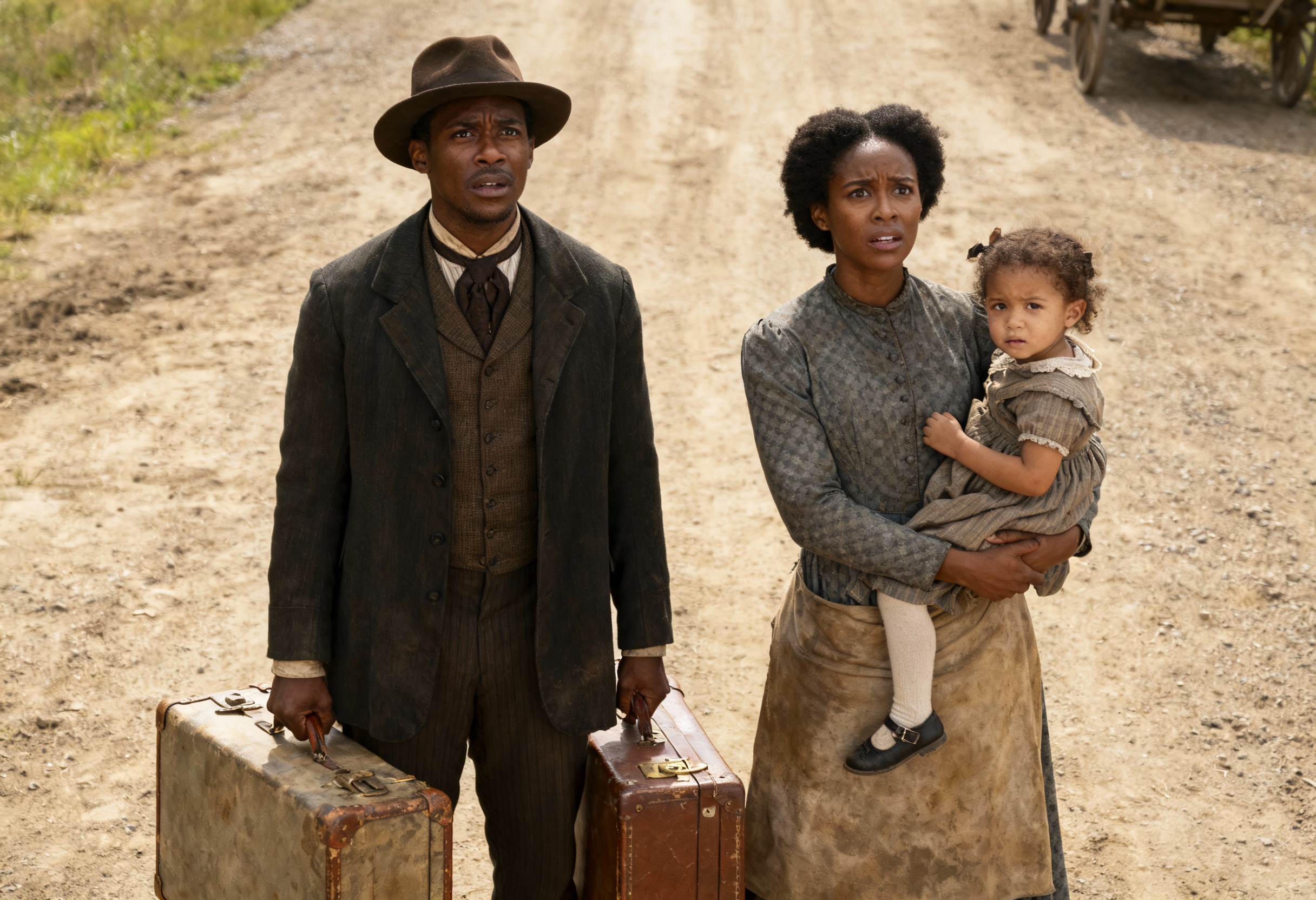


Dec 1, 2025 8:16 PM
Updated Dec 11, 2025 7:37 PM
A personal history of Durham, hidden losses, and the 1898 coup that reshaped Black life across the state
A personal history of Durham, hidden losses, and the 1898 coup that reshaped Black life across the state More Videos
The last living survivor of the Greenwood Massacre in Tulsa — Viola Fletcher, who died this week at the age of 110 — made a final request before she left this world: Do not let my death become the beginning of your forgetting. Her plea stirred something deep in me, waking the buried story of my own origins. The massacre was not always a national reference point; for most of the 20th century, it drifted into silence, erased from public memory. It took decades of activism — and even HBO’s Watchmen — to force this generation to confront its brutal truth. But the Greenwood Massacre was never an isolated catastrophe. It was one among dozens, perhaps hundreds, of Black communities destroyed by white supremacist violence. And one of them sits directly inside my family’s history: Wilmington, North Carolina, 1898, the only successful coup d’état ever carried out on American soil.
A Durham Birthline Rooted in Survival
My great-grandparents, Robert Bailey and Rosa Belle Hill, were born in Durham, North Carolina, in the 1880s. They came into a world built on the contradictions of the post–Civil War South — a world where Black freedom was written into law but contested violently in practice. Rosa Belle’s mother, Rosanna Harrell, my great-great-grandmother, was born into the slavery system. Rosanna, an enslaved baby, (we usually don't say it that way — too close to the truth) was still a child during the Civil War. Rosanna’s entire life — and the lives of the children she would bear and the children they would bear — unfolded under the long shadow of enslavement and its aftermath.
But Durham was rising quickly during the Reconstruction years. Tobacco fortunes and Black entrepreneurship shaped the city in tandem. Black churches, newspapers, schools, and mutual aid institutions were taking root. A successful Black middle class was beginning to flourish. But so was the white backlash.
Why My Family Fled North Carolina
To understand why my ancestors left North Carolina, you must understand Wilmington, North Carolina of 1898 — and what it signaled to every Black family in the state.
Related stories
Wilmington had been a model of multiracial democracy during Reconstruction:
Black men voted, held office, and shaped local governance.
Black businesses thrived.
Black journalists — like Alexander Manly, editor of The Daily Record — used their voices unapologetically.
But in November 1898, white supremacist Democrats — backed by paramilitary violence — executed a planned coup d’état:
- They burned The Daily Record to the ground.
- They murdered an unknown number of Black residents — maybe dozens, maybe hundreds.
- They forced elected officials to resign at gunpoint.
- They installed their own white supremacist government.
- And the state rewarded the terrorists by passing Jim Crow laws that disenfranchised Black people for the next 70+ years.
The Wilmington Massacre was carried out by white supremacists not just to launch an eruption of chaos.
It was to send a message.
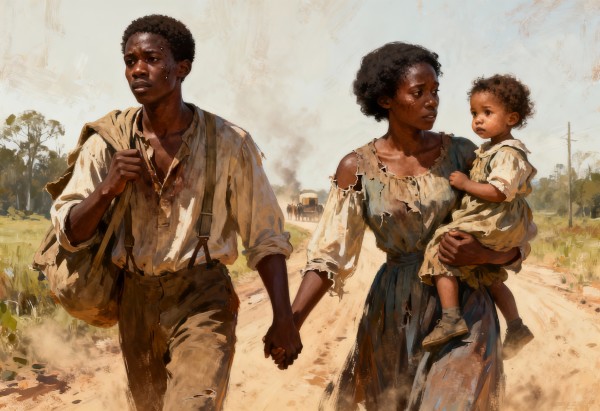
“If we can overthrow a government here, we can do it anywhere.”
Durham’s Black community — ambitious, visible, economically ascendant — felt that message immediately. My ancestors would have understood the danger without anyone needing to spell it out. Every Black family in North Carolina did.
But what happened in Wilmington didn’t stay in Wilmington.
It became state policy, written into voting laws, policing, courts, economics, and everyday life.
During this period in history, more than six million African Americans left the south. Along with millions of others, my great grandparents joined the exodus.
The Journey North — And the Babies Lost Along the Way
My grandmother, Louise Bailey, was born in Durham in 1909. Two years later, in 1911, her parents — Robert Bailey and Rosa Belle Hill — joined the stream of Black families fleeing the tightening noose of white supremacy and white terror in North Carolina. I wrote an article on post-Reconstruction North Carolina that explores the idea that the South actually won the Civil War. I think an argument can be made in favor of that perspective. You can read it here.
Anyway, my family headed north during what has come to be called “The Great Migration”. I generally think of it as “The Great Run for Your Lives Migration" but that doesn't sound as gallant and raises too many questions.
But back to my family — along the way out of the south – my grandmother and her parents stopped — in Richmond, Virginia. I never asked my grandmother why her parents left Durham only to stop in Richmond, Virginia, technically still in the South. I guess I had assumed they stayed in Richmond because they could earn a living there. It wasn’t until after she passed and after I opened an Ancestry.com account that I began to find documents that offered me a window that revealed a very different story.
Before then – before investing time in building my family tree and learning a lot more family history, I was oblivious to what happened to my grandmother after leaving Durham. What she told me was that she and her brother Sam were raised in Richmond – no mention of trauma. She told us “funny” stories like the fact that she couldn’t walk until she was five years old. There was the suggestion that she was so lazy she wouldn’t walk. Ha ha
But here is what I uncovered after her death. It is why my assumptions of her and her sibling living happily in Richmond were smashed:
My great grandparents left North Carolina in 1911 with a two-year-old in tow. Then, not long after leaving Durham, my great grandmother gave birth to a son. Was she pregnant during the journey? Did the pregnancy and birth force them to stay in Richmond? I don’t know. No portion of this part of my family's history was given to me by my grandmother. I learned this part by stumbling upon documentation in the Ancestry.com repository. Documents I didn't even know to look for because they contained information about people I had no idea ever existed.
My grandmother told me that she left Durham when she was two. So, that meant that my great-grandparents made the journey from Durham to Richmond in 1911. What my grandmother never told me was that almost immediately after arriving in Richmond, her parents welcomed a newborn son. He was born in Richmond in 1911. Another child followed in 1912, and a third in 1914.
Three babies in about three years, all born in Virginia, told me something unmistakable: if my great-grandparents had planned to continue north, life had thrown up barriers strong enough to pin them in place. But it wasn’t until I uncovered the next set of documents that the full weight—and the quiet horror—of their early years in Richmond began to come into focus.
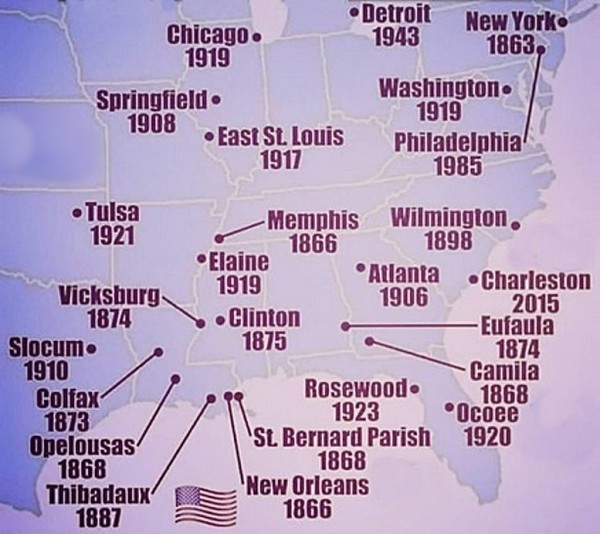
My Grandmother’s Silence Began to Make Sense – the trauma is unthinkable – unspeakable
Not long ago, while digging through records as part of my genealogy work, I typed my great-grandparents’ names into a database and hit a result I had never seen before: a death certificate. It belonged to a child who died in 1915 — a child no one in my family had ever mentioned. I grew up believing my great-grandmother had only two children, my grandmother Louise and her brother Sam. Even then, I suspected the story was incomplete; women of her era rarely had just two children unless something had happened that no one talked about. But nothing prepared me for what the records revealed. What I found didn’t just fill a gap — it opened a door into a history of loss my family had carried in silence.
Ultimately, I learned that my great grandmother had given birth to at least three boys while living in Richmond. Two of the three died before the age of 2½.
One died of marasmus — a form of severe malnutrition that occurs when a child’s body is deprived of calories, protein, and stability for too long. Marasmus is what happens when families live in conditions so unstable, so stressful, so thin on resources, that even feeding a baby becomes precarious. Not knowing the definition of marasmus, I had to look it up – immediately I remembered my Granny’s “funny” story about not being able to walk until she was five. This is another symptom of marasmus!
These babies did not die in a world of safety.
They died in a world where their parents were fleeing white supremacists racial terror that was allowed to exist and sometimes assisted by law enforcement.
How Wilmington’s Terror Reached Durham — And Families Like Mine
Although not spoken of often, the Wilmington Massacre is usually described as if it were some aberration — a terrible event that happened in one city on one day. But its impact radiated across the entire state. For Black families in Durham, North Carolina, Wilmington was not a rumor. It was a warning flare.
It meant:
- democratic protections could vanish overnight
- armed mobs could act with impunity
- courts, sheriffs, and legislatures would side with white supremacists
- Black success could trigger violence rather than respect
Durham’s Black leaders — entrepreneurs, ministers, teachers — understood they were now under surveillance. They softened their public political voices. They advised caution. They warned their congregations and children. Invisibility became a survival tactic.
My ancestors absorbed those lessons, too. They had every reason to believe that the massacre in Wilmington could just as easily happen in Durham. The coup didn’t simply topple a government; it toppled the illusion that law and democracy might protect Black people.
Durham as Origin — And Durham as Exodus
At least three generations of my maternal line were born in Durham:
- Rosanna, born into state sanctioned slavery where owning a newborn baby slave was normal
- Rosa Belle, born free of state sanctioned enslavement but not really free and never safe
- Louise, born into a Jim Crow South increasingly hostile to Black autonomy
Durham is the beginning of this story — and the crossroads where we had to leave in order to survive.
Their departure was not surrender.
It was an act of defiance.
They chose life over geography.
The Legacy That Lives in Me
When I think about North Carolina now, I think about more than dates and events. I think about Viola Fletcher’s final request that we not forget. I think about how erasure is a tool of power. And I think about how my own family’s story — from slavery to Durham to the desperate flight north — is part of the broader American story of Black resilience in the face of racial terror.
I think of Rosanna, born enslaved.
I think of Rosa Belle, whose babies did not survive the migration trail.
I think of my grandmother Louise, carried north in search of safety.
And I think of how Wilmington’s wildfire of violence scorched an entire state — shaping who stayed, who fled, who survived, and who did not.
That history doesn’t live in a textbook for me. It lives in my bloodline.
And like Viola Fletcher asked us to do with the Greenwood Massacre, I am choosing not to forget.
Comments

Powered by RoundtableAn AI/DeFi-powered Enterprise Media Operating System. Learn more at Roundtable.io.© Roundtable 2026. By using this site you agree to the Terms of Use and Privacy Policy