


Jul 7, 2020 5:00 PM
Updated Feb 10, 2022 10:38 PM
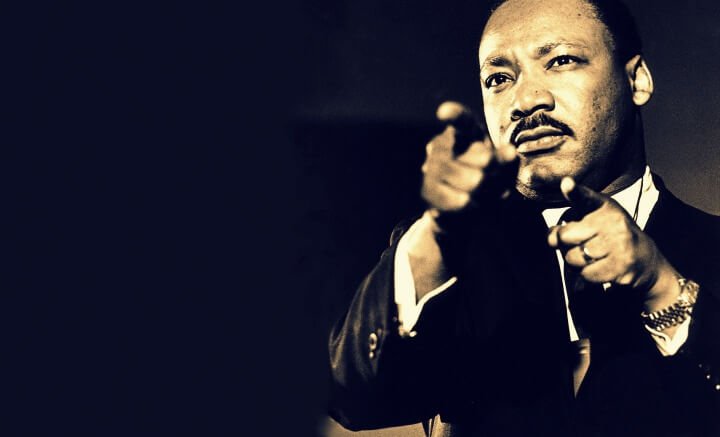
Frank Fear: I must say to you that we have not made a single gain in civil rights without determined legal and nonviolent pressure.
I came across your recent statement calling my present activities "unwise and untimely." I say: injustice is here, and that injustice anywhere is a threat to justice everywhere. Whatever affects one directly, affects all indirectly.
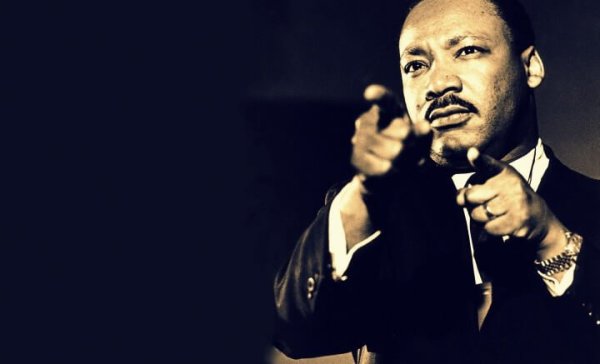
In any nonviolent campaign, there are four necessary steps: a collection of the facts to determine whether injustices exist; negotiation; self-purification; and direct action. We have gone through all those steps.
The fact is this: the ugly record is widely known. For example, Black Americans have experienced grossly unjust treatment in the courts. Based on this and other conditions, our leaders have sought to negotiate. But we rarely experienced good faith negotiation. Certain promises were made, but as time passed, we realized that we were victims of broken promises. In so many past experiences, our hopes have been blasted, and the shadow of deep disappointment has settled upon us. We have no alternative now except direct action whereby we lay our case before the conscience of the national community.
Mindful of the difficulties involved, we decided to undertake a process of self-purification. We asked ourselves: "Are we able to accept blows without retaliating?" We then decided to schedule our direct-action program.
Related stories
You may well ask: "Why direct action? Isn't negotiation a better path?" You are quite right in calling for negotiation. Indeed, that is the very purpose of direct action. Nonviolent direct action seeks to create a crisis and foster such tension that negotiation is forced to confront the issue—to dramatize the issue that can no longer be ignored.
I must confess that I am not afraid of the word "tension." Socrates felt that it was necessary to create a tension in the mind so that individuals could rise from the bondage of myths and half-truths to the unfettered realm of creative analysis and objective appraisal. Today, we see the need for nonviolence to create the kind of tension in society that will help people rise from the dark depths of racism to the majestic heights of understanding.
I must say to you that we have not made a single gain in civil rights without determined legal and nonviolent pressure.
I must say to you that we have not made a single gain in civil rights without determined legal and nonviolent pressure. Lamentably, it is a historical fact that privileged groups seldom give up their privileges voluntarily. Individuals may see the moral light and voluntarily give up their unjust posture. But, as Reinhold Niebuhr has reminded us, groups tend to be more immoral than individuals. We know through painful experience that freedom is never voluntarily given by the oppressor; it must be demanded by the oppressed.
For years now, I have heard the word "Wait!" It rings in the ear of every Black American with piercing familiarity. But "Wait!" has almost always meant "Never!" It means that "justice too long delayed is justice denied." We have waited for more than 300 years for our constitutional and God-given rights, and we still creep at horse and buggy pace.
So I hope you can understand our legitimate and unavoidable impatience, and why we are motivated to redress racial injustice. That quest includes confronting what we consider to be unjust laws. How does one determine whether a law is just or unjust? An unjust law is a code that is out of harmony with the moral law. Racism is unjust because it gives the segregator a false sense of superiority and the segregated a false sense of inferiority. And throughout the country, there have been racist acts, including using all sorts of devious methods to prevent Black Americans from becoming registered voters. Can any law enacted under such circumstances be considered democratically structured?
So we must stand against those actions—not unlike what happened during the founding of our Nation when The Boston Tea Party represented a massive act of civil disobedience. And we should never forget that everything Adolf Hitler did in Germany was "legal," but that everything the Hungarian freedom fighters did in Hungary was "illegal."
And as I make that point, let me confess that over the past few years I have been gravely disappointed with what I call “The White Moderate.” I have almost reached the regrettable conclusion that the great stumbling block for Black Americans is not the Ku Klux Klan, but the White Moderate, who is more devoted to order than to justice. To me, shallow understanding from people of good will is more frustrating than absolute misunderstanding from people of ill will.
I had hoped that the White Moderate would reject the myth of time in relation to the struggle for freedom. I just received a letter from a White brother, who wrote: "All Christians know that Black Americans will receive equal rights eventually, but it is possible that you are in too great a hurry?” More and more, I feel that people of ill have used time much more effectively than the people of good will. So now is the time to make real the promise of democracy.
But as you speak of our activity as ‘extreme,’ please know that I stand in the middle of two opposing forces. One force is complacency, which includes (I must add) Black Americans who, as a result of long years of oppression, are drained of self-respect and have adjusted to racism. It also includes middle-class Black Americans who, because of a degree of academic and economic security—and because in some ways they profit by segregation—have become insensitive to the problems of the masses. The other force is bitterness and hatred.
I have tried to stand between these two forces as I also know that oppressed people cannot remain oppressed forever. I was initially disappointed that you categorized me as an extremist, but I take comfort in Abraham Lincoln’s words, "This nation cannot survive half slave and half free," and what Thomas Jefferson said, "We hold these truths to be self-evident, that all men are created equal.”
So I say this to you: The question is not whether we will be extremists, but what kind of extremists we will be. Will we be extremists for love or for hate? Will we be extremists for the preservation of injustice or for the extension of justice?
I am thankful that many White Americans have grasped the meaning of this social revolution and have committed themselves to it. They are still too few in quantity, but they are big in quality. Unlike so many of their moderate brothers and sisters, they have recognized the urgency of the moment and sensed the need for powerful action to combat injustice.
But as I say that, let me note another major disappointment—about the White church and its leadership. Of course, there are notable exceptions, but I must honestly reiterate that I am disappointed that too many in the church misunderstand the freedom movement. While some have even been outright opponents, the majority seem to be more cautious than courageous, and they have remained silent behind the anesthetizing security of stained glass windows. In the midst of this mighty struggle, I have heard church leaders say, "Those are social issues with which the Gospel has no real concern." And every day I meet young people whose disappointment with the church has turned into outright disgust.
Before closing, I feel impelled to mention one other point. You warmly commended the police for keeping "order" and "preventing violence." I doubt that you would have so warmly commended the police force if you were to have observed their ugly and inhumane treatment of Black Americans. While it is true that the police have exercised a degree of discipline in handling the demonstrators, I ask: For what purpose? To preserve an evil system? As T. S. Eliot has said, "The last temptation is the greatest treason: To do the right deed for the wrong reason."
I wish you would have commended Black Americans and our White brothers and sisters who marched with sublime courage in the midst of great provocation. One day, I believe they will be honored for bringing our Nation back to those great wells of democracy, which were dug deep by the Founding Fathers in their formulation of the Constitution and the Declaration of Independence.
Never before have I written so long a letter. But I write in the hope that the dark clouds of racial prejudice will soon pass away, and that the deep fog of misunderstanding will be lifted.
NOTE: The text only includes passages from MLK’s Letter from a Birmingham Jail, April 16, 1963. Reference to ‘Black American’ replaces the use of ‘Negro’ in the text presented here.
You can listen to the spoken version of this article on Anchor.FMat Under the Radar with Host Frank Fear. UTR is also available at Apple, Spotify, Google Podcasts, Breaker, RadioPublic, Pocket Casts, and Overcast.
Comments

Powered by RoundtableAn AI/DeFi-powered Enterprise Media Operating System. Learn more at Roundtable.io.© Roundtable 2026. By using this site you agree to the Terms of Use and Privacy Policy