


May 25, 2025 10:02 PM
Updated May 29, 2025 8:39 PM
Even though I descend from people who were enslaved in the United States, Juneteenth wasn’t in my vernacular growing up
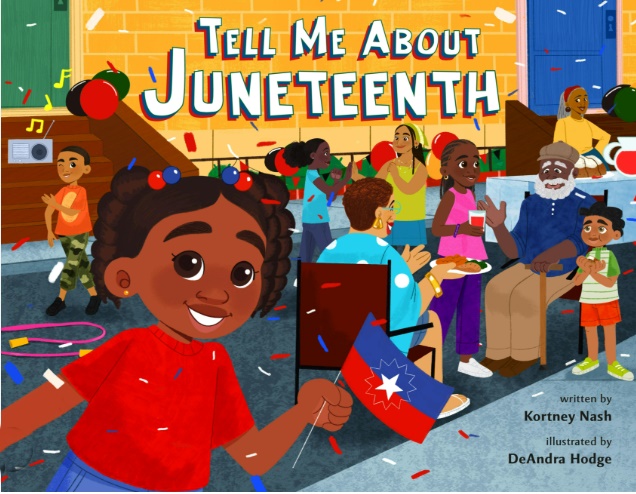
Tell Me About Juneteenth, a children’s book written by Kortney Nash and illustrated by DeAndra Hodge, is a delightful introduction to a day of remembrance we all should honor. What is now a federal holiday, almost looked like it would never happen. President Joe Biden signed the Juneteenth National Independence Day Act into law on June 17, 2021, making this day an official holiday some 245 years after the date most Americans call “Independence Day”.
Even though I descend from people who were enslaved in the United States, Juneteenth wasn’t in my vernacular growing up in the Bronx and Queens in the 60s and 70s. The books we read in elementary, middle, and high school didn’t even mention civil rights or slavery. Back then, even though I knew nothing about Juneteenth, I always felt that celebrating Independence Day and Columbus Day were an affront to Black and Native Americans and by extension, all Americans.
In a recent conversation author Kortney Nash, I learned that even today, it is difficult to find books for children about this important American holiday. That is what motivated her to write one.
My conversation with Kortney can be heard here. I recommend “Tell Me About Juneteenth” to anyone who has or encounters children in their lives.
Related stories
The brief background of Juneteenth
Juneteenth, celebrated on June 19th, marks the day in 1865 when Union General Gordon Granger arrived in Galveston, Texas, and announced that all enslaved people were free, in accordance with the Emancipation Proclamation issued by President Abraham Lincoln more than two years earlier (on January 1, 1863). Texas was one of the last holdouts where slavery continued despite the proclamation, so this date became symbolic of the final enforcement of emancipation in the U.S.
Why Was It Made a Federal Holiday?
Juneteenth was declared a federal holiday on June 17, 2021, when President Joe Biden signed the Juneteenth National Independence Day Act into law. The motivations included:
- Recognition of Black American history: Juneteenth honors the struggles and contributions of African Americans and acknowledges the enduring impact of slavery and systemic racism.
- National reckoning and healing: The push to make Juneteenth a federal holiday gained significant momentum following the racial justice protests in 2020 after the murder of George Floyd. It was seen as a step toward greater acknowledgment of historical injustices.
- Educational importance: Making it a national holiday helps raise awareness of a critical chapter in American history that has often been overlooked in traditional curricula.
- Broad bipartisan support: The legislation passed the Senate unanimously and received overwhelming support in the House, signaling a shared desire to formally honor the significance of the day.
To sum it up, Juneteenth became a federal holiday to commemorate the end of slavery, acknowledge African American resilience, and promote greater historical understanding and unity.
But Juneteenth wasn’t an idea that just popped up in 2021. Activists began calling for Juneteenth to be recognized as a federal holiday as early as the 1960s and 1970s, during and after the Civil Rights Movement. Of course, there was a lot of resistance and push back, but the push gained more organized momentum in the 1980s and 1990s.
Key Milestones:
- 1968–1979: The modern Juneteenth movement gained traction during the post–Civil Rights era. Celebrations began to spread beyond Texas, where Juneteenth had been celebrated informally since 1866 and officially since 1980 (when Texas made it a state holiday—the first state to do so).
- Opal Lee’s activism (starting in the 1990s): Often called the "Grandmother of Juneteenth," Opal Lee, a retired teacher and activist from Texas, began campaigning for Juneteenth to become a national holiday. She famously began walking across the country in her 80s to draw attention to the cause.
- 2000s–2010s: More states began recognizing Juneteenth as a holiday or observance. Advocacy groups and Black communities across the country continued to push for federal recognition.
- 2020: Following the murder of George Floyd and the global protests against racial injustice, the movement to make Juneteenth a federal holiday surged into the national spotlight. Several companies began recognizing it as a paid holiday, and bills were introduced in Congress with broader support.
- 2021: The decades-long campaign culminated in the official designation of Juneteenth as a federal holiday on June 17, 2021.
So while the idea had been around since at least the 1960s, formal and sustained national advocacy really took shape in the 1990s, led by people like Opal Lee and many grassroots organizers. Here are some local Juneteenth events in the Los Angeles area:
Comments

Powered by RoundtableAn AI/DeFi-powered Enterprise Media Operating System. Learn more at Roundtable.io.© Roundtable 2026. By using this site you agree to the Terms of Use and Privacy Policy