


Feb 20, 2023 3:00 PM
Baldwin's prosecution of the charges of injustice and raw tribalism that marks and stigmatizes us all is as relevant today as when he spoke them.
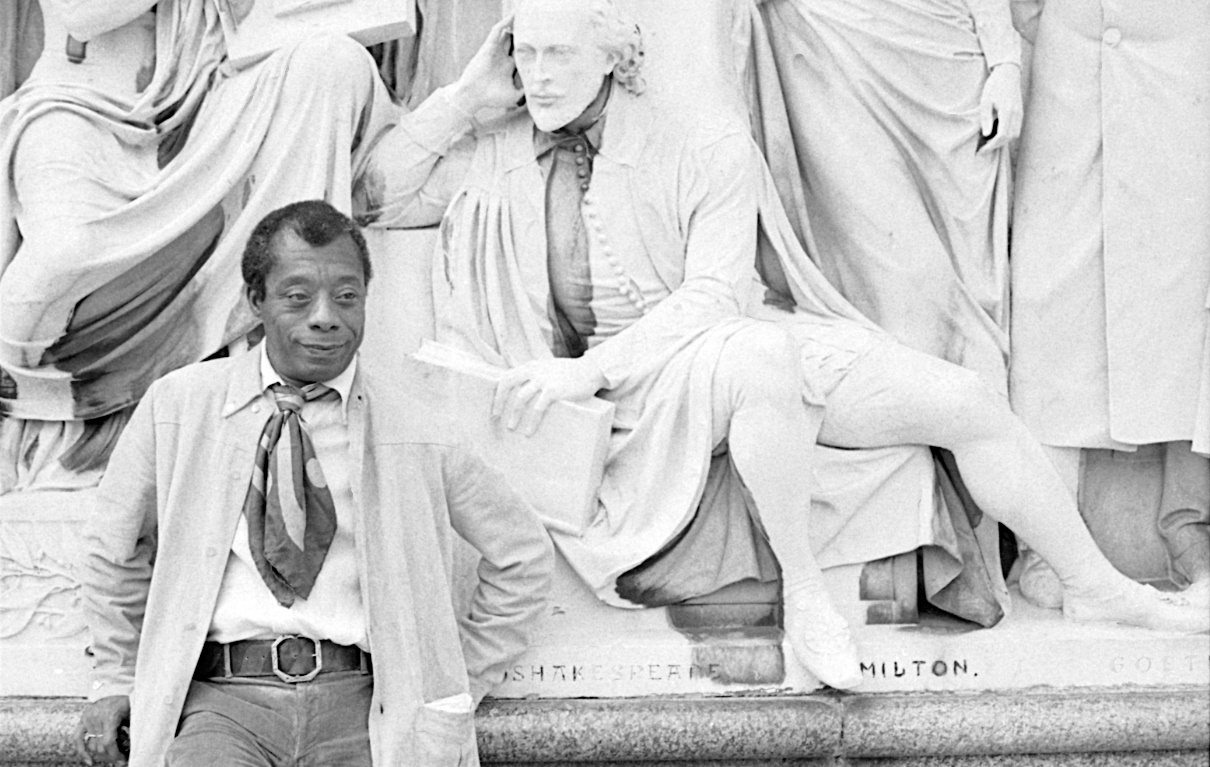
We all have personal heroes. One of mine is writer James Baldwin.
In a violent era of racial injustice, Baldwin was a bright beacon in the chiaroscuro of the dark storm. His penetrating words and deep insights about the nature of white supremacist America were delivered with artistry, dignity, compassion, poise and razor-sharp insights into the human being. His novels, essays, poems and plays helped to elevate public understanding of racial and sexual oppression.
But his signature style was his honest portrayal of his own personal experiences, which challenged Americans to uphold those universal and democratic values that allegedly were woven into the nation’s constitutional framework.
Gandhi said that arguments convince the rational mind, but that suffering convinces the human heart, that suffering opens up the heart. Baldwin’s incisive essays, gripping speeches and interviews, and majestically tragic novels, just like Martin Luther King’s marches and civil disobedience, embodied Gandhi’s spirit in a spellbinding way.
Related stories
The year 1965 was to be a watershed in the battle for the soul and sanity of the Dis-United States of America. March 7, Bloody Sunday, saw two hundred Alabama State Troopers attack over 500 civil rights demonstrators, including future Congressman John Lewis, with horses, billy clubs and tear gas as the marchers crossed the Edmund Pettus Bridge in Selma, Alabama; on March 8, 3500 Marines arrived – not in Alabama to protect and defend their fellow Black Americans against unmitigated white violence – but in South Vietnam, becoming the first US combat troops in that exploding theater of colonial war.
For the rest of March, nonviolent protest marches led by Dr Martin Luther King Jr, the Student Nonviolent Coordinating Committee and other Black leaders continued between Selma and Montgomery, Alabama, first with hundreds and then with thousands. America and its vaunted ideals were standing at the precipice.
The political establishment lurched and twitched. In August, President Lyndon Johnson signed the Voting Rights Act of 1965 into law, outlawing literacy tests and other discriminatory voting practices that had been responsible for widespread disfranchisement of African Americans. Days later, the Watts riots exploded in Los Angeles. A few days later, the Beatles performed at Shea Stadium in New York City. She loves you, yeah-yeah-yeah.
In the midst of all this amplified tension and cultural frisson, just before the onslaught of Bloody Sunday, Baldwin’s debate with Buckley riveted the public imagination. It occurred in Britain in a packed hall of the Cambridge Union at Cambridge University, a prestigious 150 year old debate series, which televised the event (here is a YouTube link to the debate, and below is the transcript). The air was crackling, the excitement was thick among the 700+ attendees, seemingly aware that something momentous was about to occur. On the BBC broadcast, the narrator sets the stage:
“I don’t think I’ve ever seen the union so well attended. There are undergraduates everywhere: They’re on the benches; they’re on the floor; they’re in the galleries; and there are a lot more outside clamoring to get in.”
The two oratorical gladiators were asked to debate the subject: “Has the American Dream been achieved at the expense of the American Negro?” Baldwin stands after a brief introduction by the moderator, and his reticence and perhaps even fear feels palpable 58 years later, as he is surrounded by a sea of white faces. Baldwin was not exactly a militant voice like Malcolm X or Stokely Carmichael, or a preacher’s passionate voice like Reverend King; his was the demeanor of a quiet prophetic rage that had still retained enough innocence and disbelief that any human could treat another the way whites treated Blacks. And yet through the course of his speech, Baldwin refuses to let himself lose his own humanity. Indeed, he finds compassion even for his oppressors.
“I suggest that what has happened to white Southerners is in some ways, after all, much worse than what has happened to Negroes there, because Sheriff Clark in Selma, Alabama, cannot be considered—you know, no one can be dismissed as—a total monster. I’m sure he loves his wife, his children… You know, after all, one’s got to assume, and he is visibly, a man like me. But he doesn’t know what drives him to use the club, to menace with the gun and to use the cattle prod. Something awful must have happened to a human being to be able to put a cattle prod against a woman’s breasts, for example. What happens to the woman is ghastly. What happens to the man who does it is in some ways much, much worse.”
This is vintage Baldwin, summoning an inexplicable empathy for the pitiful overseers. For those of you who are familiar with him and his work, take 20 minutes to revisit his brilliance and mastery of narrative, in service to his prosecution of the charges of injustice and raw tribalism that marks and stigmatizes us all. For those of you who have never experienced James Baldwin, you are in for a real treat.
Baldwin’s remarks are followed by a standing ovation, and he won the debate over Buckley in a landslide, 544-164. For that moment, those white English youth were waking up to their privilege and to the horror of Black reality. Baldwin’s searing indictment of not only America but also Western civilization (again, echoes of Gandhi) remains to this day a memorable and mighty testimony to the power of individuals and mass movements to fight for a better world. I am inspired – and angered, because racism is still very much with us -- every time I watch this speech.
Baldwin stands and delivers at about the 13:50 mark after a brief introduction by the moderator, and his elocution lasts until about the 38:00 mark. When he finishes, to his seeming shock, he is treated to a rousing, standing ovation. In the 1960s and the years before, usually white crowds of this size meant terrible things for Black people.
Am I imagining a degree of discomfort for Baldwin, surrounded at the end by a close-in throng of adoring white people? He had prosecuted nothing less than a lasting challenge to narratives of Western freedom and civilization as constructed by whites, and at least for that time and moment, the white people in the room seemed to get it.
Comments

Powered by RoundtableAn AI/DeFi-powered Enterprise Media Operating System. Learn more at Roundtable.io.© Roundtable 2026. By using this site you agree to the Terms of Use and Privacy Policy