



Sep 19, 2017 6:57 PM
Updated Feb 10, 2022 10:31 PM
John Peeler: The reader cannot avoid the conclusion that racism has been fundamental to White culture from the very beginning of American history, with deep roots in Europe.

The Definitive History of Racist Ideas in America, by Ibram X. Kendi
It is perhaps presumptuous for Ibram Kendi to call this book “the definitive history,” but its 500+ pages are certainly comprehensive and worth the read. Beginning well before the first European conquest and colonization of the Americas, he deploys a broad typology of racist, assimilationist, and anti-racist thought to analyze the ideas of a wide-ranging succession of thinkers.
Racist thought assumes that different races really exist and that there is a clear, permanent hierarchy among them, with Whites, of course, on top. Assimilationist thinking acknowledges that Whites are on top, but attributes this to social, economic and cultural factors that are subject to change. Thus, Blacks can hope, eventually, to overcome racism. Antiracism, in contrast, frontally attacks racist ideas and social structures, demanding that Blacks and other downtrodden races be acknowledged as fully human right now, and fully entitled, now, to equality.
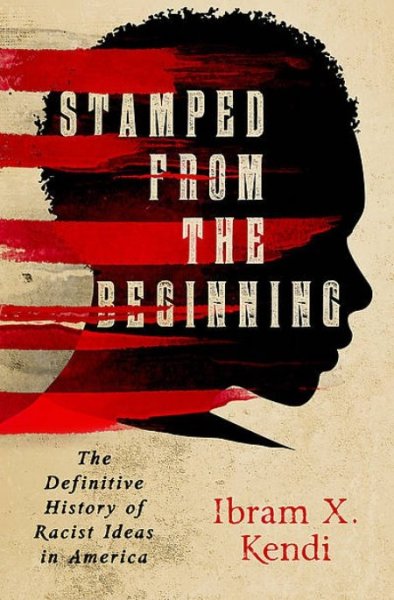
The book is organized around five major figures in American history: Cotton Mather, Thomas Jefferson, William Lloyd Garrison, W.E.B. DuBois, and Angela Davis, but each of the five parts treats a wide range of actors and thinkers of the lifetime of the central figure. Thus, the part on Jefferson begins with the Enlightenment and ends with the movement to solve America’s “Black Problem” by sending free Blacks as colonists to Africa, a movement whose most concrete result was the foundation of Liberia.
Related stories
Kendi finds, broadly, that explicit racism was predominant among Whites and present among Blacks right through the Civil War. Even abolitionists like William Lloyd Garrison held the fundamentally racist view that Blacks really were inferior to Whites, though they denied that this inferiority was a permanent feature of human nature. And it is now well-known that Abraham Lincoln, the great Liberator, was in fact deeply racist, reluctant to free the slaves, and anxious to get rid of them by colonization.
He follows DuBois from his early focus on improving the social and economic lot of Blacks, on the assumption that “The Talented Tenth” could ultimately win over racist Whites and raise their less-fortunate fellow Blacks to full citizenship. But by the 1930s, DuBois had given up on persuading Whites and adopted a fully antiracist stance that he maintained until his death in 1963.
The reader cannot avoid the conclusion that racism has been fundamental to White culture from the very beginning of American history, with deep roots in Europe.
Angela Davis’ emergence at about that time lets Kendi use her as a vehicle for looking at the whole era of Civil Rights, Black Power, the racist reaction that put Reagan in power, Clinton’s New Democrats, Bush’s New Republicans, and the remarkable rise of Barack Obama. Angela Davis is the hero of the entire book, the only major figure who shows no weakness or inconsistency in her militant antiracism.
The reader cannot avoid the conclusion that racism has been fundamental to White culture from the very beginning of American history, with deep roots in Europe. Racism has changed its face many times: now, it shows itself in support for police shootings of unarmed Blacks, and in the widespread White hatred of Obama, but usually without explicit mention of race. The Blacks who were shot somehow deserved it. Obama is not really American, is Muslim, doesn’t love America; the dismal list of condemnations goes on and on.
One is also driven to conclude that all previous strategies to attack racism—whether abolitionism, DuBois’s “talented tenth,” or the civil rights movement of the 1960s—have failed. Kendi argues that they all failed because they were not consistently antiracist. Only Angela Davis was consistently antiracist. Kendi features Davis as the embodiment of his argument, but however much one may respect her integrity and consistency, her impact on the racist character of American society has been minimal.
The book’s Epilogue flies free from this gloomy landscape to express the hope that, somehow, maybe now, antiracism will finally prevail in the United States. The book obviously went to press before the election of Donald Trump.
I think the only reasonable conclusion is that racism is absolutely fundamental to American culture from its earliest beginnings. We will never be rid of it. We can—and must—struggle against it.

John Peeler
Comments

Powered by RoundtableAn AI/DeFi-powered Enterprise Media Operating System. Learn more at Roundtable.io.© Roundtable 2026. By using this site you agree to the Terms of Use and Privacy Policy