


Nov 11, 2025 9:26 PM
Updated Jul 18, 2026 6:36 PM
From George Washington’s cherry tree myth to Donald Trump’s censorship of Harriet Tubman, America’s most powerful men have long mythologized history to conceal Black suffering and erase Black contributions.
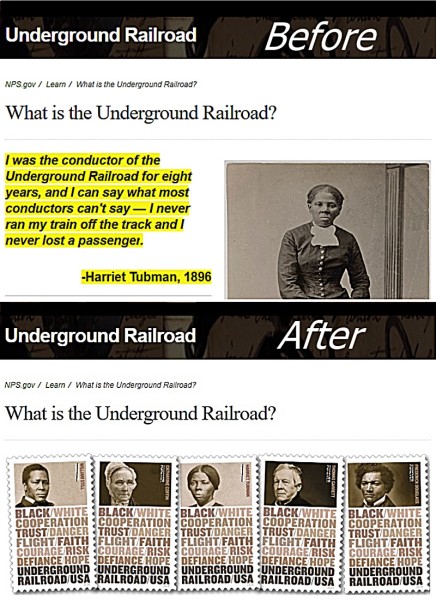
Historians and civil rights advocates warn that Donald Trump’s 2025 inauguration marked the beginning of a coordinated campaign to erase the brutal truths of African American history. As The Guardian recently reported, the National Park Service quietly deleted both an image and a quote from abolitionist Harriet Tubman on its webpage about the Underground Railroad. Imagine that—an Underground Railroad narrative stripped of the very woman known as “Moses,” who risked her life again and again to lead enslaved people to freedom.
The page was rewritten to highlight what it calls “Black/White Cooperation,” recasting one of the most excruciating periods in American history as a story of mutual goodwill. It’s historical whitewashing, plain and simple—and part of a much older American pattern.
The Politics of Mythmaking
We’ve seen this before. The Trump Administration’s approach to history echoes a long tradition of mythmaking that glorifies white leaders while erasing the people they oppressed. Take, for example, the cherry tree story about George Washington.
In 1800, Mason Locke “Parson” Weems fabricated the tale of a young George Washington confessing to cutting down his father’s cherry tree, saying, “I cannot tell a lie.” The story was pure invention—a moral fable meant to portray Washington as the embodiment of honesty and virtue. But while that story spread through schoolbooks and sermons, it hid the truth that Washington enslaved more than 300 human beings, exploiting their labor, bodies, and lives.
Related stories
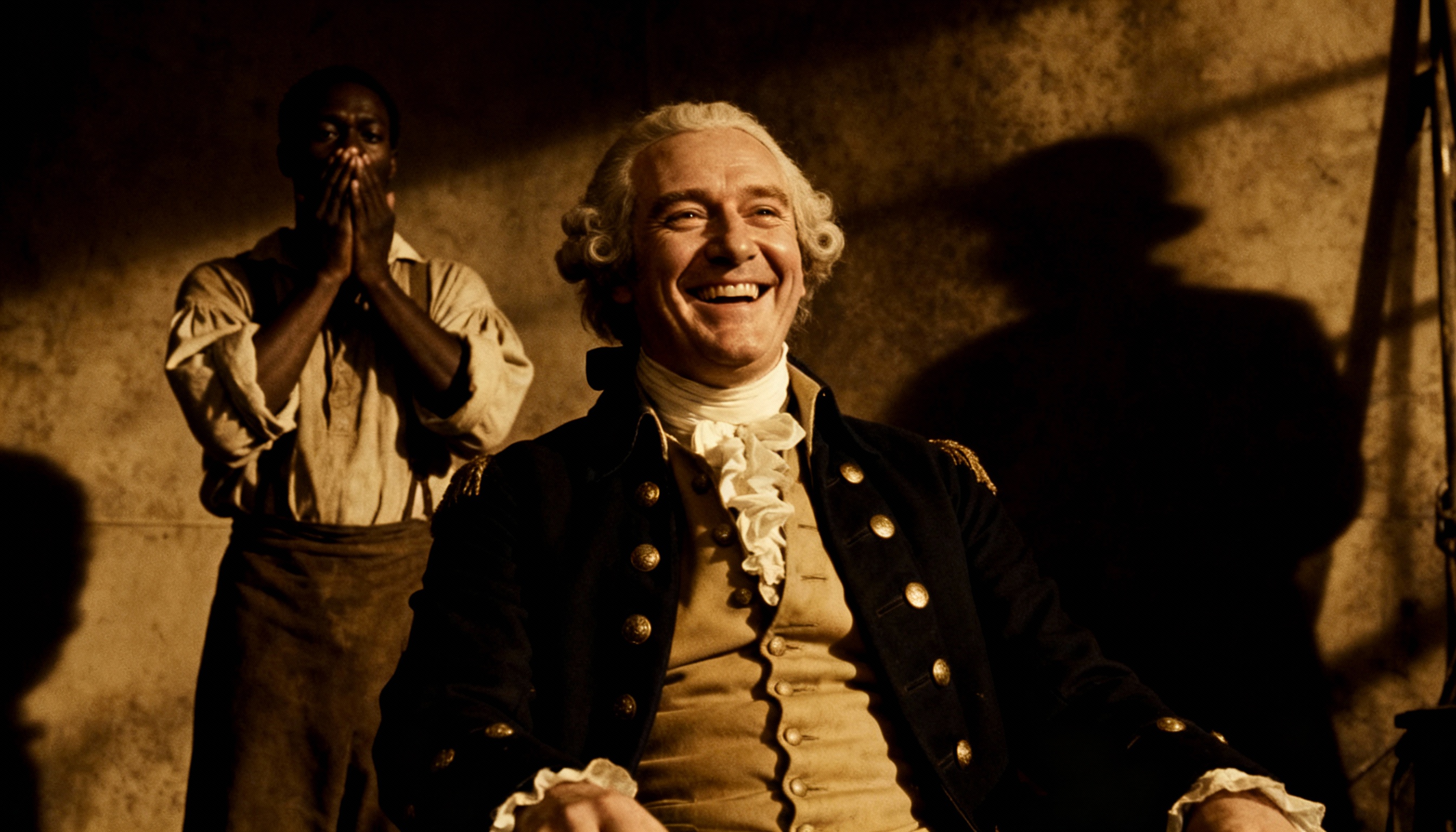
The Hidden History Behind Washington’s Smile
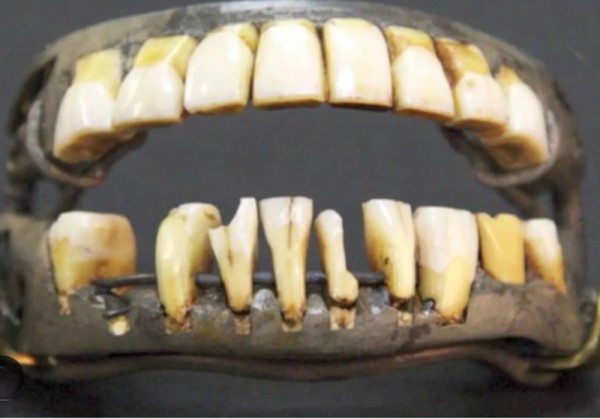
Consider another Washington myth: his supposed wooden teeth. The truth is far darker. Washington’s dentures were constructed from human teeth, animal ivory, and metal. In 1784, Washington’s financial ledger recorded a payment of £6 2s “to Negroes for 9 Teeth on account of the French dentist,” Jean-Pierre Le Mayeur. Those teeth were extracted from living people—enslaved men and women who had no right to refuse, no legal personhood, and no protection from harm or pain!
These individuals were alive when their teeth were taken! The pain must have been unbearable. Without anesthesia, their suffering was unimaginable. Dentists of the time relied on force, alcohol, or restraint to perform extractions. At the time, this procedure was considered fashionable among the wealthy - a grotesque indulgence built on the bodies of the powerless.
The Function of the Myth
The cherry tree story, like the wooden teeth myth, performs the same ideological work as Trump’s rewriting of the Underground Railroad: it rebrands exploitation as morality. It replaces horror with heroism. By softening the cruelty of slavery and replacing it with tales of honesty, cooperation, and decency, powerful men protect their own legacies.
Washington’s myth made him a saint of civic virtue. Trump’s edits to Harriet Tubman’s story recast a revolutionary act of resistance as a tale of partnership. Both distortions exist to reassure white America that its hands are clean.
The Cost of Sanitizing History
When power dictates memory, the truth disappears. The real Harriet Tubman led enslaved people through forests under threat of torture and death—not through polite interracial teamwork. The real George Washington built his comfort, his estate, and even his smile on the backs of enslaved Africans. Yet generations of Americans were taught that these same men embodied moral perfection.
When we erase the pain, we erase the resilience—the genius of the exploited and the defiance of the oppressed. We turn a history of blood and resistance into a bedtime story for the comfortable. That’s what’s at stake today, as history is rewritten in classrooms, museums, and digital archives to soothe rather than to teach.
Why This Matters
History is either a weapon or a mirror. When it’s sanitized, it becomes propaganda. The myths of Washington and the revisions of Trump serve the same end: to protect the image of power while erasing those whose lives paid the price for it. Until we reclaim the full truth—naming the horrors and the heroes alike—America will continue smiling through borrowed teeth, pretending that its greatness was not built on human suffering.
From Washington’s cherry tree myth to Trump’s censorship of Harriet Tubman, American leaders have long rewritten history to erase Black suffering and glorify white virtue. This article exposes how mythmaking protects power while distorting the truth.
Bulletized Truths: What Power Tries to Erase
To make the stakes unmistakable, here are concise, documented truths that clarify how deeply early America relied on slavery—economically, politically, and in the routines of daily life. These points are designed to awaken readers to the scale of extraction, the ubiquity of coerced labor, and the deliberate myth-making that disguised both.
- George Washington controlled 317 enslaved people at Mount Vernon in 1799. Breakdown: ~123 people he legally owned; ~153 were Custis dower slaves he managed through Martha Washington; ~41 were rented from others. He extracted labor across five farms (field hands, millers, carpenters, blacksmiths, spinners, cooks, stable hands, fishermen), and he authorized overseers to punish—while urging ‘moderation,’ he retained the whip as an instrument of control. He rotated enslaved domestics in and out of Pennsylvania to evade the state’s Gradual Abolition law, pursued fugitives (notably Ona Judge) through federal officials, and even oversaw a dental transaction in 1784 in which nine teeth were acquired from enslaved people for a transplanting dentist—living bodies reduced to spare parts.
- Where Washington’s wealth came from: inheritance, marriage, land, and bondage. He inherited land and enslaved people as a youth; his 1759 marriage to the wealthy widow Martha Custis brought immense property and scores of dower slaves under his control; he speculated aggressively in western lands; and he monetized plantation operations (first tobacco, then grain), fisheries, a gristmill, and—by the late 1790s—one of the nation’s largest whiskey distilleries. Each revenue stream depended on enslaved labor somewhere in the chain, from planting and milling to cooperage, hauling, cooking, and domestic service.
- Ten of the first sixteen U.S. presidents enslaved Africans. Slaveholding presidents among the first sixteen: George Washington (1), Thomas Jefferson (3), James Madison (4), James Monroe (5), Andrew Jackson (7), Martin Van Buren (8, owned at least one enslaved man in New York before manumission), William Henry Harrison (9), John Tyler (10), James K. Polk (11), and Zachary Taylor (12). The six who did not: John Adams (2), John Quincy Adams (6), Millard Fillmore (13), Franklin Pierce (14), James Buchanan (15), and Abraham Lincoln (16). The nation’s highest office was, for most of its early history, intertwined with human bondage.
- Slavery powered daily life, not just exports. Beyond cotton and tobacco, enslaved people built roads and wharves; felled timber; fired bricks; quarried stone; forged iron; tended livestock; distilled spirits; seined the Potomac for shad and herring; wove cloth; made nails; and produced the bread, soap, candles, and clothing that sustained white households. In elite homes, enslaved women and men cooked, laundered, mended, nursed the sick, tended children, dressed their enslavers, and slept near doors to answer calls at night. ‘Plantation’ was a full-spectrum economy run on captive labor.
- The nation’s capital was literally built by enslaved labor. Enslaved Africans were hired out to construct the White House and U.S. Capitol—hauling stone, cutting timber, and crafting the structures that now symbolize American democracy. The republic’s ceremonial center rose from coerced hands.
- Pain as policy: extractions without anesthesia. In the late 1700s and early 1800s, tooth extraction and other procedures occurred without modern anesthetics (ether, chloroform, nitrous oxide would not arrive until the 1840s). When enslaved people’s teeth were taken for elite ‘transplantation,’ it was done with restraint, speed, and crude sedatives at best—proof that the commodification of Black bodies extended to their very nerves.
- Family separation was a management tool. Hiring out, inheritance divisions, and sale functioned to discipline and redistribute labor. Dower law ensured that many at Mount Vernon—mothers and children included—were tied to the Custis estate, to be apportioned among heirs. The threat of separation hovered over every cabin and work gang.
- ‘Moderation’ masked coercion. Planter letters often urged overseers to avoid ‘excess,’ but the system itself relied on surveillance, quotas, punishment, and the legal nonpersonhood of the enslaved. Even when not whipping, Washington and peers extracted surplus by dictating rations, clothing allotments, work hours, and permissions to marry, travel, or worship.
- Myth is a management strategy. From Parson Weems’s cherry tree to ‘wooden teeth’ to modern web edits that sideline Harriet Tubman, soothing stories protect reputations and blunt demands for repair. When power controls the syllabus, museum labels, and official websites, exploitation becomes ‘cooperation’ and resistance gets rewritten as a supporting detail.
- Truth restores agency. Naming specific people—Ona Judge who fled and was never re‑enslaved; the unnamed nine whose teeth were purchased (more likely the payment went to the enslaver) in 1784; Hercules the chef who also escaped—breaks the spell of abstraction. History is not a fog of dates; it is a ledger of choices. And the choices of early America enriched the few by consuming the lives of the many.
A link to the full comparison of the National Park Service "before and after" webpage. Click here.
Comments

Powered by RoundtableAn AI/DeFi-powered Enterprise Media Operating System. Learn more at Roundtable.io.© Roundtable 2026. By using this site you agree to the Terms of Use and Privacy Policy