


Apr 18, 2026 6:33 AM
Updated Apr 20, 2026 12:05 AM
And why anti-black racism is not just another form of bigotry.
This essay includes several offensive racist terms, which appear in quotation marks. Reproducing this language is essential to any honest reflection on one of the most shameful threads of anti-Black expression within United States history. Readers are advised that while the "n-word" does not appear, other reprehensible racist slurs do appear in the article.
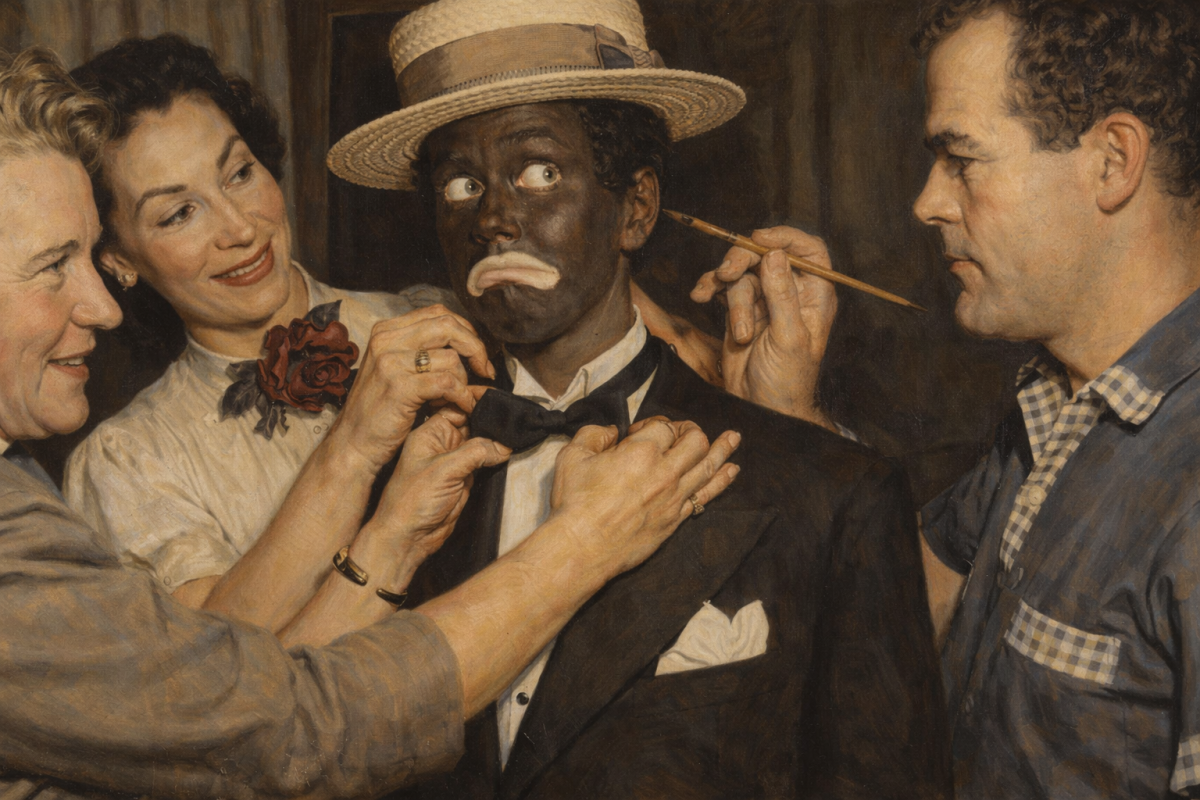
In her own context, my mother was mildly anti-racist. She enjoined her children never, ever to use of the "n-word," and she once rebuked her older sister for using the word in our hearing. Yet I was raised in an era and in a culture where traces of a mocking anti-Blackness were absolutely everywhere. "Amos 'n' Andy" was still on the radio; copies of "Little Black Sambo" could be found in almost any pile of children's picture books; the Uncle Remus stories of Joel Chandler Harris were still widely read and enjoyed; you would often hear "Eenie, Meanie, Minie, Moe" shouted in the schoolyard; blackface skits by Our Gang and Laurel and Hardy would pop up in early TV broadcasts; Jack Benny's popular radio and TV shows featured Eddie Anderson, a former minstrel performer whom Benny cast in the role of butler-valet "Rochester": a name drawn from a stock character in blackface minstrelsy. On TV sets across the country, the classic movie "Holiday Inn" delivered its annual White Christmas message in more ways than one. In this wildly popular film, superstar crooner Bing Crosby, always a big fan of blackface, corks up for a twisted "darky" tribute to Abraham Lincoln (with words and music by Irving Berlin, another blackface aficionado, who turned out dozens and dozens of "coon songs" over the course of his very long career).
It almost goes without saying that songs by "father of American music" Stephen Foster were everywhere—in schoolrooms and civic and Scouting spaces—always representing nostalgia for an older and better America, where it's always "summer...the darkies are gay" in songs like "My Old Kentucky Home," "Camptown Races," "Old Folks at Home," "Old Black Joe," "Oh Susannah," etc. Foster's meteoric rise as a popular composer exactly tracked the rise of blackface minstrelsy; over time this New Yorker's "Southern" music would find its way into thousands and thousands of shows, both those created by professionals and those created by amateurs using widely available DIY kits distributed by publishing houses.
Even as a very young person, I could sense the malice in these depictions of Black people as carefree and happy and also stupid, lazy, venal, and coarse. Ever since then, I have always bridled to hear clueless white people bracket anti-Black "prejudice" as just another ignorant bigotry, on a par with anti-Catholicism, antisemitism, misogyny, homophobia, etc. Hell no!! American anti-Blackness was and is of a whole different order. I likewise continue to worry that today's widespread use of the all-purpose catchall expression "people of color" tends to elide and diminish the particular horror of anti-Blackness.
Related stories
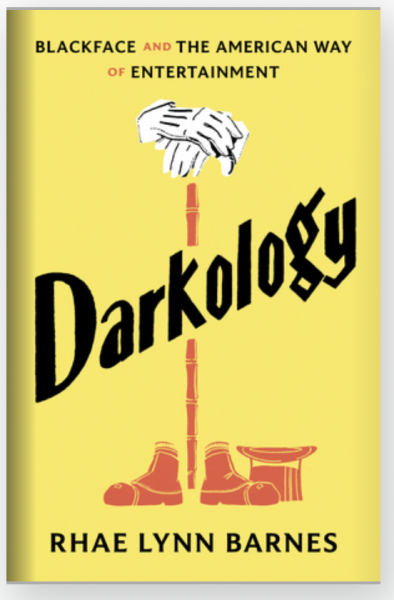
For this reason, I was thrilled and grateful to read through all 425 pages of a bombshell new book by Rhae Lynn Barnes titled Darkology: Blackface and the American Way of Entertainment. Too many other accounts of blackface minstrelsy treat the phenomenon as a "yes, but" story. These accounts—like musicologist Rob Kapilow's brief treatment of minstrelsy in his otherwise-excellent Listening to America—readily admit that the blackface numbers played out on stages across America and across the world were deeply racist. But they also argue that the music coming out of minstrel shows made a huge contribution to what they like to call the Great American Songbook. They go on to claim that minstrelsy eventually offered needed remunerative work to some gifted Black composers and performers along with the hundreds and hundreds of white artists who made fortunes from involvement in minstrelsy.
But exactly what kind of paying work was this for Black artists? The psychological price for entry was steep. Barnes discusses the involvement of brothers James Weldon Johnson and J. Rosamond Johnson—the composers in 1900 of "Lift Every Voice," a magnificent hymn that became the Black National Anthem—in writing many successful blackface hits during the early 20th century. Barnes evokes the double-consciousness anguish the brothers experienced in having to write for what they could plainly see to be a racist genre, in which actual Black people had to cork up in order to imitate white people performing parodies Black people. (And yes, in order to appear in minstrel shows Black people had to cork up and also have huge white lips painted on to complete the effect; a rigidly enforced rule of minstrel shows was that no Black people could ever appear as themselves: it had to be caricature or nothing.)
Barnes of course relates the basic story of minstrelsy's origins in seedy Lower Manhattan saloons and theaters during the 1830s and 1840s. Emmett's Virginia Minstrels were followed by the even more successful Christy Minstrels, who created the three-part format that all blackface shows would then follow for more than 100 years. Thomas "Big Daddy" Rice had already created the Jim Crow character—a partially disabled country bumpkin with jerky dance steps—when Rice's act got melded into the Virginia Minstrels show. The Jim Crow character was later paired with city slicker Zip Coon. Hilarious! The Christy company added Mr. Tambo and Mr. Bones, whose style of goofy repartee would enjoy a long afterlife in the routines of Abbott and Costello, Laurel and Hardy, and even the Smothers Brothers.

But what Barnes does with the basic story that is different from other renderings is demonstrate that blackface acts didn't go away—far from it—when early civil rights activists started to purge them from popular public entertainment venues and media channels after World War II. The poison lived in on private spaces—fraternal lodges especially—right through into the 1970s and beyond. She explains how the history of the Benevolent and Protective Order of Elks—a group originally calling itself the "Jolly Corks" prior to its official founding in 1868—has been utterly coextensive with the blackface tradition from start to finish. Because so many powerful white people were Elks—politicians, military officers, movie producers, etc.—the underlying anti-Blackness of minstrelsy kept right on renewing itself across generations in "safe" private environments. No surprise that nasty blackface skits keep showing up in frat house common rooms down to this very day.
As for World War II itself, Barnes provides revelation after appalling revelation. Following our government's promotion of blackface shows as a harmless and delightful cure for the Depression blues, the official policy of the wartime United States of America, expressed mainly though military channels, was to promote blackface minstrelsy as wholesome patriotic entertainment for the troops, including the "colored" troops. What's more, interned Japanese citizens locked down prison camps during the war years were encouraged to perform in blackface as part of their "Americanization" process. It turns out that most first-generation Japanese Americans were already familiar with blackface, as it has been introduced by the U.S. Navy during the forced "opening" of Japan during the 1850s. Thus we learn from Barnes, as we learned earlier from historian Isabel Wilkerson, how the promotion of the "American Melting Pot" fiction—e pluribus unum and all that—has always depended on defaming and despising one excluded group: i.e., people of African descent, whom Isabel Wilkerson referred to as the "mudsill caste" within this country's very own caste system.
Barnes also devotes many of her pages to painful details of the fact that, at the time of his death in Hot Springs, Georgia, wartime president Franklin Roosevelt was obsessed with preparation of a blackface show for children and their families at the polio recovery center that Roosevelt had founded back in the 1920s. White children stricken with polio would be performing in blackface. FDR had even composed his own song for the show before a massive cerebral hemorrhage took him down on the night before the planned performance. Upon hearing the dreadful news of her husband's death, Eleanor Roosevelt decreed that the show should be performed anyway. A few early news reports of FDR's death included mention of the presidential minstrel show, but all mention of it was soon scrubbed out of the record, even when references to the presence in Hot Springs of Roosevelt's mistress were retained.
Barnes makes it clear that while traces of blackface could be scrubbed in this fashion, and while many libraries and archives have routinely misclassified blackface materials as either "Americana" or "Black History," there can be no scrubbing of the lasting and enormous impact of this cancerous tradition in American life.
It's always been way too easy for northerners to dismiss anti-Black racism as a Southern malignancy, but that is the opposite of the truth. Emily Dickinson, the famously sedentary poet of "enlightened" Massachusetts, collected blackface sheet music. The entire sickening business of blackface performance was created in the North primarily for Northern audiences—both native-born and immigrant whites—in order to characterize all Black people in the most demeaning and contemptuous ways possible. Southerners were only too happy to have their own racist views more than reinforced by an art form developed by and for Northern whites.
Serving the aims of white supremacy, blackface performance was and still is part and parcel of the construction of whiteness itself.
Can this level of sickness ever be truly and fully purged? Don't try to answer the question without considering the very long life—and the not-so-hidden afterlife—of blackface "fun" in American entertainment and in the white American psyche.
Comments

Powered by RoundtableAn AI/DeFi-powered Enterprise Media Operating System. Learn more at Roundtable.io.© Roundtable 2026. By using this site you agree to the Terms of Use and Privacy Policy