


Apr 23, 2026 1:29 AM
Updated Apr 23, 2026 3:13 PM
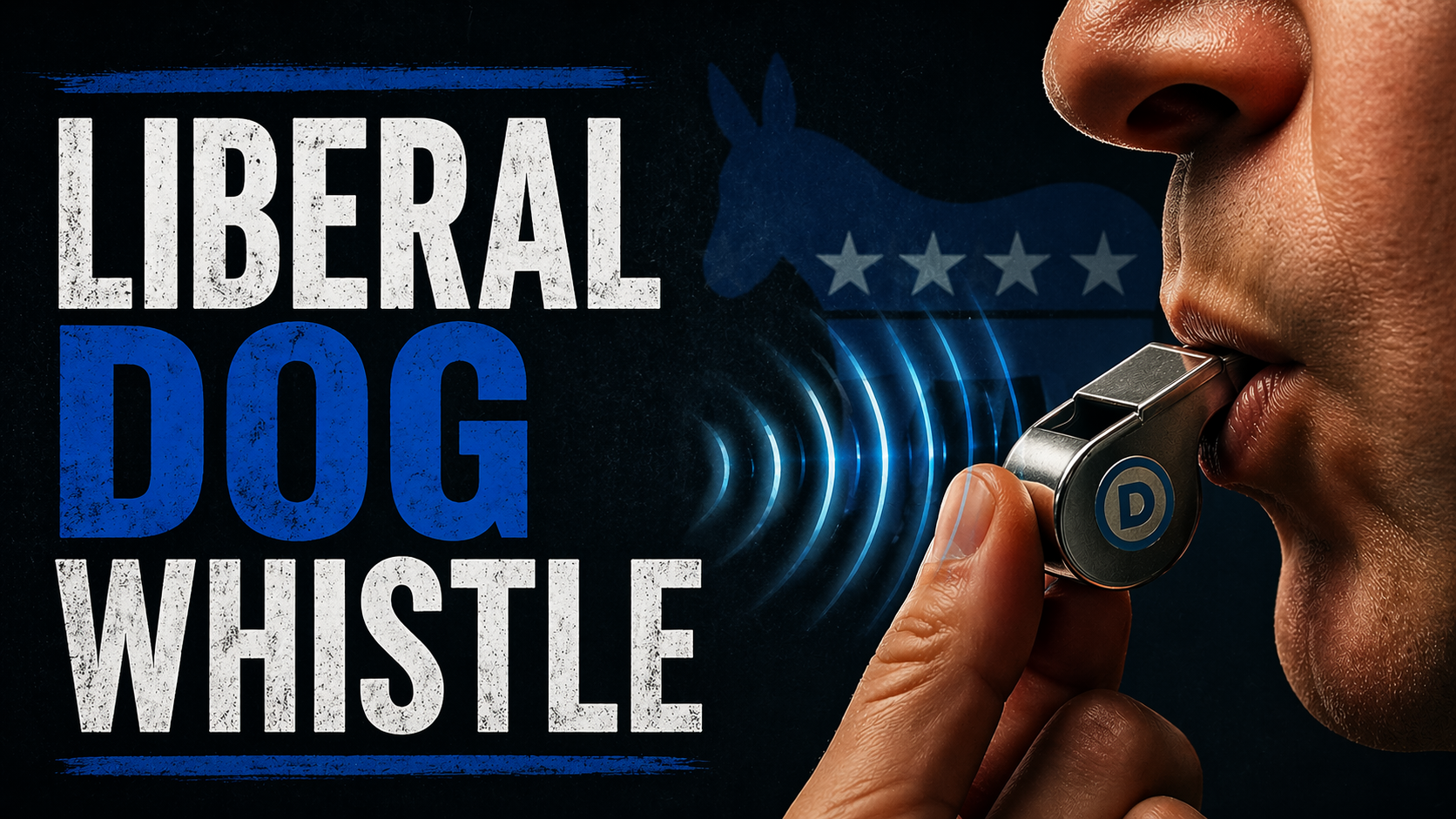
The Dog Whistle on the Left. When “Cultural Issues” Means “People Like Me”. Ruy Teixeira and other political commentators use terms like “radical” and “cultural issues” without definition. Here’s how that language obscures race, identity, and power in American politics.
When “Cultural Issues” Means “People Like Me”
When I hear a political operative, commentator, or anyone with enough gravitas to be handed a microphone say that the Democratic Party is “pushing cultural issues” or has become “radical,” I stop and listen closely.
Not because the claim is new—and certainly not because I am a Democratic Party apologist—but because this kind of political-speak is almost never explained.
What exactly is “radical”?
What, specifically, counts as a “cultural issue”?
More often than not, the speaker never says.
Related stories
And that omission is the point.
In a recent conversation on The Good Fight podcast, Ruy Teixeira—a self-described liberal and cofounder of the digital publication The Liberal Patriot, argued that Democrats are losing working-class voters because they have moved too far left. He doesn't specifically call out which policies were problemmatic but he did go on to characterize things like diversity initiatives, immigration, and gender identity debates—as radical.
At one point, he explicitly links Democratic losses among working-class voters to the party's support for policies like DEI and transgender rights—grouping them together as evidence of a broader cultural shift.
This framing matters because it’s not just one analyst’s opinion—it reflects a broader way of talking about politics that is increasingly shaping Democratic strategy, media coverage, and public debate. Because political language doesn’t just describe reality—it shapes it.
Here is an excerpt from the conversation. This is Teixeira speaking:
as the Obama administration came into office and went through its second term, you could see that the nature of the party was starting to change... People really were moving to the left on a lot of cultural and other issues. They really were becoming more intolerant of the other side. Black Lives Matter started in 2013. It may have crested in 2020, but those kinds of ideas were already out there, and they really were infecting the minds of people in the Democratic Party infrastructure—the think tanks, foundations, the arts world, legacy media, you name it. You could already see the hints of it evolving.
The Language That Does the Work
When analysts like Teixeira warn that Democrats are “too focused on cultural issues,” it sounds like analysis. It isn’t. It’s positioning.
Label something a “cultural issue,” and you’ve already done the work:
- You’ve downgraded it from structural to optional
- You’ve suggested it’s peripheral rather than central
- You’ve signaled it can be traded away in the name of electability
That’s not neutral language. That’s political work.
And Teixeira is not alone. He is part of a broader ecosystem of Democratic-aligned strategists, commentators, and operatives using this kind of shorthand to reshape what counts as “real” politics—and what does not.
This is politico-speak at its most effective: it doesn’t argue against justice claims directly. It reclassifies them.
The Overton Trick
When something is described as “radical,” a boundary is being drawn.
But what counts as “radical” is neither fixed nor universal. It shifts over time—and depends on who is speaking and whose interests are being challenged.
What was once considered radical—like same-sex marriage—is now mainstream. That didn’t happen by accident. It reflects movement in what political scientists call the Overton Window.
The Overton Window is the range of ideas considered politically acceptable at a given moment. Outside the window: unthinkable, extreme, “radical.” Inside: reasonable, sensible, common sense.
And the window moves—because people force it to move.
There was a time when women voting or racial desegregation was considered radical.
So when someone labels a position “radical” without naming it, they’re not clarifying anything—they’re signaling that it should be rejected.
It’s a rhetorical shortcut—a way to smear without evidence.
What “Cultural Issues” Actually Means
Teixeira's line of argument doesn’t stay abstract for long. Before long, he points to:
- DEI initiatives
- affirmative action
- immigration
- transgender rights
- “cancel culture”
Framed this way, “cultural issues” becomes shorthand for:
- race-conscious policy
- gender inclusion
- demographic change
- challenges to traditional hierarchy
So why not just say that?
Because saying “cultural issues” instead does cleaner political work. It bundles these together, strips away context, and subtly recasts them as excessive, fringe, or distracting.
Once labeled “cultural,” these issues can be dismissed as secondary—less urgent than the “real” business of politics.
The Identity Politics No One Names
Every one of these issues involves identity.
Education involves identity.
Policing involves identity.
Healthcare access involves identity.
Workplace opportunity involves identity.
The question is not whether identity is present—it always is.
The question is whose identity gets named.
In this framing—and in much of mainstream political discourse—identity belongs to:
- Black people
- Native Americans
- immigrants
- women
- LGBTQ people
Identity is what they have.
But one identity is almost never named:
white, heterosexual, Christian, male identity.
That identity is treated as neutral. Universal. Default.
And once that happens, everything else becomes deviation or special interest:
- Some perspectives become “common sense”
- Others become “identity politics”
- Some concerns are universal
- Others are special interests
So when Democrats are accused of focusing on “cultural issues,” what’s really being said is:
They are centering identities that are not supposed to be centered.
How “Working Class” Quietly Becomes White
It sounds inclusive. It isn’t.
In practice, the concern begins with—and orbits around—the white working class. That’s the group framed as decisive, persuadable, and at risk of being lost.
Only later does the language expand to include a broader, multiracial working class.
But by then, the hierarchy is already established.
Because when “working class” is treated as universal while race-conscious policy is treated as “cultural,” a quiet sorting takes place:
Some struggles are core.
Others are optional.
From Analysis to Erasure
This line of argument doesn’t stop at description. It moves to prescription.
The claim is that Democrats have gone “too far,” moved “quite severely” left, and alienated voters.
But that conclusion depends on a crucial reframing:
It treats responses to inequality as the problem—not the inequality itself.
Once you accept that, the prescription follows:
- talk less about race
- scale back equity-focused policy
- return to “moderation”
But moderation for whom?
And at whose expense?
Because the people living these so-called “cultural issues” don’t experience them as optional. They experience them as conditions of life.
You can’t separate wages from race if hiring discrimination shapes who gets the job.
You can’t separate housing from history if redlining shaped where wealth could accumulate.
You can’t separate public safety from identity if policing is unevenly applied.
What gets labeled “cultural” is often just inequality that becomes uncomfortable when named directly.
What Gets Erased
What disappears in this framework is the reason these issues exist in the first place - inattention to the concerns of increasingly greater numbers of people.
We’re told:
- Democrats embraced “cultural issues”
- voters didn’t like it
- therefore Democrats should retreat
What’s missing is any serious engagement with:
- structural inequality
- persistent disparities
- whether these policies are necessary
Instead, the argument collapses into something dangerously simple:
If addressing inequality is controversial, stop addressing it.
That’s not strategy.
That’s erasure dressed up as pragmatism.
The Real Question
Once you strip away the language—once you replace “cultural issues” with what’s actually being discussed—you’re left with a different set of questions:
How should a multiracial democracy address inequality it has never resolved?
What does fairness look like in a society built on unequal foundations?
And what happens when political strategy requires ignoring those realities?
Those are not “cultural issues.”
They are the central questions of American democracy.
And yet, many of the voices urging Democrats to step back from these issues—including self-described liberals like Ruy Teixeira—frame that retreat as pragmatism.
That’s the contradiction.
Because when “winning” is defined in a way that requires sidelining the very inequalities that shape people’s lives, liberalism begins to blur into something else entirely—something more concerned with managing discomfort than confronting injustice.
The language may be softer. The tone more measured. But the effect can be the same: entire categories of harm are pushed to the margins in the name of political viability.
At that point, the question isn’t whether Democrats have gone too far.
It’s whether a politics that asks people to wait—again—for their lives to be treated as central can still claim to be on their side.
Because if addressing inequality is treated as optional, then the difference between opposition and accommodation starts to narrow.
And when that happens, voters are left to wonder what, exactly, distinguishes those who claim to represent them from those who never did.
Comments

Powered by RoundtableAn AI/DeFi-powered Enterprise Media Operating System. Learn more at Roundtable.io.© Roundtable 2026. By using this site you agree to the Terms of Use and Privacy Policy