


Mar 17, 2023 4:00 PM
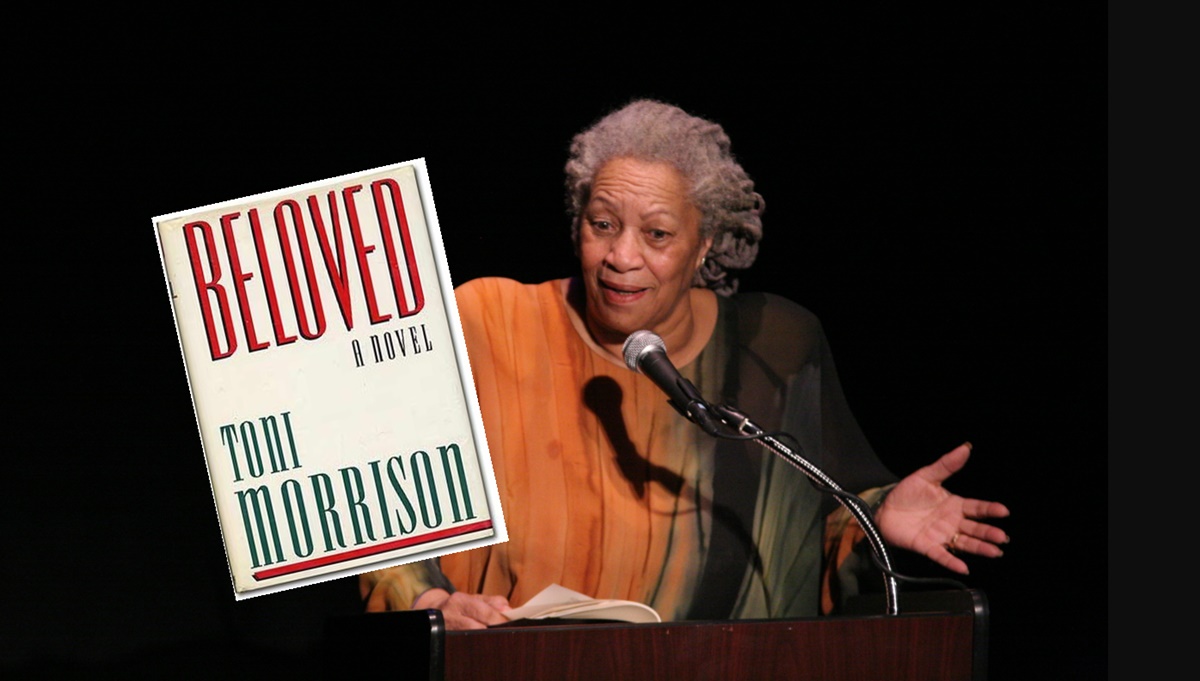
Sweet Home, which was neither sweet or a home, conjures up memories of cruelty in Toni Morrison's Beloved
In The 1619 Project, in the chapter entitled, “Fear,” Leslie Alexander and Michelle Alexander discuss the objective of “know-your-place aggression.” And that objective is intended to quell any hope of “Black freedom dreams.” The authors write, “white vigilante violence and ‘know-your-place aggression have histories rooted in fear—not merely of Black crime or Black people but of Black liberation.” The authors continue, “nothing has proved more threatening to our democracy, or more devastating to Black communities, than white fear of Black freedom dreams.”
Florida Governor Ron DeSantis is familiar with enough American history to know all about Black freedom dreams. What else would account for his fascist laws targeting women and their reproductive rights, LGBTQ rights, and Black freedom dreams? DeSantis exerts his power as governor to act on his fear of a democratic society. He wants white supremacy and feels powerful suppressing the freedom of all citizens in Florida rather than see Black Americans free of the “know-your-place aggression".
DeSantis envisions a Florida where empathy goes to die if his goal of suppressing Black freedom dreams is to succeed. And if the Florida governor is familiar with Toni Morrison’s Beloved, then, no doubt, he would identify with the structural legacy of racism, one that cruelly insists on subjugating, at every turn, the rights and freedom of Black Americans. He would identify with the sadistic slaveholder, Schoolteacher, and Schoolteacher’s rights and freedom to maintain law and order on his plantation, Sweet Home, where a Mr. Rooster, resides, free to strut about while enslaved Blacks, subject to toil on the land, extracting wealth to maintain a system of racial hierarchy.
Beloved is one of those novels DeSantis fears white children might understand and come to recognize something not so innocent about race relations in America. Worse, white children might identify with Sethe’s desire for freedom. After all, fascists do fascism. In the case of DeSantis, he produces propaganda suggesting that the fears of Black people aren’t real. Trans children, Asian children, Black children must adopt a way of life that has the interests of white children front and center. In Morrison’s novel, on the contrary, the author presents a Black women whose fears are very real. She fears, and rightly so, since her fears aren’t imaginary, the life ahead for her daughter and two sons. A grim life, one in which autonomy over their bodies will be forbidden, as they, like her, are no more that the property of Schoolteacher.
Related stories
Sethe lives with the memories of her fears, even in Ohio. She remembers Halle, the father of her children, as the man she believed abandoned plans to escape with her and the children. Bad enough, until Paul D replaces that memory with another: last seen by him, Halle was sitting near the churn with “butter all over his face.” It broke him, Paul D tells Sethe. It broke him because his fear of the consequences of stepping out of place was too strong. Overwhelming. A witness to Schoolteacher’s abuse of his wife, Halle becomes a tragedy of white rage and hate. As Baby Suggs taught the community of escaped free Blacks in Ohio, “freeing yourself was one thing; claiming ownership of that freed self was another.”
Halle couldn’t escape the hate know-your-place aggression held over him. Covering his face in butter, he no longer recognized himself as human, and, therefore, imbued, contrary to George Washington’s views on Black American’s relation to the idea of freedom, with the spirit to be free. Beloved, after all, is a novel about love. Love in the midst of cruelty. Love for freedom, love for one’s children. A love that doesn’t impose on the rights and freedom of others, even if the others are different.
When DeSantis speaks of creating a “safe space” for white Americans to come to—and, he insists, they are walking, driving, flying into Florida in droves—he means he’s working to create a Sweet Home environment. But, as Morrison shows in Beloved, love and cruelty are in battle there. Schoolteacher would claim to love his nephews, wanting to educate them and teach them how to be a man—plantation style, where whipping is commonplace and women, all, know their place.
Yet, however much Schoolteacher grooms and indoctrinates his pupils in the ways of love, evidently, for the power of whiteness and his version of freedom, he and those pupils are on the side of hate. To echo Faulkner, it’s not about love! In fact, Schoolteacher and his fellow slaveholders and those who believe in the inferiority of Black people are cruel. Schoolteacher is his cruelest when he empowers his nephews to practice being men with Sethe.
And then, there’s the day Sethe passes the barn where he teaches. She stops to listen: “‘No, no. That’s not the way. I told you to put her human characteristics on the left: her animal ones on the right. And don’t forget to line them up.’” It’s no wonder, Halle, looking on at the horrors of Schoolteacher’s freedom to be white, felt defeated by the whiteness and recognized himself as an animal. I wonder if DeSantis understands that to achieve his goal of oppressing Black freedom, he turns white children away from their human side?
DeSantis isn’t evading the American Gothic nightmare; he’s accepted his inheritance from slavery’s legacy. DeSantis isn’t the average member of the MAGA population. He’s not Marjorie Taylor Greene!
His brand of fascism is a legacy of American slavery. His brand of fascism is a legacy of American slavery, and he embraces it without qualm. He wants this brand of white freedom to spread. All of America should be Florida!
It’s a little more than two years since the January 6, 2021 Insurrection at the US Capitol. Contrary to propaganda insisting that the armed and violent crowd were peaceful “tourists,” there Capitol was vandalized. The “tourists,” calling for the death of the Vice President and the Speaker of the House, were actively looking to end democracy that day. Today, over 1,000 of those tourists have been charged for committing actual crimes, including seriously injuring law enforcement. One office died as a result of his efforts to defend the Capitol—from the peaceful “tourists.” As of yet, the man who called for the tourists to head for the Capitol has yet to be convicted for inciting a deadly riot.
In 1740, South Carolina’s pro-slavery legislature, writes Leslie Alexander and Michelle Alexander, were “enraged and terrified” as a result of the Stono Rebellion, September 9, 1739. Twenty enslaved Africans gathered by the Stono River to plan a revolt that would end enslavement in the US. The rebels, the authors note, killed 30 enslavers while attracting more than a hundred supporters. Militia groups, however, hunted the rebels until the revolt ended with several Blacks dead. The survivors’ “heads were displayed on massive wooden poles at every mile post leading to Charleston as a ghoulish warning that the cost of resistance would be death.” After all, runaways were property, lost. Revolts meant work stoppage and, again, loss of profits.
Fear compelled the state legislature to act, adding even more cruel means for Blacks to comply and obey. The Negro Act of 1740 became a reality “designed,” the authors write, “to force enslaved people into ‘due subjection and obedience’ and to save the ‘public peace and order.’” In other words, the Act empowered whites to enforce control over the lives of Black people through violence. It authorized “the policing of nearly every aspect of Black people’s lives.” Resistance, so this legislature thought, would be futile. Yet, Gabriel Prosser (Virginia, 1800), Denmark Vessey (1822, South Carolina), Nat Turner (Virginia, 1831), many others in the US, inspired by the Saint Domingue (Haiti) and Stono Rebellion rebels, pursued freedom rather than live as slaves.
American democracy, “created on the backs of unfree Black labor,” write the authors, was considered an ideology for white Americans to pursue. How could such a “troublesome presence,” as Lincoln considered enslaved Blacks, understand the concept and live in peace with white Americans? Weren’t Black people, Lincoln believed, “incompatible with a democracy intended only for white people”? Across the political spectrum, the authors note, many Americans believed “Black people held no place in American society as free citizens.”
Despite fascist policies and laws, cruel and sadistic punishment, slave patrols and vigilantes, the legacy of resistance to tyranny of systemic oppression kept Black Americans focused on freedom. In Beloved, Sethe tells the story to Paul D…
“It was Sixo who brought it up.” He sneaked off at night to see the Thirty-Mile woman, walking, running, thirty miles to see her. So he knew about the trains. There was a plan and there wasn’t a plan, but something should have been done sooner. Sethe remembers thinking, would it be, “all of us? Some? Where to? How to go?” But then Paul F was sold and Paul A was beaten. “Next time I saw him he had company in the prettiest trees you ever saw.” She recognized his shirt, but his head and feet were missing.
That’s when Sixo started “watching the sky.”
Sethe remembers Halle pointing “over the stable,” telling her that that was the direction Sixo had pointed to. “Sixo say freedom is that way. A whole train is going and if we can get there, don’t need to be no buy-out.” She remembered watching as Sixo and Halle and Paul D talk about the way to freedom. She could tell, then, that Sixo’s “mind was gone from Sweet Home.”
The day Sethe decides to leave Sweet Home, she is pregnant. In the dark, looking for Halle, her eyes settled, instead, on Paul D, captured, with a bit in his mouth, and Sixo, tired to a tree, and engulfed in flames. He’s calling out: “SevenO.” SevenO. The love of Sixo’s life, Thirty-Mile woman, is running toward freedom, with the next generation of freedom dreamers. In the midst of all this violence, it’s her spirit that rises with Sixo’s from the pyre and her spirit that runs alongside Thirty Mile woman.
Sethe remembers, she tells Paul D, that she has the milk for the baby sent ahead of her, along with her two young sons. And so she “passes right by those boys hanging in the trees” and starts for the woods. No concern for Schoolteacher, for she has the milk for the baby called Beloved.
Did it work?
One day in Ohio, among self-freed Blacks and family, Sethe recognizes the top of Schoolteacher’s hat coming across her mother-in-laws’ yard. She believed she was free. Her children free. She had freed them, hadn’t she? Sethe recalls thinking about placing her babies in a “safe place.” Schoolteacher won’t find them, to harm them. “‘Not just work, kill, or maim’” them, “‘but dirty’” them. “‘She could never let it happen to her own. The best thing she was, was her children.’”
But Schoolteacher and the other three men find her and the babies anyway. Sethe finds the handsaw…
Your love is “‘too thick,’” Paul D interrupts. It didn’t work, did it?
“‘It worked.’” Yes, it did. “‘They ain’t at Sweet Home. Schoolteacher ain’t got em.’”
Appearing before and after the Civil War, during Reconstruction and reigning through the era of Jim Crow segregation, Sethe’s Schoolteacher appears today in white robes or in the uniform of a law enforcer. He is a mean-spirited politician who comes around to “safe spaces,” just when freedom seems in reach, and he never means well.
But true descendants of freedom fighters, we aren’t returning to the days of Sweet Home, DeSantis. We, Black, Latinx, Indigenous, other people of color, LGBTQ, are at home. You, DeSantis, are the intruder!
Comments

Powered by RoundtableAn AI/DeFi-powered Enterprise Media Operating System. Learn more at Roundtable.io.© Roundtable 2026. By using this site you agree to the Terms of Use and Privacy Policy