


Aug 17, 2008 8:00 AM
Updated Aug 9, 2024 6:33 PM
Like a lot of Black people, Cornel West understands racism but unlike almost every Black person I've ever known, his ability to express what he understands stands alone
Shortly after my husband and I began attending our local Unitarian Universalist Church, one of the members invited me to a potluck dinner for the congregation’s “people of color.” Being a newcomer to the church, I wanted to put my best foot forward but I admit I was taken a back when she initially explained why she was calling.
During our brief phone conversation, I asked if Dick was also invited. For those of you who don’t know us, my husband, Dick, is white and I'm Black.
Half joking, I told the caller that Dick wasn't technically a "person of color" but he was beige - did that qualify him? I could tell she was smiling when she told me that the potluck was for people of color and their families.
Her gentle persuasion and pleasant personality led me to accept the invitation, albeit with a little reluctance. It turned out to be a fun time and we got to know some interesting people we probably wouldn't have met otherwise. But I don't think we got much more out of it.
Related stories
The church is the largest UU congregation west of the Mississippi. With three Sunday services and meetings throughout the week, it's easy for people to attend for years and still not know a good portion of their fellow members.
The potluck and subsequent “people of color” activities turned out to be a great way to develop friendships and become more acquainted with other members. But the racial component fostered stronger relationships only with other people of color while the white members continued to be strangers to us. This was as strange and as awkward as it sounds.
Throughout my life, I've been invited to join race-based affinity clubs such as the African-American Student Union or the African-American Alliance of Business Managers, etc. But I’ve always felt an underlying resistance to join. I think I resist because I haven't seen the kinds of changes this country is long overdue in making. In spite of the existence of countless racial justice organizations some of which have been around for more than 100 years -- this country still operates as if it were an outright apartheid regime.
Irrespective of "the melting pot, land of the free, we embrace diversity" rhetoric -- as a whole, the country's racial minorities and racial majority don't play well together and don't live together. Although state-sanctioned segregation is a thing of the past it has been replaced with and is wholly supported by socially sanctioned segregation. People in the United States are just as divided on the basis of race as they ever have been.
Webster’s Dictionary characterizes affinity groups as “groups of people having a common interest or goal or acting together for a specific purpose.” As a progressive activist, I wholeheartedly support the concept. I’m all for people coming together for a stated purpose or cause or to accomplish something that would be difficult or impossible to accomplish as separate individuals.
The problem I’ve had with racial affinity groups is that they often bring a subset of people together to solve problems that they themselves have not created and that they themselves don't have the bandwidth to solve. But more than that, it is unfair to saddle minorities with the task of correcting societal wrongs. I believe we will not see major change on this front until the larger society takes its rightful role in providing a long-overdue remedy.
I can and will write more about affinity clubs in the future, but for now, I wanted to open this essay with a brief discussion of affinity groups because throughout this weekend I was constantly reminded of them.
Cornel West Racism in America
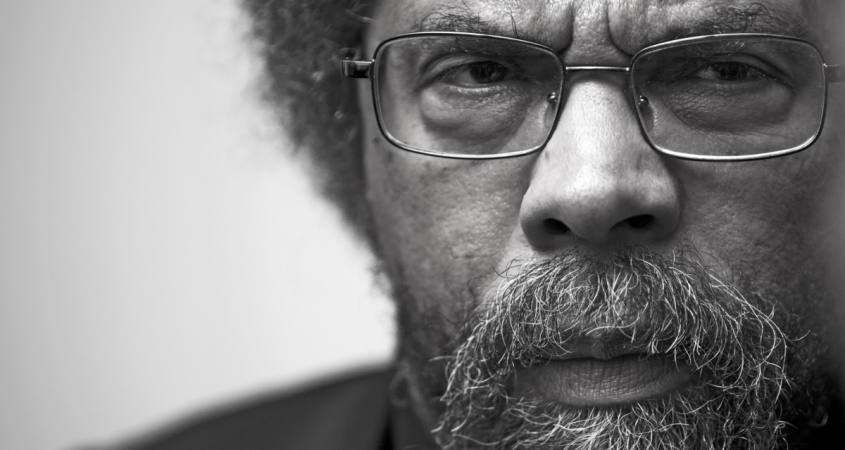
Dick and I attended two fabulous (emphasis on the word fabulous) events this weekend. The first was hosted by Dr. Anthony Asadullah Samad, the director and founder of the Urban Issues Forum. Dr. Samad’s guest this time was Dr. Cornel West, the famed Princeton professor who is an author, lecturer, and frequent guest on the Bill Maher HBO Show.
Cornel West spent the morning talking to a few hundred Black Angelinos and Dick. Although the meeting place at the California African American Museum where the talk was held was full to overflowing, you could hear a pin drop. West’s oratory skills commanded undivided attention. He enlightened, motivated, inspired, and humored us with his insights.
I will never forget the experience. If I ever have the chance again to hear Dr. West, I will and I’d encourage anyone to do the same. Hearing Dr. West in this venue was different from hearing him on a television panel. A lecture hall is this professor’s natural home, and he won me over as he talked about the kind of progressive issues that we all care about: the corporatocracy, the prison-industrial complex, race and class in America, our presidential race, and more.
Dick and I left the breakfast meeting with our spirits buoyed by West’s fiery rhetoric and warmed by the company of the friends we have made at these monthly sessions over the past several years.
Honoring Progressive Pioneers
The second event was hosted by the Progressive Democrats of the Santa Monica Mountains. Three women were honored: Jody Evans, cofounder of Code Pink; Lila Garrett of KPFK’s Connect the Dots; and Congresswoman Maxine Waters of the 35th Congressional District in Los Angeles.
Each of these woman spoke from the heart as they accepted their awards. Jody Evans told us how she became an activist while working as a hotel maid in Las Vegas. She worked with others to organize a movement that resulted in hotel workers being paid a decent wage.
Lila Garrett told the story of her father giving her a picture book when she was 5 years old that contained grotesque pictures of casualties of war. When she asked him to explain the picture, he told her that she was looking at war and that all wars are fought by one stranger killing another stranger for the power and profit of a third stranger. Garrett told us she never forgot those words. I suspect many in the audience won't soon forget them either.
And finally, Maxine Waters spoke to us of the importance of grassroots activism. She talked of how Congress can become disconnected from its constituency if we, the people, don’t make our voices heard.
Each of the award recipients were generous with their time, spending as much time as was needed to answer questions and just chat with everyone there.
Held on the grounds of a private home high in the Santa Monica Mountains, with sweeping, moon-swept views of the Marina, Santa Monica, and Downtown Los Angeles, the setting couldn’t have been grander or the company of the people we have come to know there finer. We’re not really party people and usually duck out after an hour or so—the plan last night, too—but we found ourselves among the last to leave, five hours in.
But again, it didn’t take a very sharp eye to see that three awardees were speaking to 100 white people and me – and PDLA co-chair Ricco Ross and his new wife Julie Shannon.
Now, none of these groups—not our church, not the Urban Issues Forum, not the Progressive Democrats—are racially exclusive affinity groups. All of them would welcome more racially diverse audiences and memberships. In fact, the point of our church’s “people of color” group is to figure out ways to make the congregation more inviting to a more diverse group of people.
But as America barges into the 21st Century, even in these most progressive of circles, we still manage to divide ourselves along racial lines.
I’m reminded of one of the first articles Dick and I wrote several years ago, "The Iron Rainbow", observing how election celebrations for three local California Assemblymen—Kevin de Leon, Anthony Portantino, and Mike Davis—attracted audiences almost entirely of their own race: Latino, White, and Black.
We’ve come to know these three officeholders a bit and generally admire the work they’ve done in their first Assembly terms. We’ve also seen them try to reach across racial lines among their constituencies. But like our events this weekend, their celebrations underscore how separate we are in Los Angeles, in California, and in America.
Which Brings Us to Barack Obama
Dick and I got on the Obama bandwagon early on and remain enthusiastic supporters. A part of the reason we support Barack so full-heartedly is that this attractive, thoughtful, inspiring man is being forced to address racial issues in his campaign just as America is being forced to confront race as it decides if it’s mature enough to elect a Black man president. Certainly race in America is among its biggest challenges but for reasons too complex to discuss in this short essay, issues of race are rarely central to white candidates campaigns. Nevertheless, the discussion needs to take place.
Dick is old enough to have lived through an earlier era when his suburban Minneapolis neighborhood was at least mildly shocked that he, a Methodist boy then, would play with the Catholic Parochial school kids down the block. John F. Kennedy drove a stake in that kind of bias when he moved his wife Jackie and their two kids into the White House. Since then, it just hasn’t been much of an issue whether a candidate is Catholic or not.
Here’s hoping that when Barack Obama moves Michelle and their two kids into the White House, they’ll at least put a dent in America’s racial divide.
Comments

Powered by RoundtableAn AI/DeFi-powered Enterprise Media Operating System. Learn more at Roundtable.io.© Roundtable 2026. By using this site you agree to the Terms of Use and Privacy Policy