


Sep 2, 2025 7:11 PM
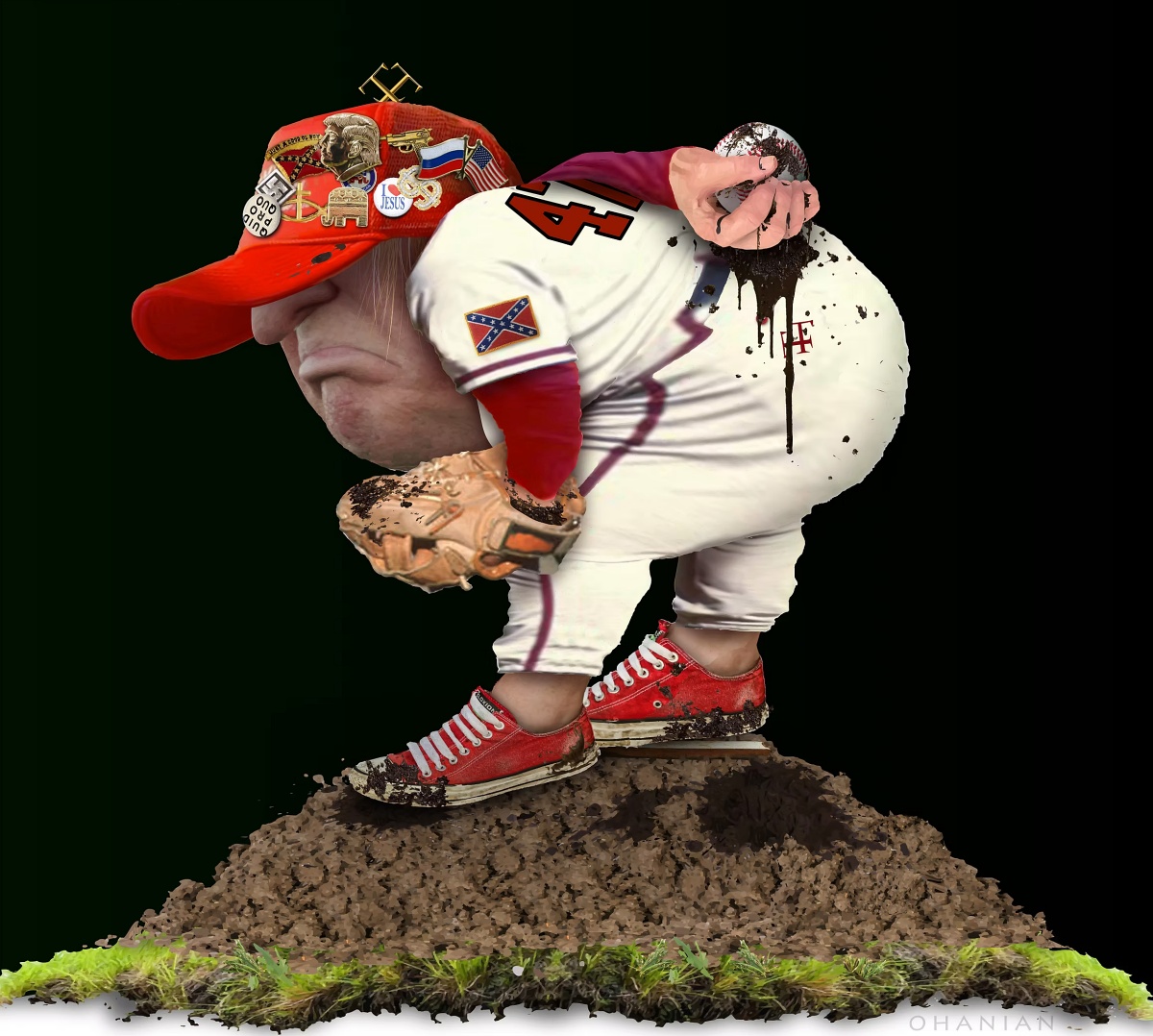
Swap muskets for press releases, sabers for executive orders, and you’ve got the same old Lost Cause—now with Wi-Fi, merch, and a loyalty program.
Monuments polished, portraits resurrected, and culture wars staged like dinner theater—meanwhile the Confederacy doesn’t “rise again,” it rebrands, opening franchises fifteen minutes outside every blue zip code. This isn’t a metaphor, sweetheart; it’s directions in Google Maps. It’s a dystopian Yelp guide to the nearest sundown town—five stars for “heritage,” zero for humanity—complete with drive-thru piety and curbside intimidation. The strategy is simple: bronze the lie, drape it in flags, and park it where the HOA can see it. Call it “heritage,” invoice it as “patriotism,” and sell it as nostalgia-flavored snake oil to folks who think the past was perfect because they never had to live under it.
“We are laser-focused on our mission of warfighting.” That wasn’t a Pacific Command brief; that was Pete Hegseth—weekend warrior with a hymnal—declaring jihad on school boards and museum placards. Sunday school with bayonets. A church bake sale with grenades. He’s laundering history like contraband: scrubbing the Pentagon’s pages on Jackie Robinson and the Navajo Code Talkers, platforming sermons that would revoke women’s votes with a wink and a hymn, and staging E-Ring prayer revivals like he’s blessing artillery. This isn’t defense policy; it’s make-believe/pretend-time Confederate make believe, with a federal per diem—Civil War LARPing on the government card, bayonet tips dipped in barbecue sauce and sanctimony.
If it feels theatrical, that’s because it is. The pageantry is the policy. The props are the plan. Swap muskets for press releases, sabers for executive orders, and you’ve got the same old Lost Cause—now with Wi-Fi, merch, and a loyalty program. And the fine print? Occupation by portrait, conquest by pedestal, and a standing ovation for treason dressed as tradition.
Monuments as Beachheads
The scheme pairs perfectly with Trump’s obsession with Confederate icons—like Pokémon cards, but racist. At West Point, a twenty-foot portrait of Robert E. Lee—complete with an enslaved Black man holding his horse—is being reinstalled after a commission ordered it down in 2022. In D.C., the National Park Service is restoring Albert Pike’s statue to Judiciary Square, the same one toppled and torched in 2020. Arlington National Cemetery’s “Reconciliation” Confederate memorial, removed in 2023, is slated for a $10 million resurrection—zombie bronze staggering back to life with taxpayer CPR.
Related stories
These are not neutral heritage acts. They are tactical beachheads. Statues are forward operating bases; portraits are propaganda posters; monuments are Confederate billboards in a Union town. Reinstallations do not teach history—they train the public to accept treason as heritage and bigotry as valor. Every pedestal is a re-occupation, not remembrance—Confederate Starbucks locations with unlimited refills of grievance.
The Confederacy Never Died
Textbooks stop the story in 1865 the way a weatherman “ends” a hurricane while your basement fills with snakes. The Confederacy didn’t die; it franchised—now open late in white-flight suburbs, megachurch parking lots, and school boards treating Toni Morrison like contraband. The uniforms changed—gray wool swapped for golf polos and tactical vests—but the creed stayed identical: nostalgia for white supremacy, shrink-wrapped in flags and deep-fried in denial.
Its genius isn’t geography; it’s proximity. Fifteen minutes outside any blue zip code, it clings to metro edges like mold on Wonder Bread. After the Great Migration, Black families moved north; white flight set up checkpoints just past the city line—sundown towns, redlined mortgages, country clubs with membership lists whiter than a salt shaker in a snowstorm. The template never retired: Ferguson’s armored policing, Florida’s “Stop WOKE” gag order, January 6 carpools from cul-de-sacs bristling with Costco patriotism and Bud Light irony. The Confederacy doesn’t need capitals. It needs cul-de-sacs, megachurch pulpits, and Bass Pro parking lots—the new courthouse steps where the old verdict still gets read.
Occupation 2.0 — Chicago as Fort Sumter 2.0
Now the marble meets muscle. Trump has already rehearsed the play: send red-state Guardsmen into blue-leaning cities, badge them as “security,” and call it patriotism. Let’s be clear—this is not homeland defense. It is an occupation. A Confederate roadshow in camo and Oakleys, rolling north on the taxpayer’s dime.
We saw the prototype in Washington, D.C.—a majority-Black, progressive city patrolled by Guardsmen from Mississippi, Alabama, and Texas. Bull Run with body armor. Gettysburg with GoPros. A Humvee idling outside the Capitol with Alabama plates is no different than a Confederate cavalry horse tied there in 1861. Back then it was treason. Today it’s sold as “restoring order,” democracy with a Dixie drawl.
And if it can happen in D.C., it can happen in Chicago. In fact, Chicago is the pressure point. A Black and brown metropolis, diverse, union-heavy, progressive to its bones—and despised by the MAGA imagination as a lawless urban jungle. To them, Chicago isn’t just a city. It’s the trophy.
Picture it: Guard convoys from Mississippi and Texas rolling down Michigan Avenue, Humvees parked at Daley Plaza, out-of-state troops patrolling Bronzeville like it’s occupied Fallujah. Outsiders, loyal not to Chicago’s residents but to the Lost Cause with a Trump-branded logo, treating neighborhoods like hostile provinces. That’s not policing. That’s garrison duty.
And history has a cruel sense of rhythm. The first shots of the Civil War were fired at Fort Sumter in 1861. Chicago may be Fort Sumter 2.0—except this time, the cannons aren’t iron. They’re hashtags, drones, surveillance grids, and live-streamed sedition. A spark in Chicago doesn’t just ignite protests—it detonates a century of suppressed rage, from Ferguson to George Floyd to January 6. The moment armored trucks circle Union cities like Chicago, push comes to shove.
Because occupation is not a policy. It’s a trigger. And Chicago is where the trigger could snap.
Why Statues Matter
Dismissive voices say, “They’re just statues.” Wrong. Statues are GPS pins in a cultural minefield. Placement defines power. Put Lee back in West Point’s library and you broadcast: the enslaved are background, the Confederate is foreground, the academy is the gallery, and history itself is for rent. Put Pike back in Judiciary Square and you tell a majority-Black city: Confederate law still looms over your courthouse like a marble debt collector.
The logistics are precise. The Park Service has a timeline for Pike’s reinstallation. Arlington’s Confederate memorial has a published budget. These are not random restorations. They are coordinated re-emplacements of Confederate symbols on civic ground—Confederate “For Lease” signs stapled to Union landmarks. Each site is a psychological supply line—reminding who belongs, who obeys, and who shuts up.
Consider: Cracker Barrel had to bring back the “good ol’boy” character to appease and please its MAGA minded loyal customers - symbols matter.
From Culture to Kinetic
This is why Hegseth’s “mission of warfighting” matters. Scrub stories of Black heroism, sanctify Confederate martyrs, and platform pastors preaching against women voters—and you are not curating history. You are grooming stormtroopers. You are drawing battle lines for the rank-and-file: who is righteous, who is the enemy, who deserves suppression.
Culture war is the appetizer. Martial law is the entrée. Statues soften resistance. Portraits signal allegiance. Then came the convoys, rolling like Uber Eats for fascism. The blueprint is seamless: icons, ideology, occupation, with Fox News as the field manual and Tucker reruns as the bedtime story.
The Fifteen-Minute Confederacy
The Confederacy’s strength is portability. It doesn’t need to plant flags downtown—it only needs the suburbs, the ring roads, the Olive Gardens. Fifteen minutes out: the county commission, the sheriff’s office, the zoning board. Fifteen minutes in: the Guard convoy, the courthouse statue, the library wall. That’s how you occupy a Union in 2025. Not by secession, but by suffocation—slow, steady, suburban waterboarding.
Because the Confederacy is now a brand, it franchises easily. It reopens under new signage: Patriot, Conservative, Real American, “Family Values.” Same creed, different font. Equality becomes persecution, multiracial democracy becomes decay, and white grievance becomes gospel—piped into gas stations and barbershops like bad country radio.
The Endgame
Trump’s Confederate Guard isn’t preserving America—it’s occupying it, like an Airbnb host who refuses to leave. Statues, portraits, and memorials are not nostalgia; they are staging grounds. National Guard deployments are not security; they are garrisons. Hegseth’s sermons are not heritage; they are war orders—Bible verses with bayonets.
The Confederacy never died. It bought a house in the suburbs, joined the HOA, and bided its time. Now it sends postcards back to the city: Wish you were here. The monuments are postcards. The troops are the movers. The portraits are the lease agreements.
Unless we rip up that franchise, the next statue dedication won’t be a commemoration. It will be a surrender ceremony—signed, sealed, and bronzed, with the Dixie band playing on and democracy buried under the pedestal.
Comments

Powered by RoundtableAn AI/DeFi-powered Enterprise Media Operating System. Learn more at Roundtable.io.© Roundtable 2026. By using this site you agree to the Terms of Use and Privacy Policy