


Jul 23, 2026 1:30 AM
Updated Jul 23, 2026 3:32 AM
Caitlin Clark did not create the racial backlash surrounding her. But once her image is used as a weapon against Black players, silence is no longer entirely neutral.
Caitlin Clark did not create the racial backlash surrounding her. But once her image is used as a weapon against Black players, silence is no longer entirely neutral. More Videos
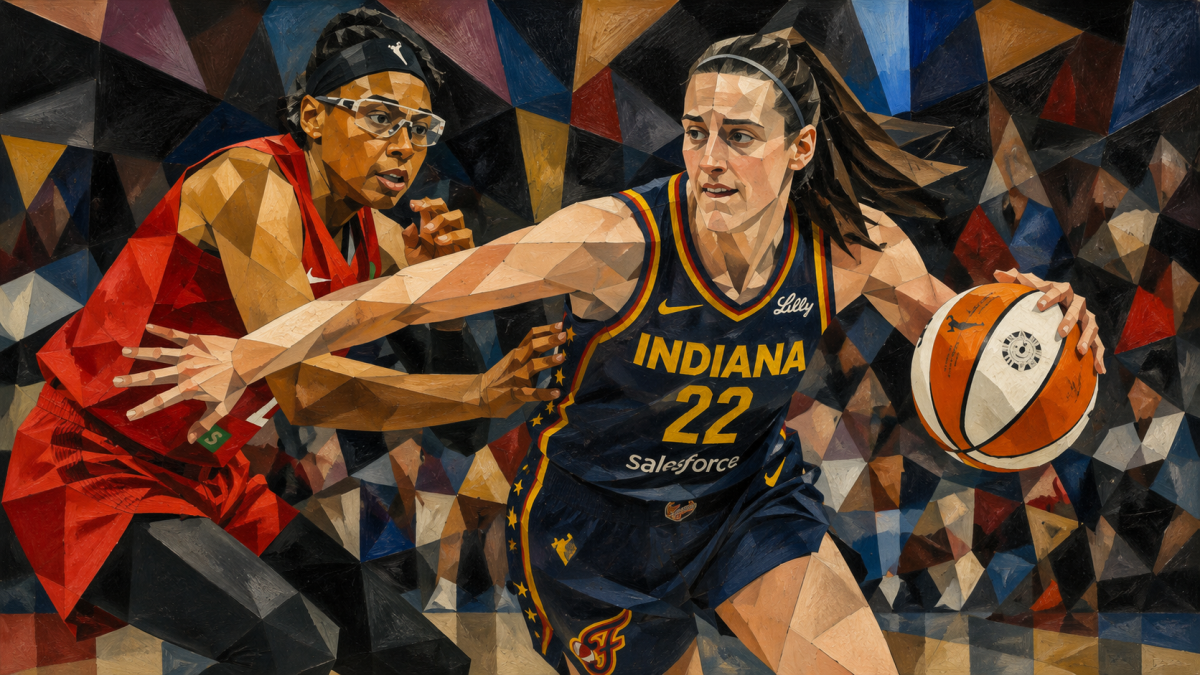
Caitlin Clark brought women’s basketball into our living room.
Sharon has little interest in sports unless someone she loves is playing. Dick follows a few teams but is hardly a fanatic. Yet several times a week, he can now be found wearing headphones and watching the Indiana Fever while Sharon works nearby. She does not watch the game exactly. But she watches him watching it.
That became the starting point for a conversation about Desi Cortez’s essay, “Stuck in the Middle: Klansmen to Caitlin Clark’s Right, Everybody Else to Her Left.” Cortez argues that although Clark did not create the racist forces gathering around her celebrity, she now has enough influence to confront them.
The question is not whether Clark deserves recognition. She plainly does.
Related stories
The harder question is why her talent awakened so much interest in a league filled with extraordinary Black athletes—and what responsibility comes with becoming a racial symbol she never asked to be.
The Player Who Pulled Dick Back In
Clark’s career at the University of Iowa caught Dick’s attention. She was setting scoring records and doing things that made casual viewers stop and stare.
Her long-range shots were audacious. Her passing was creative. Her ball handling was theatrical without being empty. She played with urgency, confidence and visible emotion.
“She is riveting,” Dick said. “She is a magician with the ball.”
That is why he began watching. At least, that is the first answer.
Sharon raised a more uncomfortable possibility. Clark was not simply a brilliant athlete. She was a brilliant white athlete entering a professional league built and sustained largely by Black women.
Would the media, sponsors and millions of new spectators have responded the same way to another exceptional Black player?
Dick did not pretend to know. That uncertainty matters.
The League Was Excellent Before Clark
The WNBA did not suddenly become excellent when Clark arrived.
Black women had been performing at an elite level for decades, often for salaries so inadequate that many played overseas during the offseason.
Long before Clark, the league had produced legends and champions. Some current players score more, defend better or have led their teams to championships while receiving only a fraction of the attention.
None of that diminishes Clark’s ability.
Two things can be true at once: Caitlin Clark is a remarkable player, and the intensity of the attention surrounding her cannot be separated entirely from race.
Her arrival brought larger audiences, fuller arenas and more media coverage. Those developments benefit Black and white players alike. But that does not erase the insult many longtime supporters understandably feel. Black women labored for years to build the house. A white player walked through the door, and suddenly much of America decided the house was worth visiting.
The White Male Audience
Clark attracted large numbers of white men who had previously shown little interest in the WNBA.
Dick is among them.
Was he drawn only by Clark’s style of play? Probably not. Was her race part of what made her seem familiar or easy to identify with? Possibly.
That does not mean every white fan who enjoys Clark is consciously racist. It means racial identification operates whether people acknowledge it or not.
White spectators often recognize individuality and innocence more readily in white athletes. Black athletes are more likely to be viewed as physical, aggressive or threatening. Clark may be competitive and emotional while retaining her status as the endangered heroine. Black players displaying the same intensity may be cast as hostile.
That pattern comes from one of America’s oldest stories: the innocent white woman endangered by supposedly dangerous Black people. Clark did not write that story, but her image has been inserted into it.
When an Athlete Becomes a Racial Weapon
Clark did not ask to become a character in America’s racial imagination.
She did not tell racist spectators to harass Black athletes or portray her competitors as jealous and brutal. She has distanced herself from people attempting to use her as a symbol of white supremacy.
But once Clark’s name and image are repeatedly used to injure others, does she acquire a responsibility to speak more clearly?
Sharon believes she does.
That does not require Clark to become a politician. She could name anti-Black racism rather than condemning only vague “hate,” reject portrayals of Black competitors as jealous or dangerous, defend colleagues racially abused in her name and remind supporters that the league they discovered was built by players they are now attacking.
These would not be extremist gestures. They would be acts of solidarity.
Clark possesses something many of her Black colleagues do not: credibility with white spectators least likely to hear those colleagues when they defend themselves. That gives her unusual power.
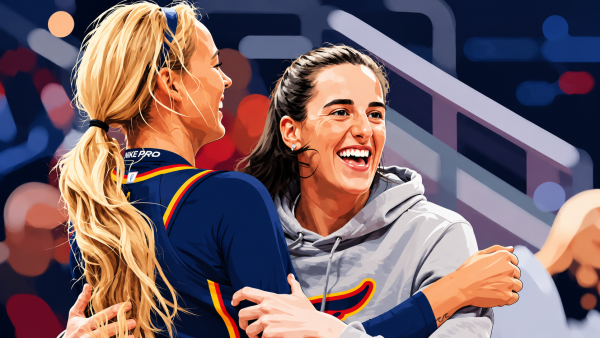
Race Was Already in the Game
Some critics accuse those raising these questions of “bringing race into sports.”
But race was already there.
It was present when Black women built the WNBA without receiving the attention or compensation their excellence deserved, and when networks, advertisers and spectators suddenly discovered the league through a white star.
Sports do not sit outside American society. They reproduce its inequalities and myths.
The same is true of the physical play surrounding Clark. Other players crowd her, block her path and sometimes knock her down.
That is often simply defense.
Clark herself plays with force and emotion. Yet ordinary contact becomes racially charged when the public is primed to see her as vulnerable and Black women as threatening.
A Black defender’s size becomes menace. Her competitiveness becomes hostility. Clark’s intensity remains proof of her passion.
Burden or Opportunity?
Dick is the more hopeful of the two of us.
He worries that critics may be demanding too much, too quickly, from an athlete who became famous because of basketball rather than political analysis. Clark is not an elected official or movement leader. She is still finding her footing inside extraordinary celebrity.
But he also sees an opportunity.
Clark could become a powerful force against anti-Black racism—not because she created it, but because people who perpetuate it are listening to her.
The same is true for the white fans who arrived with her. They can treat the WNBA as the Caitlin Clark Show, casting every opponent as a villain. Or they can allow their admiration for Clark to introduce them to the athletes, history and culture that made her career possible.
They can ask themselves why they did not watch before.
That question is not an accusation. It is an opening.
Caitlin Clark cannot control everyone who invokes her name. But she can decide what her name will stand for. Her fans can make the same decision.
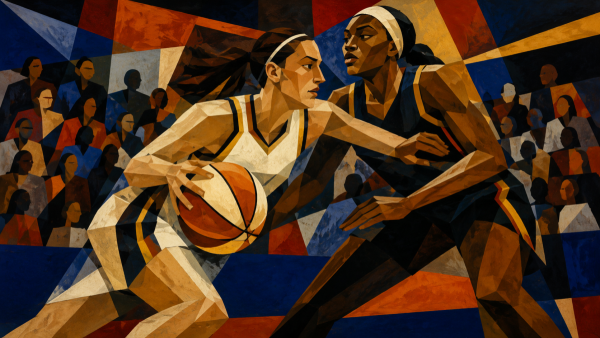
The controversy surrounding her may become another chapter in the history of white innocence and Black blame. Or it may become an occasion for white spectators to recognize the excellence they previously overlooked—and for one influential young athlete to stand beside the Black women whose league she now helps lead.
The game is still being played.
So is the larger contest over what we choose to see.
Adapted from a conversation between Dick Price and Sharon Kyle of LA Progressive.
Comments

Powered by RoundtableAn AI/DeFi-powered Enterprise Media Operating System. Learn more at Roundtable.io.© Roundtable 2026. By using this site you agree to the Terms of Use and Privacy Policy