


Dec 15, 2025 10:25 PM
Updated Dec 15, 2025 11:51 PM
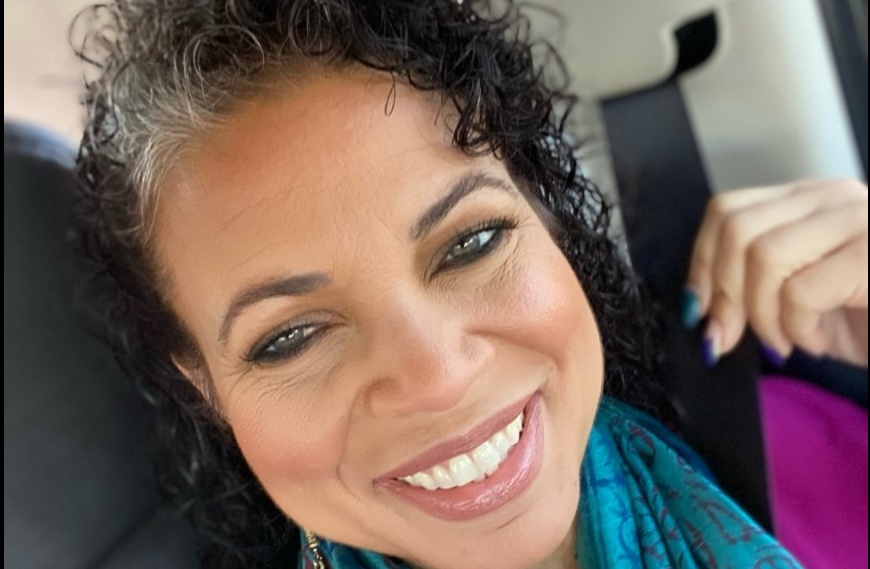
A Conversation with Melina Abdullah
On December 9, I sat down with Dr. Melina Abdullah—professor of Pan-African Studies at Cal State LA, longtime organizer, and one of the original architects of the Black Lives Matter movement—for a conversation rooted in remembrance, resistance, and truth-telling.
December 9 is not an ordinary date in the Black freedom struggle. It is the anniversary of the police killing of Christopher DeAndre Mitchell in Torrance in 2018. It is also the date, 44 years ago, that many activists and others claim journalist and Black liberation activist Mumia Abu-Jamal was framed for the murder of a police officer—a case that continues to stand as one of the clearest examples of a political prisoner in the United States.
These anniversaries framed a day of action—and a broader reckoning about power, accountability, and who gets to speak in the name of Black liberation.
Who Is Melina Abdullah—and What Is Black Lives Matter Grassroots?
Melina Abdullah is not a brand. She is not a consultant. She is not a nonprofit executive managing optics. She is, as she describes herself, “boots on the ground.”
Related stories
A professor, writer, radio host, and mama of three, Abdullah is also a co-founder of Black Lives Matter Los Angeles and Black Lives Matter Grassroots—the original, decentralized formation of the movement, now encompassing more than 52 chapters worldwide.
Black Lives Matter Grassroots, she explains, is made up of organizers doing daily work for Black freedom—often without institutional backing, major donors, or media protection.
And that distinction matters.
Calling Out the Hijacking of a Movement
One of the major actions on December 9 involved confronting what Abdullah and many organizers describe as the hijacking of Black Lives Matter’s name, resources, and legitimacy by the Black Lives Matter Global Network Foundation (BLMGNF).
According to Abdullah, hundreds of millions of dollars donated by ordinary people—people who believed they were supporting families impacted by police violence and organizers on the ground—were instead consolidated and controlled by a small nonprofit entity.
That entity, she says, has failed to meaningfully resource the very communities whose suffering fueled the movement’s rise.
When an organization called Afrokicks chose to honor Cecily Gay, the chair of BLMGNF, organizers first attempted quiet engagement—sharing documentation, raising concerns, and asking that the honor be reconsidered. They were dismissed.
So organizers showed up.
Flyers were distributed. Questions were asked. And when BLMGNF board member Diane Parker was publicly challenged about stolen movement funds, security—and then police—were called on Black organizers.
The irony was not lost on anyone.
An organization founded in the name of abolition turned to policing to silence dissent.
When Truth-Telling Is Met with Threats
Abdullah herself did not attend the gala. Prior to the event, she received a threat from an attorney representing BLMGNF, warning that a restraining order would be sought against her over a brief social media comment criticizing Afrokicks for honoring what she described as “Zionists and thieves.”
The attorney, she noted, specializes in defending white-collar crime.
The attempt to intimidate her did not work. Nor did it silence the broader movement.
“This is not about me,” Abdullah emphasized. “Black Lives Matter Grassroots is made up of hundreds—really thousands—of organizers around the world. The movement does not belong to any one person.”
Is the Department of Justice Investigating?
According to reporting by the Associated Press and The Washington Post, the Department of Justice is investigating BLMGNF. The organization has publicly acknowledged severing ties with its former executive, Shalomyah Bowers, a figure described as central to the alleged financial misconduct.
While investigations move slowly, Abdullah sees this moment as one of exposure—and an opportunity for the public to distinguish between movement infrastructure and movement profiteering.
Black Xmas: Build Black, Buy Black, Bank Black
Beyond protest, Black Lives Matter Grassroots is building alternatives.
Each year from Black Friday through January 1, the organization observes Black Xmas—a season of economic resistance and reinvestment inspired by the 2014 police killing of John Crawford III, shot dead in an Ohio Walmart for holding merchandise while shopping.
The framework is simple and radical:
- Build Black: Invest in Black-led, Black-serving organizations—from Students Deserve to the Fernando Pullum Community Arts Center to LA CAN.
- Buy Black: Redirect consumer spending to Black businesses, including community anchors like Neighbors Skate Shop in Leimert Park.
- Bank Black: Move money out of exploitative corporate banks and into Black-owned financial institutions, such as OneUnited Bank, which supported Black Lives Matter Los Angeles for years before it had any funding of its own.
This is not symbolism. It is strategy.
Has Anything Changed Since George Floyd?
For those who believe the murder of George Floyd led to lasting reductions in state violence, Abdullah is blunt:
“Feelings are not facts.”
Data from Mapping Police Violence shows that police killings of Black people surged again last year. Where reductions have occurred, they correlate directly with strong, organized local movements—not policy statements, not hashtags, not corporate pledges.
And police violence is only one expression of the problem.
White supremacist violence, Abdullah notes, is rising—evidenced by Black men found hanging from trees across multiple states, and by the continued reality that Black Americans remain the primary victims of hate crimes nationwide.
Freeing Political Prisoners: The Case of Mumia Abu-Jamal
December 9 also marked 44 years since Mumia Abu-Jamal was framed and imprisoned.
On that anniversary, Black Lives Matter Grassroots and Black Lives Matter Los Angeles hosted Jamal Iben Mumia, Abu-Jamal’s son, who continues to tour the country demanding his father’s freedom.
Abdullah reminds us: political prisoners have been freed before—Dr. Mutulu Shakur, Sekou Odinga, Assata Shakur—and they can be freed again.
“The people will get Mumia free,” she says. “But only if we fight like it matters.”
The Work Ahead
As Melina Abdullah made clear, the struggle for Black liberation is neither over nor abstract. It is contested, organized, and deeply local. It demands clarity about who represents the movement—and who exploits it.
At LA Progressive, we have covered Black Lives Matter since its earliest days. We have watched real power grow in places like Leimert Park and across Los Angeles because organizers refused to be silenced, co-opted, or erased.
The lesson remains unchanged:
Until the lion tells the story, the hunter will always be the hero.
And the lions are still telling the story.
Comments

Powered by RoundtableAn AI/DeFi-powered Enterprise Media Operating System. Learn more at Roundtable.io.© Roundtable 2026. By using this site you agree to the Terms of Use and Privacy Policy