


Aug 9, 2018 1:00 AM
Updated Feb 28, 2024 5:37 AM
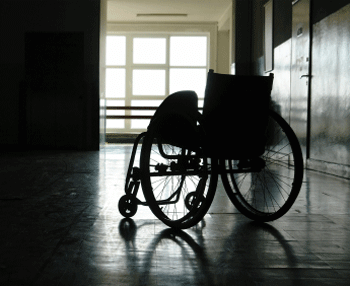
I don’t know if you have to experience discrimination, first hand, in order to be able to see it, but I do know that I learned a when my uncle became wheelchair bound 20 years ago. For that reason, I have hope that maybe the Civil Rights Division under the Obama administration will do what it has often failed to do in the past – provide a line of defense for this country’s most vulnerable people.
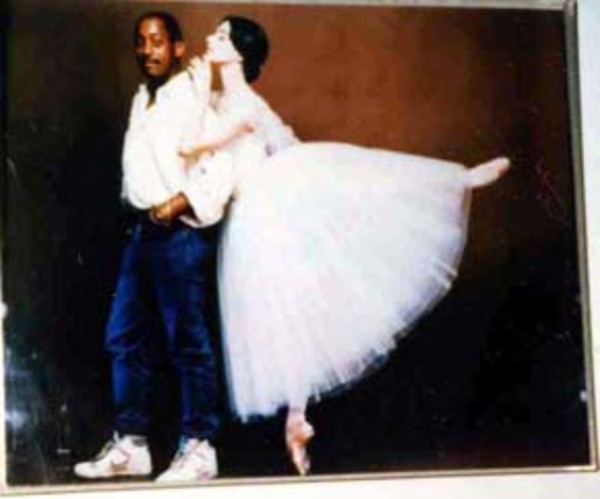
Our bond was strong. My uncle Leopold -- my mother's only brother lived with us for most of my formative years.
In my eyes, Leopold could do no wrong. He was all heart, all fun, all talent -- bright, witty, funny, and full of energy. He brought light and joy into my life and played a key role in a good deal of my fondest childhood memories.
In many ways, he was my third parent but beyond that, he was my rock. I was lucky to have had him in my life.
In the late 80s, my uncle was diagnosed with full-blown AIDS. Back then, not much was known about this new disease. The first AIDS drugs weren't widely available and those were only in the early developmental phase.
Related stories
First there was the diagnosis -- then one opportunistic infection after another hit him, each one taking a toll. At break neck speed, my uncle went from being a strong, fit, athletic, young man who bicycled around Manhattan, New York, to one who needed a cane, then a walker, and finally a wheelchair before he was no longer ambulatory -- the downward spiral took less than six months. We could barely catch out breaths.
With me living in California and my uncle living in New York, I had to make some changes in my life to be able to spend time with him. Shortly after the wheelchair was delivered, I went to stay with him for a week in his tiny Manhattan apartment. Following is my attempt to explain how my eyes were opened to a kind of discrimination that, up till then, had not been on my radar --the discrimination faced by those with disabilities.
The weather was beautiful on the first morning after my arrival. His 16th floor apartment was tiny, even by New York City standards, but it had two large windows giving him an amazing panoramic easterly facing view of Manhattan.
That first morning the view was nothing short of spectacular. Sunlight filled the room putting us in good spirits in spite of the situation. Leopold suggested we go out. He wanted to do a little shopping and we were entertaining the idea of having lunch at his favorite deli on Broadway and 80th. This was going to be a good day. Mom and I got him into his wheelchair. We left the apartment, got into the elevator, exited, and wheeled him through the sunlit lobby.
I visited New York frequently. I especially loved being there with my uncle. It didn't matter that his apartment was small. It didn't matter that I'd have to sleep on the couch or on the floor. But now his apartment was filled with medical paraphernalia, a chilling harbinger of what was to come. No matter, on this day, we were going to get away from it all and just have fun in the city.
We'd walked less than a block when it began to dawn on me that there might be a problem ahead. As we reached the corner of 59th and 10th, my fear was confirmed -- there wasn't a ramp at the curb! I didn't know how my mom and I were going to get my uncle across the street.
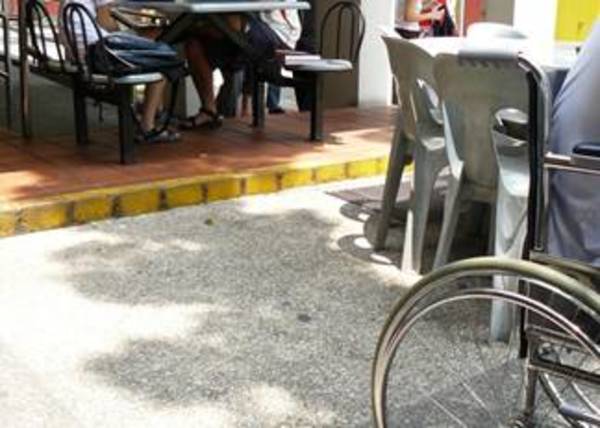
One of the conditions he suffered was neuropathy which caused extreme pain especially when he was jostled. He didn't complain but he couldn't hide the expression on his face. Just rolling over the uneven pavement was excruciating. How were we going to get him across the street and back up onto the curb without bumping and jostling the wheelchair - what if we weren't strong enough - what if we caused the chair to tip over? I wondered if we could rely on strangers to help us?
I looked at all four corners. There were no ramps on any of them. If we weren't strong enough and someone helped us at the first corner, would we be lucky enough to find others to help along the way? Remember, this is New York City and this was just the first of many corners we were going to encounter. As I stood there on the corner of 59th & 10th on that beautiful day with my uncle in his new wheelchair – the prospect of having a “fun day” began to fade.
Wheelchair Discrimination
In a flash, I thought about the hundreds of stairs going down into the subway -- and what about buses and taxis – were they wheelchair accessible? Would we be able to get him around town without knowing what obstacles we'd encounter along the way? We needed to be prepared for these things in advance!! I couldn't even get my head around the bathroom issue!?
I was born and raised in New York and visited frequently after moving to Los Angeles but for the first time it occurred to me how infrequently I saw people in wheelchairs among the thousands of pedestrians in Manhattan. I began to get a sinking feeling.
In that nano-moment, I experienced a shift -- as if a blinders were removed from my eyes. The complex issues and the many layers of complicity that worked together to create the dilemma we found ourselves in on that lovely day flashed before me.
It became all too clear how it is that systemic decision making had rendered an entire segment of the population outcasts -- discriminated against, in plain view, without anyone -- except those who are directly impacted -- noticing. I certainly was blind to it. Why was it that it never occurred to me that there was a lack of people milling around in wheelchairs in New York City?
In that moment I could see how policy makers, city planners, government contractors, builders, architects, the transportation department and thousands of others made decisions that, in effect, sentenced wheelchair bound people to housebound existences. And it was perfectly reasonable to believe that none of these decision makers had bad intentions. They just lacked first hand knowledge -- the kind of knowledge that comes with lived experience or proximity to someone with lived experience.
That day with my uncle didn’t turn out to be the fun day we were hoping for. We never got past the corner. We had to go back to the apartment and strategize. As the week passed, we learned how difficult it was to get around the city in a wheelchair. It was such an ordeal that he only left when he had to go to the doctor which was only a block away.
Sadly, with the exception of doctor's visits, my uncle remained apartment-bound until he was admitted to the hospital where he remained until he died four months after he became wheelchair bound. His death, of course, had nothing to do with curb ramps, but the quality of the last few months of his life before being admitted to the hospital certainly did.
Being apartment-bound only added to his sense of powerlessness, hopelessness, and despair. Ultimately, he became clinically depressed; he even attempted suicide but I caught him just as he was climbing out of his 16th floor apartment window.
In 2002, more than 10 years after my uncle passed away, New York City agreed to install concrete ramps at the city’s 158,000 curb corners. This was done, in part, to satisfy a settlement agreed upon to avoid a lawsuit against the city by a group representing thousands of New Yorkers in wheelchairs. Also, since that time, steps were taken to provide wheelchair-accessible taxis and subway stations throughout the city. The buses were made wheelchair accessible earlier but they still lacked curb ramps which meant the freedom to travel for people who used wheelchairs was still limited.
As a Black woman, I am all too familiar with the larger society’s inability to “see” racial discrimination even when I think it’s staring them right in the face. But experiences like this have helped me to understand that for many, this blindness is all too real.
The discriminatory results that were the consequence of thousands of decisions made over time by thousands of decision makers were not intentional. It's likely the vast majority didn't and won't ever know that they had a hand in keeping someone housebound. This particular someone -- my uncle -- was a lifelong taxpayer and participated in the representative form of government we enjoy in the United States.
We hire or elect representatives to speak on behalf of "the public" -- to make decisions that are in the public interest. It’s unlikely the architect of New York City's sidewalks and curbs intended to design a system that limited the freedom of a percentage of "the public" -- the ones who use wheelchairs. But their freedom was limited nevertheless.
For this reason, Congress established a department of government to protect the civil rights of all individuals and prohibit discrimination on the basis of race, color, sex, disability, religion, and national origin. The Civil Rights Division of the Department of Justice was created to enforce laws that protect civil rights and prohibit discrimination regardless of the perpetrator’s intention.
During the Bush Administration, many civil rights attorneys left the department - it was rumored their departures were related to the department's failure to act on many issues brought to its attention during that administration. During the Obama administration the Senate confirmed Thomas Perez as Assistant Attorney General of the Civil Rights Division. Perez took a decidedly different approach.
In an interview with Patt Morrison of KPCC Tom Perez said, “There are two ways to prove discrimination. You can show that someone intentionally discriminated or alternatively you can demonstrate that a person or a company had a practice or policy in place that while facially neutral had a discriminatory impact.” Perez announced that he would restore and transform the division so that it could more effectively protect the rights it was founded to protect. He lead the department for four years, leaving in 2013 after making significant progress.
Under the Trump Administration, the Department of Justice (DOJ) was initially led by former Alabama Senator Jeff Sessions -- a man known to use racial slurs who is not against caging the children of brown people. Sessions was replaced by Bill Barr, not exactly the image that comes to mind when one thinks of a civil rights proponent.
Since 1957, the Civil Rights Division of the DOJ has been tasked with the responsibility of enforcing anti-discrimination laws in housing, employment, voting, lending, and other areas to ensure we all have equal access to the freedoms offered by this country. In 1990, the Americans with Disabilities Act (ADA) became law. The ADA is a civil rights law that prohibits discrimination against individuals with disabilities in all areas of public life, including jobs, schools, transportation, and all public and private places that are open to the general public.
I don’t know if you have to experience discrimination first hand in order to be able to see it, but I do know that I learned a lot standing on that corner with my wheelchair bound uncle 30 years ago.
Comments

Powered by RoundtableAn AI/DeFi-powered Enterprise Media Operating System. Learn more at Roundtable.io.© Roundtable 2026. By using this site you agree to the Terms of Use and Privacy Policy