


Jul 5, 2021 2:00 PM
Updated Feb 10, 2022 10:35 PM
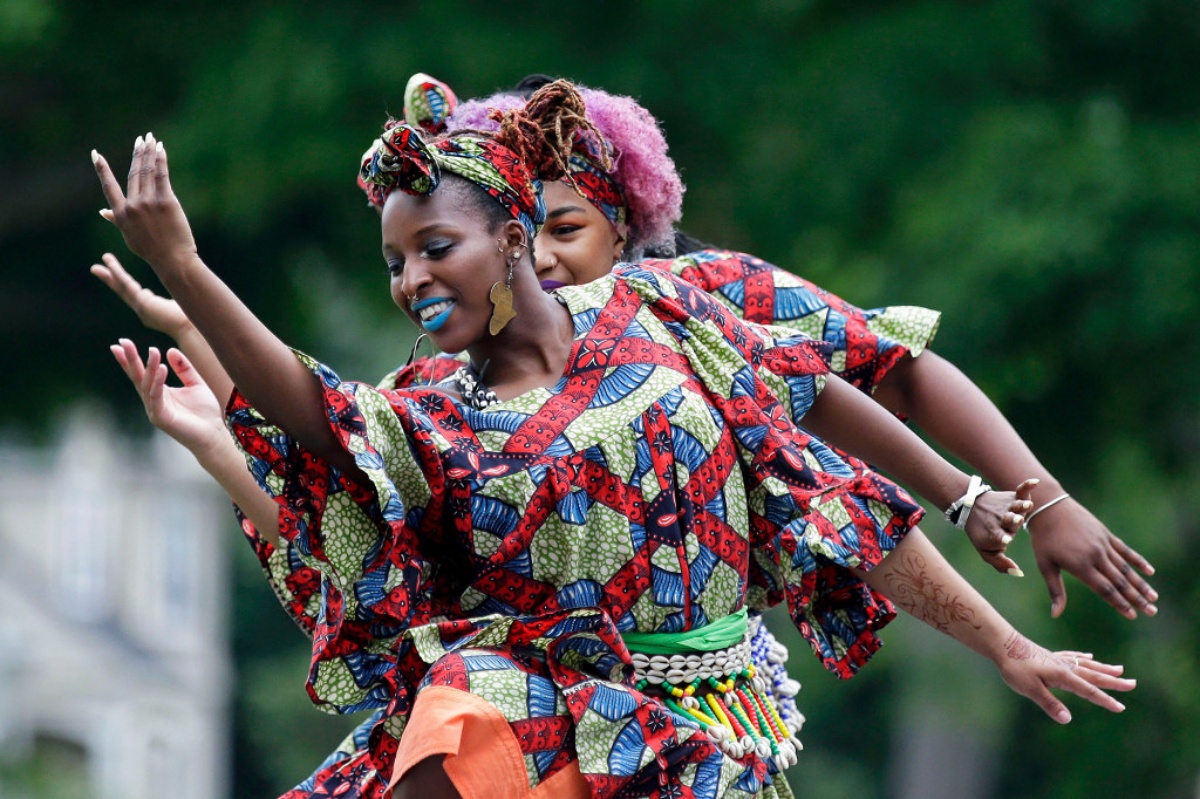
Exposure to celebrations like Juneteenth and Kwanzaa sowed seeds of curiosity that helped me dig deeper and understand the complex history of America
The Journey of a Black Country Girl
“What is Juneteenth?” I asked a friend about seven years ago after she invited me to a Juneteenth celebration. Though I’m a black woman, I knew about 4th of July, but not Juneteenth, a holiday to commemorate the emancipation of enslaved people in the US.
Over the past year, many in America are experiencing a racial reckoning in the wake of George Floyd’s murder and Juneteenth was recently made a federal holiday. While some immediately hailed the decision, understandably, some black people are skeptical because this is a symbol, not a policy. We would rather have equitable healthcare, education, childcare, housing, voting rights, and being able to walk, jog, talk, drive, shop, or sleep while black without getting killed or harassed.
Nonetheless, I see this symbol as a good start because it provides an entry point to consistently have conversations we’ve historically not been allowed to have in the mainstream. Although, it’s ironic that at this same time, several citizens and lawmakers (including some who voted for the holiday) oppose the John Lewis Voting Rights Act and the George Floyd Justice in Policing Act, and are pre-emptively railing against the teaching or discussion of America’s more comprehensive history; understanding how American racism has shaped public policy and impacts populations today.
Though I’ve been here for 16 years, I did not know much about American history or the existence of Juneteenth, until I started learning the more comprehensive American history eight years ago. Prior to that, as an African immigrant, I could not understand the plight of black people in America. I thought America was postracial since slavery was abolished, the Civil Rights Sct was passed, a biracial president was elected twice, and I was successful and treated nicely by most people. I saw America as the epitome of LIBERTY and JUSTICE; the land of the FREE and home of the BRAVE. I also fell completely in love with the country western lifestyle, and by extension, patriotism. I even wrote a song, Black Country Girl.
Related stories
Exposure to celebrations like Juneteenth and Kwanzaa sowed seeds of curiosity that helped me dig deeper and understand the complex history of America
When I saw America only through the lens of 4th of July, I missed the other realities in plain sight in America’s story. Exposure to celebrations like Juneteenth and Kwanzaa sowed seeds of curiosity that helped me dig deeper and understand the complex history of America.
This involved learning about systemic racism and its manifestations like redlining, mass incarceration, and the many lingering impacts of slavery on communities today; and how oppression evolves and masquerades in more acceptable forms like voter suppression tactics.
It also involved recognizing the paradox that while America was celebrating its freedom from England (from 4th of July 1776), it still held other humans as slaves until 1865, thus prompting Frederick Douglas’ iconic 4th of July 1852 speech, “What to the slave is the 4th of July?”, a call for the promise of liberty to be applied equally to all people. As if that wasn’t enough, black people were “freed” with no reparations, resources, or support system, but instead with 100 years of Jim Crow, the school to prison pipeline, several massacres each time black communities made progress, and much more. In fact, even in the very sentence that abolished slavery, article 1 of the 13th ammendment, lies the fine print that gave rise to the prison-industrial complex, which has broken and impoverished many black families till this day.
Honestly, knowing all I know now, I think it’s a miracle that African-Americans survived and still have the grit to be striving to improve things, despite all they’ve been through and keep going through, with little national acknowledgment or redress. I see this as the epitome of RESILIENCE. I grappled a lot with the fact that I used to think I was relatively more successful because I was better, more hardworking, moral, god-fearing, or responsible, when in reality, I just came here with more privilege, in addition to the privilege of blissful ignorance. I’ve struggled with recognizing how I must have caused harm just through my ignorance and ensuing words, no matter how innocent and well-intentioned. It has been a continuous learning and growing journey, and I’m grateful for the grace I get afforded as I push forward knowing I will make mistakes, even as a black person.
This struggle and journey of discovering the different American realities is embodied in my music video, Black Country Girl, which to me symbolizes when 4th of July meets Juneteenth. Although it represents a celebration of cultures and authenticity, it also depicts my transformation from romanticizing America to recognizing it for what it is (the good, bad, and the ugly), while trying to play my role in helping it live up to its ideals.
In it, you see how I embrace patriotism by my American flag apparel; but later face the elephant in the room, racism, manifesting through police brutality and more. At the end you see me kneeling with my fist up, to show that knowing what I know now, I’m on board with the struggle for equity and justice for all. You see that though I started out being very merry, I end the video with a solemn look, representing the heaviness and struggle as I acknowledge and deal with the reality I hadn’t been able to see before. At the end, you also see that I am wearing my American flag apparel, but this time, with a neck gaiter bearing the faces of George Floyd, Ahmaud Arbrey, and Breonna Taylor; because their stories are part of the American story too, and we have to face it in order to change it. One of my favorite quotes is from James Baldwin; “Not everything that is faced can be changed, but nothing can be changed unless it is faced.”
For me, that combination signifies when 4th of July meets Juneteenth - the paradox of freedom - When we go from idolizing America to realizing, yes, there is good to be celebrated, but there is also a lot of messed up stuff that needs to be addressed. We have a lot of work to do to truly let freedom ring for all Americans, and help America live up to its ideals of being the land of the FREE and home of the BRAVE.
I think having Juneteenth as a federal holiday is a crucial gateway to these uncomfortable conversations our country desperately needs; however, these conversations should not be limited to the Juneteenth season. They should be had all year round and they should translate into systemic action and policies, both in organizations and institutions, and on the local and national levels.
There is a risk that like Martin Luther King Jr.’s legacy, Juneteenth’s true meaning can become whitewashed, commercialized, and relegated to a marketing and PR opportunity for corporations and politicians. We know how MLK’s legacy gets so co-opted that his own words often get used to attack and demonize the very causes he was fighting for. Some use “... judged not by the color of their skins but by the content of character” to promote the illusion of colorblindness and justify not talking about race or considering how it systemically impacts our policies and experiences. So, it is important to safeguard the narrative around Juneteenth as it goes mainstream.
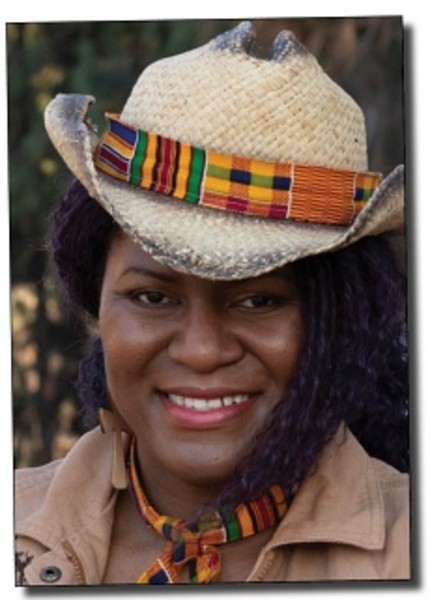
Many non-black people feel black history has nothing to do with them. Making Juneteenth a national holiday elevates its importance so that black history is viewed as American history. I am still patriotic, and it is our PATRIOTIC duty to explore and acknowledge reality and fight for inclusion, equity, and justice for all Americans. That’s what patriotism means to me.
Setche Kwamu-Nana
Comments

Powered by RoundtableAn AI/DeFi-powered Enterprise Media Operating System. Learn more at Roundtable.io.© Roundtable 2026. By using this site you agree to the Terms of Use and Privacy Policy